The home gym revolution has transformed spare bedrooms, garages, and basement corners into personal fitness sanctuaries. Yet for those working with limited square footage, one critical question often gets overlooked in the excitement of building a compact workout space: how do you ensure maximum load safety when every inch matters? Small spaces introduce unique structural and logistical challenges that can compromise both equipment performance and user well-being if not properly addressed.
For gym owners and serious fitness enthusiasts, the stakes are high. Heavy-duty equipment like power racks, cable machines, and plate-loaded systems demand careful consideration of floor integrity, weight distribution, and spatial clearance—factors that become exponentially more complex in confined areas. This article tackles the essential intersection of space optimization and load safety, covering equipment specifications, advanced technology features, structured setup procedures, and ongoing maintenance protocols. Whether you’re outfitting a 100-square-foot nook or advising clients on compact studio builds, the goal remains the same: creating a training environment where performance and safety coexist without compromise.
Understanding Small Space Constraints and Safety Fundamentals
Small home gyms typically occupy spaces between 50 and 200 square feet—areas originally designed for storage, spare sleeping quarters, or vehicle parking rather than heavy athletic training. These environments present distinct limitations that directly affect load safety. Residential floors, particularly those on upper levels, often support only 40 to 50 pounds per square foot under standard building codes, a threshold easily exceeded by a loaded squat rack or deadlift platform. Spatial layout compounds the problem: tight clearances between walls and equipment restrict proper movement patterns, increasing the risk of imbalanced lifts and sudden lateral forces that equipment wasn’t designed to absorb.
For gym owners building compact training facilities, load safety isn’t merely about preventing catastrophic failure—it’s about protecting both the user and the investment. Equipment operating near its structural limits in poorly prepared spaces experiences accelerated wear on joints, welds, and cable systems. Weight distribution becomes paramount when heavy loads concentrate on small footprints; a 500-pound loaded barbell resting on a rack with four small base plates creates point-load pressures that can crack concrete or punch through subfloor sheathing. Understanding these fundamentals—floor capacity, equipment footprint, force distribution, and structural integrity—forms the foundation for every subsequent decision in building a safe, space-efficient gym.
Key Equipment Specifications for Maximum Load Capacity and Durability
When selecting equipment for a small home gym, maximum load capacity ratings serve as the non-negotiable starting point for every purchasing decision. Gym owners should look beyond marketing claims and examine the actual engineering behind each piece. Steel gauge thickness matters enormously—11-gauge steel (approximately 3mm) represents the minimum standard for power racks expected to handle serious training loads, while 7-gauge steel (nearly 5mm) offers superior rigidity for commercial-grade applications in confined spaces where equipment deflection could mean contact with walls or adjacent machines. Weld quality, connection hardware grade, and base plate dimensions all contribute to how safely a unit handles peak forces during dynamic movements like rack pulls or heavy squats.
Interpreting specifications requires understanding the difference between static and dynamic load ratings. A rack rated at 1,000 pounds statically may perform very differently when a lifter re-racks 400 pounds aggressively after a failed rep. Look for equipment tested under dynamic conditions, and apply a safety factor of at least 1.5x your anticipated maximum working load. Stability features—wide base footprints, rear crossmembers, and bolt-down capability—become especially critical in tight quarters where tipping or sliding could cause structural damage to surrounding walls or injure nearby users.
Evaluating Warehouse Location for Optimal Equipment Placement
Selecting the right warehouse location within your home—whether that’s a garage slab, basement floor, or reinforced room—determines the ceiling for what your gym can safely support. Concrete slabs on grade offer the strongest foundation, typically handling 250 pounds per square foot or more without concern. Suspended wood floors in upper-level rooms require careful assessment: identify joist direction, spacing, and span length, then position heavy equipment directly over load-bearing walls or support beams whenever possible. Floor type dictates not just weight limits but also anchoring options; expansion bolts work in concrete while lag bolts into joists serve wood-framed structures.
Proximity to walls deserves careful measurement. Maintain a minimum of 18 inches between any barbell-loaded equipment and adjacent walls to prevent plate contact during lifts, and ensure at least 36 inches of clearance behind squat racks for safe bail-outs. Ventilation matters more than many realize in small spaces—heavy exertion in poorly ventilated areas accelerates fatigue and impairs judgment, indirectly increasing the likelihood of load-related accidents. Position equipment near windows or install mechanical ventilation to maintain airflow, and verify that your chosen location allows for rubber flooring installation thick enough (minimum 3/4 inch) to distribute point loads and protect the substrate beneath.
Advanced Features: Electric Engine and Eccentric Mode Integration
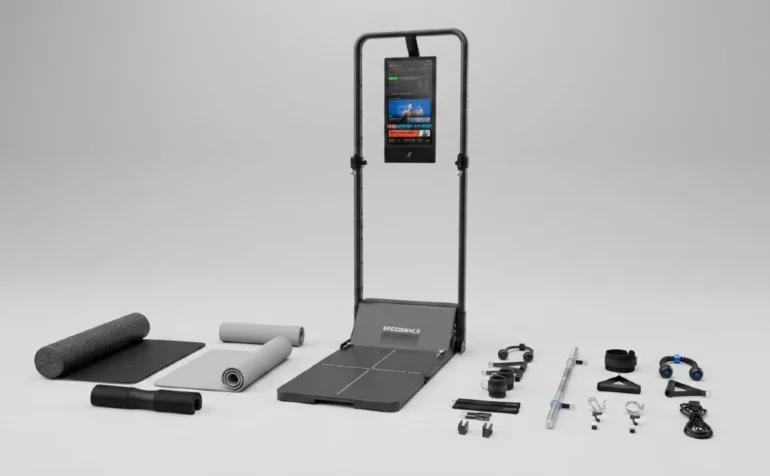
Modern resistance training equipment has evolved far beyond simple plate-loaded designs, and for small space applications, motorized systems offer distinct safety advantages that traditional setups cannot match. Equipment built with electric engine technology—such as systems developed by Speediance—replaces gravity-dependent weight stacks with servo-driven resistance, eliminating the need for heavy plates that stress floors and create storage headaches in confined areas. These systems deliver precise, programmable resistance through a compact footprint—often occupying less than 20 square feet while providing the equivalent of an entire cable station’s training variety. For gym owners managing tight layouts, this consolidation means fewer pieces of equipment bearing concentrated loads on vulnerable flooring, and smoother force curves that reduce the jarring impact forces associated with dropped or improperly controlled free weights. When exploring home gym ideas small space solutions, these all-in-one motorized systems represent the most effective way to maximize training capability while minimizing structural risk.
Eccentric mode functionality represents another technological leap for load management in small spaces. During traditional lifting, the lowering phase often produces the highest injury risk—muscles under eccentric load can handle roughly 30% more force than during concentric contractions, meaning a lifter may lose control of weight that exceeds their concentric capacity. Equipment featuring dedicated eccentric mode automatically adjusts resistance during the lowering phase, providing controlled overload without requiring a spotter or additional floor space for safety equipment. This programmable load management ensures that maximum forces remain within both the user’s capacity and the equipment’s structural envelope. For gym owners prioritizing client safety in compact studios, these integrated technologies transform how heavy training coexists with spatial limitations—delivering high-intensity stimulus while the electric engine maintains smooth, predictable force application that protects equipment joints, anchor points, and the surrounding structure from sudden shock loads.
Step-by-Step Solutions for Setting Up a Safe Small Space Home Gym
Building a safe compact gym requires a methodical approach that addresses structural readiness before any equipment arrives. Begin by assessing your floor’s load-bearing capacity—hire a structural engineer for upper-level installations or use a stud finder to map joist locations in wood-framed spaces. For concrete slabs, inspect for cracks or signs of moisture intrusion that could compromise anchor integrity. Once you’ve established your baseline capacity, reinforce as needed: sistering additional joists beneath heavy equipment zones, adding steel support columns in basements, or pouring a localized concrete pad in garage areas where maximum load capacity demands exceed existing slab thickness.
With structural preparation complete, plan your layout on paper before moving anything into position. Map each piece of equipment with its full operational footprint—including barbell extension, cable travel paths, and user movement zones. Place the heaviest equipment closest to load-bearing walls or directly over support beams, working outward with lighter pieces. Install rubber flooring rated at minimum 3/4-inch thickness across the entire training area, using interlocking tiles or rolled material secured at edges to prevent shifting under lateral forces. When positioning equipment, bolt down every rack, rig, or machine that offers anchor points; this single step dramatically reduces tipping risk in tight quarters where a falling frame has nowhere to go but into walls or other equipment. Finally, implement a pre-use checklist covering pin engagement, cable condition, and attachment security. Conduct a formal inspection every 30 days that includes torque-checking all structural bolts to manufacturer specifications, examining welds for hairline cracks, and testing safety catches under controlled load. For gym owners serving clients, document each inspection to maintain accountability and catch wear patterns before they become failure points.
Safety Protocols and Regular Maintenance for Load Assurance
Consistent safety protocols separate professional-grade home gyms from accidents waiting to happen. Establish a weekly inspection routine that covers all critical contact points: check rack J-hooks and safety arms for deformation or wear marks, verify that cable systems show no fraying or kinking, and confirm that pin-selector mechanisms engage fully at every weight increment. For motorized equipment with electric engine systems, monitor for unusual sounds during operation—grinding or hesitation during resistance changes often signals internal wear that could lead to sudden load release. Keep a maintenance log that records inspection dates, findings, and corrective actions taken, creating a traceable history that helps predict component lifespan and schedule replacements proactively rather than reactively.
User training proves equally vital to equipment maintenance in maintaining load assurance. Every person using the space should understand proper re-racking technique, emergency bail-out procedures, and the specific weight limits of each station. Calibrate digital resistance systems monthly according to manufacturer guidelines, verifying that displayed loads match actual output using a handheld dynamometer or known reference weights. For gym owners serving clients, post maximum load capacity ratings visibly on each piece of equipment and conduct quarterly hands-on safety briefings. Invest in a basic toolkit—torque wrench, cable tension gauge, and thread-locking compound—to address minor issues immediately rather than allowing them to compound into structural compromises that threaten both users and the surrounding space.
Building a Load-Safe Compact Gym Through Smart Planning and Maintenance
Creating a safe, effective home gym in a small space demands more than clever organization—it requires a deliberate commitment to load safety at every stage of planning, installation, and ongoing use. The principles covered here form an interconnected system: understanding your space’s structural limitations sets realistic boundaries, selecting equipment with verified maximum load capacity ratings ensures your gear won’t fail under stress, and leveraging advanced technologies like electric engine resistance and eccentric mode functionality allows heavy training without the spatial demands and floor stress of traditional plate-loaded systems.
For gym owners managing compact facilities, the structured setup process—from engineering assessments through bolt-down installation and documented maintenance schedules—transforms a potentially hazardous environment into one where clients train confidently and equipment lasts. The investment in proper flooring, strategic placement over load-bearing structures, and routine inspections pays dividends in reduced liability, fewer equipment replacements, and uninterrupted training availability. Take action now: assess your space honestly, choose equipment engineered for the forces you’ll generate, and build maintenance habits that catch problems early. A small footprint never has to mean compromised safety—only smarter planning.