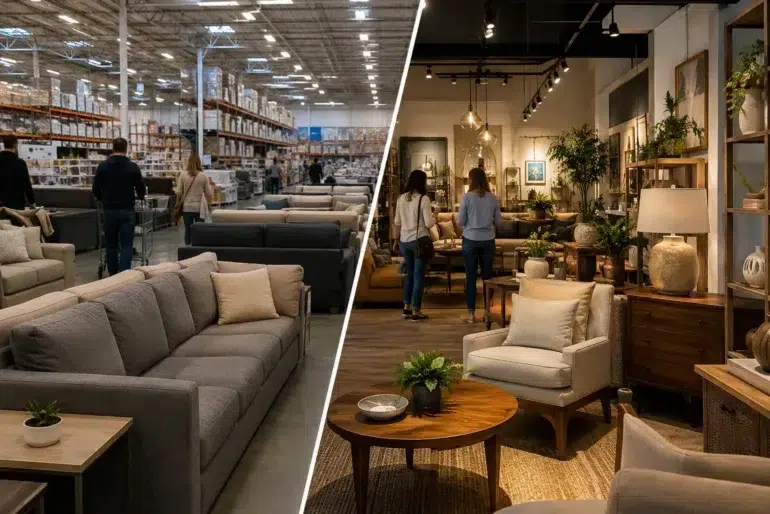
Furniture buying has quietly transformed over the last decade. Shoppers once headed straight to massive warehouse retailers, drawn by low prices and same-day pickup. Now many gravitate toward smaller boutique showrooms with curated collections and hands-on service. That shift points to deeper priorities: quality, personal taste, and the pleasure of choosing something built to stay in a home for years.
What Is Driving the Change
Several forces have reshaped how people furnish their spaces. Growing interest in design pushes buyers to look for pieces that feel distinctive instead of mass-produced. Social platforms feed that hunger, surfacing interiors that look intentional and one-of-a-kind. In a 2023 survey, close to 60 percent of consumers said uniqueness mattered more than rock-bottom pricing when they bought home goods.
Speed and savings no longer secure loyalty on their own. People want to feel fabrics, sit on cushions, and grasp how something was made before they buy. Boutique showrooms meet that need directly. For anyone weighing the best modern furniture stores, Miami has developed intimate galleries that deliver styling help and straight talk about materials that big retailers seldom provide. That care earns trust and turns one visit into an ongoing relationship.
The Appeal of Boutique Showrooms
Boutique retailers thrive because they offer far more than merchandise. They create atmosphere, share real expertise, and give shoppers a sense of discovery.
Curated Selection
Smaller stores carry fewer items, but every piece earns its spot. Staff pick designs for quality and cohesion, not sheer quantity. Customers wandering these rooms meet less clutter and clearer options. That focus makes it easier to imagine how a chair or table will settle into their space.
Personal Service
Thoughtful staff set boutiques apart from warehouse chains. Many associates bring design training and happily suggest layouts, finishes, and pairings. Their input feels closer to consulting than to a sales pitch. Buyers walk away assured, knowing solid advice shaped what they picked.
How Big-Box Stores Compare
Large retailers still bring obvious strengths. Their pricing remains competitive, and their inventory meets almost any household need. Families setting up a first apartment often begin there for good, practical reasons.
Scale carries costs, though. Cavernous aisles and countless options can tire shoppers rather than spark ideas. Employees typically work across several departments, so tailored guidance is limited. Product lines lean toward safe, familiar looks that please crowds but rarely delight. For someone chasing character, that sameness starts to feel narrow.
The Role of Quality and Longevity
Sustainability is now a major factor in furniture decisions. Plenty of shoppers question throwaway culture and would rather invest in goods that last. Studies indicate that discarded furniture adds millions of tons to landfills yearly, much of it cheap and quick to fall apart.
Boutique makers tend to prize sturdy construction and responsibly sourced materials. Buyers who spend more at the outset often come out ahead, since they replace pieces far less frequently. That thinking fits comfortably with the rising environmental awareness of younger generations.
What Shoppers Should Consider
Choosing between the two formats depends on your personal needs and goals.
Budget and Timeline
Warehouse chains work well for tight budgets and last-minute moves. Boutiques reward patience and a readiness to invest. Someone furnishing a short-term rental might sensibly put affordability ahead of longevity.
Style Goals
Homeowners shaping a cohesive, personal look gain a lot from curated guidance. Anyone after quick, functional furnishings may prefer big-box efficiency. Matching the method to the goal simply leads to happier results.
Conclusion
Furniture shopping today mirrors bigger values around quality, identity, and mindful spending. Boutique showrooms keep gaining ground because they treat buying as an experience, not just a transaction. Big-box stores still fill real needs, especially where price and speed matter most. Even so, the steady drift toward smaller, considered retailers shows that many people want more meaning, guidance, and lasting worth from the pieces they welcome home.