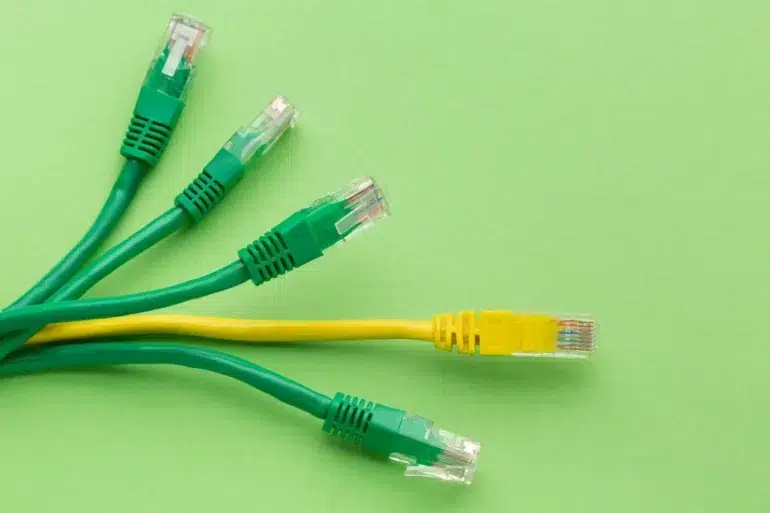
Choosing an Ethernet cable can seem straightforward until you start comparing categories, bandwidth ratings, conductor materials, jacket types, and installation environments. Two cables may look almost identical while being designed for very different applications. The right choice depends on what the network needs today, where the cable will be installed, and how much growth is expected in the future.
A cable is more than a physical connection between a computer and a switch. It becomes part of the network infrastructure and can remain in place for many years. Replacing it later may require moving furniture, opening access panels, or working around an active office.
Taking time to understand the differences before installation can therefore prevent unnecessary expense and performance limitations.
Start With Network Needs
The first question should not be which cable is the fastest. It should be what the network actually needs.
A home user connecting a few computers has different requirements from a business running servers, access points, security cameras, and large file transfers. The expected data rate, cable distance, connected devices, and future requirements all influence the decision.
For many everyday installations, Ethernet cables from established categories can provide reliable connections for computers, printers, phones, access points, and other network equipment. The goal is to select a cable that comfortably supports the intended application rather than paying for specifications that will never be used.
Understand Cable Categories
Ethernet cable categories indicate performance characteristics and help distinguish different generations of twisted pair cabling.
Cat5e remains suitable for many Gigabit Ethernet applications. Cat6 provides greater performance headroom and is widely used in modern residential and commercial installations with speeds up to 10 Gbps over 50 meters. Cat6a is designed for higher bandwidth applications and is particularly relevant when 10 Gigabit Ethernet is required over longer standard copper channel distances.
A Cat6a Ethernet cable can therefore be a sensible choice for networks where higher capacity and longer term performance are important. However, the cable is only one part of the system. Network switches, connectors, keystone jacks, and other components must also support the intended performance.
Look at the Conductor
The cable category is important, but conductor material deserves equal attention. Not every cable marketed for Ethernet networking uses the same conductor construction.
Solid bare copper conductors are commonly used in permanent structured cabling because copper provides reliable electrical performance. Copper clad aluminum cables use an aluminum core with a copper coating and can have different electrical characteristics.
For installations expected to support Power over Ethernet, conductor quality becomes especially relevant because the cable can carry both data and electrical power. Cat6 pure copper cables are often selected for structured network installations where dependable copper performance is required.
The cable should therefore be evaluated as a complete product rather than chosen solely from the category printed on its jacket.
Consider the Installation Environment
Where the cable will be installed can be just as important as its networking specifications. A cable running through an ordinary office area may face different requirements from one passing through a building’s air handling space.
Cable jackets have different ratings for different environments. Plenum rated cables, for example, are designed for use in spaces where specific fire and smoke characteristics are required.
Before purchasing, determine the pathway and applicable building requirements. Using the wrong jacket type can create compliance problems even if the cable itself offers adequate network performance.
Match the Cable to the Job
A practical cable selection process becomes easier when several factors are considered together.
- Speed: Determine the network speed the cable must support now and in the foreseeable future.
- Distance: Copper Ethernet has distance limitations, so longer runs need careful planning.
- Conductor: Consider solid bare copper or other conductor constructions based on the installation.
- Environment: Check whether the cable needs a plenum, riser, outdoor, direct burial, or another appropriate rating.
- Power: If devices will use Power over Ethernet, ensure the cabling and connected equipment are suitable for the intended application.
- Future growth: Consider whether replacing the cable later would be difficult or expensive.
This approach is more useful than simply choosing the cable with the highest number. A technically impressive cable can still be the wrong choice if its physical rating does not match the installation.
Think About Future Upgrades
Network infrastructure often stays in place longer than the devices connected to it. Computers and switches may be replaced several times while the cable inside a wall remains untouched.
That makes future planning valuable. A network that requires Gigabit Ethernet today may eventually need higher speeds because of larger files, cloud applications, virtualization, video workloads, or increased device density.
Installing a cable with reasonable performance headroom can make future upgrades easier. It does not guarantee that every future technology will work over the existing infrastructure, but it can reduce the likelihood of an early cabling replacement.
Don’t Ignore Installation Quality
Even an excellent cable can perform poorly when it is installed incorrectly. Excessive pulling force, sharp bends, poor termination, untwisting conductors too far, and improper cable management can affect signal performance.
Connectors and patch panels should also be compatible with the cable category. Permanent links should be installed carefully and tested after termination.
Testing provides useful evidence that the completed installation is functioning as expected. A cable tester can identify problems such as incorrect wire mapping, opens, shorts, or other wiring faults before they become difficult troubleshooting cases.
Good installation practice is therefore part of cable selection. The product and the way it is installed work together to determine the quality of the final network.
Conclusion
Choosing the right Ethernet cable is ultimately about matching the cable to the network rather than selecting the highest specification available. Speed, distance, conductor material, installation environment, Power over Ethernet requirements, and future growth all deserve consideration.
A thoughtful choice can provide a dependable foundation for years. It can also make future network upgrades less disruptive by giving the infrastructure enough capacity to accommodate changing demands.
The best cable is not necessarily the most expensive or the newest category. It is the one whose electrical performance, physical construction, and environmental rating fit the network it will serve.