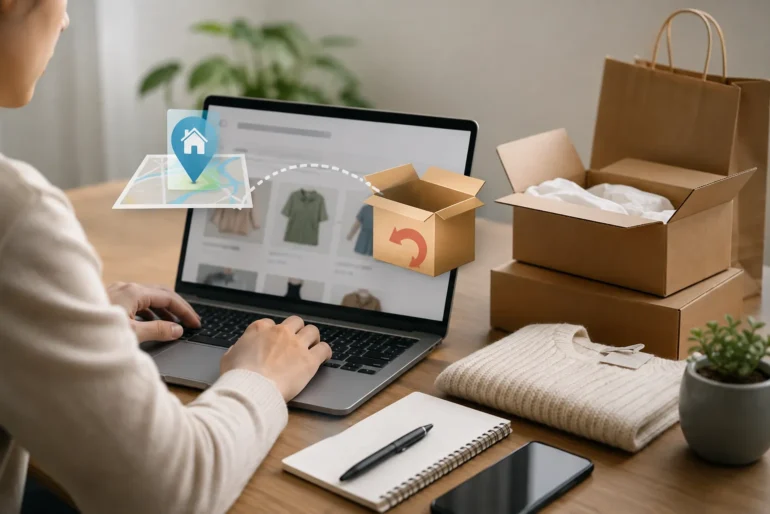
Trust is essential for every online business. Customers cannot normally visit the seller, meet the team or see where products are received and handled. Instead, they judge credibility through the company’s website, contact information, payment options, policies, reviews and returns process.
This presents a challenge for home-based businesses and international ecommerce sellers. Even a legitimate business with excellent products can lose potential customers if it has no professional contact address or offers an unclear returns procedure.
A professional business address and a dependable customer-returns service can help bridge the gap between a digital storefront and real-world operations.
Why a Business Address Influences Customer Confidence
Although ecommerce transactions happen online, customers still look for evidence that a business exists beyond its website.
Before purchasing from an unfamiliar seller, customers may ask:
- Is this a genuine business?
- Is there a professional contact address?
- Can I reach someone if there is a problem?
- Where can I return an unwanted product?
- Will I have to send the return overseas?
- What happens after my returned parcel arrives?
If this information is missing or difficult to understand, the customer may choose a competitor that appears more transparent and dependable.
An address does not replace good customer service, clear policies or secure payments. However, it can strengthen the complete collection of trust signals that customers use when deciding whether to purchase.
What Is a Virtual Address?
A virtual address provides a professional address that a business can use for approved commercial purposes without renting a conventional office.
Depending on the service and plan, the provider may receive eligible business mail and parcels, notify the customer when items arrive and forward them to another destination.
Virtual address services can be particularly valuable for:
- Home-based businesses
- Sole traders and startups
- Remote companies
- Ecommerce retailers
- International sellers
- Entrepreneurs who travel regularly
- Businesses that do not require a permanent office
Every service has different permitted uses. Some plans may be suitable only for mail, while others can support parcels, forwarding, storage or specific business-address requirements.
Customers should check the provider’s terms before using an address for Companies House, HMRC, banking, marketplace verification or any other official purpose.
How a Virtual Address Helps Build Trust
It Creates a Professional Business Presence
Using a residential address on a commercial website can make a business appear informal. It can also expose the owner’s private information.
A professional address provides a clearer separation between personal and business activities. It can make websites, invoices, email signatures and customer communications look more consistent.
It Protects the Owner’s Privacy
Many entrepreneurs operate successfully from home. However, publishing a residential address can create privacy and security concerns.
An approved virtual address allows the owner to maintain a professional contact point without unnecessarily displaying where they live.
It Provides a Consistent Point of Contact
Business owners may move home, travel or operate from several locations. Repeatedly changing the published address can confuse customers and result in important correspondence being sent to the wrong place.
A suitable virtual address can provide greater continuity while the business operates flexibly.
It Supports Remote and International Businesses
A business does not always need its own staffed office in every market it serves.
A virtual address can help a remote or international business establish an approved local contact point while eligible mail and parcels are managed according to the selected plan.
It Makes a Business Easier to Verify
Customers frequently examine contact pages, policies and address information before purchasing.
Consistent details across the website, invoices and communications can make the business easier to understand and verify. The address must always be represented accurately and used only for approved purposes.
What Is a Returns Address?
A returns address is a physical location where customers can send products back to an online seller.
For a domestic retailer with its own warehouse, receiving returns may be straightforward. For an international seller, however, asking every UK customer to send an item overseas can create higher costs, longer delays and a more complicated customer experience.
A professional returns service provides eligible customer returns with a local receiving point. When a parcel arrives, it can be recorded and matched with the seller’s account.
Depending on the provider and plan, additional services may include:
- Arrival notifications
- Outer-parcel photography
- Product inspection
- Additional photographs
- Temporary storage
- Repacking and relabelling
- Return consolidation
- UK forwarding
- International forwarding
- Redispatch to another customer
- Returned-stock resale
- Product disposal
These options allow sellers to make informed decisions about returned stock without immediately sending every parcel overseas.
How a Returns Address Builds Customer Trust
It Creates a Clearer Returns Process
Customers are more comfortable purchasing when they understand what will happen if a product is unsuitable, damaged or unwanted.
Providing a clearly explained local returns procedure demonstrates that the business has planned for after-sales support.
It Can Reduce Customer Uncertainty
International return shipping may appear expensive or difficult. A local receiving address gives the customer a defined destination and can make the process feel more manageable.
The seller must still explain who pays for postage, which products are eligible and whether prior authorisation is required.
It Demonstrates Commitment to the Market
An international seller offering a local returns solution shows that it has considered the needs of customers in that country.
The business is not simply offering products for sale; it has also planned how returns and customer enquiries will be handled.
It Provides Better Information About Returned Parcels
When a parcel is recorded on arrival, the seller has more reliable information for responding to the customer.
Outer-parcel photography can provide a record of the package as received. Optional inspection and product photography can help the seller decide whether to refund, replace, forward, redispatch or resell an item.
It Supports a More Professional Response
Unidentified or poorly managed returns can result in delays and disputes.
A structured returns process helps sellers match parcels with customers, record references and decide what should happen next. This can support faster and more informed customer communication.
Virtual Address and Returns Address: What Is the Difference?
The two services are related but serve different purposes.
| Service | Main purpose |
| Virtual address | Receiving eligible business mail and correspondence |
| Returns address | Receiving products returned by customers |
| Mail forwarding | Sending received correspondence to another destination |
| Returns management | Recording, storing, inspecting or forwarding returned products |
| Fulfilment | Storing inventory and dispatching customer orders |
A virtual address plan may not include customer returns. Similarly, a returns address plan may not permit Companies House, HMRC, banking or general business-mail use.
Businesses should select the correct service for each requirement instead of assuming that one address can be used for everything.
Why These Services Matter to International Sellers
International ecommerce creates valuable opportunities, but distance can make it harder to earn customer confidence.
Customers may hesitate if a seller:
- Provides only an overseas contact address
- Has no clear returns destination
- Requires every return to be shipped internationally
- Does not explain when a refund will be processed
- Has inconsistent contact information
- Cannot confirm when a returned parcel has arrived
A professional address can make the seller more accessible, while a local returns procedure addresses one of the main concerns associated with cross-border shopping.
Together, these services can help international sellers establish a clearer connection between their online store and physical business operations.
Address Services Must Be Supported by Clear Policies
A professional address cannot build trust by itself. It must be supported by transparent information and reliable customer service.
An ecommerce returns policy should explain:
- Which products can be returned
- How customers request a return
- Whether approval is required
- Which return reference must be included
- Who pays the return postage
- How long customers have to return an item
- When refunds or replacements are processed
- Which products are excluded
- How international returns are handled
- How customers can contact the seller
Businesses should avoid encouraging customers to send products without instructions. Unauthorised or unidentified parcels can be difficult to match with the correct account.
Other Ways Online Businesses Can Strengthen Trust
Publish Accurate Contact Information
Provide a working email address, contact form or telephone number. Make expected response times clear.
Use Secure and Recognisable Payment Options
A secure checkout and familiar payment methods can reduce anxiety about sharing financial information.
Write Policies in Plain English
Delivery, cancellation and returns policies should be clear enough for customers to understand without legal expertise.
Display Authentic Reviews
Genuine customer reviews can demonstrate how the business performs in real situations. Avoid testimonials or claims that cannot be verified.
Use Real Operational Photographs
Images of the warehouse, team, storage system or parcel-handling process can provide stronger credibility than generic stock photography.
Respond Promptly
A professional address will not compensate for unanswered emails. Fast and consistent communication remains one of the strongest indicators of a dependable business.
Keep Business Details Consistent
The business name, address and contact information should remain consistent across the website, policies, invoices and marketplace profiles.
How to Introduce Address Services Properly
1. Identify Your Requirements
Decide whether you need business mail, parcel receiving, customer returns, forwarding, storage, returned-stock resale or fulfilment.
2. Check Permitted Address Uses
Confirm exactly what the selected plan allows. Do not assume that every service supports official correspondence or business registration.
3. Complete Verification
Professional providers may require identification and business details before activating an address. This helps protect the service and its customers from misuse.
4. Wait for Approval
Do not publish or use the address until the provider confirms that your account has been approved.
5. Update Business Information
Add the approved details to the appropriate website pages, policies, invoices and customer communications.
6. Create a Returns Workflow
Decide what should happen when a returned product arrives. Options may include inspection, storage, consolidation, forwarding, redispatch, resale or disposal.
7. Monitor Performance
Record return reasons, processing times and customer questions. This information can help improve product descriptions, packaging and returns instructions.
Common Mistakes to Avoid
Selecting the Wrong Service
A virtual office, mail address and warehouse returns service may offer very different facilities. Choose a plan designed for the intended purpose.
Publishing an Address Before Approval
Mail and parcels sent before activation may be delayed or rejected.
Providing Incomplete Returns Instructions
Customers should know whether authorisation is required and which reference must be included with the parcel.
Ignoring Storage Limits
Free or temporary storage is usually provided for a limited period. Sellers should give instructions before additional storage charges accumulate.
Assuming Marketplace Approval Is Guaranteed
Amazon, eBay, TikTok Shop and other platforms establish their own requirements. A service provider cannot guarantee that an address will satisfy every platform or institution.
Hiding Additional Charges
Postage, packaging, inspection, forwarding and extended storage may cost extra. Transparent pricing supports customer confidence and prevents disputes.
Frequently Asked Questions
Can a home-based business use a professional address?
Yes, subject to the provider’s verification procedures and permitted uses. This can help separate the owner’s private residential information from public business communications.
Can international sellers obtain a UK returns location?
Many services accept eligible international ecommerce businesses after identity and business verification.
Can returned products be forwarded internationally?
Eligible products may normally be forwarded overseas, subject to courier availability, customs rules, product restrictions and additional shipping charges.
Can multiple returns be consolidated?
A consolidation service can combine several eligible returned products into a larger shipment before forwarding.
Can a professional address guarantee bank or marketplace approval?
No. Banks, marketplaces and government bodies apply their own rules and may change their requirements.
Building Long-Term Customer Trust
Customers decide whether to trust an online seller through a collection of signals. Professional contact information, clear policies, secure payments, genuine reviews and responsive customer support all contribute to that decision.
A virtual address can help a remote or home-based business establish a more professional and consistent presence. A dedicated returns address can demonstrate that the seller has prepared for customer problems as carefully as it has prepared for sales.
For international ecommerce sellers, using both services appropriately can create a stronger connection between a digital storefront and genuine physical operations. That connection can help customers feel more confident before placing an order and better supported after making a purchase.