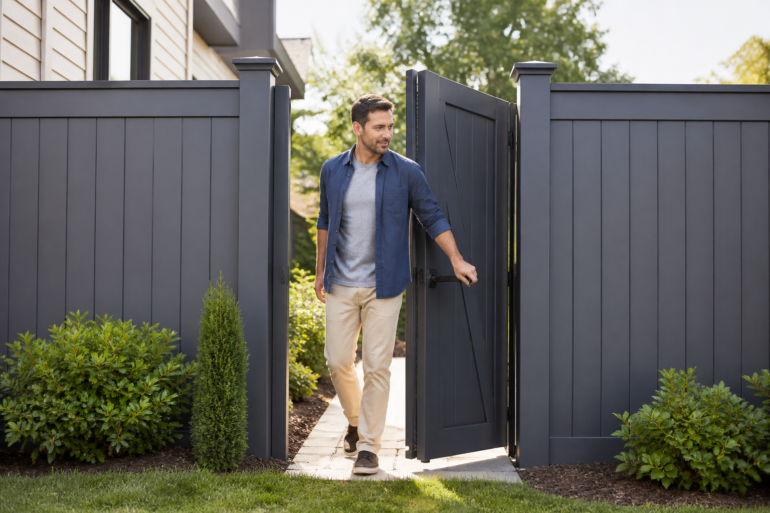
A Gate in Panel is one of those small fencing details that can make a big difference in how your outdoor space works every day. Instead of treating a fence as one long fixed barrier, this setup adds a usable entry point directly into a fence panel area. It can help with garden access, backyard movement, pet control, service entry, privacy, and even overall property security.
Think about the last time you had to walk around the entire yard just to reach a shed, side path, trash area, garden bed, or utility meter. That is where a Gate in Panel becomes useful. It gives you controlled access without breaking the visual flow of the fence.
For homeowners, landlords, landscapers, and property managers, this is not just about adding a gate. It is about making a fence stronger, smarter, and easier to live with.
What Is a Gate in Panel?
A Gate in Panel is a gate built into, attached to, or designed as part of a fence panel. Instead of installing a large standalone gate between two major posts, the gate is planned within a panel section or placed where a regular fence panel would normally sit.
It may look like a normal fence section from a distance, but it opens when needed. That makes it useful for areas where you want access without making the entrance too obvious or too wide.
In simple words, it combines two things:
A fence panel for privacy and boundary control.
A gate for movement and access.
This type of setup can be used in wood fencing, vinyl fencing, metal fencing, composite fencing, garden fencing, and decorative fencing. The final design depends on the material, gate width, post strength, hinges, latch, and how often the gate will be used.
A fence is generally used to enclose or mark a boundary, while a gate gives controlled entry through that boundary. That basic relationship is what makes panel gate design so practical for everyday properties.
Why Homeowners Choose a Gate in Panel
Many people do not think about access until after the fence is already installed. Then they realize the mower cannot reach a corner easily, the trash bins are awkward to move, or the garden path feels cut off.
A Gate in Panel solves that problem before it becomes annoying.
It is often chosen because it keeps the fence useful without making the yard feel closed off. You still get privacy and structure, but you also get a practical opening exactly where you need it.
Common reasons homeowners choose this option include:
Better backyard access.
Easier movement between side yards.
A cleaner entry point for gardeners or contractors.
More convenient pet control.
A hidden or subtle gate design.
Improved access to outdoor storage.
Better traffic flow around the property.
For small yards, even one well-placed panel gate can change how the space feels. It can turn a blocked-off corner into a usable pathway.
Gate in Panel Ideas for Stronger Fencing
A Gate in Panel should not weaken the fence. That is the biggest mistake people make when they add a gate too quickly. A fence panel is usually made to stay fixed, while a gate moves, swings, carries hardware, and takes repeated pressure.
That means strength has to be planned from the beginning.
Use Strong Posts on Both Sides
The gate is only as reliable as the posts holding it. If the posts lean, twist, or move, the gate will sag. This is especially true with wood gates, wide gates, and heavy privacy panels.
For a stronger result, the gate section should use properly set posts on both sides. In many installations, posts are anchored in concrete and checked for level before the gate is hung. Professional fence installation guidance commonly emphasizes level posts, correct spacing, secure hinges, and latch alignment as basic steps for a working gate.
A weak post may not fail on day one. But after months of wind, rain, movement, and daily use, the gate can start dragging on the ground.
Match the Gate Weight to the Hardware
Not every hinge is made for every gate. A lightweight garden gate and a tall privacy gate need different hardware.
If the gate is heavy, use heavy-duty hinges. If the gate is exposed to wind, choose hardware that can handle outdoor pressure. If children or pets use the yard, the latch should be secure but still easy for adults to operate.
Gate hardware usually includes:
Hinges.
Latch.
Handle.
Lock or padlock point.
Drop rod for wider gates.
Fasteners.
The latch is more than a small detail. A gate latch is designed to secure a gate and may also work with locks or padlocks for better security.
Reinforce the Gate Frame
A panel gate should have a strong internal frame. Without support, the gate can sag diagonally over time.
For wooden gates, diagonal bracing is often used to stop the frame from dropping. For metal gates, welded or bolted frames add stiffness. For vinyl gates, internal reinforcement may be needed because vinyl alone can flex.
A gate that looks good but feels loose will not stay aligned for long. The frame should feel solid before the panel boards or decorative face are added.
Keep the Swing Area Clear
Before installing a Gate in Panel, stand where the gate will open. Look at the ground, nearby walls, plants, steps, slope, and furniture.
A gate needs room to swing freely. If the ground rises too much, the bottom edge may scrape. If plants grow into the opening, the gate may become hard to use. If the gate opens toward a narrow path, it may block movement.
This small planning step prevents frustration later.
Best Places to Install a Gate in Panel
A gate can be added almost anywhere in a fence line, but some spots make much more sense than others.
Side Yard Access
Side yards are one of the most common locations. A Gate in Panel can connect the front and back areas without forcing people to walk through the house.
This is useful for moving bins, tools, bicycles, garden supplies, or outdoor equipment.
Garden Entry
If you have a vegetable garden, flower bed, greenhouse, or small orchard area, a panel gate can make the space feel intentional. It also helps keep pets or children away from delicate plants.
A low garden gate can be charming, while a taller privacy gate can make the area feel more protected.
Pool or Patio Boundary
For pool and patio areas, access should be carefully planned. Local safety codes may apply, especially around pools. A self-closing or self-latching gate may be required in some places, so homeowners should check local rules before installation.
Even when code is not involved, a secure latch and clear opening path matter. Outdoor living spaces are used often, so the gate must be easy to operate.
Storage and Utility Areas
Many homes have outdoor storage spaces that are not very attractive. Trash bins, HVAC units, propane tanks, garden tools, and utility meters can be screened with fencing.
A Gate in Panel gives access when needed while keeping the area visually clean the rest of the time.
Pet Areas
Pet owners often use panel gates to separate one part of the yard from another. For example, a dog run can be fenced off while still allowing easy entry for cleaning, feeding, or playtime.
For pets, pay attention to the gap under the gate, latch height, and whether the animal can push the gate open.
Materials That Work Well for a Gate in Panel
The right material depends on your budget, climate, home style, and how much maintenance you want.
Wood
Wood is classic, warm, and easy to customize. It works well for privacy fences, garden gates, and rustic outdoor spaces.
Pros:
Natural look.
Easy to paint or stain.
Can match existing fence panels.
Good for custom sizes.
Cons:
Needs maintenance.
Can warp or rot if untreated.
May sag if not braced properly.
If you want a gate that blends into a wooden fence, wood is usually the easiest material to match.
Vinyl
Vinyl is popular because it is clean-looking and low maintenance. It works well for suburban homes, privacy fencing, and decorative panel systems.
Pros:
Does not need painting.
Resists rot.
Clean modern appearance.
Easy to wash.
Cons:
Can flex without reinforcement.
Limited color options.
May crack in harsh impact.
Vinyl gates depend heavily on proper hardware and internal support. The hinges, latches, handles, and related components play an important role in how smoothly the gate opens and how long it performs.
Metal
Metal gates are strong and long-lasting. They are often used for security fencing, modern homes, commercial properties, and decorative entry points.
Pros:
Very durable.
Good for security.
Works with locks and access systems.
Can look modern or traditional.
Cons:
May cost more.
Can rust if not protected.
Heavier gates need stronger posts.
Metal is a smart choice where strength matters more than full privacy.
Composite
Composite fencing gives a wood-like look with less maintenance. It can be heavier than vinyl, so the gate structure must be planned carefully.
Pros:
Attractive finish.
Lower maintenance than wood.
Good resistance to weather.
Cons:
Can be expensive.
Needs proper support.
May require specific hardware.
Composite is a good option for homeowners who want a polished look without frequent staining or painting.
Design Tips for a Better Looking Gate in Panel
A gate should not look like an afterthought. When done well, it feels like part of the fence.
Match the Panel Lines
If your fence has horizontal boards, keep the gate boards horizontal too. If the fence uses vertical pickets, match the spacing and height.
This creates a seamless look.
A mismatched gate can make even an expensive fence look poorly planned.
Hide the Hardware When Possible
Some hardware must be visible, but you can still choose finishes that blend with the fence. Black hardware often works well with wood, metal, and modern vinyl fencing. Galvanized hardware may suit utility areas.
For a cleaner look, place hinges on the inside when the layout allows it.
Choose the Right Width
A narrow gate is fine for walking access. A wider gate is better for lawn mowers, wheelbarrows, trash bins, or garden carts.
Common walking gates are often around 3 to 4 feet wide, while equipment access may need more space. The right size depends on what will pass through it.
Do not make the gate wider than necessary. Wider gates are heavier and more likely to sag without extra support.
Keep the Top Line Consistent
If the fence has a straight top, the gate should follow that line. If the fence has a curved or decorative top, repeat that shape on the gate.
This makes the opening look planned instead of patched in.
Security Benefits of a Gate in Panel
A fence helps define a boundary, but a gate controls movement. That is why gate placement matters for security.
A Gate in Panel can improve security when it is installed with strong posts, reliable hardware, and a latch that fits the purpose. Security professionals often treat fences and integrated gates as part of a wider perimeter protection approach, especially where controlled entry is important.
For homes, the goal is usually not extreme security. It is practical control. You want to slow unwanted entry, keep children or pets inside, and make access easier for the right people.
Good security features include:
A lockable latch.
Hinges that cannot be easily lifted off.
A gate that closes fully.
No large gaps near the latch.
Strong posts and frame.
Clear visibility where needed.
For side yards or service areas, a locked gate can also prevent casual access to the back of the home.
Access Control Options for Modern Homes
Not every panel gate needs technology. Many homes only need a simple latch and lock. But for larger properties, rental units, shared spaces, or gated driveways, access control can be useful.
Access control simply means deciding who can enter a space and how. In basic form, that may be a locked gate. In more advanced setups, it may include keypads, remote controls, intercoms, smart locks, or automated gate systems.
For a residential Gate in Panel, the most practical choices are usually:
Key lock.
Padlock-ready latch.
Combination latch.
Self-closing hinge.
Keypad lock.
Smart gate lock.
Magnetic latch for light garden gates.
Choose access control based on real use. A simple backyard garden gate does not need the same setup as a rental property side entrance.
Common Mistakes to Avoid
A gate is a moving part, so small mistakes show up quickly. Here are the problems that cause the most frustration.
Installing the Gate on Weak Fence Posts
A normal fence post may not be strong enough for a moving gate. If it was not installed with gate weight in mind, it may lean.
Always treat the gate section as a load-bearing area.
Using Indoor Hardware Outside
Outdoor gates need weather-resistant hardware. Indoor screws, hinges, or latches may rust or fail quickly.
Use hardware made for exterior use.
Ignoring Ground Slope
A sloped yard can cause the gate to drag or leave a large gap underneath. Plan the swing direction and bottom clearance before cutting or hanging the gate.
Making the Gate Too Heavy
A heavy gate may look impressive, but it puts more stress on posts and hinges. If privacy is needed, use a strong frame and balanced design instead of simply adding more weight.
Forgetting Daily Convenience
A gate that is hard to open will annoy you every day. Latch height, handle comfort, swing direction, and walking path all matter.
Real-World Example: A Backyard That Finally Worked
Imagine a homeowner with a fenced backyard and a detached garage behind the house. The fence looked good, but every time they needed to move garden tools from the garage to the side yard, they had to walk around the entire property.
The solution was a Gate in Panel near the garage path.
The installer matched the existing wood fence, added stronger posts, used black exterior hinges, and installed a lockable latch. From the outside, the gate looked like another fence section. From the inside, it created a direct path to the garage.
The result was simple but powerful. Less walking, better access, and no change to the overall privacy of the yard.
That is the real value of this kind of fence upgrade. It does not have to be dramatic to be useful.
Maintenance Tips for Long-Lasting Performance
A gate needs more care than a fixed panel because it moves. The good news is that maintenance is usually simple.
Check the hinges every few months. Tighten loose screws before they cause sagging.
Look at the latch alignment. If the latch no longer catches smoothly, the gate may be shifting.
Keep soil, mulch, and plants away from the bottom edge. Moisture near wood can speed up decay.
Clean vinyl or metal gates with mild soap and water. Avoid harsh cleaners unless the manufacturer recommends them.
For wood gates, inspect paint, stain, or sealant regularly. Exposed wood absorbs moisture and may warp over time.
A well-maintained Gate in Panel can stay smooth, secure, and attractive for years.
Cost Factors to Consider
The cost of a panel gate depends on several things. The material matters, but it is not the only factor.
Main cost factors include:
Fence material.
Gate size.
Post strength.
Hardware quality.
Lock type.
Labor cost.
Ground conditions.
Custom design details.
A small wooden garden gate will usually cost less than a reinforced vinyl or metal privacy gate. A gate with a simple latch will also cost less than one with keypad access or automation.
Do not choose the cheapest hardware just to save a small amount upfront. Hinges and latches take daily stress. Better hardware can reduce repairs later.
DIY or Professional Installation?
Some homeowners can install a simple garden gate themselves. If you are comfortable measuring, leveling posts, attaching hinges, and adjusting a latch, a basic project may be manageable.
Professional installation is better when:
The gate is heavy.
The fence is tall.
The ground is sloped.
The property needs strong security.
The gate must match an existing fence perfectly.
The opening affects a pool, pet area, or rental property.
The biggest challenge is alignment. A gate can be off by a small amount and still become difficult to use. Professionals usually have the tools and experience to set posts correctly, hang the gate evenly, and adjust the hardware.
How to Choose the Right Gate in Panel Design
Start with one question: what problem should the gate solve?
If you need access for people only, keep it simple and narrow. If you need to move equipment, make it wider and stronger. If privacy matters, match the fence height. If security matters, focus on posts, locks, and hinge protection.
Here is an easy way to think about it:
For gardens, choose charm and easy access.
For side yards, choose privacy and convenience.
For pets, choose secure latching and small gaps.
For storage areas, choose screening and service access.
For security, choose strength and lock quality.
The best Gate in Panel is not always the most expensive one. It is the one that fits the way the property is actually used.
Frequently Asked Questions About Gate in Panel
Can a gate be added to an existing fence panel?
Yes, in many cases a gate can be added to an existing fence line, but the original panel may need to be removed, cut, reframed, or replaced. The posts may also need reinforcement if they were not designed to hold a gate.
Does a panel gate weaken the fence?
It can weaken the fence if installed poorly. With strong posts, proper bracing, and quality hardware, a panel gate can be sturdy and reliable.
What is the best material for a panel gate?
Wood is best for custom looks, vinyl is good for low maintenance, metal is strong for security, and composite works well for a polished modern finish. The best choice depends on budget, style, and use.
Should a gate open inward or outward?
For most residential yards, inward opening is common because it keeps the gate from swinging into sidewalks, driveways, or public paths. However, the best direction depends on space, slope, and local rules.
How do I stop a gate from sagging?
Use strong posts, a reinforced frame, proper hinges, and diagonal bracing when needed. Also check hardware regularly and fix loose screws early.
Conclusion
A Gate in Panel is a smart upgrade for homeowners who want stronger fencing and better access without ruining the look of their outdoor space. It can make a backyard easier to use, improve security, support pets and gardens, and create a cleaner path through the property.
The key is planning. Choose the right location, use strong posts, match the fence style, and invest in reliable hardware. A gate is not just another panel. It moves, carries weight, and gets used again and again.
When designed properly, a Gate in Panel feels natural, looks clean, and works quietly in the background. It gives your fence more purpose while keeping your property organized, private, and easy to access. For anyone improving a yard, garden, or outdoor boundary, this simple feature can be one of the most practical choices in modern fencing.
A well-planned fence is more than a boundary. It shapes how people move through outdoor space, how private the home feels, and how secure the property becomes. Even the basic idea of a perimeter fence shows why controlled entry matters in both residential and commercial settings.