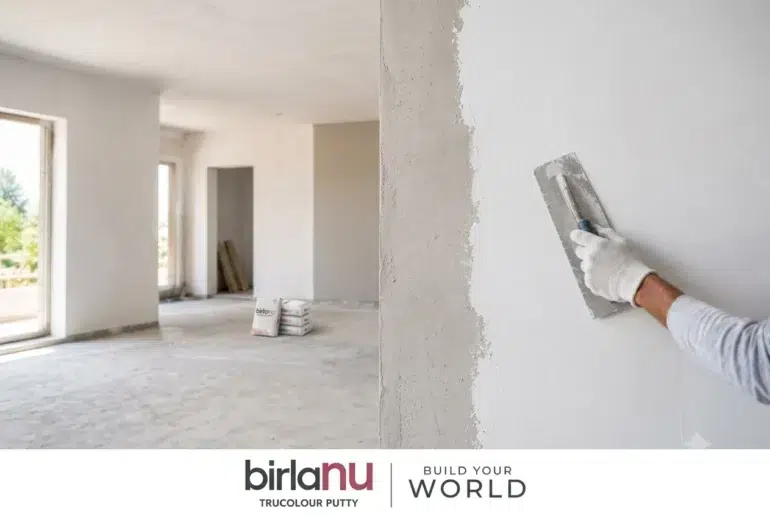
A freshly painted wall can make a home feel complete. However, the appearance and durability of the paint depend greatly on the surface underneath it.
When walls are uneven, porous or poorly prepared, homeowners may begin to notice problems such as:
- Peeling or flaking paint
- Damp patches
- Visible pores and rough areas
- Hairline surface cracks
- Uneven paint shades
- Frequent repainting requirements
Wall putty helps create a smooth and stable base before primer and paint are applied. The right putty can improve paint adhesion, reduce the effect of minor surface imperfections and provide additional protection against moisture.
However, wall putty must be selected according to the wall condition and applied correctly. It should also not be treated as a replacement for repairing active water leakage or structural cracks.
What is wall putty?
Wall putty is a surface preparation material applied over plastered walls before painting. It fills minor pores and imperfections to create a smoother, more even surface.
A properly prepared putty layer can help:
- Level minor surface irregularities
- Fill small pores and shallow cracks
- Improve the bond between the wall and paint
- Reduce uneven paint absorption
- Create a smoother final finish
- Improve the brightness and consistency of paint shades
- Protect the paint layer from early flaking
BirlaNu’s putty range is designed to offer benefits including smooth finishes, strong bonding, water resistance and enhanced colour performance. Its portfolio includes solutions for standard walls, moisture-prone areas, uneven surfaces and exterior textures.
How wall putty helps protect walls from moisture
Plastered walls contain pores that can absorb moisture. When moisture reaches the paint layer, it may lead to bubbling, flaking, discolouration or fungal patches.
A water-resistant wall putty helps create a less absorbent surface beneath the paint. This can reduce the effect of humidity and occasional moisture exposure on the wall finish.
Wall putty can be especially useful in:
- Kitchens
- Bathrooms
- Utility areas
- External walls
- Homes in humid regions
- Walls exposed to seasonal moisture
- Properties located in coastal areas
For walls that face higher moisture exposure, homeowners should consider a product specifically designed for such conditions.
BirlaNu TruColour Waterproof Putty is a white cement-based putty fortified with hybrid silane-silicone chemistry. It is designed to create a water-repellent surface that resists damp patches, peeling and fungal growth. It is recommended for wet and humid areas such as bathrooms, kitchens and coastal zones.
How wall putty helps protect walls from moisture
Plastered walls contain pores that can absorb moisture. When moisture reaches the paint layer, it may lead to bubbling, flaking, discolouration or fungal patches.
A water-resistant wall putty helps create a less absorbent surface beneath the paint. This can reduce the effect of humidity and occasional moisture exposure on the wall finish.
Wall putty can be especially useful in:
- Kitchens
- Bathrooms
- Utility areas
- External walls
- Homes in humid regions
- Walls exposed to seasonal moisture
- Properties located in coastal areas
For walls that face higher moisture exposure, homeowners should consider a product specifically designed for such conditions.
BirlaNu TruColour Waterproof Putty is a white cement-based putty fortified with hybrid silane-silicone chemistry. It is designed to create a water-repellent surface that resists damp patches, peeling and fungal growth. It is recommended for wet and humid areas such as bathrooms, kitchens and coastal zones.
Important: putty cannot stop active leakage
Water-resistant or waterproof wall putty does not repair the original source of water entering a wall.
Before applying putty, check for:
- Leaking plumbing lines
- Cracks on external walls
- Terrace or roof leakage
- Failed bathroom waterproofing
- Water entering around windows
- Dampness rising from the floor
- Leakage from adjoining properties
The leakage or waterproofing problem must be repaired first. Applying putty and paint over an actively damp wall may only hide the problem temporarily.
How wall putty helps manage minor cracks
Newly plastered walls are rarely perfectly smooth. They may have small pores, shallow depressions or fine surface cracks.
Wall putty fills these minor imperfections and creates a more uniform base. This can prevent small surface defects from remaining visible after painting.
BirlaNu TruColour Putty is formulated to provide a smooth, crack-resistant finish while creating a durable bond between the wall and the paint layer. It is suitable for interior and exterior plastered wall surfaces.
What kind of cracks can putty cover?
Wall putty may help with:
- Very fine surface cracks
- Minor pores
- Small plaster imperfections
- Shallow scratches
- Slight surface unevenness
Wall putty should not be used as the only solution for:
- Deep cracks
- Repeated cracks
- Diagonal cracks near doors or windows
- Cracks extending through masonry
- Structural movement
- Wide gaps between building materials
These cracks should be inspected and repaired using the appropriate crack-filling or structural repair method before putty is applied.
How wall putty reduces paint peeling
Paint peeling often begins when the paint cannot bond properly with the surface. Dust, moisture, loose plaster and high surface absorption can all affect adhesion.
Wall putty creates a smoother and more stable surface for primer and paint. It helps in three main ways:
1. It improves bonding
A quality putty adheres to the plastered surface and creates a dependable base for later coats.
2. It controls surface absorption
An untreated wall may absorb paint unevenly. A smooth putty layer helps the paint spread more consistently.
3. It covers minor imperfections
Small holes and irregularities can create weak points in the paint film. Putty helps level these areas before painting.
BirlaNu TruColour Putty offers water resistance, easy application, superior whiteness and strong bonding. Its smooth, paint-ready finish is also designed to reduce topcoat paint consumption and help colours remain vibrant for longer.
Why the right putty matters for paint colour
The colour visible on a wall is influenced by the base underneath it. A grey, patchy or uneven surface may make the final shade appear dull or inconsistent.
A smooth white putty base can help:
- Improve paint brightness
- Make shades appear more uniform
- Reduce dull patches
- Support even paint coverage
- Bring the selected colour closer to its intended appearance
BirlaNu TruColour Putty uses TruColour Technology to create a pure white base that helps paint shades appear vibrant and true to shade. The range is designed to improve colour reflection while providing a smooth wall finish.
This is particularly useful when homeowners are using light colours, pastel shades or premium decorative paints where differences in the base may be more visible.
Wall putty application checklist for homeowners
Homeowners may not apply putty themselves, but they can check whether the work is being carried out correctly.
Before application, confirm that:
- The plaster has dried adequately
- Active leakage has been repaired
- Loose paint, dust and weak plaster have been removed
- The wall is clean and properly prepared
- The correct putty has been selected
- Mixing instructions are being followed
- Excess water is not being added
- Each coat is given sufficient drying time
- Sanding is carried out evenly
- Primer and paint are applied only after the putty has dried
BirlaNu TruColour Putty should be applied over a properly prepared plastered surface rather than directly over bricks or an unsuitable unfinished base.
Common wall putty mistakes to avoid
Even a good product may fail when applied incorrectly. Watch out for these common mistakes:
- Applying putty over a wet wall
- Ignoring the source of dampness
- Using putty to fill deep cracks
- Applying very thick coats in one attempt
- Adding too much water to the mix
- Painting before the putty has dried
- Applying putty over loose or powdery plaster
- Using an interior-only product on an exposed exterior wall
- Skipping surface cleaning
- Selecting the same putty for every wall condition
Proper surface preparation is as important as product selection.
BirlaNu provides a range of wall putty solutions for standard walls, moisture-prone areas, uneven surfaces and textured exteriors. By selecting the appropriate product and correcting leakage or major cracks before application, homeowners can create walls that look better and require fewer repairs over time.
FAQs
1. Does wall putty prevent dampness?
Water-resistant wall putty can help reduce moisture absorption and protect the paint layer from humidity or occasional exposure. However, it cannot repair active leakage. The source of the water must be identified and corrected first.
2. Which wall putty is suitable for bathrooms and kitchens?
A moisture-resistant product such as BirlaNu TruColour Waterproof Putty is suitable for wet and humid zones including bathrooms and kitchens. It is designed to reduce dampness and paint failure in moisture-prone areas.
3. Can wall putty repair cracks?
Wall putty can fill fine surface cracks, pores and minor imperfections. Deep, recurring or structural cracks require proper inspection and repair before putty is applied.
4. How does wall putty prevent paint from peeling?
Wall putty creates a smooth, stable base that improves paint adhesion and controls uneven surface absorption. BirlaNu TruColour Putty also offers water resistance and strong bonding to support a longer-lasting finish.
5. Can the same wall putty be used for every wall?
Not always. Standard plastered walls, moisture-prone areas, uneven surfaces and exterior textured walls may require different products. BirlaNu offers specialised options including TruColour Putty, TruColour Waterproof Putty, Coarse Putty, CoverMax Putty and TruColour Texture Putty.