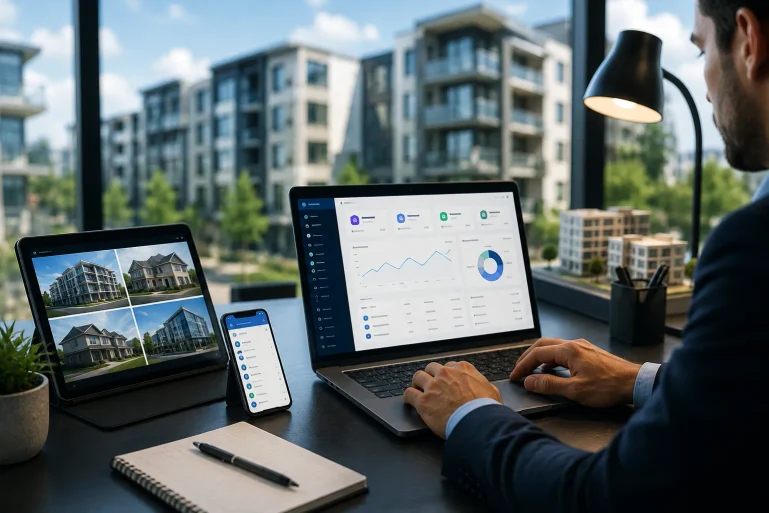
Picture this: a property manager sits down, opens 14 browser tabs, logs into three separate PMS platforms, and prays the booking sync doesn’t crash before their second cup of coffee. That’s not managing a portfolio; that’s surviving a digital obstacle course.
Here’s the plot twist: managing 5 or 50 properties isn’t just “single-property management, but bigger.” It’s a completely different game. When you scale up, the goal isn’t to force every location into the exact same rigid box. Modern multi-property software needs to pull off a clever trick, unifying operations across the entire portfolio while giving each local team room to breathe.
Getting that balance right comes down to how the underlying tech is built. That’s why growing hospitality brands team up with experienced software developers in San Francisco to create solid, flexible architectures that eliminate operational chaos instead of creating more of it.
Centralized Operations Without Losing Property-Level Control
Here’s the ultimate portfolio management paradox: HQ needs absolute visibility over the entire operation, but no two properties actually run the exact same way. A boutique beachfront resort in Miami operates on a totally different rhythm than a high-volume downtown micro-hotel.
Trying to force both into one rigid operational playbook is a fast track to broken workflows and frustrated staff. The real secret lies in building a system that acts as a single control room without micromanaging the local floor.
Unified Data
If your software treats every property like an isolated island, you’re constantly fighting duplicate guest profiles, missing maintenance logs, and mismatched revenue numbers.
Modern platforms solve this by creating one clean source of truth. Every booking, guest preference, staff shift, and invoice syncs into a central engine. But from a engineering perspective, it’s about handling high-concurrency updates smoothly so data stays pristine, no matter how many systems are pumping information into it simultaneously.
Property-Level Workflows
Centralized control shouldn’t mean stripping local teams of their autonomy. A property with specialized valet services, unique room layouts, or multi-tiered approval processes needs software that accommodates those quirks.
The platform must support property-specific pricing rules, localized staffing schedules, and custom service workflows while still funneling the core metrics back to the main dashboard.
Role-Based Access
Permissions are a fundamental design pillar. Corporate leadership needs high-level portfolio metrics, finance needs granular revenue feeds, and on-site managers only need eyes on their specific building.
Building granular, role-based access control directly into the architecture guarantees everyone gets the exact tools and data they need to execute, without accidentally tweaking settings for a property three states away.
Integrations That Keep the Property Ecosystem Connected
No property management platform lives on a secluded island. In a real-world tech stack, your software has to play nice with dozens of third-party tools; from smart door locks to point-of-sale terminals. If these systems can’t talk to each other without dropping packets or lagging, your operations hit a wall fast. The underlying integration architecture is what separates a smooth, automated engine from a constant technical headache.
PMS and Booking Systems
When a guest books a suite on an OTA, that reservation, room availability, and guest profile need to reflect everywhere immediately. Double-bookings are the ultimate operational nightmare.
Achieving true real-time synchronization requires rock-solid API design, robust webhooks, and failure-handling mechanisms that process high-volume reservation data without missing a beat or stalling the system.
Payments and Accounting
Financial workflows get messy fast across multiple locations. Your system needs to route payment processing, tax logic, and invoicing through property-specific merchant accounts while smoothly rolling those numbers up into centralized financial reports.
Clean, automated data pipelines make sure localized revenue flows directly into corporate accounting without manual reconciliation problems.
Operational Systems
From smart keyless entry and guest messaging tools to housekeeping management and maintenance ticketing, operational efficiency relies on instant connectivity. When a guest checks out via SMS, the smart lock should reset, and the housekeeping app should immediately flag the room as ready for cleaning.
When scaling custom setups, engineering teams, including seasoned custom Software developers in Miami, focus heavily on these flexible integration patterns so the platform can adapt without requiring a complete rewrite down the road.
Automation for Repetitive Property Operations
Connecting your systems is step one; making them actually do the work for you is where the real value kicks in. Nobody gets into hospitality to manually assign room cleaning tasks or copy-paste guest details across spreadsheets. A robust, event-driven workflow engine eliminates those administrative bottlenecks so property teams can focus on actual hospitality.
Key operational workflows to automate include:
- Automatic Housekeeping Assignments: Instantly flag rooms as “dirty” upon guest check-out and assign cleaning tasks to staff based on real-time location, floor priority, or workload balance.
- Maintenance Ticket Creation: Convert guest complaints or equipment alerts (like a smart lock reporting a low battery) into auto-routed work orders sent directly to the right technician on duty.
- Smart Check-in & Guest Communications: Trigger personalized welcome texts, keyless access codes, and room updates as soon as a reservation status flips to “ready.”
- Proactive Escalations & Staff Alerts: Set automated timers for critical tasks; if a priority maintenance ticket isn’t acknowledged within 15 minutes, the system automatically escalates it to the property manager.
- Portfolio-Wide Scheduled Reporting: Auto-generate and deliver daily operational logs, audit trails, and revenue summaries directly to local managers and corporate leadership without manual compilation.
Real-Time Visibility for Portfolio-Level Decisions
When you’re managing multiple properties, lagging data is your biggest enemy. If corporate leadership is relying on compiled spreadsheets or yesterday’s end-of-day reports to figure out what’s happening on the ground, they’re always reacting to problems instead of preventing them.
Live Operational Data
Stale numbers create massive blind spots. When occupancy spikes, maintenance tickets pile up, or check-in queues stall at a specific location, management needs to know right away. Streaming live operational data into a central view allows corporate teams to spot bottlenecks as they happen and shift resources before guest reviews take a hit.
Cross-Property Reporting
Comparing performance across different locations gets messy fast if every building logs data differently. Standardized data pipelines clear up that noise, letting leadership zoom out from micro-managing individual sites to analyzing overall portfolio health. You can easily benchmark properties against one another, spot recurring operational hiccups, and see which management strategies actually work.
Actionable Insights
A dashboard packed with static charts doesn’t help much if it doesn’t point you toward a solution. Modern software should actively work for you, flagging unusual patterns, highlighting equipment maintenance needs before things break, and offering smarter staffing or pricing recommendations.
This tailored intelligence layer is precisely why growing operators collaborate with custom Software developers in Miami, to build custom data setups designed around their specific operational model rather than settling for generic, out-of-the-box reporting metrics.
Preparing The Platform For Growing Operations
Adding ten new properties to your portfolio shouldn’t mean blowing up your entire tech stack and starting from scratch. As operations expand, software architecture either proves its worth or buckles under the weight.
To support real growth, the platform’s core foundation has to handle four non-negotiable requirements:
- Scalability: The underlying architecture must handle influxes of new locations, concurrent staff users, and third-party integrations, expanding capacity without requiring a full code overhaul.
- Security: Guest profiles, payment details, and corporate financial data require enterprise-grade encryption, secure token authentication, and strict compliance controls at every level.
- Reliability: Hotel operations run 24/7. Core systems need high availability, automated database backups, failover mechanisms, and continuous monitoring to guarantee near-zero downtime.
- Performance: Dashboard load times and check-in workflows need to stay blazingly fast, even during peak booking windows when thousands of background events fire simultaneously.
When off-the-shelf PMS platforms force companies into rigid operational boxes, many teams partner with custom Software developers in Miami to build flexible, custom architectures tailored precisely to their scaling requirements.
Building for the Portfolio, Not Just the Property
Modern multi-property software has to solve two competing demands: absolute centralized control and total local flexibility. Bringing data, operational workflows, integrations, automation, and reporting together under one roof doesn’t happen by accident, it takes a deliberate, well-planned structure.
The technical choices made early on ultimately dictate whether the platform can gracefully support new locations, emerging tech, and expanding teams down the road.
That’s why operators look for tech partners, such as experienced software developers in San Francisco, who know how to build around a business’s actual operating model instead of just throwing together a checklist of off-the-shelf features.
Conclusion
Managing a growing portfolio is hard enough without fighting your own tech stack. Software shouldn’t force your teams to adapt to rigid features; it should bend to fit the operational reality of your business.
Whether you’re evaluating off-the-shelf platforms or building a custom setup, the goal remains the same: create a connected, reliable foundation that handles portfolio-scale complexity while letting local properties excel at what they do best.