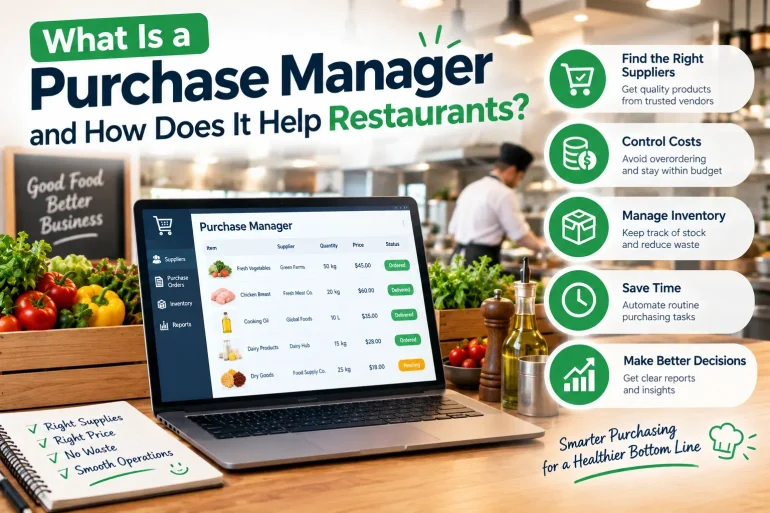
Managing a restaurant involves much more than preparing food and serving customers. Restaurant owners and managers also need to keep track of ingredients, supplies, vendors, stock levels, purchase costs, and daily operational expenses. When these activities are handled manually or without accurate records, it can become difficult to control spending and maintain the right amount of inventory.
A structured purchasing process helps restaurants organize these activities more efficiently. By monitoring stock, planning purchases, managing suppliers, and reviewing procurement information, restaurants can reduce unnecessary expenses and avoid common inventory-related problems.
What Is a Purchase Management System?
Purchase management refers to the process of planning, recording, and controlling the products and supplies a restaurant needs for its daily operations. This may include ingredients, beverages, packaging materials, cleaning supplies, and other essential items.
A digital purchase management system helps organize this information in one place. Instead of depending entirely on notebooks, spreadsheets, or individual records, restaurant teams can use a centralized system to monitor purchasing activities.
This makes it easier to understand what has been purchased, what is currently available, and what may need to be ordered.
Why Is Purchase Management Important for Restaurants?
Restaurants regularly purchase a large number of products from different suppliers. Without an organized process, businesses can accidentally order too much, overlook essential supplies, or lose track of purchasing expenses.
Effective purchase management can help restaurants:
- Maintain better control over inventory
- Reduce unnecessary purchases
- Monitor supplier and purchase information
- Minimize product wastage
- Plan replenishment more efficiently
- Keep purchasing records organized
- Improve control over operational costs
These improvements can contribute to a more efficient restaurant operation.
Better Inventory Control
Inventory management and purchasing are closely connected. A restaurant needs to know what is already available before deciding what to order next.
For example, ordering additional vegetables when sufficient stock is already available can result in unnecessary spending and potential wastage. On the other hand, failing to order an important ingredient can lead to shortages during busy periods.
Keeping purchasing and stock information organized gives restaurant managers better visibility and helps them make decisions based on actual requirements.
Reduce Unnecessary Spending
Small purchasing mistakes can add up over time. Buying excessive quantities, ordering products without checking existing stock, or failing to compare supplier prices can increase operating costs.
A structured procurement process allows managers to review previous purchases and identify spending patterns. This information can help them plan future orders more carefully.
Restaurants can also use purchasing data to identify frequently ordered products and determine whether changes in order quantities or supplier arrangements could improve cost control.
Manage Suppliers More Efficiently
Restaurants often work with multiple suppliers because different vendors may provide different ingredients and operational supplies. Keeping track of supplier information manually can become difficult as the business grows.
A digital purchasing workflow can make supplier-related records easier to organize and review. Managers can maintain a clearer history of their purchasing activities and use previous information when evaluating future orders.
This can make supplier management more systematic and reduce the amount of time spent searching through separate records.
Improve Restaurant Operations With Connected Technology
Modern restaurants increasingly use digital systems to manage different areas of their business. A reliable restaurant POS can help bring important operational information into a more connected workflow, making it easier for teams to manage daily activities.
When purchasing and inventory processes are better organized alongside POS operations, managers can spend less time handling disconnected records and more time focusing on the restaurant itself.
The goal is not simply to automate purchasing, but to create a more consistent process for managing supplies and operational information.
Reduce the Risk of Stock Shortages
Stock shortages can create serious operational challenges. If an essential ingredient is unavailable, a restaurant may need to find an alternative supplier or make an urgent purchase.
Better purchasing planning can help reduce the likelihood of these situations. By monitoring inventory and reviewing purchasing requirements regularly, managers can identify important supplies before they become critically low.
This allows restaurants to plan orders in advance instead of reacting to shortages at the last minute.
How Petpooja Purchase Manager Can Help
For restaurants using the Petpooja POS ecosystem, Petpooja Purchase Manager is a feature/add-on designed to support purchasing and inventory-related activities.
It provides restaurants with a more organized way to handle purchase information as part of their broader operational workflow. By keeping purchasing activities connected with restaurant operations, teams can work toward better visibility and more structured procurement management.
Instead of treating purchasing as an isolated task, restaurants can incorporate it into their regular operational processes. This can make it easier to keep track of supplies, review purchasing information, and plan future requirements.
Connect Purchasing With Everyday Restaurant Management
A restaurant’s purchasing process is closely connected to its inventory, sales, and daily operations. When these areas are managed through disconnected systems, staff may need to enter the same information multiple times or maintain separate records.
A digital restaurant billing software solution can help restaurants organize core operational information more efficiently. When purchasing and inventory processes are also structured, managers can get a clearer picture of how supplies are being managed alongside other restaurant activities.
This connected approach can reduce administrative work and make day-to-day management more organized.
Make Better Purchasing Decisions
Effective purchasing is not simply about buying products at the lowest price. Restaurants also need to consider product quality, quantity, supplier reliability, consumption patterns, and storage requirements.
Having organized purchasing information makes it easier for managers to review previous decisions and identify areas for improvement. Over time, this can support more informed procurement planning and better control over restaurant expenses.
Build a More Organized Restaurant
Purchasing plays an important role in the overall efficiency of a restaurant. Poor planning can lead to excess inventory, wastage, stock shortages, and unnecessary expenses, while a structured approach can help businesses maintain better control over their supplies.
By combining inventory awareness, supplier management, purchase planning, and digital tools, restaurants can create a more efficient procurement process.
For businesses already using Petpooja, Petpooja Purchase Manager can be part of this approach by helping organize purchasing activities within the wider POS ecosystem. A more structured purchasing workflow can ultimately help restaurant teams manage supplies more efficiently and make everyday operational decisions with greater confidence.