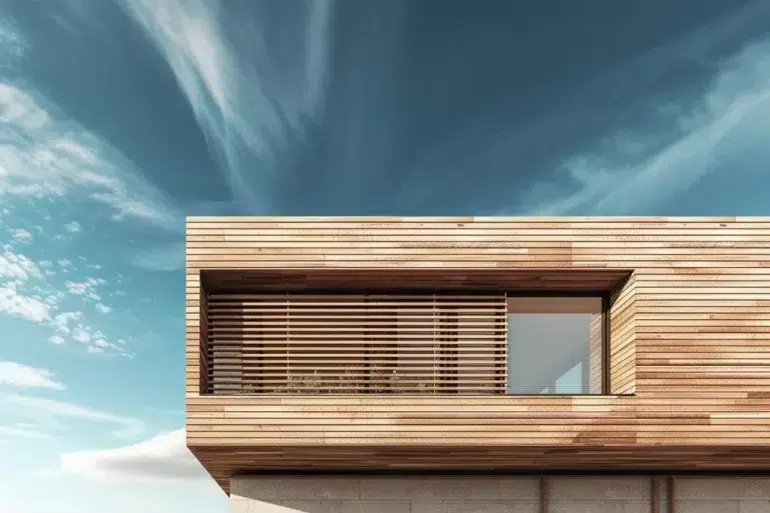
The popularity of wood-inspired facades has not changed.
What has changed is how people think about maintaining them.
Homeowners, architects, and commercial property owners often start with the same goal: create warmth, texture, and character on the exterior of a building.
The challenge starts after installation.
Real wood rarely stays exactly as it was on day one. Sun exposure, moisture, temperature changes, and regular wear all affect how it looks over time. Keeping that appearance usually requires ongoing attention.
That is why low-maintenance alternatives have become a serious part of the conversation rather than a backup option.
What actually makes a cladding material low maintenance?
A material is not low maintenance because a manufacturer says so.
It is low maintenance when it asks less from the owner after installation.
Less repainting.
Less refinishing.
Less repair work.
Less concern about moisture-related issues.
That is the reason wood-look aluminum cladding has gained attention in both residential and commercial projects.
Unlike natural timber, aluminum does not absorb water. It does not require sealing to protect against moisture, and it is not vulnerable to problems that typically concern owners of wood facades.
The less a material depends on regular maintenance cycles, the lower the long-term workload becomes.
Designers want flexibility without creating future problems
Architects and designers rarely select materials based only on appearance.
They also think about how that material will age.
A design that looks impressive at completion should still feel intentional years later.
Wood-look exterior cladding gives designers access to wood-inspired finishes while maintaining flexibility in color, profile, orientation, and facade layout.
Vertical applications.
Horizontal applications.
Feature walls.
Large commercial facades.
Modern residential elevations.
The design possibilities are often broader than people expect, especially when projects require consistency across large surfaces.
That flexibility is one reason these materials continue appearing in contemporary architecture.
Contractors pay attention to different things
Contractors often evaluate a material through a different lens.
They look at installation, labor requirements, project schedules, and long-term performance.
Modern aluminum cladding systems have evolved significantly compared to older installation methods.
Many systems are lightweight, easier to handle on site, and designed around installation methods that reduce complexity.
Click-and-lock systems, concealed fixing methods, and modular panel designs have become more common because they can help streamline installation.
That does not make every project simple.
It does explain why many contractors view modern cladding systems differently than they did in the past.
Why wood alternatives are becoming more common
This shift is not happening because architects stopped liking wood.
The appeal of timber remains strong.
The difference is that clients now ask more questions about ownership costs after construction is finished.
They want attractive facades.
They also want predictable maintenance requirements.
That balance has pushed many projects toward materials that capture the appearance of wood while reducing the responsibilities that often come with maintaining natural timber outdoors.
For some projects, real wood remains the right choice.
For others, wood-look exterior cladding offers a practical way to achieve a similar design outcome with fewer long-term concerns.
FAQs
I like real wood. Am I giving up too much if I choose wood-look cladding?
That depends on what you value most.
If owning a natural material is part of the experience you’re looking for, real wood offers something difficult to duplicate. But if your goal is the appearance of wood on the building rather than the material itself, many people find the tradeoff worthwhile because they spend less time worrying about maintenance later.
Will it still look good after a few years, or is it one of those materials that only looks good when it’s new?
This is one of the main reasons people start looking at wood alternatives in the first place.
Most concerns with exterior facades show up years after installation, not during installation. Materials that are less affected by moisture, sunlight, and seasonal changes tend to maintain a more consistent appearance over time.
Why are architects using more of these systems now than before?
Part of it comes down to what clients are asking for.
People still want warm, natural-looking buildings. They just don’t always want the maintenance schedule that comes with natural timber. Architects are responding to that reality more than they are following a design trend.