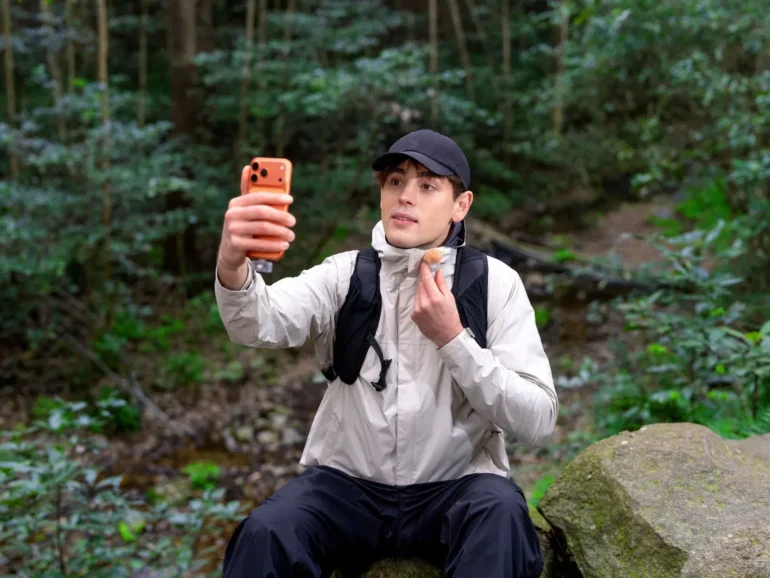
An iPhone can handle almost every part of a modern content workflow. It can record high-quality video, edit clips and publish content without a separate camera. Audio is often the part that needs the biggest improvement. The built-in microphone works well when the speaker is close to the phone, but quality can drop quickly when the subject moves farther away or records in a noisy place.
A wireless microphone solves this problem by keeping the microphone close to the speaker. It also gives creators more freedom to move. This is useful for travel vlogs, street interviews, YouTube videos and two-person conversations.
The right system depends on how you record. A solo vlogger may care most about a small transmitter and fast setup. An interview creator may need two microphones, internal recording and more control over audio. Before buying a wireless microphone for an iPhone, it is worth looking beyond basic sound quality and considering how the complete system fits your workflow.
Start with iPhone compatibility
Compatibility should be the first thing you check. Current iPhones use USB-C, while older models may use Lightning. Some wireless systems use a small receiver that connects directly to the phone. Others require an adapter or cable.
A direct connection is usually more convenient for mobile creators. There are fewer parts to carry, and the setup can be ready within seconds. This matters when you are filming while travelling or recording an interview in an unfamiliar location.
If you use an older iPhone, check whether the microphone supports Lightning through a compatible adapter. Also look at your phone case. A thick case can sometimes prevent a small receiver from sitting correctly in the port.
Bluetooth can be useful too, especially for quick recordings. However, a dedicated receiver often gives creators more control and a more complete recording workflow.
DJI Mic Mini 2S: a strong all-round choice for iPhone creators
The DJI Mic Mini 2S is a particularly good option for creators who want one compact system for both vlogging and interviews.
The transmitter weighs about 12 grams without the magnetic clip and magnet. That makes it light enough to wear on a T-shirt or jacket without pulling heavily on the fabric. This is useful for travel vloggers who may keep the microphone attached for long periods.
It also supports 32-bit float internal recording. This gives creators more flexibility when dealing with sudden changes in volume. A quiet answer followed by loud laughter is less likely to become a major problem in post-production. The system also provides internal storage for extended backup recording.
For outdoor creators, the two-level AI noise cancellation is useful. A lower setting can help in relatively quiet environments, while stronger noise reduction can be used when background sound becomes more distracting. The system also includes different voice tone presets, which gives creators some flexibility without requiring a complicated audio setup.
Phone compatibility is another advantage. The system can work with smartphones through USB-C, Lightning with the appropriate adapter, or direct Bluetooth connection. DJI also offers a compact mobile receiver for phone-based recording.
For solo creators, the one-transmitter and one-receiver version keeps the kit small. For interviews, the two-transmitter package is more practical because both people can have their own microphone.
RØDE Wireless Micro: simple for phone-first creators
The RØDE Wireless Micro is another useful option for creators who want a very simple smartphone setup.
Its main advantage is ease of use. The receiver connects directly to a phone, and the system is designed to require very little preparation. Two transmitters are included in the standard setup, which makes it convenient for casual interviews and two-person videos.
This is a good choice for creators who do almost all of their recording on a smartphone. It suits short-form video, travel updates, social content and simple interviews.
The system is less focused on advanced recording features. That may actually be a benefit for beginners. If your priority is to connect the microphone and start filming quickly, a simple system can be more useful than one with many controls.
For creators who want internal backup recording and greater flexibility for more serious interview work, the Mic Mini 2S offers a broader set of tools.
DJI Mic 3: better for more demanding productions
Some creators need more than a compact everyday microphone. If interviews are a major part of your work, a more advanced wireless system can make sense.
The DJI Mic 3 is designed for more demanding recording situations. It supports internal recording and provides greater flexibility for productions involving several speakers.
This level of control can be valuable for professional interviews, client projects and YouTube productions that are difficult to repeat. If an important guest is only available once, having stronger backup options can be worth the additional cost and complexity.
For normal iPhone vlogging, however, it may be more system than necessary. A smaller option such as the Mic Mini 2S is easier to carry and still covers the needs of most solo creators and two-person interview setups.
One transmitter or two?
The number of transmitters should match your content.
A single transmitter is enough if you normally record yourself. This works well for travel vlogs, tutorials, talking-head videos and short social clips.
For interviews, two transmitters are usually better. Each person can have a microphone close to their mouth. This creates more consistent audio and avoids the problem of one speaker sounding distant.
A dual-transmitter kit also gives solo creators more flexibility. You can use one transmitter most of the time and keep the second ready for guests.
If interviews are already part of your plans, buying the two-transmitter version from the beginning is usually the more practical choice.
Internal recording is worth having
Wireless transmission is generally reliable, but no wireless system is completely immune to problems. Interference, distance or unexpected obstacles can affect a recording.
This matters most during interviews.
If a short vlog clip has an audio problem, you may be able to record it again. An interview answer may be impossible to recreate naturally.
Internal recording gives you another copy of the audio. This is one reason the Mic Mini 2S is attractive for creators who want one microphone system for both casual and more important work.
Its 32-bit float internal recording also provides more room to deal with difficult recording levels later.
Size matters more than many creators expect
A transmitter may look small on a product page but still feel large once clipped to clothing.
Heavy microphones can pull down thin shirts. They can also become distracting in a close-up shot. For travel content, the problem becomes more noticeable because the microphone may stay attached for hours.
This is where a lightweight system has a real advantage. At around 12 grams, the Mic Mini 2S transmitter is designed to stay compact.
Magnetic mounting can also make positioning easier. Instead of relying only on the edge of a collar, creators can place the microphone in a more natural position on their clothing.
For formal interviews, you may prefer an even more discreet setup. In that case, check whether the system supports the type of microphone placement you need.
Do not ignore wind protection
Wind can ruin otherwise good outdoor audio.
A small breeze may sound harmless while filming, but the microphone can pick up strong low-frequency noise. This is common on beaches, open streets, hills and exposed travel locations.
Vloggers should therefore look for a system with proper wind protection. The windscreen needs to stay attached while walking and turning.
Electronic noise cancellation can also help with some environmental sound, but it should not replace physical wind protection. The two tools solve different problems.
For outdoor creators, testing the microphone before a trip is worthwhile. Record a few clips while walking in light wind and listen back with headphones.
What should vloggers prioritise?
Vloggers need a system that does not slow them down.
Low weight, quick phone connection and convenient storage are more useful than complicated studio features. The microphone should be easy to take out of a bag, attach and use within a few moments.
For this type of creator, the DJI Mic Mini 2S is a strong all-round option. It is compact enough for travel but still provides internal recording and more advanced audio features than many basic phone microphones.
The RØDE Wireless Micro is also worth considering if simplicity is the main priority and almost all content is recorded directly on a phone.
What should interview creators prioritise?
Interview creators should think more about reliability.
Two transmitters are important because each speaker should have their own microphone. Internal backup recording is also highly useful. Good level management matters because different people may speak at very different volumes.
For regular one-to-one interviews, the two-transmitter Mic Mini 2S kit offers a useful balance between portability and recording protection. The full kit includes two transmitters, a receiver and a charging case.
For larger or more complex productions, a more advanced system such as the DJI Mic 3 may be more suitable.
Which wireless microphone should you choose?
For most iPhone creators who want one system for both vlogging and interviews, the DJI Mic Mini 2S is the strongest all-round choice. It is small enough for travel, supports solo and two-person configurations, and includes useful features such as 32-bit float internal recording and two-level noise cancellation.
The RØDE Wireless Micro is better suited to creators who want a very straightforward phone-first setup and do not need as many recording options.
The DJI Mic 3 makes more sense for creators whose work is increasingly focused on professional interviews or more complex productions.
Final thoughts
Choosing a wireless microphone for an iPhone is mainly about matching the system to the way you create.
A travel vlogger needs low weight, quick setup and good outdoor usability. An interview creator needs two transmitters, reliable recording and useful backup options. Someone doing both needs a system that can move easily between those situations.
For that reason, the DJI Mic Mini 2S is a particularly versatile choice. A solo creator can start with a simple one-transmitter setup. A two-transmitter kit can handle interviews, collaborations and two-person videos. The small size keeps it practical for mobile use, while internal recording gives it more value for important shoots.
The best microphone should not make mobile filming feel more complicated. It should connect quickly, stay out of the way and let you focus on the conversation or story you are trying to capture.