The exhibition hall wasn’t open yet. Someone was still vacuuming the aisle. Boxes sat half-unpacked. A photographer wandered from stand to stand, checking where the morning light was landing. Across the room, two installers stretched a printed fabric over a lightweight frame. One corner refused to cooperate for a moment before snapping neatly into place.
“There,” one of them said, stepping back. From twenty metres away, the pop up fabric media wall looked almost effortless, as though it had always belonged there. Funny how the easiest-looking things usually take the most patience.
Some Displays Never Have to Ask for Attention
Walk through enough trade shows and patterns begin to repeat. People rarely stop because a display is the biggest. They stop because something feels uncluttered. Their eyes find somewhere to rest before their feet decide where to go.
An event organiser once mentioned that she spends the first hour after opening simply watching movement. “People tell you everything,” she said. “You just have to stop talking long enough to notice.” She wasn’t studying products. She was watching hesitation. The pause before someone entered a stand. The tiny moment when a visitor chose one direction over another.
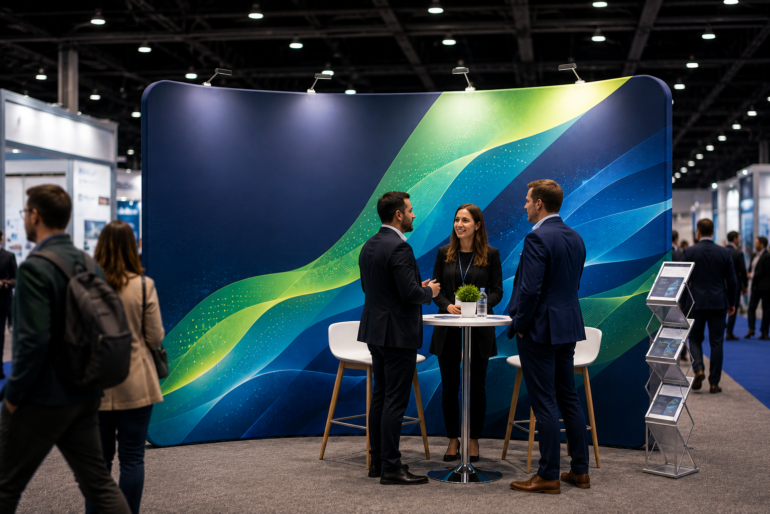
That’s where a well-designed stretch fabric media wall quietly earns its place. It creates a backdrop that frames conversations without competing with them. Visitors don’t analyse the structure. They simply feel comfortable approaching it. Oddly enough, that’s often the hardest thing to design.
The Conversations That Happen Before Anyone Arrives
The public usually sees polished graphics. The crew remembers measuring tape, ladders and coffee that’s gone cold. One installer laughed while telling me he’d rebuilt the same corner three times because a single seam wasn’t sitting perfectly straight. Nobody attending the event would ever notice the difference. He noticed.
That’s the funny thing about experienced exhibition teams. They tend to care about details nobody applauds. Fabric tension. Lighting angles. Whether a graphic lines up exactly with the edge of the frame.
Projects involving a stretch fabric media wall often succeed because someone quietly refused to accept “close enough.” Those decisions disappear into the finished display, but they shape how professional everything feels once visitors begin arriving. Real craftsmanship usually hides itself.
Lightweight Doesn’t Mean Forgettable
Portable displays sometimes carry an unfair reputation. People assume lightweight means temporary, and temporary means ordinary. Spend enough time around exhibitions and that idea falls apart pretty quickly.
One marketing manager admitted she replaced bulky timber displays after realising her team spent more energy moving equipment than speaking with potential clients. The switch wasn’t about following trends. It was about practicality.
A stretch fabric media wall packed into manageable cases instead of requiring complicated transport. Setup became faster. Packing at the end of long exhibition days became noticeably less exhausting.
Nobody attending the event cared how the display travelled. The team using it certainly did. Experience has a way of shifting priorities. Convenience starts feeling less like a luxury and more like good planning.
Looking Beyond the Printed Graphic
It’s easy to become distracted by colours and logos. The better question is usually simpler. What happens after the third event? Fabric displays are handled, folded, transported, unpacked and assembled again. They meet different venues, different lighting conditions and different exhibition floors. That’s where build quality quietly separates itself from appearance.
Teams who’ve worked across dozens of events rarely talk first about graphics. They ask where the display will travel, how frequently it will be assembled and who’ll be responsible for setting it up. Those practical conversations often determine whether a stretch fabric media wall still looks sharp after years of use or begins showing wear much sooner than expected. The display itself becomes only part of the story. The people using it complete the rest.
Back Where the Day Began
By late afternoon, the exhibition hall sounded different. Conversations echoed between displays. Coffee cups collected beside brochures. Someone laughed loudly after recognising an old client from years earlier. The photographer returned to capture the busiest stands. He paused in front of the same display he’d noticed that morning.
Nothing about it demanded attention in an obvious way. There were no flashing lights or oversized structures reaching toward the ceiling. The backdrop simply held the space together while conversations happened naturally in front of it. That’s probably why visitors kept stopping there.
Not because they had consciously chosen the stretch fabric media wall, but because everything around it felt organised, calm and inviting. Good display design rarely announces itself. It quietly removes distractions so people can focus on each other instead.
Someone would stop, glance across the aisle and wander over without quite knowing why. Another conversation would begin in front of the stretch fabric media wall. By lunchtime, nobody would be thinking about the display anymore. They’d be thinking about the people they met there.
And perhaps that’s exactly what a memorable stretch fabric media wall is supposed to do. Long after the graphics have been packed away, the conversations stay with you. Those quiet moments, repeated event after event, are what make a stretch fabric media wall from Selbys feel less like a backdrop and more like the place where good conversations naturally find each other.