

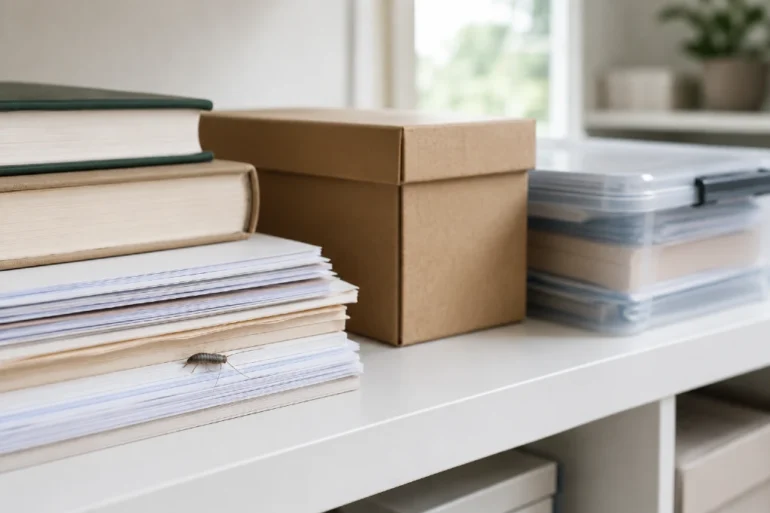
Papierfische can be a frustrating surprise, especially when you notice them near books, storage boxes, documents, wallpaper, or quiet corners of the house. At first, they may look like ordinary silverfish, but these paper-loving insects can become a real problem if they settle into the right indoor environment. They are small, fast, and mostly active at night, which is why many homeowners do not notice them until paper items, cardboard, or stored materials start showing signs of damage.
The good news is that a few practical changes can make your home far less attractive to them. You do not always need panic, harsh chemicals, or expensive treatment right away. You need to understand why they appear, what they are looking for, and how to interrupt the conditions that help them spread.
What Are Papierfische?
Papierfische, often called paper silverfish or long-tailed silverfish, are small wingless insects that belong to the same general insect group as silverfish. They have a flat, narrow body, long antennae, and three tail-like bristles at the back. Their movement is quick and slightly wiggly, which makes them easy to confuse with regular silverfish.
The key difference is their preferred environment and food. While common silverfish are strongly linked with damp spaces such as bathrooms, laundry rooms, and basements, paper silverfish are often found in drier indoor areas. They can live around bookshelves, offices, closets, storage rooms, cardboard boxes, paper files, and wall gaps.
Scientific sources identify the paper silverfish as Ctenolepisma longicaudatum, a species now found in many indoor environments around the world. It has become more noticeable in homes, archives, libraries, and museums because it can feed on paper and other cellulose-based materials.
Why Papierfische Appear in Homes
Papierfische do not appear randomly. They usually show up because the home offers three things they need: food, shelter, and stable indoor conditions.
Modern homes can accidentally create the perfect setup. Warm rooms, quiet storage areas, cardboard packaging, piles of paper, rarely moved books, and small cracks near baseboards all give them places to hide and feed.
In many cases, they arrive through packaging. A cardboard delivery box, secondhand book, old file folder, moving carton, or stored paper item can carry eggs or insects into the home. Once inside, they look for dark, undisturbed places.
Common reasons they appear include:
- Stacks of cardboard boxes kept indoors for months
- Old books, paper files, newspapers, and documents
- Wallpaper glue, book bindings, and paper-based materials
- Small cracks behind baseboards, shelves, or cabinets
- Warm and stable room temperatures
- Low-traffic areas where they are not disturbed
- Poor storage habits in closets, offices, or attics
Unlike pests that are mainly attracted to food scraps, these insects are often drawn to materials people forget about. A tidy kitchen does not always protect you if the storage room is full of cardboard and paper.
Are Papierfische the Same as Silverfish?
They are related, but they are not exactly the same.
Regular silverfish are usually associated with moisture. You may see them in bathrooms, drains, damp basements, or laundry rooms. Paper silverfish, on the other hand, are more likely to be found in dry indoor rooms where paper and cardboard are available.
That difference matters because the solution is slightly different. If you treat every case like a bathroom humidity problem, you may miss the real source. A dry study room with boxes under the desk may be more important than a damp shower corner.
Here is a simple comparison:
| Feature | Papierfische | Common Silverfish |
|---|---|---|
| Main attraction | Paper, cardboard, cellulose materials | Damp spaces, starches, paper, organic matter |
| Common location | Bookshelves, offices, storage rooms, closets | Bathrooms, basements, laundry areas |
| Moisture preference | Can tolerate drier indoor spaces | Usually prefers higher humidity |
| Main concern | Damage to paper items and stored goods | Nuisance pest and minor material damage |
| Activity time | Mostly night | Mostly night |
NC State Extension notes that silverfish and firebrats feed on paper, fabrics, glues, starches, and book-binding materials. This helps explain why paper-loving relatives can become a problem around books, stored files, and paper goods.
Where They Hide During the Day
One reason Papierfische are hard to control is that they avoid light. You may only see one moving across the floor at night, but the main hiding area could be somewhere else.
They often hide in:
- Cracks along baseboards
- Behind bookshelves
- Inside cardboard boxes
- Under stacks of paper
- Behind loose wallpaper
- Inside closets
- Around door frames
- Under storage cabinets
- In gaps near flooring
- Behind picture frames or wall panels
They prefer places that remain quiet for long periods. A box of documents that has not been touched for a year is more inviting than a desk drawer opened every day.
If you see one insect in the open, do not assume there is only one. It may simply be the one you happened to catch while it was searching for food.
What Damage Can Papierfische Cause?
They do not bite people, and they are not known for causing the kind of health concerns people associate with cockroaches or rodents. The main problem is material damage.
They can scrape, chew, or graze on items that contain cellulose, starch, or glue. Over time, this can leave small marks, holes, surface damage, or weakened edges.
Items at risk include:
- Books and book bindings
- Paper documents
- Cardboard storage boxes
- Wallpaper and wallpaper glue
- Old photographs
- Paper labels
- Packaging materials
- Certificates and records
- Paper artwork
- Archive folders
For a home with ordinary paperwork, the damage may be annoying. For someone with rare books, family records, collectible prints, legal documents, or inherited photographs, it can be much more serious.
The problem often grows slowly. You may notice tiny surface marks first, then damaged edges, then activity in nearby boxes or shelves.
Signs You May Have Papierfische
Because they are nocturnal, you may not see them often during the day. The signs are usually subtle at first.
Look for:
- Small insects running quickly when lights turn on
- Tiny feeding marks on paper or cardboard
- Damage around book bindings
- Shed skins near shelves or storage areas
- Small dark specks in drawers or boxes
- Activity near documents, folders, or packaging
- Repeated sightings in the same room
A single sighting does not always mean a serious infestation. But repeated sightings, especially in rooms with paper storage, should be taken seriously.
A practical test is to inspect the quietest paper-heavy spaces first. Pull out old boxes, check behind shelves, lift piles of documents, and look along wall edges with a flashlight.
Why Newer Homes Can Still Have Them
Many people assume pests are only a problem in old or poorly maintained houses. That is not always true.
Paper silverfish can do well in modern homes because newer buildings often have stable temperatures, insulated rooms, and plenty of hidden gaps. Online shopping also brings more cardboard packaging into the house than ever before.
A clean, modern apartment can still have a problem if cardboard boxes are stored for long periods. The insects do not care whether the room looks stylish. They care whether there is food, shelter, and enough quiet space to survive.
This is why prevention is not just about cleaning. It is also about storage habits.
How to Deal With Papierfische at Home
The best approach is simple: remove what attracts them, reduce hiding places, monitor activity, and protect vulnerable items.
You do not have to turn the house upside down in one day. Start with the rooms where you have seen activity and work outward.
1. Remove unnecessary cardboard
Cardboard is one of the biggest hidden problems. Delivery boxes, old moving cartons, shoe boxes, and packaging materials can all become shelter.
Break down and recycle boxes you do not need. If you must keep some for storage, avoid placing them directly on the floor or against the wall. Use sealed plastic storage bins for important items instead.
This one change can make a big difference because it removes both food and hiding space.
2. Protect books and documents
If you have books, certificates, photographs, or legal paperwork, do not leave them loose in open boxes.
Use:
- Sealed plastic containers
- Archival-quality folders
- Clean shelves with airflow
- Closed storage cabinets
- Regular inspection routines
Avoid storing valuable paper items in attics, basements, or garages unless those spaces are dry, clean, and well managed.
3. Vacuum cracks and hidden edges
Vacuuming is not glamorous, but it helps. It removes insects, eggs, shed skins, crumbs, dust, and tiny food particles.
Focus on:
- Baseboards
- Shelf corners
- Closet floors
- Under furniture
- Behind cabinets
- Storage room edges
- Around door frames
Use a narrow nozzle attachment. After vacuuming suspicious areas, empty the vacuum outside or seal the contents before disposal.
4. Seal cracks and gaps
Small gaps give Papierfische a safe place to hide during the day. Sealing those spaces makes the room less comfortable for them.
Pay attention to:
- Baseboard gaps
- Cracks near flooring
- Loose wallpaper edges
- Gaps around pipes
- Spaces behind built-in shelves
- Door frame cracks
Use caulk or suitable sealant where appropriate. This does not solve every problem alone, but it reduces shelter and makes monitoring easier.
5. Keep rooms dry and ventilated
Although paper silverfish can handle drier spaces better than common silverfish, indoor moisture still matters for many household pests. Good ventilation also reduces the chance of mold, musty storage areas, and damp cardboard.
UC IPM recommends dehumidifiers and ventilation to reduce indoor conditions that support silverfish activity, especially in closed or humid spaces.
Use bathroom fans, open windows when weather allows, repair leaks, and avoid trapping moisture behind furniture. If a storage room feels stale or musty, improve airflow before the problem grows.
6. Use sticky traps for monitoring
Sticky traps can help you understand where the insects are active. Place them near walls, shelves, closets, and storage areas.
Do not rely on traps alone as a full solution. Think of them as a tracking tool. If one room catches several insects and another catches none, you know where to focus your cleaning and storage changes.
Check traps weekly and write down where activity appears.
7. Be careful with secondhand items
Used books, paper files, picture frames, and cardboard boxes can bring insects into the home.
Before bringing them inside:
- Inspect the item carefully
- Shake out loose paper outdoors
- Avoid keeping old cardboard packaging
- Store new arrivals separately for a short period
- Check book spines and inner covers
This habit is especially useful if you buy secondhand books, collect vintage prints, or receive boxes from storage units.
A Real-World Home Scenario
Imagine a small home office that looks clean at first glance. The desk is tidy. The floor is vacuumed. Nothing seems dirty.
But under the desk, there are three cardboard boxes full of old invoices, manuals, notebooks, and packaging from online deliveries. Behind the bookshelf, dust has collected along the baseboard. A few books have not moved in two years.
At night, the room becomes quiet. The insects leave their hiding spots, move along the wall edges, and feed on paper-based material. The homeowner sees one near the bookshelf and assumes it came from the bathroom. In reality, the main issue is the office storage.
The solution is not just spraying the visible insect. The better solution is to remove cardboard, seal documents, vacuum the shelf area, inspect books, use traps, and close cracks near the baseboard.
That is how real control usually works. You solve the environment, not just the sighting.
Should You Use Chemical Treatments?
For a small issue, start with non-chemical steps first. Cleaning, storage changes, traps, sealing gaps, and humidity control are safer and often enough when the problem is caught early.
Chemical treatments may be considered when activity continues after practical prevention steps. However, they should be used carefully, especially around children, pets, food storage, books, and bedrooms.
If you choose a pest-control product, read the label fully and follow local safety rules. Do not spray randomly across shelves, books, or documents. That can damage the very items you are trying to protect.
For a larger infestation, a licensed pest control professional is usually the better option. They can identify the insect correctly, locate the source, and use targeted treatment instead of guesswork.
Common Mistakes That Make the Problem Worse
Many homeowners accidentally make Papierfische harder to remove because they only deal with what they see.
Avoid these mistakes:
- Keeping delivery boxes indoors for months
- Spraying one corner without removing paper clutter
- Ignoring bookshelves and storage rooms
- Storing documents in open cardboard boxes
- Assuming clean rooms cannot have pests
- Forgetting to inspect secondhand books
- Leaving cracks and gaps untreated
- Not checking traps after placing them
The biggest mistake is thinking one visible insect is the whole problem. In many cases, the real issue is hidden storage.
How to Prevent Papierfische Long Term
Long-term prevention is mostly about habits. Once your home is less attractive to them, they have fewer chances to settle and multiply.
Keep these habits in place:
- Recycle unused cardboard quickly
- Store important papers in sealed containers
- Move and inspect books occasionally
- Vacuum shelf edges and closets regularly
- Keep storage areas dry and ventilated
- Seal small wall and floor gaps
- Check secondhand paper items before storing them
- Use traps in problem rooms for early warning
If you live in an apartment building, prevention matters even more. Insects can sometimes move between units through small gaps, shared walls, service spaces, or storage areas. Keeping your own home less attractive reduces the chance they will stay.
Are Papierfische Dangerous?
For people and pets, they are not usually dangerous. They do not sting, and they are not known as aggressive insects. The concern is damage to paper-based belongings and the stress of having a persistent indoor pest.
That said, no one wants insects moving through shelves, closets, or document boxes. Even if the health risk is low, the nuisance factor is real.
If you have asthma, allergies, or sensitive indoor air concerns, heavy pest activity of any kind should be handled carefully. Shed skins, dust, and insect debris can add to general indoor irritants.
When to Call a Professional
You may be able to manage a small problem yourself. But professional help makes sense when:
- You see insects in several rooms
- Traps keep catching them every week
- Valuable books or documents are being damaged
- You cannot find the source
- Activity returns after cleaning and sealing
- You live in a shared building with repeated sightings
A professional inspection can save time because proper identification matters. Paper silverfish, common silverfish, and firebrats may look similar to many homeowners, but their preferred conditions are not always the same.
Simple Home Checklist
Here is a quick action plan you can follow this week:
| Task | Why it helps |
|---|---|
| Remove old cardboard | Reduces food and hiding places |
| Inspect bookshelves | Finds early signs near paper items |
| Vacuum baseboards | Removes insects, eggs, dust, and debris |
| Seal cracks | Reduces daytime hiding spots |
| Use sticky traps | Shows where activity is strongest |
| Store documents properly | Protects important paper items |
| Improve airflow | Reduces stale indoor conditions |
| Check secondhand items | Prevents new insects entering |
This checklist works best when you repeat it every few weeks until activity drops.
Frequently Asked Questions About Papierfische
Why do Papierfische keep coming back?
They usually return because the source has not been removed. If cardboard boxes, paper clutter, cracks, and quiet hiding places remain, the insects still have what they need. Spraying one visible area may reduce sightings for a while, but it will not fix the environment.
Do they only live in dirty homes?
No. They can appear in clean homes too. Their main attraction is not filth. It is paper, cardboard, glue, starches, shelter, and stable indoor conditions.
Can they damage books?
Yes, they can damage books, especially bindings, paper edges, and areas with glue or starch-based materials. Rare books, old documents, and stored paper collections should be protected in sealed or well-managed storage.
Are they active during the day?
They prefer darkness and are mostly active at night. If you see them during the day, it may mean they were disturbed or that activity is becoming more noticeable.
What is the fastest way to reduce them?
Start by removing cardboard and paper clutter, then vacuum hidden edges, seal cracks, and place sticky traps. These steps quickly reduce shelter and help you locate the active zones.
Conclusion
Papierfische are not the kind of household problem you should ignore, especially if you store books, records, documents, or cardboard in quiet rooms. They may be small, but they can slowly damage paper-based materials and spread through hidden spaces if the conditions suit them.
The best response is practical and steady. Remove unnecessary cardboard, protect important documents, clean hidden edges, seal gaps, improve airflow, and monitor the rooms where activity appears. Once you understand what attracts them, dealing with Papierfische becomes much easier and far less stressful.
If you want to understand more about the insect behind the problem, the species commonly linked with paper silverfish is described as long-tailed silverfish, a paper-feeding indoor insect that has become more noticeable in homes and archive-like spaces.