
Every successful home begins long before the foundation is poured or the walls are framed. The most important decisions are often made during the planning stage, when ideas are translated into layouts, room arrangements, and functional living spaces.
For decades, this process relied heavily on sketches, technical drawings, and repeated revisions. While these methods remain essential, modern technology is creating new opportunities for both professionals and homeowners. Among the most influential innovations are AI floor plan generators, which are helping people explore design possibilities faster and visualize projects more clearly.
From architecture firms seeking greater efficiency to homeowners building their dream house, AI-powered planning tools are changing how early design decisions are made. Combined with modern real estate visualization techniques, these technologies are making the entire building journey easier to understand and navigate.
The First Design Decision Is Often the Most Important
When people think about home building, they often imagine construction activities such as framing, roofing, or interior finishing. However, many of the project’s future successes—or problems are determined much earlier.
The layout of a home influences:
- Daily movement between rooms
- Privacy levels
- Storage capacity
- Natural lighting
- Future flexibility
- Overall comfort
A home with an inefficient layout may never function as well as intended, regardless of how much money is spent on finishes and upgrades. This is why architects dedicate considerable attention to planning before construction begins.
Why Homeowners Often Struggle With Floor Plans
Architectural plans contain a wealth of information, but they can be difficult for non-professionals to interpret. A homeowner reviewing a drawing may understand where the bedrooms and kitchen are located, yet still find it challenging to answer practical questions.
For example:
- Will the living room feel spacious enough?
- Is there enough room for storage?
- Will family members move comfortably through the house?
- Does the layout support future needs?
Without a clear understanding of the space, homeowners may approve plans that do not fully align with their expectations. The ability to visualize a design before construction helps reduce this uncertainty.
AI Is Bringing a New Level of Exploration to Architecture
One of the biggest challenges in architectural planning is evaluating multiple possibilities. Every project involves trade-offs. Expanding one room may reduce the size of another. Relocating a staircase could improve circulation but affect storage opportunities. Traditionally, exploring multiple options required significant drafting time.
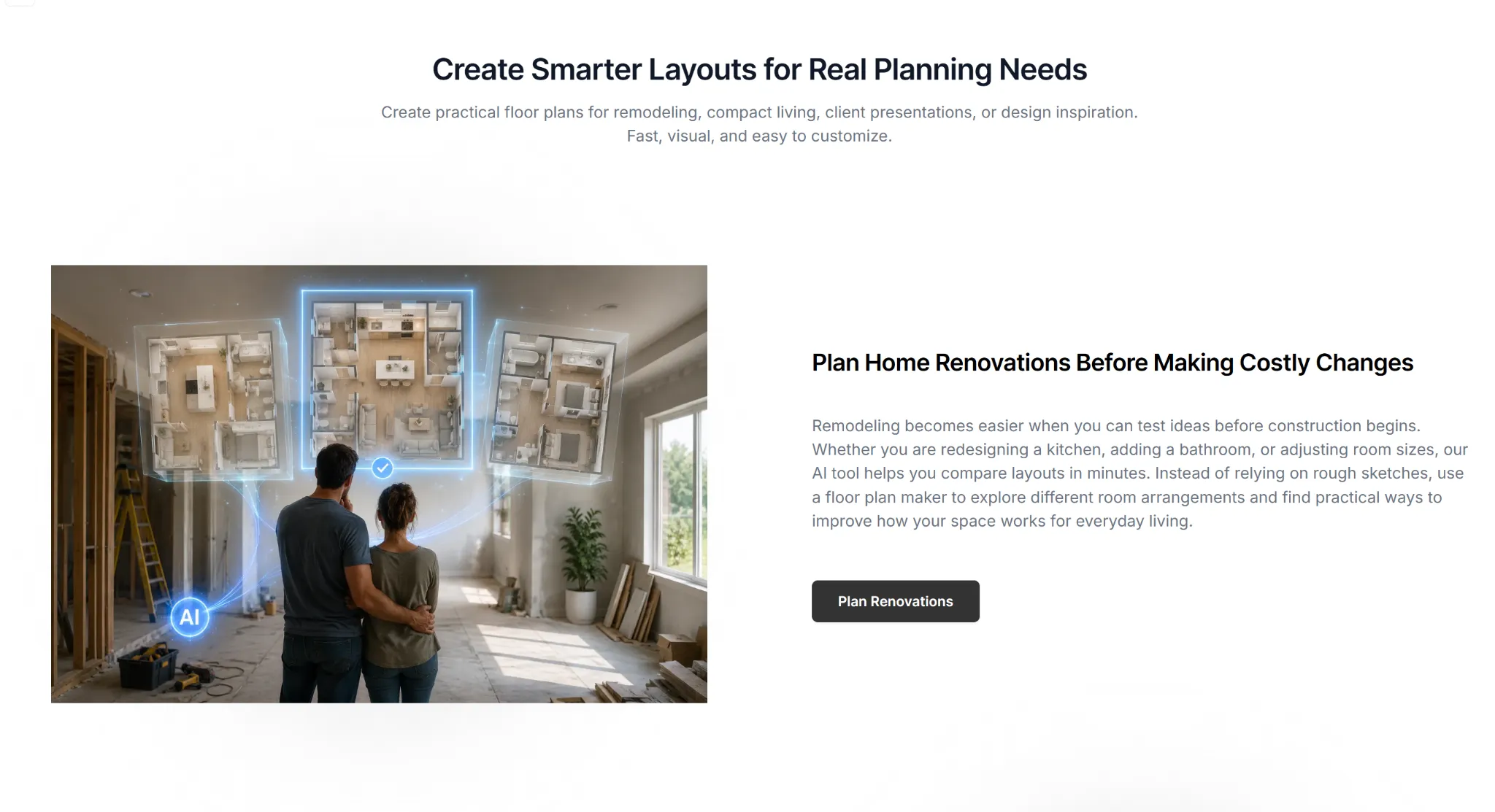
Today, an AI Floor Plan maker can assist by creating alternative layouts based on specific requirements. Instead of spending hours developing initial concepts, designers and homeowners can review several options and focus on refining the most promising solutions. This ability to compare ideas quickly often leads to more informed decisions.
Faster Concepts, Better Conversations
Design projects frequently involve communication between several stakeholders. A typical home-building project may include:
- Homeowners
- Architects
- Interior designers
- Builders
- Developers
Each participant brings different priorities to the discussion. When planning, concepts can be generated and reviewed quickly, conversations become more productive. Instead of debating abstract ideas, stakeholders can evaluate actual layouts and provide targeted feedback.
This often shortens the planning cycle and helps align expectations early in the project.
Home Building Is About Lifestyle, Not Just Construction
A house is more than a structure. It is a place where people work, relax, entertain, and build memories. For this reason, modern architectural planning focuses heavily on lifestyle requirements.
Some homeowners prioritize:
- Open family spaces
- Dedicated home offices
- Large kitchens
- Flexible guest rooms
- Outdoor living areas
Others may value privacy, energy efficiency, or future accessibility. AI-powered planning tools can help explore different ways of organizing these priorities within the available space, creating layouts that better reflect how people actually live.
Architecture Still Requires Human Expertise
Despite rapid advances in technology, architecture remains a profession built on knowledge and experience.
A successful design must address factors such as:
- Structural performance
- Local regulations
- Site conditions
- Building systems
- Safety requirements
- Environmental considerations
AI can assist with generating concepts, but it does not replace the expertise required to transform ideas into safe, buildable structures. The strongest results typically come from combining technological efficiency with professional design judgment.
The Rise of Real Estate Visualization
Planning a home is one challenge. Selling or marketing it is another. Real estate professionals often face the difficult task of helping buyers understand properties that are still under construction or undergoing renovation.
Traditional floor plans provide useful information, but many buyers struggle to imagine how those plans translate into real spaces. Real estate visualization helps solve this problem by creating realistic representations of future properties.
Instead of interpreting measurements and symbols, buyers can better understand:
- Room relationships
- Functional layouts
- Furniture possibilities
- Overall spatial flow
This creates a stronger connection between the buyer and the property.
Why Visualization Influences Buyer Confidence
Purchasing a home is one of the largest financial decisions most people make. Naturally, buyers want confidence before committing. When people can clearly see how a property is organized and how spaces may function, they are often more comfortable moving forward with a decision. Visualization helps answer questions that traditional drawings cannot easily address.
Potential buyers can assess whether:
- Rooms feel appropriately sized
- Living spaces meet their needs
- Storage appears adequate
- Layouts suit their lifestyle
The more information buyers have, the easier it becomes to evaluate a property’s suitability.
Reducing Costly Design Changes
One of the practical advantages of AI-assisted planning and visualization is the ability to identify issues early. Discovering a design problem during construction can be expensive.
For example:
- A room may feel too small.
- Storage may be insufficient.
- Traffic flow may be awkward.
- Furniture placement may be difficult.
When these concerns are identified during planning rather than construction, adjustments can be made more efficiently and at a lower cost.
Early visualization helps transform assumptions into informed decisions.
Where Floor Plan Maker Supports the Process
For homeowners, architects, and property professionals, Floor Plan Maker provides a practical way to explore layouts and visualize ideas before construction begins. By helping users create and evaluate plans digitally, the platform supports better communication and more confident decision-making throughout the project lifecycle.
Whether someone is planning a custom home, reviewing architectural concepts, or presenting a property to potential buyers, having access to clear visual layouts can make the process significantly easier. The goal is not simply to create drawings but to improve understanding.
The Future of Home Planning
Technology will continue to influence how homes are designed, built, and marketed. AI tools are becoming more sophisticated, visualization methods are becoming more realistic, and planning processes are becoming more accessible to non-professionals.
However, the fundamental objective remains unchanged. People want homes that are comfortable, functional, and aligned with their lifestyles. By combining architectural expertise, thoughtful planning, and modern tools such as AI floor plan generators, it becomes easier to achieve that goal.
Final Thoughts
The relationship between AI, architecture, home building, and real estate visualization is not about replacing traditional design methods. Instead, it is about improving how ideas are explored, communicated, and refined.
For homeowners, these technologies offer greater clarity and confidence during planning. For architects, they provide faster ways to evaluate concepts. For real estate professionals, they create more engaging ways to present properties