

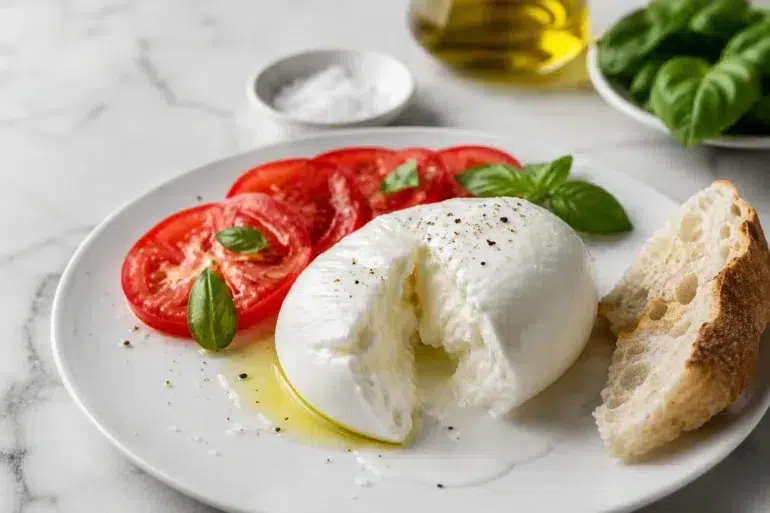
Fior di Latte is one of those ingredients that sounds fancy at first, but once you understand it, it feels wonderfully simple. At its heart, it is fresh cow’s milk mozzarella, known for its soft texture, milky flavor, and easy pairing with pizza, salads, pasta, bread, tomatoes, olive oil, and fresh herbs. It is not loud or overly salty. It does not try to dominate a dish. Instead, it brings a clean, creamy taste that makes simple food feel more refined.
The name often gets attention because it translates beautifully from Italian as “flower of milk.” That phrase fits the cheese well. It suggests freshness, softness, and a delicate dairy flavor rather than something heavy or sharp. In Italian food culture, the term may also be used for a plain milk-based gelato flavor, but in cooking, most people use it to describe fresh mozzarella made from cow’s milk. Wikipedia notes that mozzarella varieties are often distinguished by the milk used, with mozzarella fior di latte made from cow’s milk and buffalo mozzarella made from buffalo milk.
This article looks at its nutrition, flavor, serving ideas, storage tips, and simple ways to use it at home without making food feel complicated.
What Is Fior di Latte?
Fior di Latte is a fresh, soft cheese made from cow’s milk. It belongs to the mozzarella family and is commonly associated with Italian cooking, especially pizza, Caprese salad, sandwiches, and simple antipasto plates.
It has a moist, elastic texture and a gentle dairy taste. Unlike aged cheeses such as Parmesan or cheddar, it is not meant to be sharp, crumbly, or intense. Its charm is in its freshness.
A good piece should feel soft but not mushy. When cut, it may release a little milky liquid. That is normal for fresh mozzarella-style cheese. The flavor should be clean, slightly sweet, and creamy, with a mild tang in the background.
Fior di Latte vs Regular Mozzarella
Many shoppers use the words mozzarella and Fior di Latte as if they mean the same thing, but there is a small difference worth knowing.
Mozzarella is a broad term. It can refer to cheese made from cow’s milk, buffalo milk, or even low-moisture blocks used for melting. Fior di Latte usually refers to fresh cow’s milk mozzarella.
That means it is softer, wetter, and more delicate than the shredded mozzarella many people buy for casseroles or quick weeknight pizza. It also has a fresher taste.
Here is a simple comparison:
| Type | Milk Source | Texture | Flavor | Best Use |
|---|---|---|---|---|
| Fior di Latte | Cow’s milk | Soft, moist, elastic | Mild, creamy, fresh | Pizza, salads, sandwiches |
| Buffalo mozzarella | Buffalo milk | Rich, soft, juicy | Tangier, richer | Caprese, antipasto |
| Low-moisture mozzarella | Usually cow’s milk | Firm, drier | Mild, salty | Baked pasta, pizza topping |
| Burrata | Cow’s milk | Soft shell, creamy center | Rich, buttery | Salads, toast, appetizers |
If you want a fresh cheese that melts nicely but still tastes clean and milky, Fior di Latte is usually a great choice.
Fior di Latte Nutrition: What You Should Know
From a nutrition point of view, Fior di Latte is a dairy food that offers protein, calcium, fat, phosphorus, and other milk-based nutrients. Since it is a fresh mozzarella-style cheese, its nutrition is generally similar to whole milk mozzarella, though exact values can vary by brand, moisture level, and serving size.
According to USDA-based nutrition data for whole milk mozzarella, 100 grams contains roughly 300 calories, about 22 grams of protein, about 22 grams of fat, and around 505 milligrams of calcium.
That makes it a nutrient-dense cheese, not a low-calorie food. It can absolutely fit into a balanced diet, but portion size matters.
Typical Nutrition Per 1 Ounce Serving
A common serving is about 1 ounce, or 28 grams. Based on whole milk mozzarella values, that serving usually provides approximately:
| Nutrient | Approximate Amount |
|---|---|
| Calories | 70 to 85 |
| Protein | 5 to 7 g |
| Fat | 5 to 7 g |
| Carbohydrates | Less than 1 g |
| Calcium | Around 140 mg |
| Sodium | Varies by brand |
These numbers are estimates, but they give a useful picture. The cheese brings protein and calcium, but also saturated fat and sodium, depending on how it is made and stored.
Is Fior di Latte Healthy?
Fior di Latte can be part of a healthy eating pattern when used thoughtfully. It is not something you need to fear, and it is not something to eat without limits either.
The good side is clear. It provides protein, calcium, and a satisfying texture that can make meals feel more complete. Mozzarella is often considered one of the more approachable cheeses because it tends to be milder and, depending on the product, may be lower in sodium than many aged cheeses. EatingWell notes that mozzarella provides protein and bone-supporting nutrients such as calcium and phosphorus, while moderation and serving size still matter.
The part to watch is also simple. Like most whole milk cheeses, it contains saturated fat. Some versions are saltier than others. If you are watching sodium, heart health, or calorie intake, read the label and keep portions realistic.
A smart serving is often enough to add creaminess without turning the whole meal heavy.
Flavor Profile: What Does Fior di Latte Taste Like?
The taste is mild, fresh, milky, and slightly sweet. It does not have the sharpness of cheddar or the saltiness of feta. It also does not have the deep aged flavor of Parmesan.
That soft flavor is exactly why cooks love it. Fior di Latte lets other ingredients shine.
Tomatoes taste brighter beside it. Basil feels fresher. Olive oil becomes more noticeable. Bread tastes warmer and more rustic. On pizza, it melts into soft white pools instead of covering everything in a greasy blanket.
The flavor works best when the dish is built around balance. Too much sauce, too many toppings, or very salty ingredients can hide its delicate character.
Texture and Melt: Why It Works So Well on Pizza
One of the main reasons people search for Fior di Latte is pizza. It melts beautifully when used correctly.
Fresh cow’s milk mozzarella has enough moisture to create a creamy melt, but it can also release water if used carelessly. That is why many pizza makers drain it before baking. Some even cut it into pieces and let it sit on paper towels for 15 to 30 minutes.
This simple step helps prevent a soggy pizza center.
For home pizza, use small torn pieces rather than thick slices. Torn pieces melt more naturally and give the pizza that handmade look. They also leave space for sauce, crust, and toppings to breathe.
If you are using a very hot oven or pizza stone, add the cheese near the beginning for a classic melt. If your oven runs cooler, you can add some cheese halfway through baking to keep it from releasing too much liquid.
Best Ways to Serve Fior di Latte
Fior di Latte tastes best when treated simply. You do not need complicated recipes. Fresh ingredients and good timing usually do more than heavy seasoning.
1. Serve It With Tomatoes and Basil
This is the classic choice for a reason.
Slice fresh tomatoes, add pieces of cheese, drizzle with extra virgin olive oil, then finish with basil, black pepper, and a little flaky salt. Use ripe tomatoes if possible. If the tomatoes are bland, the whole dish will feel flat.
For a small upgrade, add a spoonful of pesto or a few drops of balsamic vinegar. Do not drown the plate. A little is enough.
2. Use It on Pizza
For pizza, drain it first. Then tear it into small chunks and scatter it across the sauce.
It pairs well with:
- Tomato sauce
- Basil
- Mushrooms
- Roasted peppers
- Prosciutto
- Arugula
- Cherry tomatoes
- Garlic oil
- Fresh oregano
Try not to overload the pizza. Fior di Latte works best when it has room to melt and brown lightly.
3. Add It to Sandwiches
Fresh mozzarella can turn a simple sandwich into something special. It works especially well with crusty bread, ciabatta, focaccia, or sourdough.
A good sandwich combination could include cheese, tomato, basil, olive oil, and roasted chicken. Another easy version is cheese, pesto, grilled zucchini, and a little black pepper.
If the cheese is very moist, pat it dry before placing it in the sandwich. This keeps the bread from getting soggy.
4. Pair It With Fruit
This may sound surprising, but its mild flavor works beautifully with fruit.
Try it with:
- Peaches
- Figs
- Melon
- Strawberries
- Pears
- Grapes
Add olive oil, cracked pepper, or a few fresh herbs. Mint and basil both work well. This is a lovely summer appetizer because it feels light but still satisfying.
5. Add It to Pasta After Cooking
Instead of baking it into the pasta from the start, add torn pieces near the end. The warmth of the pasta softens the cheese without completely breaking it down.
It works well with tomato pasta, pesto pasta, roasted vegetable pasta, and lemony olive oil pasta.
For a quick meal, toss hot pasta with cherry tomatoes, olive oil, garlic, basil, and small pieces of cheese. The result feels fresh, not heavy.
Real-World Serving Scenario: A Simple Dinner That Feels Expensive
Imagine you have friends coming over, but you do not want to cook something complicated.
You buy fresh bread, ripe tomatoes, basil, olives, a little prosciutto, and a ball of Fior di Latte. You slice the tomatoes, tear the cheese, drizzle olive oil, and add pepper. Then you toast the bread and put everything on one large plate.
That is it.
The food looks thoughtful because the ingredients are fresh. It tastes good because the flavors are balanced. You do not need a long recipe or restaurant-level skill.
This is where the cheese shines. It makes simple food feel generous.
How to Buy Good Fior di Latte
When buying fresh cow’s milk mozzarella, look for freshness first.
Choose cheese that is stored in liquid or sealed properly. The color should be white or slightly creamy, not yellowed or dry. The smell should be fresh and milky. If it smells sour, bitter, or unpleasant, skip it.
Check the date on the package. Fresh cheese is best eaten soon after purchase. It does not improve with age like hard cheeses.
A few buying tips:
- Choose cheese packed in brine or whey for better moisture.
- Avoid packages with cloudy liquid if the cheese also smells sour.
- Buy only what you can use within a few days.
- For pizza, look for a slightly drier fresh mozzarella if available.
- For salad, choose the freshest, softest option.
If your store sells both fresh balls and low-moisture blocks, remember they are not the same. The block melts well, but it will not give the same fresh milky taste.
How to Store Fior di Latte Properly
Fresh mozzarella-style cheese needs gentle storage.
Keep it refrigerated in its original liquid until you are ready to use it. Once opened, place leftovers in an airtight container and cover them with the original brine if possible.
If you threw away the liquid, you can use lightly salted water for short-term storage. Still, the texture may change after opening.
Use it within a couple of days for best flavor. The longer it sits, the more it loses its fresh character.
Avoid freezing it if you plan to serve it fresh. Freezing can change the texture, making it grainy or watery after thawing. If you must freeze it, use it later in cooked dishes rather than salads.
Common Mistakes to Avoid
Fior di Latte is easy to use, but a few mistakes can make it less enjoyable.
Using It Straight From the Fridge
Cold cheese tastes muted. Let it sit at room temperature for about 15 to 20 minutes before serving. This helps the flavor open up.
Do not leave it out for hours. Just give it a little time to lose the refrigerator chill.
Not Draining It for Pizza
Fresh cheese contains moisture. If you slice it and place it directly on pizza, you may end up with puddles of liquid.
Drain it, pat it dry, or tear it and let it rest briefly before baking.
Adding Too Much Salt
The cheese is delicate. If you add salty meats, salty olives, salty sauce, and extra salt all at once, the dish can become unbalanced.
Taste first. Season after.
Covering It With Too Many Strong Flavors
Heavy sauces, too much garlic, or very spicy toppings can overpower it. That is not always bad, but it defeats the purpose of using a fresh, mild cheese.
Let the cheese be part of the main flavor, not just background texture.
Fior di Latte in Gelato: A Sweet Side Note
The phrase also appears in the world of gelato. In that context, it usually refers to a simple milk-flavored gelato without chocolate, fruit, coffee, or vanilla taking over. Bon Appétit describes it as a flavor that highlights dairy, sugar, and simplicity rather than added flavorings.
That connection makes sense. Whether cheese or gelato, the idea is the same: pure milk flavor.
For this article, though, the focus is the cheese, especially how it tastes, nourishes, and works in everyday meals.
Best Pairings for Fior di Latte
Because the flavor is gentle, pair it with ingredients that bring contrast.
Good pairings include:
- Acidic ingredients like tomatoes, lemon, or balsamic vinegar
- Fresh herbs like basil, mint, oregano, and parsley
- Rich ingredients like olive oil, avocado, or prosciutto
- Sweet ingredients like peaches, figs, and honey
- Crunchy ingredients like toasted bread, nuts, or roasted vegetables
The key is contrast. Creamy cheese needs brightness, texture, or aroma beside it.
Is Fior di Latte Good for Weight-Conscious Eating?
It can be, as long as the portion makes sense.
The cheese is satisfying because it contains fat and protein. That can help a meal feel more complete. A small amount can add richness to a salad, grain bowl, or sandwich without needing heavy sauces.
For a lighter plate, pair it with vegetables, lean protein, and whole grains. For example, make a tomato and cucumber salad with a small amount of cheese, grilled chicken, olive oil, and herbs.
That gives you freshness, protein, and flavor without turning the meal into a cheese-heavy dish.
Is Fior di Latte High in Protein?
Yes, for a fresh cheese, it offers a useful amount of protein. Whole milk mozzarella-style cheese provides around 22 grams of protein per 100 grams, based on USDA-style nutrition data.
That does not mean it should replace all other protein foods, but it can contribute to daily intake. It works especially well when paired with eggs, chicken, beans, lentils, whole grains, or vegetables.
For breakfast, try it with eggs and tomatoes. For lunch, add it to a chicken sandwich. For dinner, use it in a vegetable pasta or homemade pizza.
Is Fior di Latte Lactose-Free?
Not always. Fresh mozzarella-style cheese may contain less lactose than milk, but it is not automatically lactose-free.
People with mild lactose sensitivity may tolerate small portions, but that varies from person to person. Anyone with a strong intolerance should check the label or look for lactose-free mozzarella options.
If you are serving guests, it is worth asking first. Fresh cheese seems simple, but dairy sensitivity is common.
How Much Should You Serve?
A practical serving is usually 1 to 2 ounces per person, depending on the dish.
For salad, 1 ounce may be enough if you have tomatoes, bread, vegetables, and olive oil. For pizza, the amount depends on the crust size and how cheesy you want it. For a cheese board, smaller portions work because there are other foods on the plate.
A good rule: use enough to taste it clearly, but not so much that it covers every other ingredient.
Quick Serving Ideas for Busy Days
You do not need a special occasion to enjoy this cheese.
Try these simple ideas:
- Add torn pieces to warm tomato soup.
- Layer it with tomato and basil on toast.
- Put it in a wrap with grilled vegetables.
- Serve it with roasted peppers and olive oil.
- Add it to scrambled eggs at the end.
- Use it in a simple pasta bowl.
- Pair it with fruit for a light snack.
These are easy, realistic uses. The cheese does not need much work.
Frequently Asked Questions
What is Fior di Latte made from?
It is made from cow’s milk. In cheese form, it is commonly understood as fresh cow’s milk mozzarella.
Is Fior di Latte the same as buffalo mozzarella?
No. Buffalo mozzarella is made from buffalo milk and usually tastes richer and tangier. Fior di Latte is made from cow’s milk and has a milder, creamier flavor.
Can you use it on pizza?
Yes. It is excellent on pizza, especially when drained first. Tear it into small pieces and avoid using too much to prevent excess moisture.
Does it taste like regular mozzarella?
It tastes like fresh mozzarella, but softer and milkier than low-moisture shredded mozzarella. It is less salty and less processed in texture.
Can you eat it raw?
Yes. It is commonly served fresh with tomatoes, basil, olive oil, bread, fruit, or cured meats.
Conclusion
Fior di Latte is simple, fresh, and quietly flavorful. It gives you the creamy comfort of mozzarella without the heaviness of stronger cheeses. Its nutrition profile includes protein and calcium, while its mild taste makes it easy to use in salads, pizza, pasta, sandwiches, and appetizers.
The best way to enjoy it is not to overthink it. Buy it fresh, drain it when needed, season it gently, and pair it with ingredients that bring brightness or texture. Tomatoes, basil, olive oil, bread, fruit, and roasted vegetables all work beautifully.
For anyone who loves Italian food, this cheese is worth knowing. It is one of those ingredients that proves good food does not always need to be complicated. Sometimes, a few fresh ingredients and a soft piece of Italian mozzarella are enough to make a meal feel special.