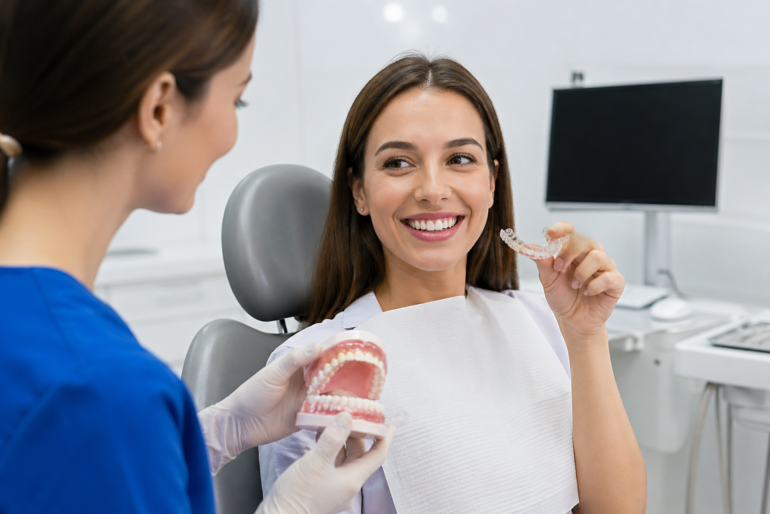
A straighter smile is not only for teenagers with metal brackets. Many grown adults want a better smile, but they hesitate because they imagine wires, food restrictions, long appointments, and the feeling of looking “too old” for orthodontic treatment. That is why Alternatives to Braces for Adults have become such a popular topic for people who want a cleaner, more confident smile without the traditional braces experience.
The good news is simple: adults now have more choices than ever.
Some options actually move teeth. Others improve the appearance of mild gaps, uneven edges, or small cosmetic concerns without fully changing tooth position. The right choice depends on your bite, your budget, your lifestyle, and how much correction your teeth really need.
This article walks through the most common modern options in a practical way, so you can understand what may fit your situation before speaking with a dentist or orthodontist.
Why Adults Look for Alternatives to Braces for Adults
Many adults are not against orthodontic treatment itself. They are against the idea of visible metal braces.
That is understandable.
You may work in a client-facing job. You may speak on camera. You may have a wedding, career change, or major life event coming up. Or maybe you simply do not want to deal with brackets and wires as an adult.
The American Association of Orthodontists notes that one in four orthodontic patients is an adult, which shows how common adult teeth straightening has become today. Adults often seek treatment for crowded teeth, gaps, bite problems, and crooked teeth, not just for appearance but also for easier oral hygiene.
Traditional braces still work very well, especially for complex cases. But if your alignment problem is mild to moderate, or your main concern is cosmetic, there may be other ways to improve your smile.
What Counts as a Braces Alternative?
A braces alternative is any treatment that improves tooth alignment, smile appearance, or bite function without using traditional metal brackets on the front of your teeth.
Some treatments move teeth slowly and safely over time. These include clear aligners and certain orthodontic appliances.
Other treatments do not move teeth much at all. Instead, they reshape, cover, or rebuild the visible surface of the teeth. These include veneers, bonding, contouring, and crowns in selected cases.
That difference matters.
If your teeth are truly misaligned, crowded, rotated, or affecting your bite, cosmetic treatments alone may only hide the issue. If your bite is already healthy and you only dislike small spaces or uneven tooth shape, cosmetic dentistry may be enough.
Clear Aligners: The Most Popular Option
Clear aligners are often the first treatment people think of when searching for Alternatives to Braces for Adults.
They are custom-made plastic trays that fit over your teeth. Instead of brackets and wires, each aligner applies controlled pressure to move teeth little by little. You usually switch to a new set every one to two weeks, depending on your treatment plan.
The American Association of Orthodontists says clear aligners may treat issues such as gapped teeth, crowded teeth, overbite, underbite, open bite, crooked teeth, and crossbite in suitable cases. Cleveland Clinic also describes clear aligners as a popular alternative to braces that use a series of custom trays to shift teeth into better positions over time.
Why Adults Like Clear Aligners
Clear aligners are popular because they fit modern adult life.
They are nearly invisible in everyday conversations. You can remove them for eating, brushing, and flossing. There are no wires poking your cheeks. There are also fewer food restrictions compared with traditional braces because you take the trays out when you eat.
For many adults, that convenience is the biggest selling point.
A person who attends meetings, works in sales, teaches, or records videos may feel more comfortable wearing clear aligners than metal braces. They can continue their routine without constantly thinking about how their teeth look.
Where Clear Aligners Work Best
Clear aligners usually work well for:
- Mild to moderate crowding
- Small gaps between teeth
- Minor rotations
- Relapse after previous braces
- Some bite correction cases
- Adults who can wear trays consistently
The key word is “consistently.”
Most aligner systems require long daily wear. If you remove them often, skip trays, or forget to wear them at night, progress can slow down or stop.
Where Clear Aligners May Not Be Enough
Clear aligners are not perfect for every mouth.
Severe crowding, major bite issues, large tooth rotations, impacted teeth, or complex jaw problems may still need braces or a combined orthodontic plan. That does not mean aligners are weak. It simply means some tooth movements need stronger control.
This is why an in-person exam matters. A digital scan alone may not tell the full story. Your dentist or orthodontist also needs to check gum health, bone support, bite pressure, cavities, and jaw function.
Ceramic Braces: A Less Visible Middle Ground
Ceramic braces are technically still braces, but many adults consider them a softer alternative because they are less noticeable than metal brackets.
Instead of shiny metal, ceramic braces use tooth-colored or clear brackets. The wires may also be lighter in color, depending on the system. From a distance, they blend in better with your teeth.
This option may suit adults who need the power of fixed braces but want something more discreet.
Ceramic braces can handle many cases that clear aligners may struggle with. They are often useful for more significant crowding, bite correction, or tooth movement that requires precision.
The downside is that they are still attached to your teeth. You still need to avoid certain hard or sticky foods. You still need careful brushing around brackets. They may also be more fragile or more expensive than traditional metal braces.
Still, for many adults, ceramic braces feel like a fair compromise between appearance and strength.
Lingual Braces: Hidden Behind the Teeth
Lingual braces are another option for adults who want fixed orthodontic treatment without visible front brackets.
These braces are placed on the back side of the teeth, facing the tongue. That makes them hard to see when you smile or speak.
For people who want powerful tooth movement but do not want visible braces, lingual braces can be attractive. They may work well for professionals, performers, and adults who feel self-conscious about visible orthodontic appliances.
However, they are not for everyone.
Lingual braces can feel uncomfortable at first because they sit near the tongue. Some people notice temporary speech changes. They may also be harder to clean and may cost more because they require specialized planning and placement.
If your main goal is invisibility and your case is too complex for aligners, lingual braces may be worth discussing with an orthodontist.
Dental Veneers: A Cosmetic Smile Shortcut
Veneers are not orthodontics in the traditional sense. They do not move your teeth into better positions like aligners or braces.
Instead, veneers are thin custom shells placed over the front surface of teeth. They can improve the appearance of chips, stains, uneven shapes, small gaps, and minor alignment concerns. Cleveland Clinic explains that dental veneers are custom-made shells that cover the front surfaces of teeth and can conceal cosmetic imperfections.
For adults with minor cosmetic concerns, veneers can create the look of a straighter smile without months of tooth movement.
When Veneers Make Sense
Veneers may be a good fit when:
- Your bite is healthy
- Your teeth are only slightly uneven
- You have small gaps
- You dislike tooth shape or color
- You want a cosmetic transformation
- Orthodontic movement is not necessary
For example, imagine an adult with two slightly small side teeth that make the front smile look gapped. Clear aligners could close some spacing, but veneers may also create better tooth proportions. In this case, the dentist may recommend cosmetic treatment instead of full orthodontics.
When Veneers Are Not the Best Choice
Veneers should not be used to hide serious crowding or bite issues.
If teeth are too far out of position, placing veneers may require too much enamel removal. That can weaken healthy teeth. Veneers also do not fix jaw alignment, chewing pressure, or gum problems caused by crowded teeth.
This is why veneers should be planned carefully. They can be beautiful, but they are not a shortcut for every case.
Dental Bonding for Small Gaps and Uneven Edges
Dental bonding is another cosmetic option for adults who want a quick smile improvement.
In bonding, a dentist applies tooth-colored resin to the tooth, shapes it, and hardens it with a special light. It can close tiny gaps, repair chips, reshape edges, and make teeth look more even.
Bonding is usually more affordable than veneers. It is also less invasive because it often requires little to no enamel removal.
For mild cosmetic concerns, bonding can be one of the simplest Alternatives to Braces for Adults.
For example, someone with one small gap between the front teeth may not want months of aligners. If the bite is healthy and the gap is mostly cosmetic, bonding may improve the smile in one visit.
The limitation is durability. Bonding can stain, chip, or wear down over time. It may need maintenance or replacement sooner than veneers.
Tooth Contouring and Reshaping
Tooth contouring, also called enameloplasty, is a small cosmetic procedure where a dentist gently reshapes the edges of teeth.
It can help when one tooth looks slightly longer, pointier, or uneven compared with the others. It may also smooth tiny chips or rough edges.
This treatment does not move teeth. It only changes the shape of the enamel in small amounts.
Tooth contouring can be useful when your teeth are already fairly straight but the smile line looks uneven. It is quick, subtle, and usually painless because only a small amount of enamel is adjusted.
However, it is not suitable for major alignment problems. There must be enough healthy enamel, and the dentist must avoid removing too much.
Retainers After Previous Braces
Some adults had braces as teens but stopped wearing retainers. Years later, their teeth shifted.
If the movement is minor, a dentist or orthodontist may recommend a new retainer or limited aligner treatment. Sometimes a spring retainer or active retainer can correct small relapse cases.
This is one of the most overlooked Alternatives to Braces for Adults because people assume they need full treatment again.
Not always.
If your teeth shifted only slightly, you may need a shorter, simpler plan. But do not force an old retainer onto shifted teeth. That can cause pain or damage. A professional should check whether a new appliance is safe.
Palatal Expanders and Adult Jaw Concerns
Palatal expanders are more common in children because their jaw bones are still growing. In adults, expansion is more complicated because the bones are mature.
Still, some adults may need expansion as part of a bigger orthodontic plan. In certain cases, this may involve specialized appliances or surgical assistance.
This is not a casual alternative for mild smile concerns. It is usually considered when the upper jaw is narrow, the bite is off, or there is not enough room for proper tooth alignment.
If an adult has significant crowding or crossbite, an orthodontist may discuss expansion-related options. This is a more advanced area and needs careful diagnosis.
Crowns for Alignment Appearance in Damaged Teeth
Dental crowns cover the entire visible part of a tooth. They are usually used when a tooth is weak, broken, heavily filled, or structurally damaged.
In some cosmetic cases, crowns may also improve the appearance of tooth position. But crowns should not be chosen just to avoid braces if the natural teeth are healthy.
Why?
A crown requires more tooth reduction than bonding or veneers. That makes it a bigger commitment.
Crowns may make sense when the tooth already needs protection and cosmetic improvement. They are not usually the first choice for simple straightening.
Teeth Whitening Before or After Alignment
Whitening does not straighten teeth, but it can make a smile look fresher and more even.
Many adults combine whitening with clear aligners, bonding, veneers, or contouring. In some cases, simply whitening teeth after mild alignment treatment creates a more dramatic result than expected.
The timing matters.
If you plan to get bonding, veneers, or crowns, whitening should usually happen first. Restorations do not whiten like natural enamel, so your dentist needs to match them to your desired shade.
This is a small detail, but it can make a big difference in the final result.
Comparing Alternatives to Braces for Adults
Here is a simple comparison to help you understand the main differences.
| Option | Best For | Main Benefit | Limitation |
|---|---|---|---|
| Clear aligners | Mild to moderate alignment issues | Discreet and removable | Requires discipline |
| Ceramic braces | More complex movement with less visibility | Stronger correction than aligners | Still fixed on teeth |
| Lingual braces | Hidden fixed treatment | Not visible from the front | Can affect comfort and speech |
| Veneers | Cosmetic gaps, shape, color issues | Fast smile makeover | Does not move teeth |
| Bonding | Small gaps, chips, uneven edges | Affordable and quick | Less durable |
| Tooth contouring | Minor uneven edges | Simple and subtle | Very limited correction |
| Retainers | Minor relapse after old braces | May be simpler than full treatment | Only for small movement |
| Crowns | Damaged teeth needing coverage | Strength and appearance | More invasive |
How to Choose the Right Option
Choosing the right treatment is less about what is trendy and more about what your mouth actually needs.
Start with the problem you want to solve.
Do your teeth feel crowded when you floss? Are your front teeth rotated? Do you have a bite issue? Do your teeth look uneven only because of shape or color? Are you unhappy with gaps, or do you feel your jaw does not close comfortably?
These answers point you toward different solutions.
Choose Clear Aligners If
Clear aligners may fit you if you want real tooth movement without visible braces.
They are often a good match for adults who are responsible with daily routines. If you can wear the trays as instructed and keep them clean, aligners can be very convenient.
They also work well for people who want fewer eating restrictions.
Choose Veneers or Bonding If
Veneers or bonding may fit you if your teeth are mostly healthy in position but look uneven because of shape, small gaps, discoloration, or chips.
These treatments are cosmetic. They can make a smile look straighter, but they do not correct the underlying bite.
Choose Ceramic or Lingual Braces If
Ceramic or lingual braces may fit you if your case needs stronger orthodontic control but you want something less visible than metal braces.
This is common for adults with more crowding, rotations, or bite problems.
Real-World Example: Three Adult Smile Scenarios
Let’s make this practical.
Scenario 1: The Busy Professional With Mild Crowding
A 34-year-old marketing manager has mild lower crowding and one slightly rotated front tooth. She speaks with clients daily and does not want visible braces.
Clear aligners may be a strong option because the issue is mild to moderate, and the treatment can fit her work routine. She must be willing to wear trays consistently and attend checkups.
Scenario 2: The Adult With Small Gaps and Short Teeth
A 41-year-old has small gaps near the front teeth and teeth that look slightly narrow. The bite is healthy, and there is no major crowding.
Veneers or bonding may be considered because the concern is more about tooth shape and proportions than tooth position.
Scenario 3: The Adult With Bite Problems
A 29-year-old has crowding, an overbite, and jaw discomfort when chewing. He wants a fast cosmetic fix.
In this case, cosmetic treatment alone may not be enough. An orthodontist may recommend braces, clear aligners, or another structured treatment plan depending on the bite. Hiding the issue with veneers could ignore the real problem.
Cost Factors Adults Should Think About
The price of Alternatives to Braces for Adults can vary widely.
Costs depend on your location, treatment complexity, dentist or orthodontist experience, imaging needs, retainers, refinements, and whether cosmetic work is included.
Clear aligners may cost less for mild cases and more for complex cases. Veneers are often priced per tooth, so a full smile makeover can become expensive. Bonding may be cheaper upfront, but it may need touch-ups over time.
Insurance may cover some orthodontic treatment, but adult coverage varies. Cosmetic treatments such as veneers and bonding are often not covered unless there is a functional or restorative reason.
Always ask for a full treatment estimate, not just the starting price.
Ask whether the quote includes:
- Consultation
- X-rays or scans
- All aligner trays
- Refinements
- Emergency visits
- Retainers
- Follow-up appointments
- Replacement trays or repairs
This prevents surprise costs later.
Safety Matters More Than Convenience
Adult teeth straightening should not be treated like buying a beauty product.
Before moving teeth, a professional should check gum health, bone support, cavities, root condition, and bite forces. Teeth can move only through healthy bone and gums. If gum disease is present, orthodontic movement may create more problems.
This matters especially for adults because gum recession, bone loss, old dental work, crowns, implants, and missing teeth are more common with age.
Recent research has also looked at how clear aligners affect oral hygiene and the mouth’s bacterial environment. One 2023 review found clear aligner therapy can have advantages such as being removable and comfortable, but success depends on case selection, proper planning, and patient compliance. Another 2023 review reported promising findings around plaque and gingival health with clear aligners, though oral hygiene still remains essential.
In plain English, the treatment tool matters, but your habits matter too.
Questions to Ask Before Starting Treatment
Before choosing between Alternatives to Braces for Adults, ask direct questions during your consultation.
You do not need to sound like a dental expert. You just need clear answers.
Ask:
- Is my concern cosmetic, orthodontic, or both?
- Will this treatment move my teeth or only improve appearance?
- Do I have gum or bone issues that affect treatment?
- How long will the result last?
- Will I need retainers afterward?
- What happens if my teeth do not move as planned?
- Are refinements included?
- Can this treatment affect my bite?
- Is there a less invasive option?
- What maintenance will I need?
A good provider will welcome these questions.
Do Adults Always Need Retainers After Treatment?
Yes, retainers are usually needed after tooth movement.
This is true whether you had braces, clear aligners, or minor orthodontic correction. Teeth naturally try to shift over time. Retainers help keep them in their new position.
Many adults are surprised by this because they think treatment ends when the teeth look straight. In reality, retention is part of the result.
If you choose aligners, ask about the retainer plan before you start. Find out how often you will wear them and how replacement works.
Can You Straighten Teeth Without Seeing an Orthodontist?
Some services advertise remote teeth straightening. They may seem affordable and convenient, but adult orthodontics can carry risks if there is no proper exam.
The shutdown of SmileDirectClub left many customers uncertain and renewed concern from dental professionals about direct-to-consumer aligners without enough in-person supervision. AP News reported that dental groups had long raised safety concerns about remote aligner models and emphasized the importance of local dentist involvement.
That does not mean every remote tool is automatically unsafe. It means your mouth deserves more than a quick impression kit.
For adults, an in-person dental exam is especially important before choosing Alternatives to Braces for Adults.
Common Myths About Braces Alternatives
Myth 1: Clear Aligners Work for Everyone
Clear aligners are excellent for many adults, but not all cases. Severe bite issues, major rotations, or complex tooth movement may need another approach.
Myth 2: Veneers Are the Same as Straightening Teeth
Veneers can create the look of straighter teeth, but they do not move teeth. They are cosmetic restorations, not orthodontic treatment.
Myth 3: Adult Teeth Cannot Move
Adult teeth can move. Treatment may take careful planning, but many adults successfully improve alignment later in life.
Myth 4: If Teeth Look Straight, the Bite Is Fine
A smile can look straight from the front while the bite is still uneven. That is why bite evaluation matters.
Best Daily Habits During Adult Smile Treatment
Good habits protect your investment.
Brush carefully twice a day. Floss daily. Clean aligners as instructed. Do not eat while wearing removable trays. Avoid sugary drinks when aligners are in your mouth. Keep dental cleanings on schedule.
If you choose bonding or veneers, avoid biting hard objects such as ice, pens, or fingernails. Cosmetic dental work is strong, but it is not indestructible.
If you grind your teeth at night, tell your dentist. You may need a night guard after cosmetic work or orthodontic treatment.
Conclusion: Alternatives to Braces for Adults Can Be Practical, Subtle, and Life-Changing
Alternatives to Braces for Adults are not about avoiding real dental care. They are about finding the right path for your mouth, your confidence, and your daily life.
Clear aligners can move teeth discreetly. Ceramic and lingual braces can offer stronger correction with less visibility. Veneers, bonding, and contouring can improve the appearance of a smile when the issue is mostly cosmetic. Retainers may help minor relapse, while crowns may be useful when damaged teeth also need restoration.
The smartest choice starts with a proper dental exam. Once you know whether your concern is cosmetic, orthodontic, or both, the decision becomes much easier.
A better smile does not have to feel embarrassing, complicated, or out of reach. With modern dentistry and careful planning, adults have realistic options that can improve both appearance and comfort while supporting long-term oral health.
Frequently Asked Questions
What are the best Alternatives to Braces for Adults?
The best options include clear aligners, ceramic braces, lingual braces, veneers, dental bonding, tooth contouring, retainers for minor relapse, and crowns in selected restorative cases. The right choice depends on whether your problem is tooth movement, bite correction, or cosmetic appearance.
Are clear aligners better than braces for adults?
Clear aligners may be better for adults with mild to moderate alignment issues who want a removable and discreet option. Braces may be better for complex bite problems, severe crowding, or tooth movements that need stronger control.
Can veneers replace braces?
Veneers can improve the look of mildly uneven teeth, small gaps, chips, or discoloration. They do not actually straighten teeth or fix bite problems, so they should not replace orthodontic treatment when real alignment correction is needed.
What is the fastest way to make adult teeth look straighter?
For cosmetic concerns, bonding or veneers can create a straighter-looking smile faster than orthodontics. For actual tooth movement, clear aligners may be faster in mild cases, but timing depends on your teeth and treatment plan.
Are Alternatives to Braces for Adults safe?
They can be safe when planned by a qualified dental professional after checking your teeth, gums, bite, and bone support. Safety depends on proper diagnosis, realistic treatment choice, and good oral hygiene.