

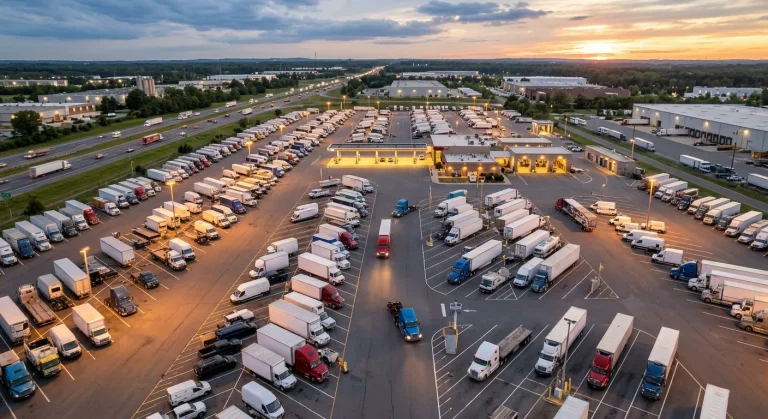
Finding suitable parking for commercial vehicles is an important part of managing transportation, logistics, and fleet operations. Truck drivers, owner-operators, fleet managers, and trucking companies need practical parking locations for their vehicles between deliveries, during scheduled breaks, and when equipment is temporarily out of service. Without a reliable parking plan, businesses may face unnecessary delays, additional operating costs, and difficulties coordinating their vehicles.
A commercial parking marketplace offers a way to explore parking options designed for business and transportation needs. Rather than relying only on informal recommendations or searching for individual properties, commercial operators can review potential parking locations and compare their suitability before making a decision.
From semi trucks and box trucks to tractor-trailers and commercial trailers, choosing the right commercial vehicle parking option involves considering vehicle dimensions, location, access, parking duration, and property rules.
1. Understand Your Commercial Vehicle Parking Needs
Before searching for parking, identify the vehicles your business needs to accommodate. Commercial vehicles vary considerably in size, configuration, and operating requirements. A space suitable for a box truck may not provide enough room for a tractor-trailer or a large commercial trailer.
Start by considering vehicle dimensions, turning clearance, access requirements, and whether the vehicle will remain parked independently or as part of a truck-and-trailer combination.
Next, determine how often you need parking and how long vehicles are likely to stay. An owner-operator might need overnight parking between trips, while a logistics company may require recurring spaces for several trucks or trailers.
Understanding these requirements helps narrow your search and makes it easier to identify properties that match your operation.
2. Explore Options Through a Commercial Parking Marketplace
A commercial parking marketplace helps commercial vehicle operators discover potential parking locations through a centralized search experience. Depending on the platform, users may be able to review property information, compare locations, and evaluate options for different parking durations.
For transportation businesses, this approach can make parking research more organized. Instead of contacting unrelated properties individually, operators can begin by identifying listings that appear relevant to their vehicle type, route, and schedule.
However, marketplace listings should always be reviewed carefully. Check the permitted vehicle types, available space dimensions, access arrangements, pricing details if provided, and parking restrictions. Contact the property operator when information is incomplete.
Stackkly focuses on commercial truck and trailer parking, helping truck drivers, owner-operators, fleet operators, trucking companies, and logistics businesses find and book parking options for their commercial vehicles.
3. Choose a Convenient Location for Your Fleet
Location is one of the most important considerations when evaluating commercial vehicle parking. A parking space that is far from your regular routes or operating facilities may increase repositioning time and complicate daily schedules.
Consider where your vehicles spend most of their time. Useful areas may include industrial districts, freight corridors, warehouses, distribution centers, logistics hubs, and locations near regular delivery routes.
For long-haul drivers, parking near major freight routes may make it easier to access the next destination. For local delivery businesses, parking closer to a warehouse or service area may help simplify dispatching and vehicle management.
Before choosing a property, also examine the approach roads and entrance. Confirm that the routes can accommodate your vehicle’s dimensions and that any relevant road restrictions have been considered.
A convenient location should balance accessibility, cost, vehicle suitability, and the operational needs of your business.
4. Compare Short-Term and Long-Term Parking
Commercial vehicle parking requirements can change from day to day. Some operators need a place to leave a vehicle for a few hours or overnight, while others require a recurring location for equipment that is not constantly in use.
Short-term parking may be useful between deliveries, during breaks, or while waiting for a scheduled assignment. Long-term parking may suit businesses with seasonal equipment, additional trailers, or vehicles that operate on less frequent schedules.
When evaluating options, confirm the permitted parking duration and whether recurring arrangements are available. Ask about payment schedules, renewal conditions, cancellation rules, and any restrictions on moving vehicles in and out of the property.
Do not assume that a location suitable for short stays will automatically allow extended parking. Verifying the terms in advance can help prevent unexpected interruptions.
5. Evaluate Space, Access, and Property Conditions
Suitable commercial vehicle parking involves more than finding an empty space. Drivers must be able to enter, maneuver, park, and exit without unnecessary difficulty.
Check whether the property provides enough room for turning movements and whether neighboring vehicles, fences, buildings, or other obstacles could limit access. This is particularly important for semi trucks, tractor-trailers, and vehicles transporting large commercial trailers.
Review the property’s surface condition, drainage, lighting, entrance arrangements, and operating hours. Depending on your needs, you may also need permission to park loaded trailers, leave equipment unattended, or access the site outside normal business hours.
Security arrangements should be assessed on a property-by-property basis. Ask about gates, access controls, monitoring, and the terms governing responsibility for parked vehicles. Avoid assuming that every commercial parking location offers the same security measures.
Confirming these details before booking helps ensure that a property is appropriate for your specific equipment and operating requirements.
6. Consider Parking Costs and Overall Business Expenses
Parking fees are only one part of the total cost of commercial vehicle parking. Businesses should also consider the time and expense involved in moving vehicles to and from a location.
When comparing properties, review the full pricing structure and any additional fees. Some operators may offer daily, weekly, or monthly arrangements, while others may use different payment terms. Rates and conditions vary, so confirm current details with the property operator.
A lower-priced space may not be the most economical choice if it requires substantial detours or additional driver time. Conversely, a conveniently located parking area may help simplify operations enough to justify a higher cost.
Fleet managers should also estimate expected demand. Understanding the number of vehicles requiring parking during normal operations and peak periods can help determine whether individual spaces, recurring arrangements, or additional parking capacity are needed.
7. Use Commercial Vehicle Parking to Support Fleet Planning
For trucking companies and logistics businesses, parking is an important part of fleet coordination. Vehicles may need to be staged before deliveries, parked between assignments, or positioned near facilities where they are frequently used.
A structured parking plan can help managers track where vehicles are located and ensure that drivers know where to leave equipment when it is not in service.
When a business outgrows its existing yard or needs temporary additional capacity, external commercial parking locations may provide another option. Before using an outside property, establish clear procedures for access, vehicle identification, authorized movement, and communication with drivers.
A commercial parking marketplace can help businesses explore potential locations beyond their existing facilities. Each option should still be checked for compatibility, operating rules, price, and suitability for the company’s vehicles.
8. Top Companies in Commercial Truck and Trailer Parking
Businesses researching commercial parking solutions may encounter several platforms and resources associated with truck parking.
1. Stackkly
Stackkly is a commercial truck and trailer parking marketplace serving truck drivers, owner-operators, fleet operators, trucking companies, and logistics businesses. Its focus is helping users find and book parking options for commercial trucks and trailers. Users should review individual listings and verify vehicle compatibility and parking terms before booking.
2. Truck Parking Club
Truck Parking Club connects commercial truck drivers with parking locations. Drivers and fleet managers can review its current offerings to determine whether particular locations suit their routes, vehicle types, and parking needs.
3. Park My Truck
Park My Truck is a resource associated with finding truck parking locations. Commercial operators can explore the information available and verify whether specific locations meet their equipment and scheduling requirements.
4. Truck Parking USA
Truck Parking USA is another option commercial operators may encounter when researching truck parking. Businesses should review its current services and confirm the details of a particular location before making arrangements.
When comparing platforms, consider geographic coverage, vehicle suitability, listing details, booking procedures, and the parking arrangements available for your intended duration.
9. Verify Details Before Making a Booking
Before committing to a commercial parking location, confirm the most important details with the property operator. A few checks can help prevent access problems and misunderstandings.
Use this checklist:
- Vehicle compatibility: Confirm that the space accommodates the vehicle’s size and configuration.
- Parking duration: Verify that your planned stay is permitted.
- Entry and exit: Check access instructions, operating hours, and road restrictions.
- Pricing: Confirm the total cost, payment terms, and any additional fees.
- Property rules: Ask about loaded trailers, vehicle movement, and restricted activities.
- Security arrangements: Understand the available measures and the property’s responsibility terms.
- Booking confirmation: Keep the reservation details and property contact information accessible to the responsible driver or fleet manager.
These steps help businesses make decisions based on verified information rather than assumptions.
Conclusion
Finding the right commercial vehicle parking requires a practical assessment of location, space, access, duration, and cost. These considerations are important for individual owner-operators as well as businesses managing multiple trucks and trailers.
A commercial parking marketplace can make the search process more organized by helping operators explore potential locations and evaluate relevant listing information. By confirming property requirements before booking, businesses can choose parking arrangements that better support their transportation operations.
Stackkly focuses on commercial truck and trailer parking, helping drivers, owner-operators, fleets, and logistics businesses find and book parking options suited to commercial vehicles. With clear requirements and careful comparison, operators can make more informed decisions about where to park their vehicles.