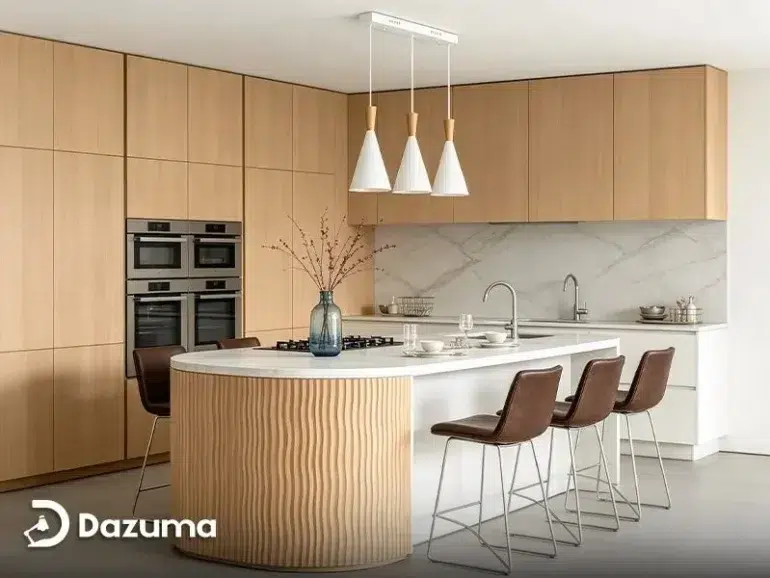
Changing a ceiling light is one of the simplest ways to refresh a room without replacing furniture, repainting walls, or beginning a major renovation. The right pendant can create a focal point, define a particular area, and make an ordinary interior feel more thoughtfully designed.
However, not every room needs the same type of fixture. Compact pendants are useful when the space needs focused lighting without visual clutter, while wider drum-shaped designs can bring balance and presence to larger rooms. Choosing between them depends on the room’s proportions, furniture layout, ceiling height, and intended atmosphere.
Matching the size and shape of a pendant light to the room can create a more balanced and polished interior.
Why Pendant Lighting Makes Such a Noticeable Difference
Pendant lights hang closer to the furniture and activity areas below them than standard ceiling fixtures. This helps connect the ceiling visually with a kitchen island, dining table, reading corner, or bedside area.
They are also useful in open-plan homes. A group of pendants above an island can mark the kitchen zone, while a larger fixture above the dining table establishes a separate place for meals. This creates visual organisation without requiring walls or partitions.
The fixture does not need to be oversized or highly decorative to make an impact. Correct scale and placement are often more important than an elaborate design.
Choose Mini Pendants for Flexibility
Small fixtures are particularly useful in apartments, compact kitchens, breakfast areas, narrow hallways, and rooms with limited ceiling space. They provide focused illumination while allowing the surrounding interior to remain open.
mini pendant lights can be installed individually or arranged in groups. One fixture may work above a bedside table, reading chair, or small breakfast table. Two or three pendants can provide better coverage across a kitchen island or long counter.
Grouping smaller fixtures also gives homeowners more control over spacing. Instead of allowing one large pendant to dominate the room, several compact designs can create rhythm while distributing light across the surface below.
Mini pendants are available in glass, metal, coloured, and decorative designs. Clear glass keeps a small room feeling light, while a coloured or metal shade can introduce contrast and personality.
Choose a Drum Pendant for a Stronger Focal Point
A drum pendant has a wider cylindrical or rounded shade, giving it more visual presence than a compact pendant. This style works well when the room needs one central feature rather than several smaller lights.
Drum Pendant Lighting can suit dining rooms, bedrooms, living rooms, entryways, and home offices. Fabric shades often create a softer and more relaxed glow, while metal, glass, or open-frame drum designs can produce a cleaner contemporary appearance.
The wider shade can also help balance substantial furniture. A large dining table, king-size bed, or broad seating arrangement may look disconnected beneath a very small fixture. A correctly sized drum pendant gives the furniture and ceiling a clearer visual relationship.
Match the Shape to the Furniture
The furniture beneath the light should guide the choice. A row of mini pendants naturally follows the length of a kitchen island. One drum pendant may work better above a round or square dining table, where a single central focal point feels balanced.
In bedrooms, small pendants beside the bed can replace table lamps and free up nightstand space. A drum pendant positioned in the centre of the room can provide a softer general glow and make the bedroom feel more complete.
The fixture does not have to copy the furniture shape exactly, but the two should look visually connected.
Consider Ceiling Height and Hanging Position
A pendant that hangs too high may feel disconnected from the furniture, while one installed too low can block views and interfere with movement. Above tables and islands, the fixture should feel close enough to create focus without interrupting conversation or daily tasks.
In hallways, entryways, and other walking areas, suitable head clearance is essential. Rooms with lower ceilings may benefit from compact pendants with shorter suspension lengths, while taller spaces can support larger drum shades or more dramatic drops.
Before installation, temporary markers or cardboard templates can help homeowners visualise the fixture’s size and position.
Coordinate Materials and Finishes
Pendant lighting looks more intentional when it relates to other details in the room. Black fixtures can connect with window frames, cabinet handles, or furniture legs. Brass finishes complement warm wood and neutral fabrics. Glass can balance heavy furniture, while a fabric drum shade can soften a room filled with hard surfaces.
Exact matching is unnecessary. Repeating one colour or material in two or three places is usually enough to create a coordinated design.
Remember to Layer the Lighting
A pendant should not be expected to handle every lighting task. Kitchens may still need under-cabinet or recessed lighting, while bedrooms and living rooms benefit from lamps or wall lights.
Combining several light sources makes the room more flexible. Brighter lighting can support working and cleaning, while softer pendant and accent lighting can create a more comfortable evening atmosphere.
Final Thoughts
Mini and drum pendant lights both offer practical ways to improve an interior, but they serve different purposes. Mini pendants provide flexibility and focused illumination in compact areas, while drum pendants create a stronger central feature and suit rooms that need more visual balance.
By considering the furniture, ceiling height, room size, materials, and daily activities, homeowners can choose a pendant that feels naturally connected to the space. A thoughtful lighting update can make even a simple room feel more polished, comfortable, and complete.