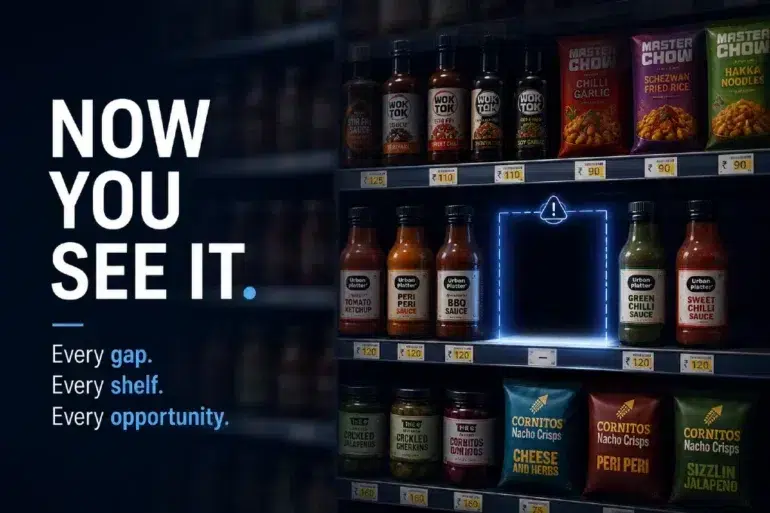
The modern retail store looks peaceful to the casual observer. Shoppers stroll down aisles, background music plays softly, and neatly stacked products await selection. But underneath this calm exterior lies a fierce, high-stakes conflict.
Every day, Consumer Packaged Goods (CPG) brands, distributors, and retailers engage in an invisible war. The battlefield is the retail shelf. The weapons are millimeters of shelf space, eye-level positioning, promotional tags, and pricing strategies. In this war, a single out-of-stock item or a misplaced competitor product can mean millions of dollars in lost revenue and a permanent shift in consumer loyalty.
For decades, leadership teams have fought this war using blunt instruments: manual audits, historical sales data, and gut instinct. However, as retail environments become increasingly complex and consumer behavior grows more volatile, these traditional methods are no longer sufficient. Winning the retail battle today requires real-time clarity. It requires moving from guesswork to execution.
This is where AI Shelf Intelligence comes in. Powered by advanced artificial intelligence and Computer Vision (CV), Shelf Intelligence exposes the hidden dynamics of the retail environment, turning the invisible war into a visible, winnable strategy.
The Blind Spots Inhibiting Retail Execution
In conversations with global consumer goods executives, a recurring theme emerges: a profound lack of real-time visibility at the store level. Organizations invest heavily in brand marketing, supply chain optimization, and trade promotions, yet they remain fundamentally blind to what happens when the product meets the shelf.
Consider the traditional retail audit. A sales representative visits a store, manually counts inventory, estimates Share of Shelf (SoS), checks compliance against a planogram, and logs the data into a Customer Relationship Management (CRM) or Sales Force Automation (SFA) tool. This process is flawed in three major ways:
- Human Subjectivity: Two representatives looking at the same shelf will often calculate shelf share differently. Human error and fatigue lead to inaccurate reporting.
- Time Inefficiency: Manual audits are incredibly time-consuming. A representative might spend 20 to 30 minutes just counting products on a single category shelf, leaving less time for actual selling, relationship building, or corrective action.
- Stale Data: By the time manual audit data is aggregated, cleaned, and analyzed by corporate teams, weeks have passed. Leadership is forced to make strategic decisions based on what was happening, rather than what is happening.
When brands operate with these blind spots, they suffer from compliance drift. Planograms agreed upon at the corporate level are rarely executed perfectly on the ground. Competitors quietly encroach on assigned facings, promotional materials are left in the backroom, and critical out-of-stock (OOS) situations go unnoticed for days. This is the cost of fighting an invisible war without intelligence.
Understanding Shelf Intelligence: The Digital Eyes of CPG Enterprise
Shelf Intelligence transforms the physical retail shelf into a structured, continuous stream of digital data. By leveraging sophisticated Image Recognition (IR) technology, the process is radically simplified. A field representative takes a quick photograph of the shelf using a mobile device. Within seconds, an AI engine processes the image, identifying every product, SKU, competitor item, price tag, and promotional banner.
This technology does not merely recognize shapes; it understands context. It measures exact Share of Shelf down to the percentage point, detects planogram compliance deviations, identifies missing price tags, and flags immediate out-of-stock risks.
From a business standpoint, this shifts the paradigm from reactive firefighting to proactive execution. Instead of guessing why a specific region is underperforming, executive teams can see precisely which stores lack compliance, which competitors are launching aggressive hyper-local promotions, and where distribution gaps exist.
The Strategic Pillars of the Invisible War
To effectively leverage Shelf Intelligence, business leaders must understand the key dimensions of the retail environment where the “invisible war” is won or lost.
1. The Battle for Real-Estate: Share of Shelf (SoS)
In retail, shelf space is directly correlated with market share. If your brand owns 40% of the category market share but only occupies 25% of the physical shelf space, you are actively losing revenue to competitors. Conversely, maintaining too much slow-moving shelf space hurts retail partnerships.
Shelf Intelligence provides objective, automated tracking of SoS. It allows brands to audit their share versus competitors instantly. When a competitor attempts to crowd out your SKUs, the system alerts the field team, allowing them to present data-driven arguments to store managers to reclaim their rightful real estate.
2. The Battle for Execution: Planogram Compliance
Brands spend millions designing optimal planograms based on shopper psychology and cross-merchandising strategies. Yet, global retail compliance rates hovering around 40-50% are shockingly common.
When a planogram is violated, the strategic intent of the brand is broken. Shelf Intelligence matches the real-time image of the shelf against the master planogram layout. It instantly highlights anomalies—such as a premium SKU placed on the bottom shelf instead of eye level—allowing field teams to rectify the execution before it impacts daily sales.
3. The Battle for Availability: Mitigating On-Shelf Availability (OSA) Gaps
An empty shelf space is the ultimate failure in retail. If a consumer cannot find their preferred brand, they will either buy a competitor’s product or leave the store empty-handed. Traditional inventory systems often show that a item is “in stock” because it sits in the store’s backroom, but if it is not on the shelf, it does not exist to the shopper.
Image recognition bridges the gap between inventory logic and shelf reality. By identifying phantom inventory and alerting teams to empty facings immediately, it ensures that On-Shelf Availability remains optimal, directly protecting the brand’s bottom line.
4. The Battle for Intelligence: Competitor Counter-Strategy
Your competitors are not static. They constantly adjust prices, introduce new packaging, and roll out localized promotions. Tracking these moves manually across thousands of retail outlets is impossible.
With automated image analysis, every shelf photo captured by your field force double-functions as a competitive intelligence report. Leadership gains macro-level insights into competitor pricing trends, new product introductions, and promotional strategies, enabling agile, defensive, or offensive counter-measures.
Operationalizing Intelligence: Empowering the Field Force
The value of data lies entirely in its actionability. Gathering massive amounts of retail data is useless if it simply sits in a corporate dashboard. True enterprise transformation occurs when Shelf Intelligence is integrated seamlessly into the daily workflows of the sales and field teams.
When a field representative walks into a retail outlet equipped with an advanced solution like Retail Image Recognition Software, their role shifts from a data collector to a strategic consultant.
Instead of spending their limited store visit time manually auditing shelves, they take a single photograph. The AI processes the image in real time, providing the representative with an instant “Perfect Store” score and a clear, prioritized checklist of corrective actions:
- Fix the out-of-stock on SKU X.
- Correct the incorrect price tag on SKU Y.
- Reposition SKU Z to match the planogram.
By automating the administrative burden, field representatives save up to 60-70% of the time previously spent on audits. This saved time can be reinvested into expanding distribution, negotiating better secondary displays, and building stronger, data-backed relationships with store managers.
The Executive Horizon: Data-Driven Retail
For Chief Commercial Officers, Sales Directors, and CEOs, the ultimate benefit of Shelf Intelligence goes beyond operational efficiency. It provides a single source of truth for the entire organization.
Historically, sales teams and supply chain teams operated in silos, often disagreeing on the root causes of poor performance. Shelf Intelligence introduces objective, verifiable data into the enterprise ecosystem. This visibility allows corporate leadership to:
- Optimize Trade Spend: Evaluate whether expensive trade promotions and displays are actually being set up correctly by retailers.
- Refine Supply Chain Forecasting: Align manufacturing and distribution schedules with actual on-shelf velocity and compliance realities rather than flawed historical orders.
- Enhance Category Management: Approach retail partners not with vague requests for more space, but with clear, visual evidence showing how optimal compliance for your brand increases the overall profitability of the retailer’s entire category.
Conclusion
The invisible war across the retail landscape is accelerating. As discounters expand, e-commerce forces physical retail to be more experiential, and consumers demand instant gratification, the margin for error at the shelf has dropped to zero. Brands can no longer afford to fly blind.
Investing in Shelf Intelligence is no longer an experimental innovation project; it is a core strategic imperative for modern CPG enterprises. By turning visual data into immediate execution, market leaders are eliminating blind spots, maximizing field productivity, and ensuring that their products are always in the right place, at the right price, at the right time.
In the battle for the retail shelf, visibility is the ultimate unfair advantage. Those who see the battlefield clearly will win the war.