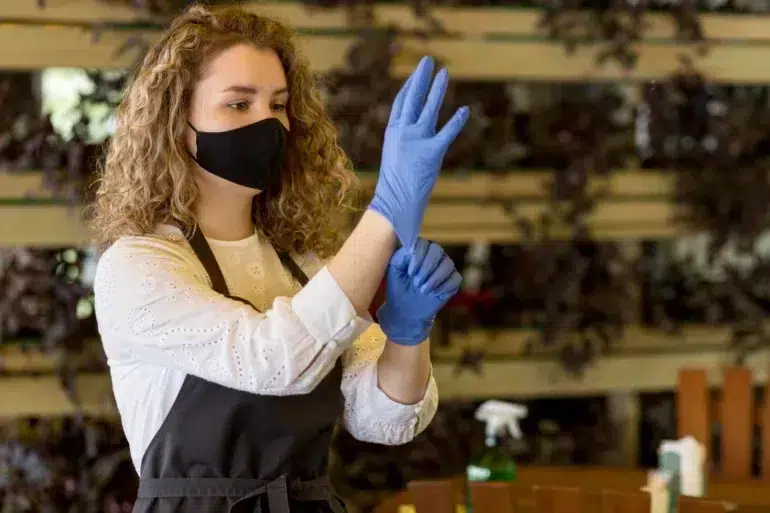
Choosing the right disposable gloves is essential so that you receive the safety, protection, and dexterity benefits you seek. The most common options include nitrile, latex, and vinyl. But which is best for your needs?
KEY TAKEAWAYS
Disposable gloves are used for a diverse range of applications, from medical and healthcare to automotive, manufacturing, food service, janitorial, and DIY.
There are several options in terms of disposable glove material, and choosing the right one for you and your needs is crucial.
In terms of durability, strength, imperviousness, and optimised protection, nitrile gloves tend to perform best and are a non-allergenic option for heightened health and safety.
Hand protection is as important as using the right tools or other products – from DIY jobs at home to industrial, healthcare, dental, laboratory, or any other type of work. Gloves are used for:
- Medical
- Dentistry
- Pathology
- Laboratory work
- Chemical handling
- Tattooing
- Piercing
- Hair colouring
- Nail technicians
- Beauty salons
- Cleaning and janitorial work
- Automotive
- Manufacturing
- Emergency services (police, paramedics)
- Food handling/preparation/serving
- Painting
- Woodworking
- Crafting
- General protection
Choosing the glove that’s right for your needs is crucial.
NITRILE
Nitrile gloves are made from man-made rubber and provide excellent chemical-resistance and puncture-resistance. Unlike latex, they do not cause allergic reactions, so are safe for almost everyone to use and ideal for medical and other healthcare work where infection risk is high, and scalpels and needles are commonly used. They’re ideal for use when handling sharp objects and chemicals such as oils, solvents, and acids – though they are not impervious to all of these.
Widely used for projects using harsh chemicals, like manufacturing, automotive, painting, and laboratory-based research, these are a durable glove and there are biodegradable options available for those seeking a more environmentally sustainable disposable glove alternative. They tend to be marginally less flexible than latex gloves, so they are not quite as snug-fitting or dextrous.
LATEX
Latex is a natural rubber. Gloves made from lates are highly flexible, snug-fitting, and comfortable. They offer high touch-sensitivity, and they’re ideal for tasks requiring a high level of precision and accuracy, and are naturally biodegradable – so they make for a sustainable choice.
Some people are sensitive or even allergic to latex – this is a limitation of these gloves, and those people should choose another material. Latex gloves are also not as resistant as nitrile when it comes to strong chemicals, and they puncture/tear/abrade more readily. As such, they are better suited for projects with a low risk of chemical exposure or ripping and which require a high level of dexterity.
VINYL
The most cost-efficient option, vinyl gloves are latex-free, non-allergenic, and good for light tasks like basic household cleaning, gardening, and food handling. They’re not as durable or as strong as latex and nitrile, and they are a good option for short-term wear as a temporary barrier against mild irritants and dirt. They offer only very limited chemical resistance.
CONCLUSION
Understanding the properties, advantages, and drawbacks of each material makes choosing the right disposable gloves for your needs much easier. Whether you need nitrile gloves for medical or heavy-duty jobs, latex for optimal comfort and dexterity, or budget-friendly vinyl for very light duties, the right product for your unique needs is available online near you at a competitive price.