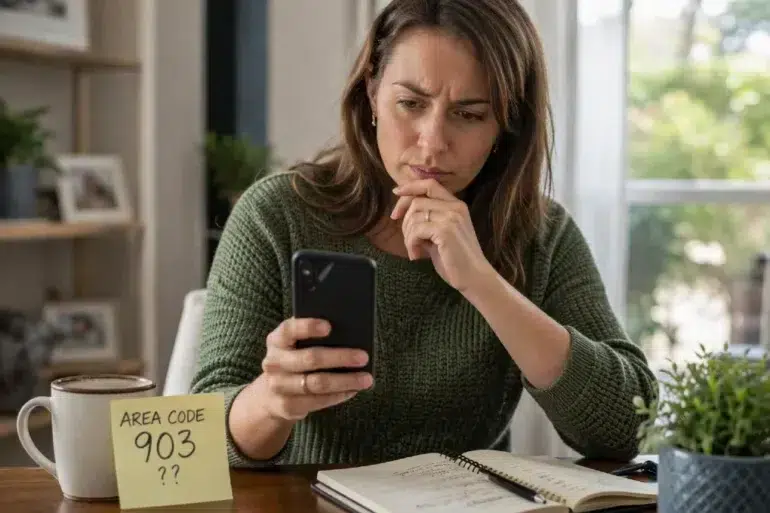
If you’ve recently received a call from the 903 Area Code, you might be wondering whether it’s legitimate or something to worry about. You’re not alone. Many people search for answers after seeing unfamiliar numbers pop up on their phones, especially when spam calls are more common than ever.
The truth is simple: the 903 Area Code is a real and valid area code in Texas. However, like any other area code, it can still be used by scammers. That’s where confusion starts. Just because a number looks local or familiar doesn’t automatically mean it’s safe.
In this article, we’ll break down everything you need to know about the 903 Area Code, including where it’s located, why you might be getting calls from it, and how to tell the difference between a real caller and a scam.
What Is the 903 Area Code and Where Is It Located?
The 903 Area Code is assigned to northeastern Texas. It covers a wide region that includes both small towns and mid-sized cities.
Some of the major cities in the 903 area include:
- Tyler
- Texarkana
- Sherman
- Denison
- Longview
- Paris
This area code was created in 1990 when it split from the 214 area code due to increasing demand for phone numbers in Texas.
If you see a number starting with 903, it is most likely associated with this part of Texas. That said, with modern technology like VoIP and number spoofing, the physical location of the caller isn’t always guaranteed.
Is 903 Area Code a Scam or Legit?
Let’s clear this up directly.
The 903 Area Code itself is not a scam. It is a legitimate North American area code used by residents and businesses in Texas.
However, scammers can and do use numbers that appear to come from this area code. This practice is known as caller ID spoofing, where the displayed number is manipulated to look local or trustworthy.
So the real answer is:
- The area code is real
- The caller may or may not be
That distinction is important. The number alone does not determine whether a call is safe.
Why You Might Be Getting Calls from the 903 Area Code
There are several common reasons you might receive calls from the 903 Area Code.
1. A Legitimate Call from Texas
You may have:
- A friend or family member living in Texas
- A business contact based in the region
- An online order or service connected to a Texas company
In these cases, the call is completely normal.
2. Business or Customer Service Calls
Many companies operate nationwide but use regional numbers. You could receive calls from:
- Delivery services
- Customer support teams
- Financial institutions
Even if you’re not in Texas, businesses often use local numbers to improve answer rates.
3. Robocalls and Telemarketing
Telemarketing calls sometimes use local area codes like 903 to appear more familiar. This increases the chance that someone will pick up.
According to the Federal Trade Commission, Americans receive billions of robocalls each year, many of which use spoofed local numbers.
4. Scam Calls Using Spoofed Numbers
This is the biggest concern for most people.
Scammers often:
- Fake local area codes
- Pretend to be government agencies or banks
- Use urgency or fear to trick people
A call from the 903 Area Code could fall into this category if the behavior seems suspicious.
How to Tell If a 903 Area Code Call Is a Scam
Recognizing a scam call is more about behavior than the number itself. Here are some warning signs.
Red Flags to Watch For
- The caller asks for personal or financial information
- You hear a pre-recorded message instead of a real person
- The caller pressures you to act quickly
- The call claims you owe money or have won a prize
- The number calls repeatedly without leaving a message
If any of these happen, it’s best to hang up immediately.
Signs the Call Might Be Legitimate
- The caller identifies themselves clearly
- They don’t pressure you for sensitive information
- You recognize the business or person
- You can verify the number online
Always take a moment to verify before responding.
Real World Example: How Scammers Use Local Area Codes
Imagine you live in another state but receive a call from a 903 Area Code number.
You might think, “This could be someone local or important,” and answer. That’s exactly what scammers rely on.
They often use a tactic called “neighbor spoofing,” where the number looks similar to your own. This trick increases trust and curiosity.
Once you answer, they may:
- Pretend to be from a bank
- Claim suspicious activity on your account
- Ask you to confirm sensitive details
This is why relying only on the area code is not enough to judge safety.
How to Protect Yourself from 903 Area Code Scam Calls
You don’t need to panic every time you see an unfamiliar number. A few smart habits can make a big difference.
Simple Safety Tips
- Do not answer unknown numbers unless necessary
- Let calls go to voicemail first
- Avoid sharing personal details over the phone
- Use call blocking or spam detection apps
- Register your number with the National Do Not Call Registry
These steps reduce your chances of falling for scams.
What to Do If You Answer a Suspicious Call
If you accidentally answer a suspicious call:
- Hang up immediately
- Do not engage with the caller
- Do not press any buttons
- Block the number
If the call involved fraud attempts, consider reporting it to the Federal Trade Commission at reportfraud.ftc.gov.
Can a Real Business Use the 903 Area Code?
Yes, absolutely.
Many legitimate businesses operate within the 903 Area Code region. These include:
- Local service providers
- Retail stores
- Medical offices
- Government agencies
Receiving a call from this area code does not automatically mean it’s a scam.
In fact, northeastern Texas is a growing region with active commerce, meaning many valid businesses use 903 numbers daily.
903 Area Code Time Zone and Details
The 903 Area Code operates in the Central Time Zone (CT).
Here’s a quick overview:
| Detail | Information |
|---|---|
| State | Texas |
| Region | Northeast Texas |
| Time Zone | Central Time (CT) |
| Overlay Code | 430 |
The overlay code 430 was introduced to meet demand for additional numbers in the same region.
Frequently Asked Questions About 903 Area Code
Is the 903 Area Code safe?
Yes, the 903 Area Code itself is safe and legitimate. However, individual callers may still be scammers.
Why do scammers use real area codes like 903?
Scammers use real area codes to appear trustworthy and increase the chances of someone answering the call.
Can I block all 903 Area Code calls?
You can, but it is not recommended. You might block legitimate calls from businesses or contacts in Texas.
How can I verify a 903 number?
Search the number online or call the official business number listed on their website to confirm authenticity.
Final Thoughts
So, is the 903 Area Code a scam or a real Texas number?
It’s definitely real. It represents a genuine part of northeastern Texas and is widely used by residents and businesses. The confusion comes from how easily scammers can mimic legitimate numbers using modern technology.
The safest approach is to judge the call based on behavior, not just the number. Stay cautious, verify unknown callers, and avoid sharing sensitive information unless you are completely sure who you’re dealing with.
Understanding how phone systems work, including things like a telephone numbering system, can help you stay one step ahead of scams.
At the end of the day, awareness is your best defense.