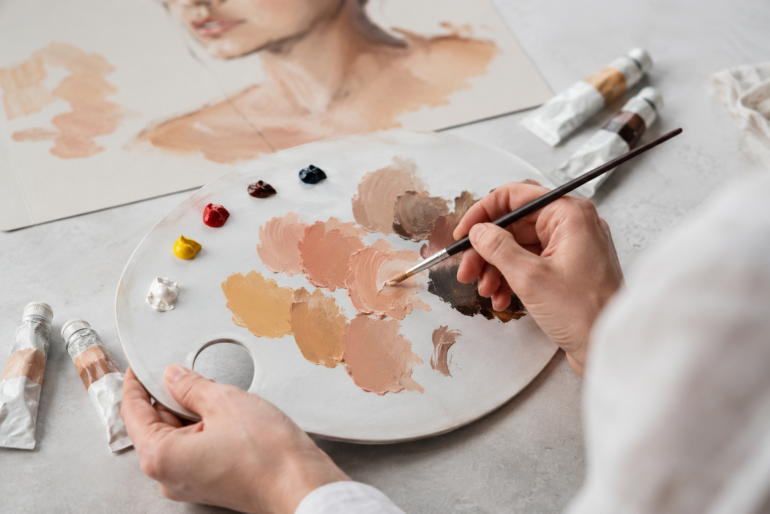
Learning How to Make Skin Color Paint is one of the most useful skills for artists, students, craft lovers, and anyone working on portraits or realistic figure painting. Skin is never just one flat color. It can be warm, cool, light, deep, golden, pink, olive, brown, reddish, or neutral depending on the person, lighting, and painting style.
The good news is that you do not need a huge paint collection to mix believable skin tones. With a few basic colors, some patience, and a better understanding of undertones, you can create natural-looking shades for portraits, school projects, canvas art, miniatures, clay crafts, and DIY decorations.
Many beginners try to mix “skin color” by adding white to brown or peach, but that often creates a dull, chalky, or fake-looking result. Realistic skin color paint comes from balancing red, yellow, blue, brown, and white in small amounts. Once you understand how those colors work together, the process becomes much easier.
What Makes Skin Color Paint Look Realistic?
Real skin has depth. It is affected by blood flow, light, shadows, undertones, and surrounding colors. That is why one single paint mix rarely works for an entire face, hand, or body.
A realistic skin tone usually includes three things:
- A base color
- A warm or cool undertone
- Highlight and shadow variations
For example, cheeks may look slightly warmer or pinker than the forehead. Areas under the chin, nose, or hairline may look cooler or darker. Hands may have more red or brown tones than the face.
When you understand this, How to Make Skin Color Paint becomes less about finding one perfect formula and more about learning how to adjust color naturally.
Basic Colors You Need to Make Skin Color Paint
You can make many skin tones using only a small group of paints. You do not need every shade in the art store.
Here are the most useful basic colors:
- Red
- Yellow
- Blue
- White
- Brown
- Black, used carefully
- Orange, optional
- Burnt sienna, optional
- Raw umber, optional
- Yellow ochre, optional
If you are using acrylic paint, these colors work very well. If you are using watercolor, oil paint, gouache, or poster paint, the same color logic still applies, but the mixing behavior may feel slightly different.
For beginners, red, yellow, blue, white, and brown are enough to start.
Simple Skin Color Paint Formula for Beginners
A basic skin color starts with a warm orange-brown base. You can create this by mixing red and yellow, then adjusting it with white and brown.
Try this simple formula:
| Step | Color to Add | Purpose |
|---|---|---|
| 1 | Yellow + red | Creates a warm orange base |
| 2 | Add a small amount of brown | Makes the color more natural |
| 3 | Add white slowly | Lightens the tone |
| 4 | Add tiny blue if too orange | Reduces brightness |
| 5 | Adjust with red or yellow | Changes undertone |
Start with more yellow than red. A strong red can quickly overpower the mix, so add it slowly.
A beginner-friendly ratio is:
- 2 parts yellow
- 1 part red
- Small touch of brown
- White as needed
This creates a peachy base. From there, you can darken it, warm it, cool it, or soften it.
How to Make Skin Color Paint With Primary Colors
If you only have primary colors, you can still mix skin tones. Red, yellow, and blue can make almost any natural shade when balanced correctly.
Start by mixing yellow and red to make orange. Then add a very tiny amount of blue. Blue dulls the orange and turns it into a more natural brownish tone.
After that, add white if you want a lighter skin tone.
The key is to use blue carefully. Too much blue can make the mixture gray, green, or muddy. Add only a pin-sized amount at a time.
This method is helpful because it teaches you how color balance works. If the paint looks too bright, add a tiny bit of blue. If it looks too dull, add a little yellow or red. If it looks too dark, add white.
How to Make Light Skin Color Paint
Light skin tones are not just white plus orange. They often include soft pink, peach, beige, cream, or yellow undertones.
To make light skin color paint, start with white as your main color. Add a tiny amount of yellow and red to create a soft peach. Then add a small touch of brown to make it look more natural.
A simple light skin mix:
- White as the base
- Small touch of yellow
- Tiny touch of red
- Very small touch of brown
If the color looks too pink, add yellow. If it looks too yellow, add a little red or brown. If it looks too bright, add a tiny touch of blue or brown.
For realistic art projects, avoid making light skin too pure or pale. Even very fair skin has warmth, shadow, and subtle color changes.
How to Make Medium Skin Color Paint
Medium skin tones often have warm golden, tan, olive, or light brown qualities. These shades are very common in portraits and figure painting.
To make a medium skin tone, begin with yellow and red to create orange. Add brown until the color becomes more natural. Then add white to control the brightness.
A basic medium skin mix:
- Yellow
- Red
- Brown
- White
- Tiny blue if needed
If you want a golden medium tone, add more yellow. If you want a warmer tan tone, add more red or burnt sienna. If you want an olive tone, add a very small amount of blue or green.
This is where How to Make Skin Color Paint becomes more interesting because medium tones can shift in many directions. A person’s skin may look golden in sunlight, cooler indoors, and warmer near red clothing or warm light.
How to Make Dark Skin Color Paint
Dark skin tones are rich, layered, and full of color. A common mistake is using plain black or dark brown only. That makes the skin look flat and lifeless.
To make dark skin color paint, start with brown as your base. Add red and yellow to bring warmth. Then use blue or a tiny amount of black to deepen the shade.
A simple dark skin mix:
- Brown
- Red
- Yellow
- Small touch of blue
- White for highlights only
For deep warm brown skin, add more red or burnt sienna. For cooler dark skin, add a tiny bit more blue. For golden dark skin, add yellow ochre.
When painting dark skin, highlights are very important. The highlights should not always be pure white. Mix the base skin tone with a little yellow, orange, or cream to create natural highlights.
How to Make Skin Color Paint for Different Undertones
Undertone is the subtle color underneath the surface of the skin. It affects how realistic your paint mix looks.
There are three common undertone types:
| Undertone | What It Looks Like | Paint Adjustment |
|---|---|---|
| Warm | Golden, peach, reddish, honey | Add yellow, red, orange, or burnt sienna |
| Cool | Pink, bluish, violet, soft red | Add red, blue, or a tiny purple tone |
| Neutral | Balanced beige, brown, or tan | Balance yellow, red, brown, and white |
Warm undertones usually feel sunlit and golden. Cool undertones may appear pinker or slightly muted. Neutral undertones sit somewhere in between.
When mixing paint, look at your subject carefully. Is the skin more yellow, red, brown, olive, or pink? That small observation can completely improve your final result.
Skin Color Paint Mixing Chart
Here is a simple mixing chart you can use while practicing:
| Desired Skin Tone | Start With | Add | Adjust With |
|---|---|---|---|
| Fair peach | White + yellow | Tiny red | Small brown |
| Warm beige | Yellow + red | White | Brown |
| Tan | Yellow + red | Brown | White or blue |
| Olive | Yellow + brown | Tiny blue | White |
| Reddish brown | Brown | Red | Yellow |
| Deep brown | Brown + blue | Red | Yellow or white |
| Golden brown | Brown + yellow | Red | White |
| Cool brown | Brown | Blue | Red or white |
This chart is not a strict rule. Think of it as a starting point. Paint brands, paper types, canvas surfaces, and lighting can all change the final appearance.
How to Make Skin Color Paint With Acrylics
Acrylic paint dries slightly darker than it looks when wet. This is important when mixing skin tones because a perfect wet mix may look too dark after drying.
When working with acrylics, mix a little more paint than you think you need. It can be difficult to match the exact shade again once it dries.
Useful acrylic mixing tips:
- Add paint in tiny amounts
- Test the color on scrap paper or canvas
- Let the test patch dry before judging it
- Keep notes of your color ratios
- Use a wet palette if you need more working time
Acrylics are great for school projects, canvas portraits, crafts, and decorative pieces. They dry quickly, so blending skin tones requires some planning.
How to Make Skin Color Paint With Watercolors
Watercolor works differently because the whiteness usually comes from the paper, not white paint. To make lighter skin tones, you add more water instead of more white.
Start with a very light wash of yellow and red. Then add tiny touches of brown, orange, or blue depending on the tone you need.
For watercolor skin tones:
- Use more water for lighter tones
- Build color slowly in layers
- Avoid overmixing on paper
- Let each layer dry before adding shadows
- Use soft edges for cheeks, noses, and hands
Watercolor skin can look beautiful when layered gently. If you make the first layer too dark, it can be hard to correct, so always begin lighter than you think.
How to Make Skin Color Paint With Oil Paint
Oil paint gives you more time to blend. This makes it excellent for realistic portraits and smooth skin transitions.
For oil painting, start with a base flesh tone and slowly add warm and cool variations. You can blend shadows and highlights directly on the canvas.
Useful oil colors for skin include:
- Titanium white
- Yellow ochre
- Burnt sienna
- Raw umber
- Cadmium red
- Ultramarine blue
Oil paint is forgiving because it stays wet longer. However, it also requires patience. If you are painting realistic skin, build layers gradually rather than trying to finish everything in one pass.
How Lighting Changes Skin Color Paint
Lighting can completely change how skin appears. A person standing in warm sunset light will not have the same skin color as someone standing under cool indoor lighting.
Warm light makes skin look more orange, golden, or red. Cool light can make skin look more blue, gray, or purple in shadow areas.
For realistic art projects, always ask:
- Is the light warm or cool?
- Where is the strongest light coming from?
- Which areas are in shadow?
- Are nearby objects reflecting color onto the skin?
For example, if someone is sitting near a green wall, a little green may reflect into the shadow areas of their skin. If they are near a red curtain, the skin may look warmer.
This is one reason real portraits rarely use only one skin color.
How to Mix Highlights and Shadows for Skin
Once you create a base skin tone, you need highlight and shadow colors. Without them, the painting will look flat.
For highlights, add:
- White
- Yellow
- Cream
- Light peach
For shadows, add:
- Brown
- Blue
- Purple
- Raw umber
- Burnt sienna
Avoid using plain black for shadows. It can make skin look dirty or lifeless. Instead, use dark browns, muted purples, or cool blues depending on the lighting.
A warm shadow may need brown and red. A cool shadow may need brown and blue. A soft natural shadow may need the base color plus a little raw umber.
Common Mistakes When Mixing Skin Color Paint
Many beginners struggle with skin tones because they overcorrect too quickly. One small amount of strong paint can change the entire mixture.
Here are common mistakes to avoid:
- Adding too much red at once
- Using black to darken every shade
- Making all skin tones too orange
- Using pure white highlights everywhere
- Forgetting undertones
- Painting the whole face with one flat color
- Ignoring light direction
- Not testing the color before applying it
The best solution is to mix slowly. Add tiny amounts, test often, and compare your paint to the subject or reference image.
How to Fix Skin Color Paint That Looks Wrong
Sometimes your paint mix will look too orange, too pink, too gray, or too muddy. That does not mean you need to throw it away. Most skin tone mistakes can be corrected.
If the color is too orange, add a tiny touch of blue or brown.
If it is too pink, add yellow or a small amount of brown.
If it is too yellow, add red or a tiny touch of purple.
If it is too dark, add white for acrylic or oil, or water for watercolor.
If it is too pale, add brown, red, or yellow depending on the tone.
If it looks muddy, you may have added too many colors. Start a cleaner mix and use the muddy color only for shadows.
Understanding these corrections is a big part of learning How to Make Skin Color Paint with confidence.
Real-World Example: Mixing Skin Color for a Portrait
Imagine you are painting a portrait of someone with a medium warm skin tone. You start by mixing yellow and red to create orange. Then you add brown to soften it. The color looks close, but it feels too bright.
You add a tiny touch of blue to calm it down. Now it looks more natural. For highlights, you take some of that base color and mix in white and yellow. For shadows, you mix the base color with brown and a tiny amount of blue.
Now you have three related colors:
- Base skin tone
- Highlight skin tone
- Shadow skin tone
Because all three came from the same base, they look connected. This makes the portrait feel more realistic.
Real-World Example: Mixing Skin Color for Crafts
If you are painting clay figures, dolls, or school craft projects, you may not need highly detailed portrait colors. Still, the skin tone should look pleasant and balanced.
For a simple craft skin tone, mix white, yellow, red, and a small amount of brown. Keep it soft and clean. If you are painting cartoon-style figures, you can make the color slightly warmer or brighter.
For realistic crafts, add small variations. Hands, cheeks, and noses can be slightly warmer. Shadow areas can be slightly darker. Even a simple craft project looks better when the skin is not one flat color.
How to Make Skin Color Paint Look Natural on Canvas
Canvas texture can affect how paint appears. Acrylics may dry darker. Oils may stay glossy. Thin layers may reveal texture underneath.
To make skin color look natural on canvas:
- Start with a mid-tone base
- Add shadows before final highlights
- Blend edges softly around cheeks and forehead
- Keep some areas slightly warmer
- Avoid over-smoothing every detail
- Step back often to view the whole painting
Natural skin has soft transitions. However, it also has small color changes. Do not blend everything into one plain shade. A little variation adds life.
Best Paint Colors for Realistic Skin Tones
You can work with basic colors, but some artist colors make the job easier. These are especially useful if you paint portraits often.
Helpful colors include:
- Titanium white
- Yellow ochre
- Burnt sienna
- Burnt umber
- Raw sienna
- Raw umber
- Cadmium red or similar warm red
- Ultramarine blue
- Alizarin crimson or similar cool red
Yellow ochre is especially useful because it creates natural warmth without becoming too bright. Burnt sienna is excellent for warm reddish-brown skin tones. Raw umber works well for muted shadows.
How to Match a Skin Tone From a Photo
If you are using a photo reference, do not pick just one color from the face. Photos contain highlights, shadows, mid-tones, and reflected colors.
Look for the middle skin tone first. This is usually the area that is not too bright and not too dark. Mix that color as your base.
Then observe:
- Are the shadows warm or cool?
- Are the cheeks redder?
- Is the forehead more yellow?
- Is the chin darker?
- Does the light source change the color?
Photos can also be affected by filters, indoor lighting, or camera settings. Use your eyes, but do not copy every color blindly. Adjust the paint so it looks natural in your artwork.
How to Practice Skin Color Mixing
The best way to improve is to make small color studies. Do not wait until you are working on an important painting.
Try this practice method:
- Make a simple base skin tone.
- Create five lighter versions by adding white.
- Create five darker versions by adding brown or blue.
- Create warm versions by adding yellow or red.
- Create cool versions by adding blue or purple.
- Label each mix so you remember what worked.
This exercise helps you understand how colors behave. Over time, you will stop guessing and start mixing with intention.
Why Skin Color Paint Should Show Diversity
One of the most important parts of realistic art is representing different skin tones with care. Skin colors exist across a wide range, from very fair to very deep, with many undertones in between.
A good artist does not rely on one “flesh color” tube for every subject. Instead, they observe each person’s unique tone and mix accordingly.
This makes your artwork more respectful, accurate, and visually rich. It also helps your portraits feel more human.
When learning How to Make Skin Color Paint, remember that there is no single universal skin color. There are many beautiful variations.
Best Tips for Better Skin Tone Painting
Here are practical tips that can quickly improve your results:
- Mix more than one skin tone for each subject
- Use warm and cool colors together
- Keep shadows colorful, not just dark
- Avoid using black too heavily
- Study real faces under different lighting
- Test every mixture before painting
- Keep notes of successful mixes
- Use thin layers for natural transitions
- Let undertones guide your adjustments
Small changes make a big difference. A tiny amount of blue can calm down orange. A touch of red can bring warmth. A little yellow can add life.
Frequently Asked Questions About Making Skin Color Paint
What colors make skin color paint?
Most skin color paint starts with red, yellow, brown, and white. Blue is often added in very small amounts to reduce brightness or create cooler shadows. The exact mix depends on whether you want light, medium, tan, olive, brown, or deep skin tones.
Can I make skin color paint without brown?
Yes, you can make brown by mixing red, yellow, and blue. Start with red and yellow to create orange, then add a tiny amount of blue to turn it into brown. After that, adjust with white, yellow, or red depending on the skin tone you need.
Why does my skin color paint look orange?
Skin color paint often looks orange when there is too much red and yellow without enough neutral color. Add a tiny amount of blue or brown to soften it. Be careful because too much blue can make the paint gray or muddy.
How do I make skin color paint darker?
To make skin color paint darker, add brown, burnt umber, raw umber, or a tiny touch of blue. Avoid using too much black because it can make the color look flat. For richer dark skin tones, use brown with red, yellow, and small amounts of blue.
How do I make skin color paint lighter?
For acrylic or oil paint, add white slowly to lighten the mixture. For watercolor, add more water and use the white of the paper. To keep the color natural, you may also need to add a tiny bit of yellow or red after lightening.
Can I use pre-mixed flesh tone paint?
Yes, but it is better to treat pre-mixed flesh tone as a starting point, not a final answer. You will usually need to adjust it with yellow, red, brown, blue, or white to match the subject.
Conclusion
Learning How to Make Skin Color Paint is not about memorizing one perfect recipe. It is about understanding how red, yellow, blue, brown, and white work together to create natural human tones. Once you know how to adjust warmth, coolness, light, and shadow, your paintings start to feel more realistic.
Start simple. Mix a base color, then create lighter and darker versions from it. Pay attention to undertones, lighting, and the small color changes that make skin look alive. Whether you are using acrylics, oils, watercolors, or craft paint, the same basic idea applies.
The more you practice, the easier it becomes to see color accurately. A strong understanding of color theory can also help you make better choices when mixing skin tones for portraits, crafts, and realistic art projects.
In the end, How to Make Skin Color Paint is a skill that grows with observation. Look closely, mix slowly, and let each layer add depth. That is how simple paint turns into natural, expressive, believable skin.