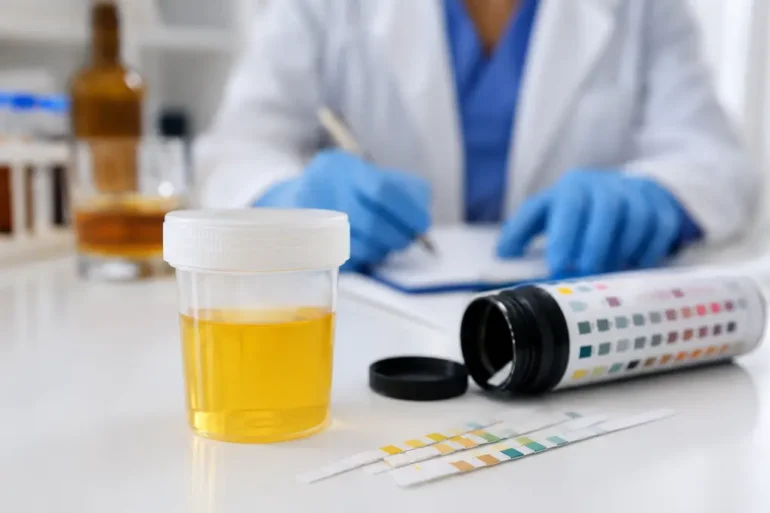
If you are wondering how long does alcohol stay in urine, the honest answer is: it depends on the type of urine test being used. A standard urine alcohol test may detect alcohol for only a short period, often around 12 to 24 hours. More sensitive tests, such as EtG and EtS urine tests, can detect alcohol byproducts for much longer, sometimes from 1 to 5 days depending on drinking amount, test cutoff, and the person’s body.
That is why two people can drink on the same night and still have different test results later. Your body size, metabolism, liver health, hydration level, drinking pattern, and the exact test method all matter.
This article breaks it down in plain English, without scare tactics or confusing medical language.
What Does a Urine Alcohol Test Actually Look For?
A urine alcohol test does not always look for the same thing.
Some tests look for ethanol itself, which is the actual alcohol found in beer, wine, and liquor. Ethanol usually leaves urine fairly quickly. Other tests look for alcohol metabolites, which are byproducts your body creates after processing alcohol.
The most common alcohol-related urine markers include:
| Test Type | What It Detects | Typical Detection Window |
|---|---|---|
| Ethanol urine test | Alcohol itself | Usually up to 12 to 24 hours |
| EtG test | Ethyl glucuronide, an alcohol metabolite | Around 1 to 5 days |
| EtS test | Ethyl sulfate, another alcohol metabolite | Around 1 to 5 days |
| Lab confirmation test | More precise measurement | Depends on test method and cutoff |
ARUP Consult lists ethanol detection in blood or urine at roughly 1 to 12 hours, while EtG and EtS can be detected in urine for 1 to 5 days. ARUP’s lab test information also notes that EtG and EtS may be detected up to 80 hours after ethanol ingestion.
That is why the question how long does alcohol stay in urine can have more than one correct answer. A basic urine test and an EtG urine test are not the same thing.
How Long Does Alcohol Stay in Urine for Standard Alcohol Tests?
For standard alcohol tests that check for ethanol, alcohol may be detectable in urine for several hours after drinking. In many cases, the window is around 12 hours, though it may stretch longer depending on how much alcohol was consumed and how the test is performed.
For EtG or EtS testing, the window is longer. These tests do not measure intoxication. They measure evidence that alcohol was processed by the body.
A practical way to think about it is:
| Drinking Situation | Possible Urine Detection Window |
|---|---|
| One light drink | Several hours to 24 hours |
| Moderate drinking | 24 to 48 hours |
| Heavy drinking | 48 to 80 hours or longer |
| EtG or EtS sensitive testing | 1 to 5 days in some cases |
Mayo Clinic Laboratories states that urine testing for EtG and EtS can help identify alcohol consumption in urine up to five days, especially in clinical or monitoring settings.
So, if someone asks how long does alcohol stay in urine after a night out, the safer answer is this: standard ethanol testing may only catch recent drinking, but EtG or EtS testing may detect alcohol use for days.
Why Standard Urine Tests and EtG Tests Give Different Answers
A standard urine alcohol test is usually focused on recent alcohol presence. It answers a narrow question: is alcohol still present in the urine?
An EtG test asks a different question: has the body processed alcohol recently?
EtG stands for ethyl glucuronide. EtS stands for ethyl sulfate. These are direct metabolites formed after the body breaks down ethanol. Because they remain detectable longer than ethanol itself, they are commonly used in programs where recent alcohol use matters, such as clinical treatment monitoring, abstinence programs, or justice system settings. Mayo Clinic Laboratories lists EtG testing as useful for monitoring abstinence in clinical and justice system settings.
This is where many people get confused.
A person may no longer feel drunk. Their breath may not smell like alcohol. Their blood alcohol concentration may be back down. But an EtG urine test may still detect signs of prior drinking.
That does not mean the person is currently impaired. It means the test found evidence of recent alcohol exposure.
What Affects How Long Alcohol Stays in Urine?
There is no single timer that works for everyone. Your body processes alcohol at its own pace, and urine testing adds another layer because different labs use different detection thresholds.
The main factors include:
Amount of Alcohol Consumed
The more alcohol you drink, the more your body has to process.
A small amount of alcohol may clear faster than a heavy drinking episode. After heavy drinking, EtG and EtS levels may remain detectable longer because the body has produced more metabolites.
For example, one glass of wine with dinner may have a shorter detection window than several mixed drinks over a long night. This does not mean the exact number of drinks guarantees a specific test result, but drinking amount is one of the biggest factors.
Time Since Your Last Drink
Timing is everything.
A urine test taken 4 hours after drinking is different from one taken 48 hours later. Standard ethanol tests are more useful shortly after drinking. EtG and EtS tests are designed for a longer lookback window.
This is why how long does alcohol stay in urine is often tied to the phrase “detection window.” The test is not measuring how someone feels. It is measuring whether alcohol or its markers are still detectable.
Test Sensitivity and Cutoff Level
Not every test uses the same cutoff.
A lower cutoff can detect smaller amounts for longer. A higher cutoff may reduce the chance of picking up trace exposure but may also miss lower-level drinking.
One study on urinary EtG found that a 100 ng/mL cutoff was more likely to detect heavy drinking for up to five days and any drinking during the previous two days.
That is a major reason online answers can seem inconsistent. One source may be talking about standard ethanol testing. Another may be talking about a sensitive EtG screen. Another may be referring to a confirmation test.
Hydration and Urine Concentration
Hydration can affect urine concentration, but it does not magically remove alcohol from the body.
Drinking water may dilute urine, but labs often check for signs of dilution. Many professional testing programs look at creatinine, specific gravity, or other validity markers to see whether a urine sample appears unusually diluted.
In simple words: water supports normal body function, but it does not force your liver to process alcohol at super speed.
Body Size, Sex, and Metabolism
People absorb and process alcohol differently.
Body weight, biological sex, genetics, liver function, food intake, and overall health can all influence alcohol metabolism. Someone who drank alcohol with a full meal may absorb it differently than someone who drank quickly on an empty stomach.
That said, metabolism has limits. The body still needs time to process ethanol.
Liver Health
The liver does most of the work when it comes to breaking down alcohol.
If a person has liver disease or reduced liver function, alcohol processing may be slower. This can affect how long alcohol or its byproducts remain measurable.
Anyone with liver problems, alcohol dependence concerns, or repeated heavy drinking should speak with a qualified healthcare professional instead of relying on online detection estimates.
Does the Type of Alcohol Matter?
Many people assume liquor stays in urine longer than beer or wine. The truth is more practical: the amount of pure alcohol matters more than the drink type.
A standard drink in the United States generally contains about the same amount of pure alcohol, whether it comes from beer, wine, or liquor. The difference is serving size.
For example:
| Drink | Approximate Standard Serving |
|---|---|
| Beer | 12 ounces at about 5% alcohol |
| Wine | 5 ounces at about 12% alcohol |
| Distilled spirits | 1.5 ounces at about 40% alcohol |
What usually changes the result is how many standard drinks were consumed, how quickly they were consumed, and whether food was eaten.
So, if someone has three strong cocktails, that may represent more alcohol than they realize. A large pour of wine or a high-alcohol craft beer can also contain more than one standard drink.
Can Alcohol Be Detected After 24 Hours?
Yes, alcohol-related markers can sometimes be detected after 24 hours.
If the test is looking only for ethanol, detection after 24 hours is less likely unless drinking was heavy or the testing conditions are unusual. But if the test is looking for EtG or EtS, detection after 24 hours is very possible.
This is one of the most important points in this article.
When people ask how long does alcohol stay in urine, they often think only about alcohol itself. But many modern urine tests are not just looking for alcohol. They are looking for what alcohol leaves behind.
Can Alcohol Be Detected After 48 Hours?
Yes, especially with EtG or EtS testing.
After moderate or heavy drinking, EtG can sometimes be detected around 48 hours later. The likelihood depends on how much alcohol was consumed, the cutoff level, and the person’s biology.
A standard urine ethanol test is much less likely to detect alcohol after 48 hours, but an EtG test may still be positive.
This is why testing programs often use EtG or EtS when they want a longer detection window.
Can Alcohol Be Detected After 80 Hours?
It can happen with EtG and EtS tests.
ARUP’s test information states that EtG and EtS can be detected up to 80 hours in urine after ethanol ingestion. ARUP Consult also gives a broader urine detection window of 1 to 5 days for EtG and EtS.
However, “up to 80 hours” does not mean every person will test positive for 80 hours after any drink. A single light drink is different from heavy drinking. A sensitive lab test is different from a less sensitive screen.
This is why realistic wording matters. The answer is not always “yes” or “no.” It is about probability, test type, and context.
Common Real-World Scenarios
Let’s make this easier with a few everyday examples.
Scenario 1: One Drink With Dinner
Someone has one beer or one glass of wine with a meal.
A standard urine test may only detect alcohol for a short time. An EtG test could detect alcohol use longer, but the window may be shorter than it would be after heavy drinking.
This type of situation is also where cutoff levels matter a lot. A very sensitive test may detect lower exposure that another test might not report as positive.
Scenario 2: A Night of Heavy Drinking
Someone drinks several alcoholic beverages over several hours.
This creates more ethanol for the body to process and more metabolites afterward. In this case, EtG or EtS may be detectable for a couple of days and sometimes longer.
If the test is tied to probation, treatment, workplace policy, or medical monitoring, the person should follow the official rules of that program rather than guessing from online timelines.
Scenario 3: Drinking on Friday and Testing Monday
This is one of the most common questions.
Could alcohol still show in urine on Monday after drinking Friday night? With a standard ethanol urine test, it is less likely. With EtG or EtS testing, it may be possible, especially if drinking was heavy or the test is sensitive.
Again, there is no guaranteed answer without knowing the test type and cutoff.
Can Mouthwash or Hand Sanitizer Affect EtG Results?
EtG testing is sensitive, and that sensitivity is both useful and tricky.
Some alcohol-containing products may create concern, including:
- Alcohol-based mouthwash
- Hand sanitizer
- Certain cough syrups
- Some fermented foods or beverages
- Nonalcoholic beers that still contain trace alcohol
- Cooking extracts or flavorings
ARUP notes that EtG alone is not always a unique marker of ethanol ingestion and that false positives or false negatives can occur in some circumstances, including microbial formation, fermentation, or bacterial degradation.
This does not mean every positive test is caused by mouthwash. It means context matters, especially when results have legal, medical, or employment consequences.
For serious testing situations, confirmation testing and professional interpretation are important.
Does Drinking Water Help Alcohol Leave Urine Faster?
Water does not speed up alcohol metabolism in a meaningful way.
Your liver processes alcohol at a limited rate. Drinking water may help with dehydration and general comfort, but it does not erase EtG or EtS from urine on demand.
Trying to dilute urine may also create problems. Labs can often detect diluted samples, and a diluted result may be treated as invalid or suspicious depending on the testing policy.
A better approach is simple: avoid alcohol when you are required to remain alcohol-free, and do not rely on shortcuts.
Are Home Urine Alcohol Tests Accurate?
Home tests can be useful for general awareness, but they are not the same as professional lab testing.
A home EtG strip may show a positive or negative result based on its cutoff. But lab testing can be more controlled, more sensitive, and more reliable. Some lab tests also include confirmation methods that reduce uncertainty.
If the result matters for court, work, treatment, or medical care, a home test should not be treated as the final word.
Urine Alcohol Test vs Breath Test vs Blood Test
Different tests answer different questions.
| Test Type | Best For | General Detection Window |
|---|---|---|
| Breath test | Current or recent alcohol use | Usually hours |
| Blood test | Current alcohol level | Usually up to 12 hours |
| Standard urine ethanol test | Recent alcohol presence | Often up to 12 to 24 hours |
| EtG or EtS urine test | Recent alcohol use history | Around 1 to 5 days |
| Hair or nail testing | Longer-term pattern | Weeks to months |
Breath and blood tests are often used when current impairment is the main concern. Urine EtG and EtS tests are used more often when recent alcohol use is the concern, even after intoxication has passed.
That distinction matters. A person can be sober at the moment and still have a positive EtG result from earlier drinking.
What If a Test Comes Back Positive?
If a urine alcohol test comes back positive, the next step depends on the situation.
For medical care, the result may help a healthcare provider understand recent alcohol exposure. For treatment monitoring, it may be part of a broader conversation about recovery. For legal or workplace testing, the policy may determine what happens next.
A positive result should be interpreted carefully. The test type, cutoff, timing, sample validity, and possible exposure sources all matter.
If the result is unexpected and important, it may be reasonable to ask whether confirmation testing was performed. Lab confirmation can help reduce confusion, especially with sensitive screening tests.
How to Read Detection Windows Without Panicking
Detection windows are estimates, not promises.
When you see a statement like “alcohol can be detected for up to 80 hours,” it does not mean every drink will show for that long. It means detection is possible under certain conditions.
When you see “1 to 5 days,” that range may include heavy drinking, sensitive cutoffs, and clinical monitoring tests.
A more realistic way to read it is:
- Standard urine ethanol tests usually detect recent alcohol use for a shorter time.
- EtG and EtS tests can detect alcohol use for much longer.
- Heavy drinking increases the chance of a longer detection window.
- Test cutoff levels can change the result.
- No online article can guarantee a personal test outcome.
Practical Tips Before a Urine Alcohol Test
If you are required to take urine alcohol tests, the safest approach is to understand the rules clearly.
Helpful steps include:
- Ask what type of test is being used, if allowed.
- Know whether the test checks ethanol, EtG, EtS, or all of them.
- Avoid alcohol-containing products if your program warns against them.
- Do not assume “one drink” is automatically safe.
- Keep a record of prescribed medications or products that may contain alcohol.
- Speak with a medical or legal professional if the result could affect your job, case, or treatment plan.
For people in alcohol recovery, testing can feel stressful. But the goal of testing in healthcare settings is often support and accountability, not shame. If stopping alcohol feels difficult, that is a health issue worth discussing with a qualified professional.
Frequently Asked Questions
How long does alcohol stay in urine after one drink?
After one drink, alcohol itself may only be detectable for several hours. EtG or EtS tests may detect alcohol use longer, sometimes into the next day or beyond depending on sensitivity and cutoff.
How long does alcohol stay in urine after heavy drinking?
After heavy drinking, alcohol metabolites may be detectable for 48 to 80 hours and sometimes up to 5 days with certain EtG or EtS tests. The exact window depends on the amount consumed, timing, and test method.
Can a urine test show alcohol after 3 days?
Yes, it can happen with EtG or EtS testing, especially after heavy drinking. A standard urine ethanol test is less likely to detect alcohol after that long.
Does coffee, exercise, or sweating remove alcohol faster?
No. Coffee may make someone feel more awake, and exercise may cause sweating, but neither one significantly speeds up alcohol metabolism. The body still needs time.
Can a urine alcohol test prove someone is drunk?
Not always. A urine test may show recent alcohol use, but it does not always prove current impairment. Breath or blood alcohol testing is more commonly used when current intoxication is the main issue.
Conclusion
So, how long does alcohol stay in urine for standard alcohol tests? For basic ethanol urine testing, the window is usually short, often within 12 to 24 hours. For EtG and EtS urine testing, alcohol use may be detected much longer, commonly 1 to 5 days depending on the test and situation.
The biggest takeaway is that “urine alcohol test” is not one single thing. A standard test, an EtG screen, and a lab confirmation test can all give different answers because they are looking for different markers.
If the result matters for medical, legal, workplace, or recovery reasons, avoid guessing. Know the test type, understand the detection window, and take the result seriously. Alcohol testing is closely tied to how the body processes ethanol through normal alcohol metabolism, but the final result depends on timing, amount, test sensitivity, and individual biology.