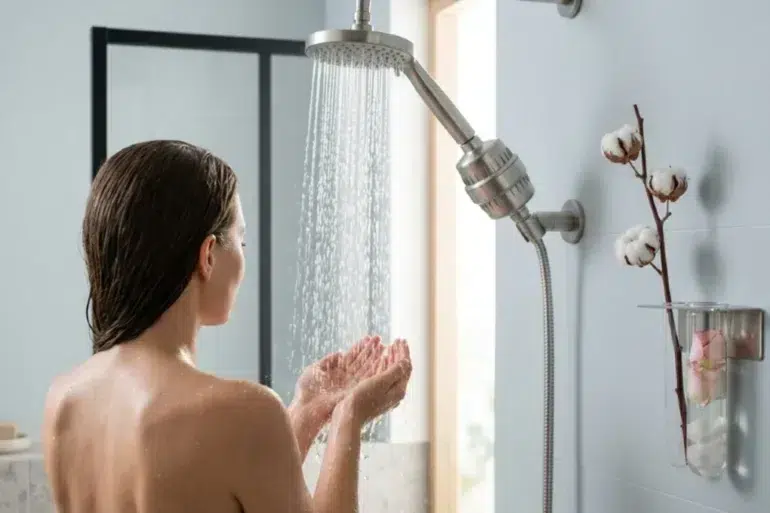
A Filter in Shower may seem like a small bathroom upgrade, but it can make your daily shower feel noticeably cleaner, fresher, and more comfortable. Many people think about water quality only when they drink water, yet the water that touches your hair and skin every morning matters too. If your shower water smells strongly of chlorine, leaves your skin feeling tight, or makes your hair feel dry and rough, a shower filter might be worth considering.
To be clear, a shower filter is not a magic beauty product. It will not turn poor water into spa water overnight, and it does not replace proper skincare, haircare, or a full home water treatment system when there is a serious water issue. But for many homes, especially where water has chlorine odor, mineral buildup, or an unpleasant feel, it can be a practical and affordable improvement.
This article looks at what a shower filter does, how it may help your skin and hair, what it can and cannot remove, and how to choose one that actually fits your home.
What Is a Filter in Shower?
A Filter in Shower is a small filtration device installed either inside the showerhead, between the shower arm and showerhead, or as part of a handheld shower system. Its job is to reduce certain unwanted substances from shower water before the water reaches your skin and hair.
Most shower filters are designed to target things like:
- Chlorine smell
- Sediment
- Rust particles
- Some metals
- Unpleasant odor
- Certain water impurities that affect feel and appearance
The exact performance depends on the filter type, media quality, certification, water temperature, flow rate, and how often the cartridge is replaced.
In simple terms, a shower filter is meant to improve the showering experience. It is mostly about comfort, feel, odor, and reducing exposure to common aesthetic water issues. The U.S. Environmental Protection Agency notes that secondary water standards are related to aesthetic concerns such as taste, color, and odor, rather than direct health risks.
Why Shower Water Feels Harsh in Some Homes
Not all water feels the same. One home may have water that feels soft and smooth, while another may have water that leaves white spots on glass doors, buildup around fixtures, and a dry feeling on the skin.
A few common reasons include:
- High mineral content
- Chlorine used for disinfection
- Old plumbing
- Sediment in water lines
- Regional water source differences
- Water heater buildup
Municipal water systems often use disinfectants such as chlorine to help make water safer before it reaches homes. That process is important because untreated water can carry harmful microorganisms. The issue is that chlorine can also create a noticeable smell and may make shower water feel less pleasant for some people.
Water hardness is another common factor. Hard water contains minerals, mainly calcium and magnesium. It is not usually considered dangerous, but it can affect how soap lathers, how easily shampoo rinses out, and how your skin feels after bathing. Some public health and extension resources note that water hardness is not regulated as a health-based contaminant under federal drinking water standards.
How a Filter in Shower Works
A Filter in Shower works by passing water through filtration media before it comes out of the showerhead. The media inside the filter depends on the product, but many shower filters use a combination of materials.
Common shower filter media include:
| Filter Media | Common Purpose |
|---|---|
| Activated carbon | Helps reduce chlorine taste and odor in some filter types |
| KDF media | Often used for chlorine and some metal reduction |
| Calcium sulfite | Common in hot-water chlorine reduction filters |
| Sediment screens | Help catch particles, rust, or visible debris |
| Multi-stage cartridges | Combine several media types for broader filtration claims |
Activated carbon is widely used in water filtration, but hot shower water can reduce its performance depending on the design. That is why many shower filters combine carbon with other media, such as KDF or calcium sulfite, to handle warm water more effectively.
NSF explains that NSF/ANSI 42 certification is related to reduction of aesthetic impurities such as chlorine, taste, and odor. For shower-specific products, it is smart to look for third-party testing or certification rather than relying only on marketing claims.
Main Benefits of Using a Filter in Shower
A Filter in Shower is popular because the benefits are easy to notice in everyday life. The changes may be subtle at first, but over time many users notice that their shower feels cleaner and less harsh.
1. Cleaner-Smelling Shower Water
One of the first things people notice is smell. If your bathroom has a strong swimming-pool-like odor when hot water runs, chlorine may be part of the reason.
A good shower filter can help reduce that smell, making the shower feel fresher. This does not mean your water was unsafe before. It simply means the water may feel and smell better after filtration.
For people who are sensitive to strong odors, this alone can make the bathroom experience more comfortable.
2. Softer-Feeling Skin After Bathing
Many people install a Filter in Shower because their skin feels tight, dry, or itchy after bathing. Shower water is only one piece of the puzzle, but it can make a difference.
Hot water, harsh soaps, chlorine odor, and hard water minerals can all contribute to that stripped feeling. A filter may help by reducing some elements that make water feel irritating.
A practical example: someone with naturally dry skin may notice that after switching to filtered shower water, they need less lotion immediately after bathing. That does not mean the filter cured dry skin. It simply means the shower may be less drying than before.
3. Hair That Feels Easier to Rinse
Hard water can make shampoo feel less effective. It may leave hair feeling coated, heavy, or rough, especially if you already use styling products.
A shower filter may help reduce some particles and chlorine odor, which can make hair feel cleaner after rinsing. People with color-treated, curly, dry, or frizz-prone hair often pay closer attention to shower water because their hair tends to show changes quickly.
If your hair feels dull no matter what shampoo you use, water quality might be worth checking.
4. Less Soap Scum and Buildup Around the Shower
A shower filter will not remove all hard water minerals the way a true water softener does. Still, some filters may help reduce sediment and certain impurities that contribute to buildup.
You may notice:
- Less residue on shower walls
- Cleaner-looking fixtures
- Less odor around the showerhead
- Fewer visible particles from old pipes
For homes with heavy limescale, a full water softener may be more effective. But for mild to moderate water feel issues, a shower filter can still be a helpful bathroom upgrade.
5. Better Experience for Sensitive Skin
People with sensitive skin often react to small changes. A new soap, a different detergent, cold weather, or harsh shower water can all make the skin feel uncomfortable.
A Filter in Shower may help create a gentler bathing routine by reducing some water-related irritants. It should not be treated as medical treatment, especially for eczema, allergies, or ongoing skin conditions. But as part of a simple skin-friendly routine, filtered shower water can be useful.
A better routine may include:
- Lukewarm water instead of very hot water
- Fragrance-free body wash
- Shorter showers
- Moisturizer after bathing
- A properly maintained shower filter
Filter in Shower for Hard Water: What to Expect
This is where many people get confused. A Filter in Shower and a water softener are not the same thing.
A shower filter may improve how water feels, reduce chlorine odor, and catch some particles. But if the main issue is high calcium and magnesium, a small shower filter may not fully soften the water.
Here is the difference:
| Product | Best For | Limitation |
|---|---|---|
| Shower filter | Chlorine odor, sediment, shower comfort | Usually does not fully soften hard water |
| Water softener | Calcium and magnesium minerals | More expensive and installed for whole-home use |
| Whole-house filter | Broader home water treatment | Higher cost and more complex installation |
| Reverse osmosis system | Drinking water filtration | Usually not used for shower water |
So, if you have white crust around faucets, cloudy glass doors, and scale buildup in appliances, you may be dealing with hard water. A shower filter may help your shower feel better, but it may not solve the root mineral problem.
Signs You May Benefit From a Shower Filter
You may want to consider a Filter in Shower if you notice any of these everyday signs:
- Your shower water smells like chlorine
- Your skin feels tight after bathing
- Your hair feels dry, dull, or coated
- Soap does not lather well
- You see rust-colored particles
- Your showerhead clogs often
- Your bathroom fixtures build residue quickly
- Your water has an unpleasant odor
These signs do not automatically mean your water is unsafe. They simply suggest that your shower water may contain substances affecting comfort, smell, or appearance.
What a Shower Filter Cannot Do
A shower filter has limits. This is important because many products make bold claims that sound better than reality.
A standard shower filter usually cannot:
- Make unsafe water safe to drink
- Remove every contaminant
- Replace a certified drinking water filter
- Fully soften very hard water
- Fix old plumbing problems
- Remove all dissolved minerals
- Work forever without cartridge changes
If you receive a boil water notice, have private well concerns, or suspect lead or harmful contamination, you should test your water and follow local health guidance. Shower filters are not designed to replace proper water safety steps.
NSF maintains searchable certification databases for water treatment products, which can help consumers check whether a product has been tested for specific reduction claims.
How to Choose the Right Filter in Shower
Buying a Filter in Shower can feel confusing because many products look similar. The packaging often promises cleaner skin, shinier hair, and luxury water. The better approach is to focus on evidence, fit, and maintenance.
Check the Filter Claims
Look for clear claims, not vague phrases. “Improves water quality” sounds nice, but it does not tell you much.
Better claims include:
- Reduces free available chlorine
- Helps reduce sediment
- Tested to a named standard
- Certified by a recognized third party
- Lists cartridge life in gallons or months
NSF/ANSI standards are useful because they give consumers a way to compare products beyond advertising. NSF notes that different standards apply to different types of water treatment systems and contaminant reduction categories.
Match the Filter to Your Water Problem
Do not buy based only on popularity. Buy based on the issue you want to solve.
If your problem is chlorine smell, look for chlorine reduction.
If your problem is visible particles, look for sediment filtration.
If your problem is hard water scale, understand that a shower filter may only help partially.
If your problem is dry skin, choose a filter with credible chlorine reduction and pair it with better bathing habits.
Consider Water Pressure
Some filters reduce water pressure more than others. If your home already has weak pressure, choose a filter designed for steady flow.
A good filter should improve water feel without turning your shower into a slow drip. Reading real customer reviews can help, but certification and product specifications matter more than hype.
Check Cartridge Replacement Cost
The cheapest filter is not always the cheapest long-term option. Replacement cartridges can add up.
Before buying, check:
- Cartridge price
- Replacement frequency
- Gallon rating
- Availability
- Ease of replacement
A filter that is hard to maintain is usually ignored after a few months.
Installation: Is It Difficult?
Most shower filters are simple to install. Many do not require a plumber.
The basic process usually looks like this:
- Unscrew the existing showerhead.
- Wrap plumber’s tape around the shower arm threads.
- Attach the shower filter.
- Reattach the showerhead.
- Run water for a few minutes to flush the filter.
- Check for leaks.
Inline filters are especially popular because they fit between the shower pipe and your current showerhead. Filtered showerheads replace the entire showerhead. Handheld filtered systems are useful if you want more flexibility for bathing children, pets, or rinsing hair.
Real-World Scenario: When a Shower Filter Makes Sense
Imagine a family living in an apartment with municipal water. The water is technically safe, but every hot shower has a strong chlorine smell. The children complain that their skin feels itchy after bathing, and the parents notice soap scum building up quickly.
They do not own the property, so installing a whole-house system is not realistic. A shower filter becomes a practical middle ground. It is affordable, removable, and does not require major plumbing changes.
After a few weeks, they may notice the shower smells better, hair rinses more cleanly, and skin feels less tight. The filter did not change the entire water supply, but it improved the daily shower experience.
That is the realistic value of this type of product.
Shower Filter vs Filtered Showerhead
Both options can work, but they fit different needs.
An inline shower filter attaches to your existing showerhead. This is a good choice if you already like your showerhead and simply want filtration.
A filtered showerhead replaces your current showerhead completely. This can be useful if your old showerhead is clogged, outdated, or uncomfortable.
A handheld filtered showerhead gives more control and is often easier for families.
| Type | Best For |
|---|---|
| Inline shower filter | Keeping your current showerhead |
| Filtered showerhead | Replacing an old showerhead |
| Handheld filtered shower | Flexible rinsing and family use |
| High-output shower filter | Homes needing stronger water flow |
The best choice depends on your bathroom setup and what kind of shower experience you prefer.
Maintenance Tips for Better Performance
A Filter in Shower only works well when maintained. Once the cartridge is full or worn out, performance drops. In some cases, old filters can even affect water flow.
Follow these simple habits:
- Replace the cartridge on schedule
- Flush a new filter before first use
- Check for leaks after installation
- Clean the showerhead regularly
- Do not exceed the recommended filter life
- Keep replacement cartridges available
Most brands recommend changing cartridges every few months, but this depends on water quality and usage. A household of five people will use up a filter faster than one person living alone.
Can a Filter in Shower Help With Chlorine?
Yes, many shower filters are designed mainly for chlorine reduction. Chlorine is commonly used in public water treatment because it helps disinfect water. However, some people dislike the smell or feel of chlorinated shower water.
A filter with appropriate media and credible testing may reduce free available chlorine. This can make the shower smell better and feel less harsh.
However, not every filter performs equally. Hot water, fast flow, and poor-quality media can reduce effectiveness. That is why third-party certification or clear testing information matters.
Can It Help With Dry Skin?
A Filter in Shower may help some people with dry-feeling skin, especially if chlorine odor or water harshness is part of the issue. But dry skin has many causes, including weather, age, soap, long hot showers, and skin conditions.
For better results, use the filter as part of a full routine:
- Shower with warm, not very hot, water
- Keep showers shorter
- Use gentle cleansers
- Pat skin dry instead of rubbing
- Apply moisturizer while skin is slightly damp
Filtered water can support the routine, but it should not be the only solution.
Can It Help With Hair?
Many users buy shower filters because of hair concerns. If water leaves your hair feeling rough, dry, or heavy, a shower filter may help improve the feel.
It may be especially useful for:
- Color-treated hair
- Curly hair
- Dry hair
- Frizz-prone hair
- Hair that feels coated after washing
Again, results vary. If your water is extremely hard, you may still need a clarifying shampoo or a water softening solution. But for many people, reducing chlorine smell and particles is enough to make washing feel better.
Common Mistakes to Avoid
A shower filter is simple, but people often make a few mistakes.
The first mistake is expecting it to fix every water problem. It will not.
The second mistake is never replacing the cartridge. An old cartridge cannot perform like a fresh one.
The third mistake is buying only by price. A low-cost filter with unclear claims may not be worth it.
The fourth mistake is ignoring water pressure. Some filters are too restrictive for certain homes.
The fifth mistake is assuming “multi-stage” always means better. More stages sound impressive, but testing matters more than the number of layers.
Is a Filter in Shower Worth It?
A Filter in Shower is worth it if you want a simple, affordable way to improve your shower water’s smell, feel, and comfort. It is especially useful for renters, apartment dwellers, and homeowners who are not ready for a larger water treatment system.
It may not be worth it if your main issue is serious contamination, very hard water scale throughout the home, or plumbing-related water discoloration. In those cases, testing and a more complete solution may be needed.
For everyday comfort, though, a shower filter can be a smart upgrade. It is easy to install, easy to remove, and usually costs far less than whole-home treatment.
Frequently Asked Questions
Does a shower filter make water softer?
Not exactly. A shower filter may make water feel smoother by reducing chlorine odor, sediment, or some impurities, but it usually does not fully remove calcium and magnesium like a true water softener.
How often should I replace a shower filter?
Most cartridges need replacement every two to six months, depending on the brand, household size, and water quality. Always follow the product instructions.
Can I install a shower filter in an apartment?
Yes. Most shower filters are renter-friendly because they attach directly to the shower arm and can be removed later.
Does a shower filter reduce chlorine?
Many shower filters are designed to reduce chlorine, but performance depends on the filter media and testing. Look for credible certification or verified product claims.
Will filtered shower water improve my skin?
It may help your skin feel less dry or tight if your current shower water is harsh, chlorinated, or unpleasant. However, skincare habits and medical skin conditions also matter.
Conclusion
A Filter in Shower is a small bathroom upgrade that can make daily bathing feel cleaner, fresher, and more comfortable. It may help reduce chlorine smell, catch sediment, improve the feel of water on skin, and make hair easier to rinse. For many households, that is enough to make showers feel noticeably better.
The key is to choose the right product for your actual water problem. Look for clear claims, reliable testing, reasonable cartridge costs, and a design that fits your bathroom. A shower filter will not replace a full water softener or solve serious water safety issues, but it can be a practical step toward better everyday comfort.
As with any water filter, performance depends on the design, media, and maintenance, so replacing cartridges on time matters.