Fashion manufacturing has never been completely static. New fabrics, automated machinery, digital design software, and changing consumer expectations have all influenced how garments are produced. Now, laser technology is attracting attention as another potential shift in the industry.
Clothing laser cutting is increasingly being used to cut fabric, create intricate patterns, produce perforations, and support customized apparel production. Compared with conventional blade cutting, laser processing offers a digital and contact-free approach that can provide precise and repeatable results.
But does that mean laser cutting will eventually replace traditional garment manufacturing?
Probably not.
The more realistic possibility is that laser technology will become an important part of a broader manufacturing ecosystem, particularly where precision, flexibility, customization, and digital production matter most.
Why Is Laser Cutting Attracting Attention in Garment Manufacturing?
Traditional garment production has relied on mechanical cutting methods for decades. These methods remain highly effective, particularly for standardized, high-volume production.
However, modern fashion is becoming more fragmented. Brands release collections more frequently, consumers expect more customization, and smaller businesses increasingly experiment with limited production runs.
This creates a need for manufacturing technologies that can adapt quickly.
Laser cutting addresses part of this challenge through digital control. Instead of creating a physical cutting tool for every pattern, manufacturers can prepare a digital file and use the laser system to follow the programmed cutting path.
When designs change frequently, this flexibility can become particularly valuable.
The technology also allows manufacturers to explore shapes and patterns that may be more difficult to reproduce consistently with conventional cutting equipment.
What Makes Clothing Laser Cutting Different?
The biggest difference is that laser cutting does not require a physical blade to contact the fabric.
A focused laser beam follows a programmed path and applies concentrated energy to the material. Depending on the fabric and the selected parameters, the material is cut or processed along the desired contour.
This contact-free process can reduce some of the mechanical limitations associated with blade cutting. There is no cutting blade gradually becoming dull in the same way, and complex digital patterns can be processed without changing physical tooling.
For fashion designers, this can translate into greater freedom when developing intricate details.
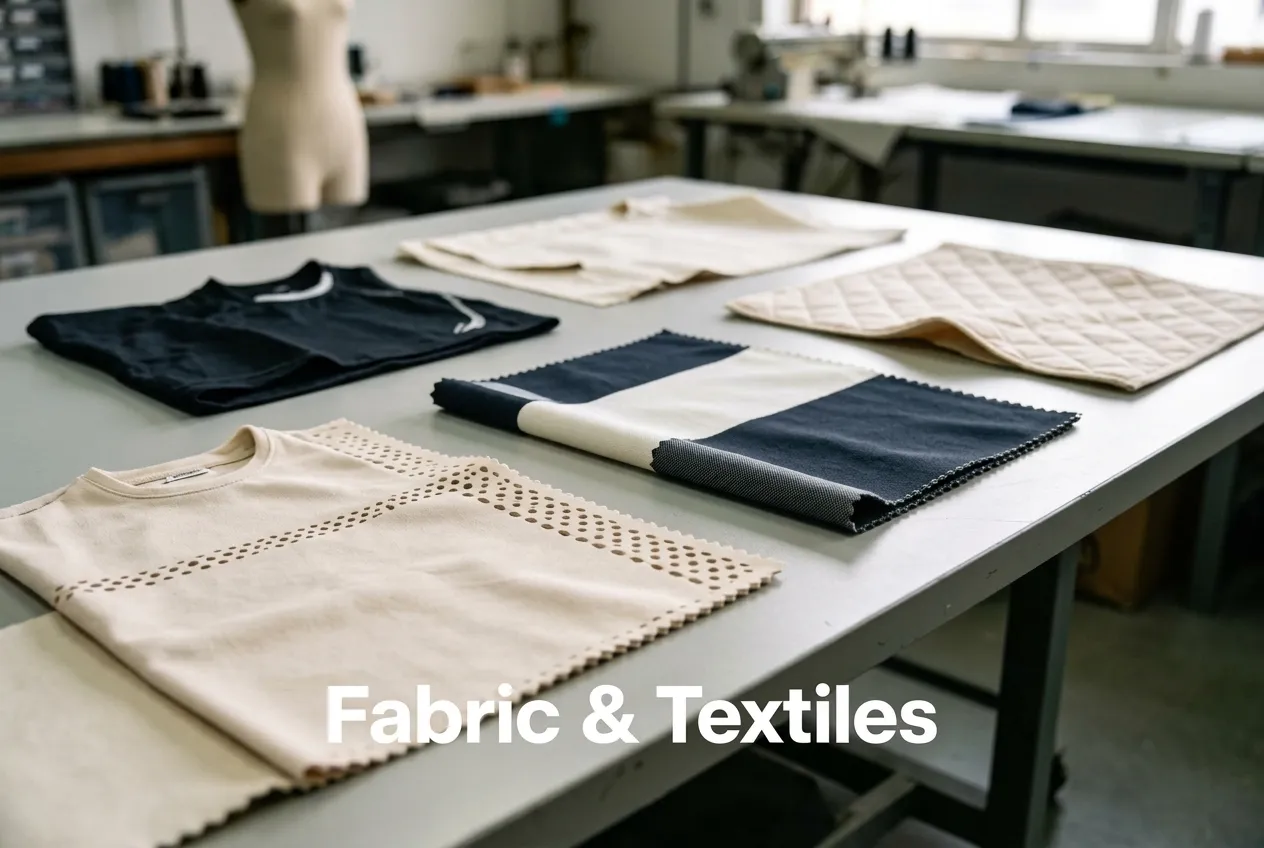
Laser technology can be used for garment panels, decorative cutouts, perforations, ventilation patterns, and other textile features. For some synthetic fabrics, the heat generated during cutting can also help reduce edge fraying by sealing the material.
However, these advantages depend heavily on the fabric and machine settings. Laser cutting is not automatically better for every textile.
Where Does Laser Cutting Make the Most Sense?
The strongest case for laser technology appears in applications where flexibility and precision are more important than simply cutting large quantities of identical shapes.
Sportswear is one example. Performance garments may require ventilation structures, lightweight designs, and carefully positioned perforations. Laser technology can create these features without requiring additional mechanical cutting processes.
Fashion designers can also use laser processing to create decorative patterns and unconventional textile structures. Instead of treating cutting as a purely functional step, the process can become part of the design itself.
Customization is another important application.
A manufacturer producing personalized garments may need to process different patterns regularly. With a digital workflow, changing from one design to another can be much simpler than producing or modifying physical cutting tools.
This makes laser cutting particularly interesting for prototypes, limited collections, customized apparel, and other forms of flexible production.
Can Laser Cutting Really Handle Modern Textile Production?
The answer depends on what is being produced.
For small batches and highly customized garments, the flexibility of a digital cutting process can be a significant advantage. For larger manufacturers, however, productivity and automation become equally important.
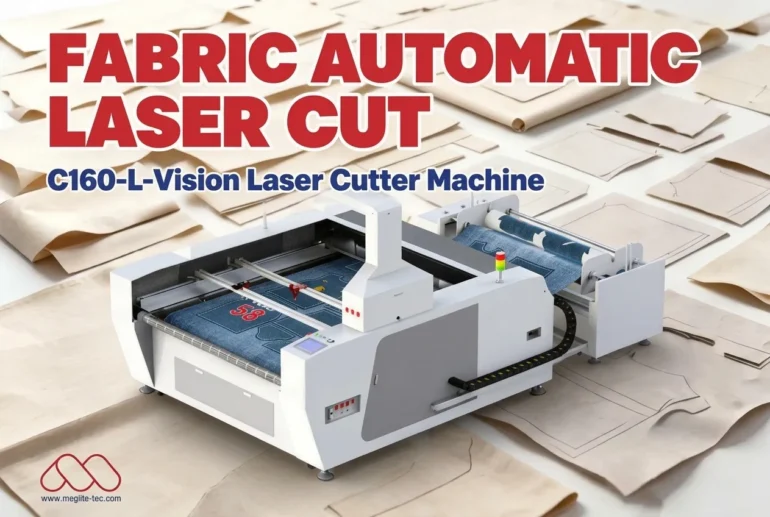
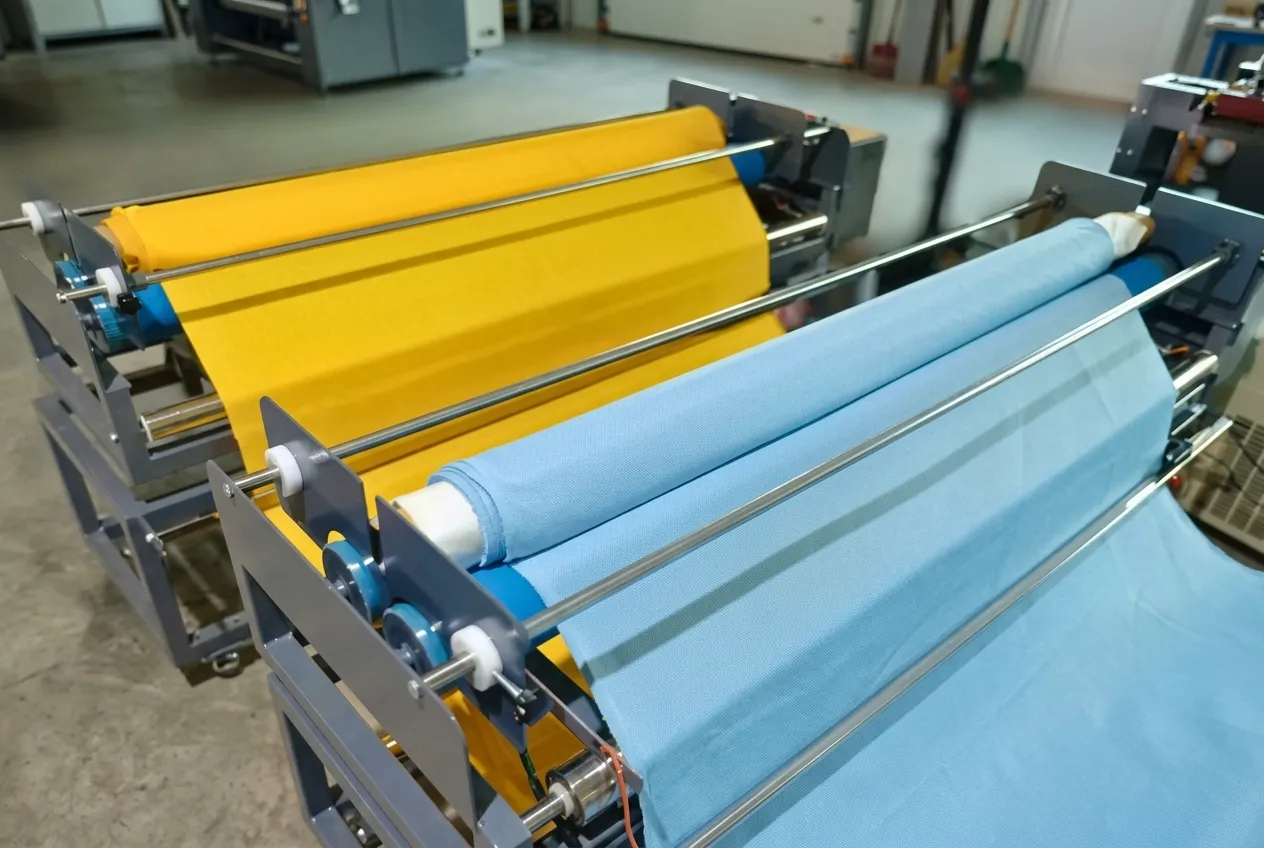
Modern textile laser systems can incorporate automated material feeding and conveyor-based workflows, allowing fabric to move continuously through the cutting area. Vision systems can also help identify printed patterns or registration points and adjust the cutting path accordingly.
These capabilities are changing the role of laser technology. It is no longer simply a machine that cuts individual pieces of fabric. It can become one component within a connected digital manufacturing process.
For a closer look at how laser technology is being applied to textile and apparel production, this guide to fabric laser cutting in textile and apparel manufacturing provides additional context on applications, automation, and the production process.
What About Traditional Garment Cutting?
This is where claims about laser cutting becoming “the future of all garment manufacturing” become questionable.
Traditional cutting methods are not disappearing simply because laser technology exists.
Mechanical cutting remains practical for many standardized production environments. Manufacturers already have established workflows, trained operators, and equipment designed around conventional processes. Replacing an entire production system simply to introduce a different cutting method may not always make economic or operational sense.
There are also materials and applications where conventional processing may remain preferable.
The decision should therefore be based on production requirements rather than the assumption that newer technology is automatically superior.
Laser cutting is most compelling when its specific strengths—precision, digital control, flexibility, and contact-free processing—solve an actual production problem.
Does Laser Cutting Work With Every Fabric?
Another reason to be cautious about calling laser cutting the universal future of garment manufacturing is material compatibility.
Different textiles respond differently to heat. Synthetic materials such as polyester and nylon can behave differently from natural fabrics such as cotton or silk. Fabric thickness, color, coatings, blends, and construction can all influence the final result.
Laser power and cutting speed also need to be adjusted to the material.
If the settings are inappropriate, a fabric may experience discoloration, excessive melting, scorching, or an edge finish that does not meet production requirements.
For this reason, manufacturers should test the actual materials they plan to process before introducing laser cutting into regular production.
The technology can be extremely capable, but successful implementation still depends on understanding the relationship between the laser system and the textile.
Is Laser Cutting More Useful for Designers or Manufacturers?
Interestingly, the answer can be both.
Designers benefit from the creative possibilities. Digital laser processing makes it easier to experiment with detailed patterns, perforations, cutouts, and unconventional garment structures.
Manufacturers, meanwhile, can benefit from repeatability and digital workflow integration.
The same technology can therefore serve two different purposes. For designers, it can expand what is possible. For manufacturers, it can improve how certain designs are produced.
This combination is one reason laser technology has attracted attention beyond traditional cutting applications.
Instead of simply replacing a blade, it can connect the design stage more closely with physical production.
Could Laser Cutting Support More Sustainable Fashion?
Sustainability is another area where laser cutting deserves attention, although its environmental benefits should not be exaggerated.
Digital cutting can potentially improve material utilization when cutting paths are carefully optimized. Software can arrange patterns to reduce unnecessary gaps between components, which may help lower fabric waste.
The ability to produce smaller batches can also support more demand-driven manufacturing. Instead of producing large quantities in anticipation of demand, some businesses may use flexible digital production to respond more closely to actual orders.
However, laser cutting itself does not automatically make a garment sustainable.
Energy consumption, material selection, production volume, machine efficiency, and the overall supply chain all influence the environmental impact of apparel manufacturing.
Laser technology can contribute to a more efficient production model, but it is only one part of the equation.
So, Is Laser Cutting the Future?
The most accurate answer is probably neither “yes” nor “no.”
Laser cutting is unlikely to become the only method used to manufacture garments. Traditional cutting technologies will continue to have an important role, particularly in established high-volume production environments.
At the same time, calling laser cutting a temporary fad would also underestimate its potential.
The technology fits several major trends shaping the fashion industry: digital design, customization, shorter product cycles, small-batch manufacturing, automation, and increasingly complex textile designs.
As these trends continue, the role of clothing laser cutting is likely to expand.
The future may not belong to laser cutting alone. Instead, it may belong to manufacturing systems that combine digital design, automated cutting, intelligent software, material handling, and conventional production methods according to the needs of each garment.
The Real Future May Be Hybrid
The most interesting development is not necessarily the replacement of traditional cutting with lasers. It is the emergence of hybrid manufacturing environments.
A fashion manufacturer might use conventional equipment for standardized high-volume components while using laser cutting for customized details, prototypes, decorative patterns, or specialized materials.
Another business might rely heavily on laser technology because its entire production model is based on short runs and personalization.
In both cases, the technology is being used where it creates the most value rather than being adopted simply because it is newer.
That may ultimately be the real future of garment manufacturing.
Laser cutting is not a magic solution for every fabric, garment, or production line. But when precision, customization, design complexity, and digital workflow are priorities, it offers capabilities that traditional cutting methods cannot always provide as efficiently.
So, is laser cutting the future of all garment manufacturing—or just a fad?
It is neither. It is better understood as one of the technologies helping shape the next generation of apparel manufacturing. Its long-term importance will depend not on replacing everything that came before it, but on how effectively manufacturers integrate it into smarter, more flexible, and more digitally connected production systems.
Website:www.mimowork-laser.com
Mimowork:https://www.mimowork-laser.com/about-us
Office: Shanghai and Dongguan, China
Email: info@mimowork-laser.com