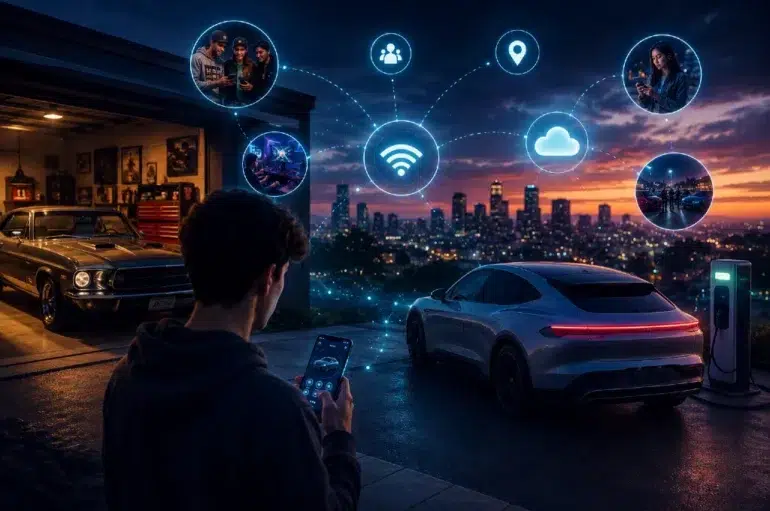
For much of automotive history, performance defined aspiration. Horsepower figures, engine size, acceleration times, and mechanical engineering were central to how vehicles were marketed and discussed. Enthusiast culture revolved around what sat beneath the bonnet.
That hierarchy is changing.
For younger drivers entering the market today, digital connectivity often matters more than engine configuration. Seamless smartphone integration, intuitive infotainment systems, subscription-based services, sustainability features, and connected technology increasingly shape purchasing decisions ahead of traditional performance metrics.
This does not necessarily mean younger motorists care less about cars. Rather, their relationship with vehicles reflects broader changes in how technology fits into everyday life. Cars are no longer viewed solely as machines to drive. They are expected to function as integrated digital environments.
The Smartphone Has Become the Centre of the Driving Experience
One of the clearest shifts is the growing expectation that vehicles should operate as extensions of personal devices.
For younger buyers raised in a permanently connected world, poor digital integration feels more frustrating than modest engine performance. Features such as wireless Apple CarPlay, Android Auto, voice assistants, real-time navigation, and app-based controls are often considered essential rather than optional extras.
This expectation has influenced how manufacturers design interiors. Physical buttons are disappearing in favour of touchscreen interfaces, software ecosystems, and connected dashboards. In many newer vehicles, the user experience resembles consumer technology more than traditional automotive engineering.
The appeal lies partly in familiarity. Drivers increasingly expect the same level of responsiveness and personalisation they receive from smartphones and streaming platforms. Vehicles that fail to deliver intuitive digital experiences can feel outdated regardless of their mechanical capability.
This is particularly relevant for urban drivers, where commuting often prioritises convenience, navigation, and comfort over outright performance.
Ownership Is Becoming More Flexible
Younger consumers are also reshaping the idea of car ownership itself.
Subscription services, flexible financing models, car-sharing platforms, and short-term leasing have gained popularity among drivers who view mobility as a service rather than a long-term commitment. Economic pressures, rising living costs, and changing attitudes towards ownership all contribute to this shift.
For some younger motorists, access matters more than possession.
This mindset aligns closely with broader digital consumption habits. Music, television, software, and even fitness memberships increasingly operate on subscription models. Automotive companies are adapting accordingly, offering software-enabled upgrades, monthly feature packages, and connected services that mirror the structure of modern digital products.
While critics argue that subscription-based vehicle features risk overcomplicating ownership, they also reflect changing expectations around flexibility and customisation.
The car industry is slowly moving away from a purely mechanical product towards an evolving technology platform.
Sustainability Shapes Perception as Much as Performance
Environmental concerns also play a major role in generational purchasing decisions.
Younger drivers are more likely to consider emissions, efficiency, and sustainability when evaluating vehicles. Electric cars, hybrids, and alternative mobility options appeal not only for environmental reasons but also because they align with broader technological progress.
This has altered the cultural image of what makes a desirable vehicle.
Previous generations often associated aspiration with engine noise and raw power. Today, innovation, efficiency, and smart technology increasingly carry equal social value. Quiet electric vehicles equipped with advanced connectivity features can feel more relevant to younger buyers than traditional performance-focused models.
Importantly, sustainability is often viewed through a lifestyle lens rather than purely an environmental one. Many younger consumers see EVs and connected vehicles as part of a modern, digitally integrated identity.
That identity extends beyond driving itself. Design, aesthetics, and personal presentation remain highly influential, especially in social-media-driven automotive culture. For motorists investing in subtle forms of vehicle personalisation, brands such as Number 1 Plates reflect the growing desire for cars to feel individual without appearing overtly modified.
Social Media Has Changed Automotive Aspirations
Digital platforms play a significant role in shaping younger drivers’ expectations.
Previous generations formed automotive opinions through television, magazines, dealerships, or family influence. Today, TikTok, YouTube, Instagram, and online creator culture heavily influence how vehicles are perceived.
Cars are increasingly evaluated through user experience and visual presentation rather than purely technical specifications. Interior lighting, digital displays, charging convenience, sound systems, and interface design often generate as much online discussion as handling characteristics or engine tuning.
This has broadened automotive culture considerably. Many younger enthusiasts appreciate vehicles through aesthetics, technology, and usability rather than traditional performance credentials alone.
Even performance culture itself has evolved online. Electric vehicles now appear alongside modified combustion-engine builds in enthusiast communities, reflecting a more fluid definition of automotive interest.
Manufacturers have noticed this shift. Vehicle launches now emphasise software updates, connectivity ecosystems, and digital features alongside traditional engineering improvements.
The Definition of a “Good Car” Is Changing
None of this suggests mechanical engineering no longer matters. Reliability, comfort, safety, and driving dynamics remain important factors for buyers of all ages.
However, priorities are becoming more layered.
For many younger drivers, a vehicle’s digital experience now carries similar weight to its physical performance. A car that integrates smoothly into daily digital life may feel more valuable than one with a larger engine or marginally faster acceleration.
This reflects a broader transition occurring across the automotive industry. Cars are evolving from standalone machines into connected lifestyle products shaped by software, media habits, and digital expectations.
The shift is generational, but it is also cultural. Younger motorists have grown up in a world where technology is expected to be seamless, personalised, and constantly connected. Naturally, they expect the same from the vehicles they drive.
As automotive companies continue adapting to these changing priorities, the future of car culture may depend less on what powers a vehicle and more on how intelligently it connects to the world around it.