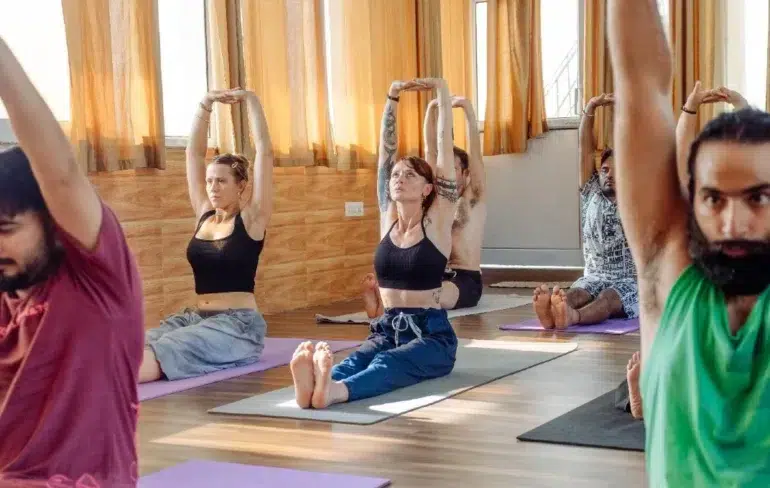
If you are pregnant and your body is changing faster than your wardrobe can keep up with, you are not alone. Prenatal yoga is one of the few practices that adapts with you — week by week, trimester by trimester. Done correctly, it eases back pain, supports better sleep, prepares your body for labour, and gives you a few quiet minutes that belong only to you.
Done incorrectly, it can put unnecessary pressure on your abdomen, restrict blood flow, or strain ligaments that are already softer than usual. The difference is not in the poses themselves — it is in how they are modified for each stage of pregnancy.
This guide is built on the framework taught in Registered Prenatal Yoga Teacher (RPYT) certification programmes recognised by Yoga Alliance. Every pose listed below is one that has been taught to pregnant students personally. Where a pose has a known risk, it has been flagged clearly.
First Trimester (Weeks 1–13): Build the Foundation
The first trimester is the trickiest to teach because, on the outside, nothing looks different. Inside, hormonal changes are loosening ligaments and the placenta is still attaching. Most miscarriage risk sits in this window, which is why even experienced yoga practitioners often pause vigorous practice during the first 12 weeks.
Safe poses
- Easy seated pose (Sukhasana) with gentle side stretches
- Cat-Cow (Marjaryasana-Bitilasana) for spinal mobility
- Modified Mountain Pose (Tadasana) with feet hip-width apart
- Standing forward fold (Uttanasana) with bent knees
- Supported Bound Angle Pose (Baddha Konasana) with bolster behind the back
Avoid
- Deep twists that compress the abdomen
- Inversions if you are not already a regular practitioner
- Strong abdominal work, including boat pose and core-heavy planks
- Hot yoga and Bikram — overheating in the first trimester is linked to neural tube concerns
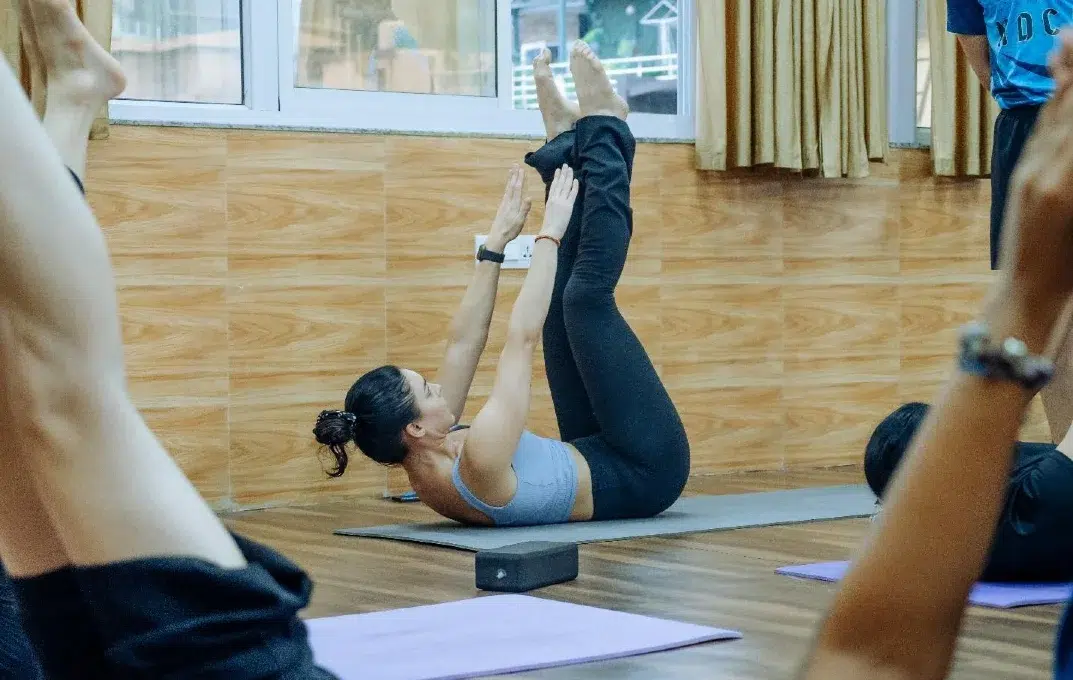
Second Trimester (Weeks 14–27): The Sweet Spot
The second trimester is when most students feel their best. Nausea typically eases, energy returns, and the bump is visible but not yet restrictive. This is also the stage where most prenatal yoga classes begin to look noticeably different from a regular class.
From around week 16 onwards, you should stop lying flat on your back. The weight of the uterus can compress the inferior vena cava, the major vein returning blood to the heart. Use a wedge or stack of bolsters to keep your torso elevated at roughly 30 degrees.
Safe poses
- Warrior II (Virabhadrasana II) with feet wider than usual for stability
- Triangle Pose (Trikonasana) with hand on a block, not the floor
- Wide-legged Standing Forward Fold (Prasarita Padottanasana) with bent knees
- Supported Pigeon Pose with a bolster under the front hip
- Side-lying Savasana with a pillow between the knees
Avoid
- Lying flat on your back beyond a few seconds
- Closed twists (open twists where the belly turns away from the leg are fine)
- Belly-down poses such as bow, locust, and full cobra
- Jumping transitions between poses
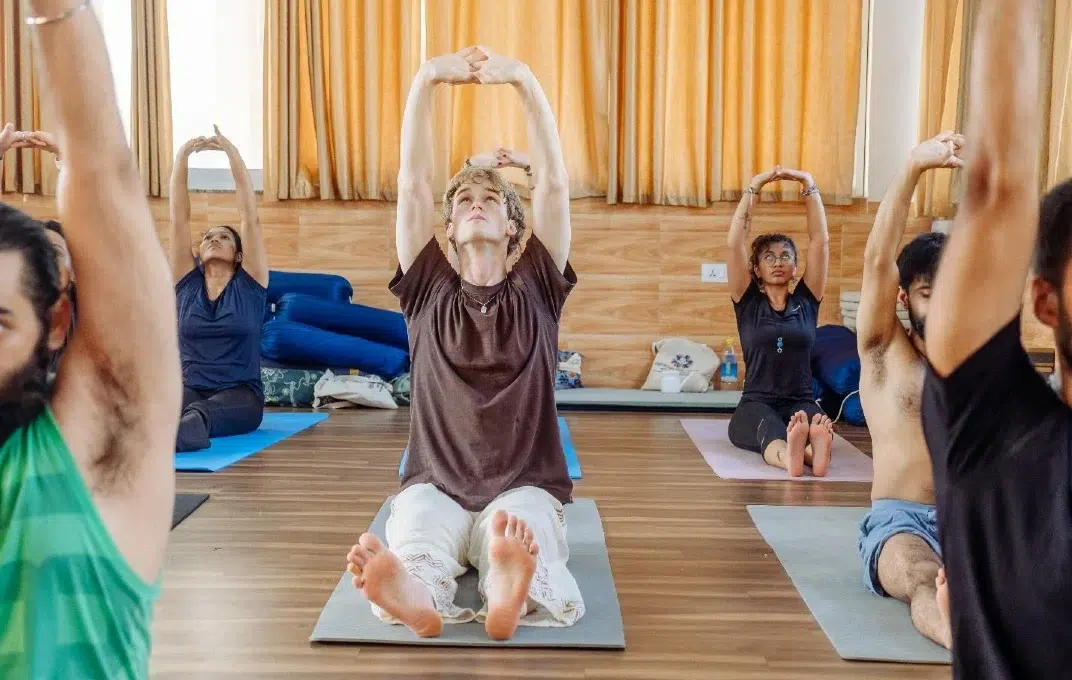
Third Trimester (Weeks 28–40): Birth Prep
By the third trimester, prenatal yoga shifts focus. The goal is no longer flexibility or strength — it is opening the pelvis, releasing the lower back, and teaching your nervous system to stay calm under pressure. The breathwork you practise now will likely come back to you during labour.
Safe poses
- Malasana (Yogi Squat) with heels supported on a folded blanket
- Cat-Cow on hands and knees — encourages optimal foetal positioning
- Standing pelvic circles, holding a wall or chair for support
- Supported Child’s Pose with knees wide and a bolster supporting the chest
- Side-lying restorative poses with extensive bolster support
Avoid
- Anything that requires balance on one leg without wall support
- Long holds in standing poses — your blood pressure is more reactive now
- Backbends beyond a gentle chest opener
- Any pose that doesn’t feel right — your intuition is more reliable than the cue
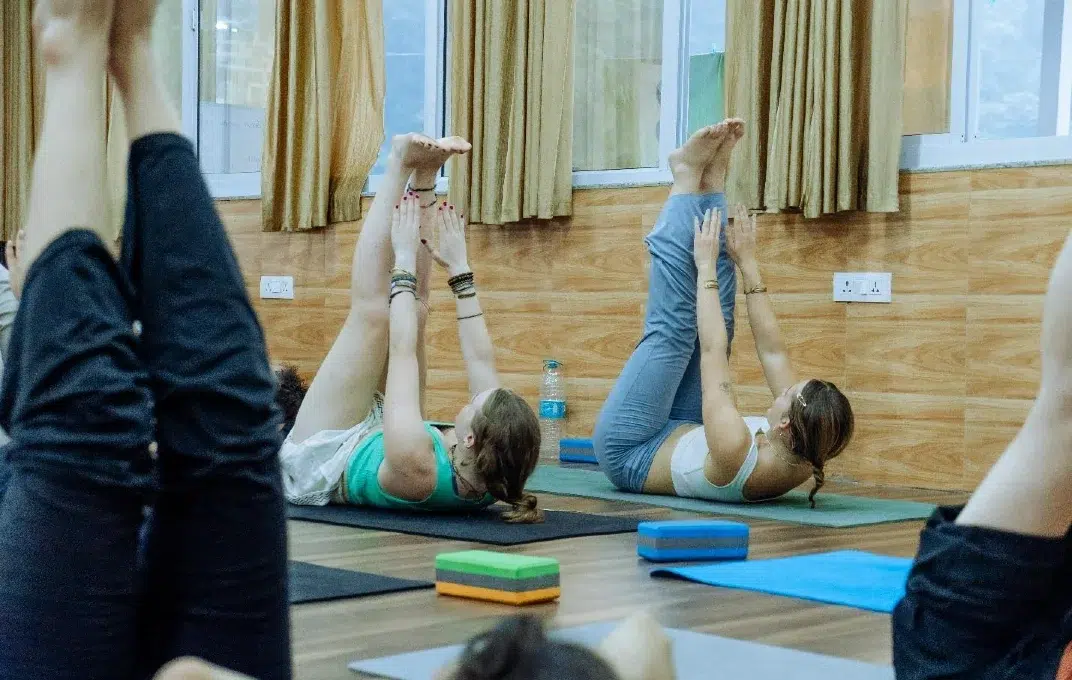
Universal Modifications That Apply Throughout Pregnancy
- Stance: Always stand with your feet hip-width apart or wider. Your centre of gravity has shifted forward — a narrow stance increases fall risk.
- Forward folds: Bend the knees and create space for the belly. Hinge from the hips, not from the spine.
- Twists: Turn away from the bent leg, not towards it. This keeps the abdomen open.
- Breath: Breathe through the nose. Avoid breath retention (kumbhaka) entirely throughout pregnancy.
When to Stop and Call Your Doctor
Yoga is not a substitute for prenatal medical care. Pause your practice immediately and contact your OB-GYN or midwife if you experience any of the following:
- Vaginal bleeding or fluid leakage
- Dizziness, faintness, or sudden shortness of breath
- Calf pain or swelling
- Headaches that don’t ease with rest
- Decreased foetal movement
- Regular contractions before 37 weeks
Why Train with an RPYT-Certified Teacher
If you are a yoga teacher reading this and considering specialising in prenatal work, the Yoga Alliance Registered Prenatal Yoga Teacher (RPYT) credential is the recognised standard. The 85-hour training covers anatomy of pregnancy, contraindications by trimester, modifications, hands-on adjustments, and post-birth recovery work. Programmes such as the RPYT certification programme in Rishikesh are taught at Yoga Alliance USA certified schools and combine traditional yoga therapy with current Western obstetric understanding.
A Note on Your Practice
Your pregnancy is not a problem to be solved through poses. It is a sacred, exhausting, beautiful season of your life. Some days, the most powerful prenatal yoga you can do is lying on your left side with a pillow between your knees, breathing slowly. That is enough. That is yoga.
About the Author
Yogi Sajan Negi is the Co-Founder of Rishikesh Yog Nirvana and an E-RYT 200 (Experienced Registered Yoga Teacher 200hr) with Yoga Alliance USA. He holds a Master’s degree (M.A.) in Yoga, with deep expertise in Meditation and Yoga Philosophy. Drawn to philosophy and meditation from an early age, Sajan has dedicated his life to helping others find inner peace through traditional pranayama, mantra chanting, and contemplative practice. He teaches at Yoga Alliance certified Yoga Teacher Training programmes in Rishikesh and writes regularly on the philosophical and energetic foundations of safe, ethical yoga teaching.
Call to Action
Whether you are practising for your own pregnancy, recovering postpartum, or training to teach this work yourself, the foundation is the same: clear understanding, careful modification, and respect for what the body is doing. Practise gently. The body knows.