Finding Gluten Free Fast Food that feels convenient, filling, and actually safe can be harder than it should be. The good news is that more major chains now publish allergen information, ingredient details, and customization options that make Gluten Free Fast Food easier to order than it was a few years ago. The harder truth is that gluten free ordering at fast food restaurants is never just about ingredients. It is also about prep surfaces, shared fryers, glove changes, and whether the staff understands cross contact. The FDA’s gluten free standard for packaged foods is less than 20 parts per million, but restaurant meals come with a different kind of real world risk because food is being prepared in a shared kitchen.
That matters because celiac disease is not a lifestyle preference. It is a serious autoimmune condition, and the National Institute of Diabetes and Digestive and Kidney Diseases says people with celiac disease need to follow a gluten free diet for life to prevent symptoms and intestinal damage from returning. Symptoms can come back even after consuming small amounts of gluten. The Celiac Disease Foundation estimates celiac disease affects about 1 in 100 people worldwide, which is why better Gluten Free Fast Food options are more than a convenience issue for many diners.
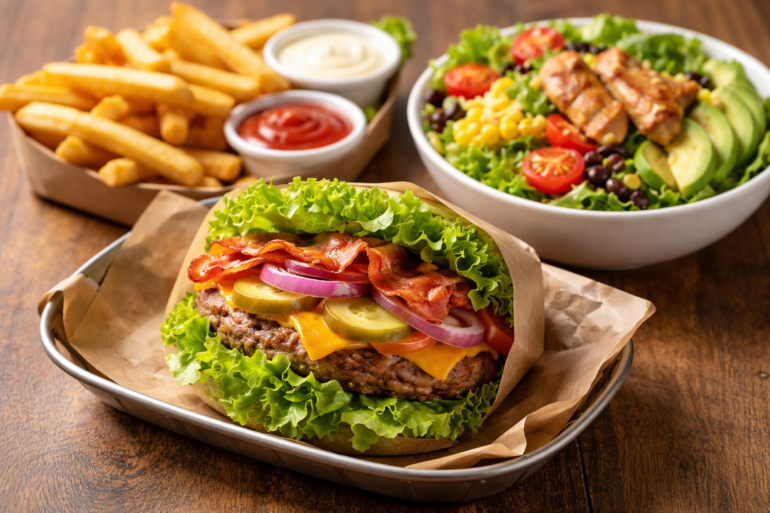
So if you are trying to eat out without stress, here is the real answer. The best Gluten Free Fast Food choices are usually the simplest ones: bunless burgers, grilled protein bowls, salad-based meals with verified dressings, corn tortilla items when ingredients are checked, and fries only when the fryer is dedicated and staff can confirm it. The safest meal is usually the one with the fewest substitutions and the clearest kitchen process.
What counts as safe Gluten Free Fast Food
When people search for Gluten Free Fast Food, they often mean one of two things. Some want menu items made without wheat ingredients. Others need food that is as safe as possible for celiac disease or severe gluten sensitivity. Those are not always the same thing. A meal can be made with gluten free ingredients and still be exposed to gluten through a shared toaster, a grill covered with crumbs, or fryer oil that is also used for breaded foods. Beyond Celiac defines this as cross contact, and it is one of the biggest reasons restaurant dining remains tricky.
That is why menu labels like “gluten friendly” should not automatically be treated as the same as Gluten Free Fast Food for someone with celiac disease. National Celiac Association notes that restaurants may use these terms differently, and the only smart approach is to ask specific questions every time you order. Even if a chain offered a safe meal last month, ingredients and prep practices can change.
The safest types of Gluten Free Fast Food orders
If your goal is dependable Gluten Free Fast Food, start with food formats that are easier to control.
- Burrito bowls or rice bowls without flour tortillas
- Bunless burgers or lettuce-wrapped burgers
- Grilled chicken items without breading
- Salads with verified gluten free proteins and dressings
- Plain fries only when cooked in a dedicated fryer
- Breakfast eggs, fruit, yogurt, or hash browns only after ingredient checks
These choices work better because they let you remove the obvious gluten source without turning the whole order into a kitchen puzzle. Simpler meals are easier for staff to prepare carefully and easier for you to verify at the counter.
Best safe picks at popular chains
The strongest Gluten Free Fast Food options usually come from chains that publish allergen details clearly and offer meals that do not depend on bread. Here are the most practical examples.
Bowl based chains
Chipotle is one of the better known examples because it directs customers to allergen tools and explicitly highlights meals for gluten free diets. In practice, a bowl built with rice, beans, meat, salsa, fajita vegetables, and many toppings can be one of the easier Gluten Free Fast Food meals to customize. The key is still to tell the server about your gluten concern before ordering so they can reduce avoidable contact during assembly.
A rice bowl format is useful because it removes the tortilla, which is often the biggest issue in quick service restaurants. It also gives you more control over sauces, crunchy toppings, and add-ons that may introduce gluten.
Grilled chicken chains
Chick-fil-A publishes specific information about gluten free or gluten friendly menu items, including grilled options, salads, and an individually packaged gluten free bun. That packaging is helpful because it reduces contact before the bun is opened, though the company also notes that once it is removed from the wrapper, it can come into contact with gluten in the kitchen. For many people, grilled nuggets, certain salads, fruit, and other simpler items can fit into a smarter Gluten Free Fast Food order when checked carefully.
This is a good reminder that Gluten Free Fast Food is often less about the label and more about the handling. A packaged gluten free bun sounds perfect until it touches the same counter as a regular sandwich.
Burger chains
Burger places can work surprisingly well for Gluten Free Fast Food if you think beyond the bun. A burger patty with lettuce, tomato, onion, pickles, and a gluten free verified sauce can be a straightforward order. Five Guys is a good example of the tradeoff many burger chains present. The company states that its fries contain no gluten and are cooked in fryers used only for fries, which is a big plus. At the same time, it warns that bread is present in the restaurant, so cross contamination remains possible.
That balance is common in Gluten Free Fast Food. One part of the order may be low risk, while another part of the environment is not. If you order a bunless burger, ask for fresh gloves and confirm whether any sauces or seasoning blends contain wheat.
Traditional burger and sandwich chains
Many national chains publish allergen menus, including Wendy’s, which identifies major FDA allergens on its U.S. menu resources. That makes these chains useful for ingredient research, but an allergen chart is not a promise of a celiac safe kitchen. A burger without a bun, a baked potato, chili, or a salad may sometimes be practical Gluten Free Fast Food options depending on the current ingredients and prep conditions, but they still require a live conversation at the restaurant.
What makes one fast food choice safer than another
The best Gluten Free Fast Food orders share a few traits. First, they avoid breaded proteins and flour tortillas. Second, they limit sauces unless ingredients are verified. Third, they can be prepared with minimal shared equipment. Fourth, staff can answer your questions without sounding unsure.
National Celiac Association’s restaurant guidance recommends separate equipment, a separate fryer when possible, clean cooking surfaces, washed hands, and fresh gloves for gluten free orders. If a restaurant can do those things consistently, your odds improve. If staff seem confused or dismissive, the menu itself stops mattering.
Common Gluten Free Fast Food mistakes people make
A lot of people think the biggest threat is bread. Bread matters, but it is only one part of the picture. The more common mistakes are these:
- Assuming fries are always gluten free
- Forgetting that marinades and sauces may contain wheat
- Trusting a menu label without asking about prep
- Assuming a salad is safe even when croutons are removed
- Believing symptoms are the only sign of exposure
That last point is important. National Celiac Association notes that people with celiac disease can still have intestinal damage even if they do not feel immediate symptoms after exposure. In other words, a fast food meal is not proven safe just because it did not cause an obvious reaction.
How to order Gluten Free Fast Food without feeling awkward
The easiest way to order Gluten Free Fast Food is to be direct and specific. You do not need a speech. You need a short script.
Say that you need a gluten free meal and ask three questions:
- Is this item made with any wheat, barley, or rye ingredients?
- Is it cooked in a shared fryer or on a shared surface?
- Can the staff change gloves and use clean tools for my order?
Those questions work because they move the conversation from vague reassurance to practical kitchen steps. Beyond Celiac’s dining guidance emphasizes asking about separate prep space, utensils, and fryers. That is the kind of information that actually changes whether Gluten Free Fast Food is workable for you.
Here is a real world example. A bunless burger may sound safe on paper. But if it is placed on the same prep board where buns are cut and wrapped with the same gloved hands that touched bread, the risk changes. On the other hand, a simple bowl assembled with fresh gloves from uncontaminated ingredients may be a stronger choice, even if the restaurant is not fully gluten free.
Are fries really part of Gluten Free Fast Food
Fries are one of the most misunderstood parts of Gluten Free Fast Food. Potatoes themselves are naturally gluten free, but that does not tell you whether the fries are safe. The two big questions are whether the fries contain a gluten ingredient and whether they are cooked in shared oil with breaded foods.
This is why a dedicated fryer matters so much. Five Guys specifically states that its fries contain no gluten and are cooked in fryers that cook nothing else, which is a much stronger setup than the typical shared fryer situation. Many other chains cannot make that claim, so their fries may not fit a strict Gluten Free Fast Food plan even if the potato ingredient seems fine.
Breakfast and late night Gluten Free Fast Food options
Breakfast can be a frustrating category for Gluten Free Fast Food because bread, biscuits, pancakes, and breaded proteins dominate so many menus. The better bets are eggs, fruit cups, yogurt, hash browns with verified ingredients, and breakfast bowls that skip flour tortillas and biscuits. At chains with gluten free buns or packaged alternatives, some breakfast sandwiches can sometimes be rebuilt safely, but only if staff can prevent contact during assembly.
Late night ordering usually becomes riskier, not because the ingredients change, but because busy kitchens move faster and make more mistakes. If you need dependable Gluten Free Fast Food, peak rush is not always your best window. Ordering at off peak times gives you more room for a real conversation and lowers the chance that your custom request gets rushed.
A quick comparison table for Gluten Free Fast Food choices
| Fast food format | Usually stronger option | Main risk to check |
|---|---|---|
| Burger chain | Bunless burger or lettuce wrap | Shared prep boards, sauces, seasoning |
| Bowl chain | Rice or salad bowl | Shared serving utensils, tortilla crumbs |
| Chicken chain | Grilled chicken items | Marinades, fryer use, bun handling |
| Breakfast chain | Eggs, fruit, plain sides | Hidden wheat, shared grills, biscuits nearby |
| Fry focused order | Plain fries only | Shared fryer oil |
This is why the best Gluten Free Fast Food order is often not the most exciting menu item. It is the one with the fewest hidden risks.
Can you trust gluten free labels at restaurants?
You can use restaurant labels as a starting point, but not as the final answer. FDA gluten free labeling rules help create a standard for packaged foods sold in stores, yet restaurant kitchens still operate with shared equipment and moving parts that labels cannot fully capture. That is one reason restaurant safety remains so personal and situation dependent.
There is also published research showing why caution matters. A 2019 analysis in the American Journal of Gastroenterology found gluten in a substantial fraction of restaurant foods labeled gluten free, with detectable gluten reported in 32% of tested samples in the dataset. That does not mean every restaurant meal is unsafe, but it does mean Gluten Free Fast Food should be approached with informed caution, not blind trust.
Best practices for safer Gluten Free Fast Food every time
If you eat fast food regularly, consistency helps. Use the same checking process every time, even at places you already know.
- Review the allergen menu before you go
- Choose simple meals with fewer modifications
- Tell the cashier about your gluten needs before ordering
- Ask about shared fryers, grills, and prep areas
- Request fresh gloves and clean tools
- Skip the order if the answers sound vague
National Celiac Association specifically advises asking each time you eat out because ingredients and preparation can vary from visit to visit. That one habit alone can prevent a lot of accidental exposure.
Conclusion
The smartest approach to Gluten Free Fast Food is not chasing a perfect chain. It is learning how to spot the menu formats and kitchen habits that lower risk. Bowls, bunless burgers, grilled proteins, simple salads, and fries from verified dedicated fryers are usually your best safe picks at popular chains. What turns those choices into better Gluten Free Fast Food is clear communication, careful ingredient checks, and a willingness to walk away when the answers are uncertain.
For readers managing celiac disease, the goal is not just convenience. It is protecting your health while still having realistic options on busy days, road trips, school nights, and work breaks. The more you understand about cross contact, the easier it becomes to order with confidence. If you want a deeper background on the condition itself, you can read more about celiac disease and how it affects the body.
Done right, Gluten Free Fast Food is possible. It just works best when you treat menu labels as the beginning of the conversation, not the end