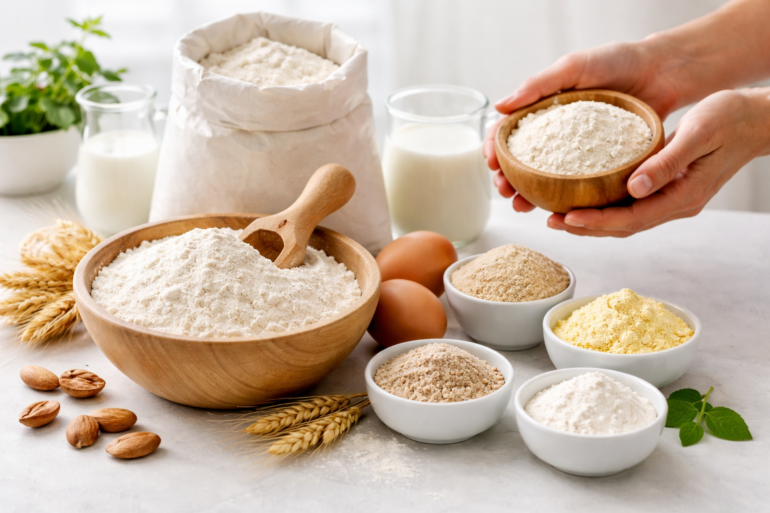
If you have ever opened an American recipe and stopped at the words All Purpose Flour UK, you are definitely not the only one. This is one of the most common baking questions for UK readers, especially when a recipe from the US calls for all purpose flour, cake flour, or bread flour and your cupboard only has plain flour, strong white flour, or self raising flour. The good news is that All Purpose Flour UK is not as confusing as it first seems. In most everyday recipes, the closest match is plain flour, but the best substitute really depends on what you are baking and the texture you want in the final result. UK baking brands often describe plain flour as the equivalent of all purpose flour, and protein content is usually the clue that helps you choose more accurately.
For a lot of home bakers, the issue is not whether All Purpose Flour UK exists as a product. It is whether your current flour will give you the same cookies, pancakes, muffins, pastry, or loaf that the recipe writer had in mind. That matters because flour is not just flour. Its protein level affects gluten development, and gluten changes softness, chew, structure, and rise. American all purpose flour usually sits in the middle of the range, which is why it can handle many jobs reasonably well. One well known US example, King Arthur Unbleached All Purpose Flour, lists 11.7% protein, while UK plain flours can vary by brand and sometimes sit lower or around a similar level. Dr. Oetker UK also notes that plain flour is also known as all purpose flour and gives a typical protein range of 10 to 12%.
That is why this topic matters so much. If you swap flours without thinking about protein, your cake may turn out heavier than expected, your cookies may spread too much or too little, and your bread may lack structure. Once you understand what All Purpose Flour UK really means in practice, it gets much easier to make confident substitutions without wasting ingredients or ruining a bake.
What is all purpose flour, really?
All purpose flour is a general use wheat flour designed to work across a wide range of recipes. It is meant to be versatile rather than highly specialized. In the US, that usually means a flour with a moderate protein level, enough to develop some gluten for bread-like structure, but not so much that cakes and cookies become tough. King Arthur Baking describes all purpose flour as a middle ground flour that works for bread dough, biscuits, scones, and more.
In the UK, the naming system is different. You are much more likely to see plain flour, self raising flour, strong white bread flour, or 00 flour than a bag labeled all purpose flour. That is where the confusion begins. Many UK bakers assume all purpose flour must be a special American product they cannot replace, but in daily baking, All Purpose Flour UK usually maps most closely to plain flour. Dr. Oetker UK says exactly that, noting that plain flour is also known as all purpose flour and that it contains no raising agents.
There is one more wrinkle. Not every plain flour behaves exactly the same. Some brands are softer and better for cakes. Some sit closer to the middle and behave very well in cookies, muffins, batter, and even some simple yeast recipes. That is why experienced bakers do not just ask, “What is All Purpose Flour UK?” They also ask, “Which brand am I using, and what am I making?”
Is plain flour the same as all purpose flour in the UK?
Most of the time, plain flour is the best answer to All Purpose Flour UK. For everyday baking, it is the closest direct substitute and the one most UK cooks already have at home. It has no added baking powder, which lines up with American all purpose flour, and it works well in cakes, cookies, pancakes, muffins, sauces, batters, and many traybakes. Dr. Oetker UK explicitly calls plain flour the American equivalent of all purpose flour.
Still, “same” does not always mean “identical.” One American all purpose flour may have slightly more protein than a UK plain flour. Some UK plain flours, however, land very close. Doves Farm Organic Plain White Flour lists 11 grams of protein per 100 grams, which is right in the same general territory as some all purpose flours used in the US. King Arthur’s all purpose flour is 11.7% protein. So when people say All Purpose Flour UK equals plain flour, they are usually correct in practical terms, but there can still be small differences from brand to brand.
That explains why a recipe can still work even when bakers insist the flours are “different.” They may be different on paper, but close enough in real kitchens for most uses. The result depends on the recipe and on whether the bake needs tenderness, chew, or extra structure.
Why flour protein changes the result
Protein matters because it controls gluten development. The more protein a flour has, the more structure and chew it can build when mixed with water and worked into dough or batter. Lower protein flours tend to produce softer, more delicate results. Higher protein flours support bread, pizza, and other bakes that need strength. King Arthur explains that protein percentage is what helps determine whether a flour is better suited to tender baked goods or stronger doughs.
That is the practical side of the All Purpose Flour UK question. If you use strong bread flour instead of plain flour in a simple cake, the cake may feel firmer or slightly chewy. If you use a very soft flour where a loaf needs strength, the loaf may not rise or hold shape as well as expected. In other words, the name on the bag matters less than how the flour behaves.
Here is a simple comparison:
| Flour type | Typical use | Protein tendency | Best for |
|---|---|---|---|
| Plain flour | General baking | Medium | Cakes, cookies, muffins, pancakes, sauces |
| Self raising flour | General baking with leavening | Similar to plain, but includes raising agents | Sponge cakes, quick bakes |
| Strong white bread flour | Yeast doughs | Higher | Bread, pizza, rolls |
| All purpose flour | General baking | Medium | Wide range of recipes |
This is why the best All Purpose Flour UK substitute is not always the same answer for every bake. The flour you choose should match the job.
The best substitutes for all purpose flour in the UK
If you need a quick answer, plain flour is the default substitute. But there are better and smarter swaps depending on the recipe.
1. Plain flour
This is the best overall replacement for All Purpose Flour UK. It is the closest everyday match and works in most American recipes without much adjustment. Use it for cookies, muffins, pancakes, brownies, batter, crumble toppings, and many cakes.
This is also the easiest option because you do not need to change the measurement in most recipes. Just use the same amount by weight. If the recipe is written in cups, convert to grams first for better accuracy.
2. Plain flour plus a little cornflour for softer baking
If you are making something delicate, such as a very soft sponge, tender cupcakes, or a lighter cookie texture, you can remove a small amount of plain flour and replace it with cornflour. That lowers the overall protein slightly and softens the crumb.
A common home baking method is to replace about 1 to 2 tablespoons of flour per cup with cornflour. This is not always necessary, but it can help when a US recipe seems designed for a softer flour blend.
3. Strong white flour mixed with plain flour
Sometimes a recipe sits somewhere between a general flour and a bread flour. That happens with chewy cookies, some enriched doughs, or rustic bakes. In that case, a blend of plain flour and strong white bread flour can be a useful All Purpose Flour UK workaround.
This gives you a little more strength without going all the way to bread flour. It is especially useful if your plain flour is on the softer side and the recipe needs a bit more structure.
4. Self raising flour, only with changes
Self raising flour is not a direct substitute for All Purpose Flour UK because it already contains raising agents. If a recipe calls for all purpose flour plus baking powder or baking soda, you might be able to make it work, but you must adjust the leavening carefully.
This is not the best first choice unless you really understand the recipe. For most bakers, plain flour is the safer and more predictable option.
Best substitute by recipe type
This is where the All Purpose Flour UK question becomes much easier. Match the flour to the bake instead of trying to find one perfect universal answer.
For cakes
Use plain flour. If you want a lighter crumb, replace a small portion with cornflour. Avoid strong bread flour because it can make the texture firmer than you want.
For cookies
Use plain flour first. If you like a slightly chewier cookie, you can blend in a little strong flour. American style cookies often handle that well.
For muffins and quick breads
Plain flour is usually ideal. It provides enough structure without becoming heavy.
For pancakes and waffles
Plain flour works beautifully. This is one of the easiest All Purpose Flour UK swaps because the result is usually very forgiving.
For bread and pizza
Plain flour can work in a pinch, but strong white bread flour is usually better if the recipe depends on stretch, rise, and chew. All purpose flour in the US can handle some breads, but many UK bakers get better bread results from strong flour.
For sauces, gravies, and coating
Plain flour is the straightforward choice. This is one area where the All Purpose Flour UK substitution is almost always simple.
When a US recipe still turns out differently
Even when you choose the right All Purpose Flour UK substitute, your result may still vary. That is normal. Flour is only one variable.
A few things can change the outcome:
- Different brands have different protein levels
- American cup measurements can be inconsistent
- UK butter and sugar products may behave differently
- Oven calibration can shift baking time and texture
- Humidity affects flour absorption
This is why experienced bakers rely more on texture cues than blind obedience to a recipe. If a batter looks too stiff, you adjust. If a dough feels too slack, you add a touch more flour. Understanding All Purpose Flour UK helps, but good baking still comes down to observation.
A quick note on flour labels in the UK
UK flour labels can also confuse readers because the word “plain” sounds basic, not versatile. In reality, plain flour is a workhorse ingredient. It is designed for many common kitchen tasks. UK flour rules also differ from US practice in some important ways. Government guidance explains that non wholemeal wheat flour in the UK is fortified with calcium carbonate and, where natural levels are low, iron, niacin, and thiamin; newer rules also introduce folic acid fortification from December 2026.
That does not usually change how you bake day to day, but it is a reminder that All Purpose Flour UK and American all purpose flour do not come from an identical regulatory and product system. Similar use, yes. Completely identical product, not always.
Common mistakes people make with all purpose flour substitutes
The first mistake is assuming self raising flour and all purpose flour are interchangeable. They are not. Self raising flour already contains leavening, so it can throw off the balance of a recipe fast.
The second mistake is using strong bread flour in everything. It sounds more premium, so people assume it must be better. In reality, stronger is not always better. Many cakes and biscuits suffer when the flour has too much protein.
The third mistake is measuring flour by volume when the recipe writer expected a different cup standard or packing method. Flour weight is much more reliable. If your American recipe gives cup measurements, converting to grams will often do more for accuracy than obsessing over the perfect All Purpose Flour UK replacement.
The fourth mistake is tasting or handling raw flour casually. The FDA notes that flour is a raw food and has not been treated to kill bacteria, which is a useful kitchen safety reminder whether you are making cookie dough, pancakes, or batter.
Practical tips for getting better results
If you want your All Purpose Flour UK substitution to work first time more often, keep these habits in mind:
- Read the recipe style before you choose the flour
- Use plain flour as your standard starting point
- Save strong flour for bread, pizza, and chewy doughs
- Weigh flour instead of scooping cups whenever possible
- Adjust texture, not just numbers
- Keep notes on which brand worked best for each bake
These small choices matter more than chasing a perfect one-size-fits-all answer.
So, what should you buy in UK stores?
For most home bakers, the smartest answer is simple. Buy a good plain flour and a good strong white bread flour. With those two in your kitchen, you can cover almost every American recipe that raises the All Purpose Flour UK question.
Plain flour will handle the bulk of your everyday baking. Strong flour will step in for yeast doughs and recipes that genuinely need more strength. If you bake delicate cakes often, keeping cornflour on hand can also help you fine-tune texture.
That approach is more practical than hunting for a bag labeled “all purpose flour.” Some UK retailers and specialist brands do sell all purpose flour, but you do not need it for most recipes. In real life, understanding the function of flour matters more than matching the label exactly.
Conclusion
The simplest answer to All Purpose Flour UK is that plain flour is usually the best substitute. It is the closest match in most everyday recipes, and many UK baking sources describe it as the equivalent of all purpose flour. The part that trips people up is not the name. It is the texture. Once you understand that flour strength and protein change how a bake behaves, the confusion fades quickly.
So if a US recipe asks for all purpose flour, start with plain flour and think about what you are making. For cakes and cookies, plain flour is usually spot on. For bread or pizza, strong flour may be better. For softer bakes, a little cornflour can help. That is the real answer to All Purpose Flour UK. It is less about finding one magic bag and more about choosing the flour that fits the job.
In the end, better baking comes from understanding ingredients, not just following labels. A little knowledge about flour types, protein, and texture will save you time, ingredients, and disappointment. And once you get comfortable with that, American recipes stop feeling foreign and start feeling flexible. If you want more background on wheat flour, it helps to see how different flour styles developed across baking traditions.