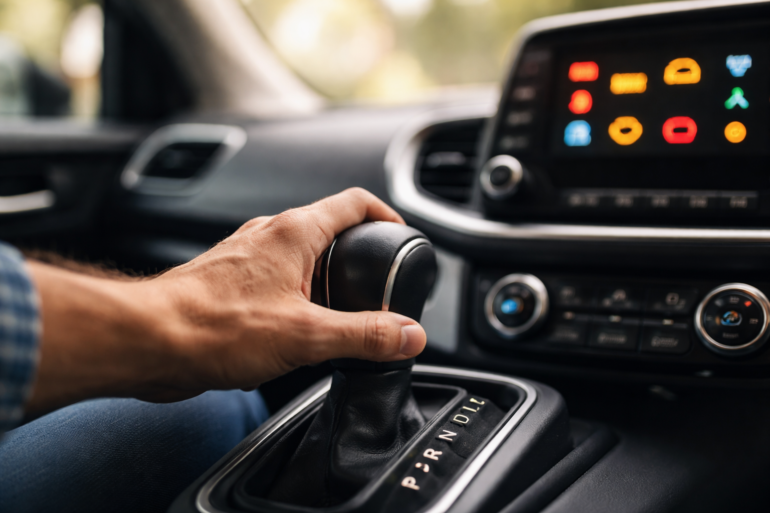
If you have ever looked at an automatic car’s dashboard or gear selector and thought, “I know some of these, but not all of them,” you are not alone. A lot of drivers recognize P, R, N, and D, but the moment a new symbol lights up on the dash, things get confusing fast. That is exactly why understanding Automatic Car Symbols matters. These symbols are there to help you drive safely, protect the vehicle, and react quickly when something needs attention.
The good news is that most automatic car symbols are not as mysterious as they seem. Some relate to gear positions like PRNDL, while others are warning lights tied to engine health, braking, tire pressure, temperature, or stability systems. According to AAA, dashboard warning lights and indicators are an important part of how modern vehicles communicate problems and safety alerts to drivers. JD Power also notes that common automatic gear positions such as Park, Reverse, Neutral, Drive, and Low each serve a distinct purpose in everyday driving.
Once you know what these symbols mean, driving becomes less stressful. You stop guessing, you respond faster, and you lower the risk of making a small issue worse. This article breaks down the meaning of PRNDL, the most common dashboard signs, and the practical difference between a symbol you can monitor and one you should never ignore.
What Are Automatic Car Symbols?
Automatic Car Symbols are the letters, icons, and warning indicators you see on the gear selector, instrument cluster, and dashboard of an automatic vehicle. They are designed to tell you what gear the car is in, what systems are active, and whether the vehicle has detected a problem.
Some of these symbols are informational. They simply show that a feature is on, such as cruise control, high beams, or eco mode. Others are warning signs. These may alert you to low tire pressure, engine trouble, overheating, brake system issues, or low oil pressure.
This is important because modern cars rely heavily on sensors. Instead of waiting for a serious mechanical failure, your car often warns you first. AAA points out that drivers should pay attention not just to red warning lights, but also to amber or yellow lights, since they often signal problems that still need timely service.
Understanding PRNDL in Automatic Cars
One of the most familiar sets of automatic car symbols is PRNDL. This group of letters appears on the shifter or display in many automatic vehicles. It shows the transmission mode you have selected.
Here is what each letter usually means:
| Symbol | Meaning | What It Does |
|---|---|---|
| P | Park | Locks the transmission so the car stays stationary |
| R | Reverse | Moves the vehicle backward |
| N | Neutral | Disengages the drive gear so the wheels are not powered |
| D | Drive | Moves the vehicle forward in normal automatic mode |
| L | Low | Keeps the transmission in a lower gear range for more control |
JD Power describes Park as the mode that engages the parking pawl to help keep the car from moving, while Reverse is for backing up, Neutral disconnects the drive function, Drive handles forward travel, and Low helps provide better control on steep grades or under heavy load.
In some vehicles, you may also see S for Sport, M for Manual mode, or numbers like 1, 2, or 3. These are not unusual. Automakers use slightly different symbols depending on the transmission type and design.
What PRNDL Really Means in Everyday Driving
Knowing the letters in the category of Automatic Car Symbols is one thing. Knowing when to use them is where real driving confidence comes in.
Park should be used whenever the car is fully stopped and you are done driving. It is smart to apply the parking brake too, especially on an incline. Relying only on Park can put extra strain on the transmission.
Reverse is only for backing up. It sounds obvious, but the mistake some drivers make is shifting into Reverse before the vehicle has fully stopped. That can stress the transmission.
Neutral is sometimes misunderstood. Many drivers think it is a safe coasting mode, but using Neutral while moving downhill is not a good habit. You lose normal engine braking control, and in many cases it offers no safety benefit.
Drive is your regular setting for daily travel. In this mode, the automatic transmission changes gears on its own based on speed and throttle input.
Low or L is especially useful when going down steep hills, towing, or driving in conditions where you want stronger engine braking and less constant shifting. JD Power notes that Low mode helps keep the car in lower gears, which can improve control in certain conditions.
Why Some Cars No Longer Show Traditional PRNDL the Same Way
If you drive a newer vehicle, especially a hybrid or EV, the classic PRNDL layout may not look the same. Some vehicles use buttons, rotary dials, electronic selectors, or digital displays instead of the traditional floor lever.
That does not mean the functions disappeared. It just means the interface changed. Even in vehicles without a classic shifter, the same basic transmission selections still exist in some form. Wikipedia’s overview of automatic transmissions notes that PRNDL has long been a common selector layout in automatic vehicles, though modern designs vary by manufacturer and technology.
This is why reading your specific owner’s manual still matters. The symbol may look modern, but the purpose behind it is usually familiar.
Common Dashboard Signs in Automatic Cars
Beyond PRNDL, the dashboard is where most people feel overwhelmed. The symbols are small, often color coded, and sometimes they come on without warning.
Here are the common categories you should know.
Check Engine Light
This is one of the most recognized dashboard signs. It usually looks like an engine outline. AAA says the check engine light signals that there is a problem with one of the engine systems and that the issue should be diagnosed promptly.
Sometimes it is something minor, like a loose gas cap. Other times it can point to ignition, emissions, or sensor issues. If the light is steady, you can often drive carefully to a repair shop. If it is flashing, that is more urgent.
Oil Pressure Warning Light
This usually looks like an oil can. It does not mean you are just due for an oil change. It can mean the engine does not have enough oil pressure, which is much more serious.
If this light comes on while driving, you should stop as soon as it is safe and check the situation. Driving with low oil pressure can cause severe engine damage.
Battery or Charging System Light
This symbol often looks like a battery. It usually points to a charging system issue rather than a dead battery alone. The problem could involve the alternator, battery connections, or related electrical components.
If it stays on, the car may continue running for a short time, but it could eventually lose electrical power.
Engine Temperature Warning Light
This sign often appears as a thermometer over waves. It indicates the engine is running too hot. If ignored, overheating can damage the engine quickly.
AAA’s warning light advice makes clear that some red indicators need immediate attention, and overheating falls into that category.
Brake Warning Light
This may show as a circle with an exclamation mark or the word BRAKE. It can indicate the parking brake is engaged, low brake fluid, or a problem in the braking system.
Because braking is a critical safety function, this is not a light to dismiss casually.
Tire Pressure Warning Light
This symbol looks like a horseshoe shape with an exclamation point in the center. It warns that one or more tires may be underinflated.
Low tire pressure affects fuel economy, tire wear, and vehicle handling. It also raises the risk of tire failure. Even if the car feels fine, this warning deserves attention.
ABS Light
ABS stands for anti-lock braking system. If this light is on, your standard brakes may still work, but the anti-lock function may be disabled. That matters most during hard braking or slippery conditions.
Traction Control or Stability Control Light
This symbol often looks like a car with wavy lines behind it. If it flashes, the system may simply be actively helping you maintain grip. If it stays on, the system may be off or there may be a fault.
Airbag Warning Light
An airbag symbol typically means there is an issue with the supplemental restraint system. That could affect airbags, seat belt pretensioners, or crash sensing components.
This light should be checked promptly because it relates directly to occupant safety.
The Meaning of Dashboard Colors
One of the easiest ways to understand dashboard signs is by color. While each manufacturer can vary slightly, the general pattern is consistent.
Green or blue usually means information. A feature is on or working, such as headlights or cruise control.
Yellow or amber usually means caution. The car is warning you that something needs checking soon.
Red usually means urgent action. AAA notes that red indicators tend to signal more severe or immediate issues.
That color system helps you judge how quickly to respond, even before you know the exact symbol.
Automatic Car Symbols New Drivers Often Misread
A few symbols create trouble again and again, especially for new drivers.
The first is Neutral. Some people think it is fine for coasting downhill or saving fuel. In real driving, that is not a smart or necessary practice.
The second is Low gear. Many drivers never use it, then assume it means something is wrong when they see it. In reality, it is just a lower gear setting for special driving conditions.
The third is the check engine light. People either panic too much or ignore it too long. The right response depends on whether it is steady or flashing, how the car feels, and whether other symptoms appear.
The fourth is the tire pressure light. Drivers often wait because the tire does not look flat. But even a modest drop in pressure can trigger the light and affect safety.
Real-World Example: Why Symbols Matter More Than People Think
Imagine you are driving home and see the tire pressure warning light. The car still feels normal, so you keep going for several days. By the weekend, that slightly underinflated tire has worn unevenly and picked up extra heat on the highway. What started as a simple air pressure issue can turn into poor handling or even a blowout risk.
Now imagine a different case. You are descending a steep road and shift into Low mode instead of riding the brakes the whole way. Suddenly the car feels more controlled and your brakes stay cooler. That is a good example of a symbol doing exactly what it was designed to do.
A lot of dashboard signs are like that. They are either early warnings or built-in tools. Understanding them gives you a practical advantage every time you drive.
How to Read Automatic Car Symbols the Smart Way
The smartest approach is not to memorize every icon from every car ever made. It is to build a simple response habit.
First, look at the color. That tells you how urgent the issue might be.
Second, think about what changed. Did the car start running rough? Did the brakes feel different? Did you just fuel up, hit a pothole, or drive in bad weather?
Third, check the owner’s manual. Dashboard symbol sets can vary. Even common signs may look slightly different depending on brand.
Fourth, do not ignore a warning light just because the car still moves. Many issues begin subtly and get expensive later.
Frequently Asked Questions About Automatic Car Symbols
What does PRNDL stand for in an automatic car?
PRNDL generally stands for Park, Reverse, Neutral, Drive, and Low. These are the main transmission positions used in many automatic vehicles.
What is the L symbol in an automatic car?
The L stands for Low. It helps keep the transmission in a lower gear range, which can improve control on steep hills, while towing, or in certain low-speed conditions.
Are yellow dashboard lights serious?
They can be. Yellow or amber usually means caution rather than immediate danger, but the problem still needs attention. Waiting too long can turn a minor repair into a major one.
Which dashboard lights mean stop driving?
Red warning lights are the ones to take most seriously, especially oil pressure, overheating, or brake system warnings. In those cases, stopping safely and checking the issue is often the best move.
Why do automatic car symbols differ from one car to another?
Manufacturers use different displays, digital interfaces, and feature sets. The basic functions are similar, but the look and layout can vary by brand, model year, and transmission design.
Final Thoughts on Automatic Car Symbols
Learning Automatic Car Symbols is one of those small things that makes a big difference in real life. It helps you understand your transmission, use PRNDL correctly, and react calmly when dashboard signs appear. Instead of guessing what your car is trying to tell you, you can make safer and smarter decisions.
For most drivers, the biggest win is confidence. You know when a light is informational, when it means caution, and when it signals that the car needs immediate attention. That knowledge can protect your vehicle, lower repair costs, and reduce stress every time you get behind the wheel.
Modern cars may use different displays, digital selectors, or updated icons, but the purpose remains the same. Your vehicle is communicating with you. Once you understand the language, driving feels much more manageable. For broader background on the automatic transmission, it helps to see how these selector positions became standard across many vehicles.