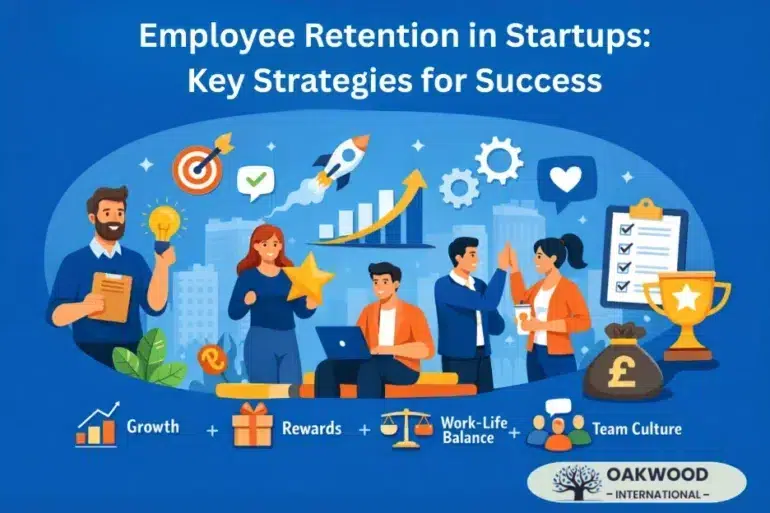
What makes people stay in a startup when things get uncertain or fast moving? People Management Courses often point to one simple idea, people stay where they feel valued and supported. Employee Retention is not just about offering a job, it is about creating an environment where people want to grow and contribute. In startups, every team member plays an important role, so losing even one person can slow things down. Getting this on time can shape long term success.
This blog explores strategies that help startups retain their people and create a strong and motivated workforce.
Key Strategies to Improve Employee Retention in Startups
Below are the key strategies that help improve Employee Retention in startups and create long term success:
Create a Clear Vision and Purpose
People want to believe that their effort is important. Employees feel more a part of the larger picture when companies explain their goals in a clear and concise manner. A sense of purpose is developed as a result. Additionally, it keeps teams engaged throughout difficult times.
Work becomes purposeful when there is a clear vision. Employees believe they are making a significant contribution. In order to help executives align teams with common objectives, many businesses also reinforce this clarity through People Management Courses. This emotional bond increases dedication and lowers the likelihood of departing.
Offer Growth and Learning Opportunities
Employee Retention is significantly impacted by growth. Employees want to take on new tasks and acquire new abilities. Teams at startups that make development investments are more engaged.
Giving employees access to skill-based training or People Management Courses promotes their professional development. It also demonstrates the organisation’s commitment to its future. Over time, this fosters loyalty and trust.
Build Open and Honest Communication
Strong teams are formed through open communication. Employees should feel comfortable expressing their thoughts and worries. Startups that promote random communication develop a productive workplace.
Employees feel valued when managers actively listen to them. This ability can be further strengthened by taking People Management Courses that teach effective communication. As a result, there are fewer misunderstandings and the team’s relationships become stronger. Additionally, it enhances overall performance.
Provide Flexibility and Work-Life Balance
Startups frequently require long hours and quick labour. Balance is still crucial, though. Employees who have a flexible work culture are better able to manage their time.
Employees experience less stress when they are in charge of their schedules. This lowers burnout and increases productivity. Better retention results from a work-life balance.
Create Strong Leadership and Support Systems
The experience of employees is shaped by effective leadership. Teams should be led and supported by their leaders. Strong leadership fosters confidence and trust.
Managers who are aware of the demands of their teams are able to resolve problems fast. Many executives improve these skills by taking People Management courses, which facilitate improved team leadership and decision-making. This develops a welcoming atmosphere where employees feel safe and appreciated. Long-term engagement is strengthened.
Encourage Team Collaboration and Belonging
People stay when they feel like they belong. Startups should make building a sense of community a top focus. When teams work together, they may be able to connect and get more done.
Doing things together makes relationships stronger. When employees feel like they are part of a team, they are more committed to the firm and its success.
Offer Fair Rewards and Benefits
Pay is still important. Employees want to be fairly compensated for their work. Startups should make sure that rewards are commensurate with contributions and results.
Value is increased by offering employees bonuses or recognition initiatives. It demonstrates how much the company values and respects its employees. Retention is strengthened as a result.
Conclusion
Keeping talent in a startup is not about one big action, it is about consistent effort and care. When businesses focus on growth and recognition, Employee Retention becomes easier to manage. Strong people practices create loyal and motivated teams. Learning from structured programmes such as People Management Courses can support this journey.
For those aiming to build better workplace strategies, Oakwood International offers training that helps apply these ideas in real and practical ways.