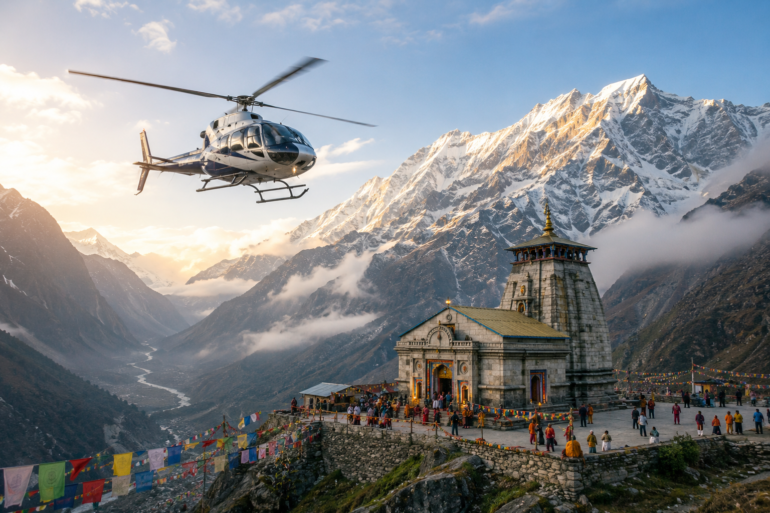
Experience the ultimate spiritual journey across the majestic Himalayas with a char dham yatra by helicopter. This specialized pilgrimage route offers a seamless way to visit the four sacred shrines of Yamunotri, Gangotri, Kedarnath, and Badrinath. For those seeking a blend of devotion and comfort, traveling by air eliminates the physical strain of long mountain treks, allowing you to focus entirely on the spiritual significance of the “Abode of Gods.” This meticulously planned itinerary ensures that you reach each temple during the most auspicious hours, providing a serene environment for prayer and reflection amidst the high-altitude peaks of Uttarakhand.
The Spiritual Significance of the Four Shrines
The journey begins with the realization of the profound religious importance these sites hold in Hindu mythology. Each temple represents a unique aspect of divinity and nature. Yamunotri is dedicated to Goddess Yamuna, marking the source of the holy river. Gangotri honors Goddess Ganga, who descended to Earth to wash away the sins of humanity.
Kedarnath, one of the twelve Jyotirlingas, is the seat of Lord Shiva, while Badrinath is the holy dwelling of Lord Vishnu. Visiting these four sites is believed to provide “Moksha” or liberation from the cycle of birth and rebirth. When you choose an aerial route, the vastness of the Garhwal Himalayas becomes a backdrop to your internal transformation, making the experience both grand and intimate.
Dehradun: The Gateway to Your Pilgrimage
Your expedition typically commences from the Sahastradhara Helipad in Dehradun. As the starting point, Dehradun offers the necessary infrastructure for a smooth transition into the high-altitude zones. Most travelers arrive a day early to acclimate to the mountain air and attend a pre-departure briefing. This briefing is essential for understanding weight limits on helicopters, safety protocols, and the specific timing for each day’s flight. The transition from the bustling valley of Dehradun to the quiet, thin air of the mountains is the first step in a life-changing week of devotion.
Day One: Reaching the Source of River Yamuna
The flight from Dehradun to Kharsali is the first leg of the trip. Kharsali serves as the base for Yamunotri. Upon landing, the crisp mountain air and the sound of the flowing river greet you. From Kharsali, the temple is a short distance away. While others may spend hours trekking uphill, helicopter passengers benefit from quick transfers via Palki or pony, ensuring you reach the temple gates with energy to participate in the morning Aarti.
At Yamunotri, the Divya Shila and the hot water springs of Surya Kund are vital points of worship. Devotees often cook rice in the thermal springs as “Prasad.” The tranquil environment of the Yamuna valley provides a perfect start to the circuit, offering a sense of peace that stays with you throughout the journey.
Day Two: The White Temple of Gangotri
The next phase of the journey takes you toward Harsil, often referred to as the “Mini Switzerland of India” due to its lush apple orchards and dense deodar forests. From the Harsil helipad, a short drive leads to the Gangotri temple. This shrine, situated on the banks of the Bhagirathi River, is a stunning structure of white granite.
The atmosphere here is vibrant with the chants of pilgrims and the roaring sound of the river. After offering prayers and taking a holy dip in the icy waters, you can spend time meditating in the quiet corners of Harsil. The efficiency of air travel allows for an afternoon of rest, which is vital for maintaining health at these altitudes before proceeding to the more challenging terrain of Kedarnath.
Day Three: Aerial Access to Lord Shiva’s Abode
Kedarnath is perhaps the most awaited destination for many. Located at an altitude of 3,584 meters, the trek to this shrine is legendary for its difficulty. However, the helicopter flight from Phata or Sersi directly to the Kedarnath helipad changes the dynamic entirely. As you fly over the Mandakini River and witness the snow-capped peaks closing in, the sight of the ancient stone temple coming into view is unforgettable.
Being so close to the temple allows you to participate in the Rudra Abhishek or the evening Aarti without the exhaustion of a 16-kilometer trek. The spiritual energy of Kedarnath is palpable, and having the time to sit in the temple courtyard and soak in the vibrations is a luxury provided by the aerial route.
Day Four: Seeking Blessings at Badrinath
The final shrine in the circuit is Badrinath, nestled between the Nar and Narayan mountain ranges. The flight from Kedarnath to Badrinath offers some of the most spectacular views of the Himalayan range. Upon arrival, the colorful facade of the Badrinath temple stands out against the stark mountain landscape.
A visit to the Tapt Kund, a natural thermal spring, is traditional before entering the temple for Darshan. After visiting the main deity, Lord Badri Vishal, many pilgrims take the opportunity to visit Mana Village, the last Indian village before the Tibet border. This area is steeped in history, featuring the Vyas Gufa where the Mahabharata was said to be composed. The ease of transport ensures you can cover these historical landmarks without feeling rushed.
Essential Preparation for High Altitude Travel
Traveling by air requires specific preparations that differ from road journeys. Due to the limited space in helicopters, luggage is usually restricted to small waterproof bags weighing no more than 5 kilograms per person. It is important to pack layers of woolen clothing, as temperatures can drop suddenly even in the summer months.
Medical fitness is also a priority. Even though you are flying, you are still spending time at altitudes exceeding 10,000 feet. Carrying personal medications and staying hydrated is key to avoiding altitude sickness. Most operators provide oxygen cylinders on board, but a personal health check before the trip is always recommended for a worry-free experience.
Why Time Management Matters in the Himalayas
Weather in the mountains is unpredictable. Clouds and mist can move in quickly, affecting flight schedules. This is why helicopter services operate primarily in the early morning hours when the skies are clearest. A well-organized itinerary accounts for these variables, often including buffer time or alternative arrangements to ensure that no shrine is missed. By sticking to a professional flight schedule, you maximize your chances of completing the entire circuit within a compact timeframe of five to six days, which would otherwise take nearly two weeks by road.
The Comfort of Hand-Picked Accommodations
One of the highlights of this specific travel mode is the quality of stay. Since the itinerary is streamlined, you stay at some of the best available hotels and resorts in Harsil, Kharsali, and Badrinath. These accommodations are chosen for their proximity to the helipads and their ability to provide warm meals and comfortable bedding in a rugged environment. After a day of spiritual activity, returning to a warm room and a hot meal is a significant advantage that helps in physical recovery and mental relaxation.
Cultural and Culinary Experiences on the Route
While the focus is on the temples, the journey also introduces you to the local culture of the Garhwal region. The food served is typically vegetarian and prepared using local mountain ingredients like lentils, red rice, and various herbs. Engaging with the local priests and villagers provides insight into the traditions that have kept these shrines alive for centuries. The helicopter route allows for these brief but meaningful cultural exchanges during the transition periods at each helipad.
Safety Protocols and Pilot Expertise
Safety is the cornerstone of mountain aviation. The pilots flying these routes are highly experienced in navigating the complex wind patterns and narrow valleys of the Himalayas. The aircraft used are modern and maintained under strict aviation standards. Ground staff at each helipad ensure that boarding and deboarding are handled with care, especially for elderly pilgrims. Understanding that you are in the hands of professionals allows for a stress-free journey, where the only thing on your mind is the divine Darshan.
Best Time to Plan Your Spiritual Visit
The yatra season typically opens in late April or early May and continues until the festival of Diwali in October or November. The months of May and June are the most popular due to pleasant weather, while September and October offer clear blue skies after the monsoon season. Avoiding the peak monsoon months of July and August is advisable for helicopter travel, as heavy rains and landslides can lead to flight cancellations. Planning your trip for the “shoulder” months can often lead to a quieter, more meditative experience at the shrines.
Booking Process and Documentation
Securing a spot for an aerial pilgrimage requires early planning. Due to the high demand and limited number of seats, bookings often open months in advance. You will need to provide government-issued identification and undergo a mandatory medical registration process initiated by the Uttarakhand government. A transparent booking process ensures there are no hidden costs, covering everything from flight tickets and transfers to meals and local assistance.
Conclusion and Final Thoughts
Completing the sacred circuit is a milestone in the life of any devotee. The convenience of a char dham yatra by helicopter makes this dream accessible to everyone, including senior citizens and those with time constraints. By choosing this path, you trade the hardships of the road for the serenity of the skies, ensuring that your energy is preserved for the holy rituals at each site. From the first lift-off in Dehradun to the final blessings at Badrinath, every moment is designed to bring you closer to the divine. For travelers starting their journey from the capital, a well-coordinated char dham tour package from delhi provides the perfect logistical bridge, handling all transport and accommodation needs so you can focus on the sanctity of the Himalayas.