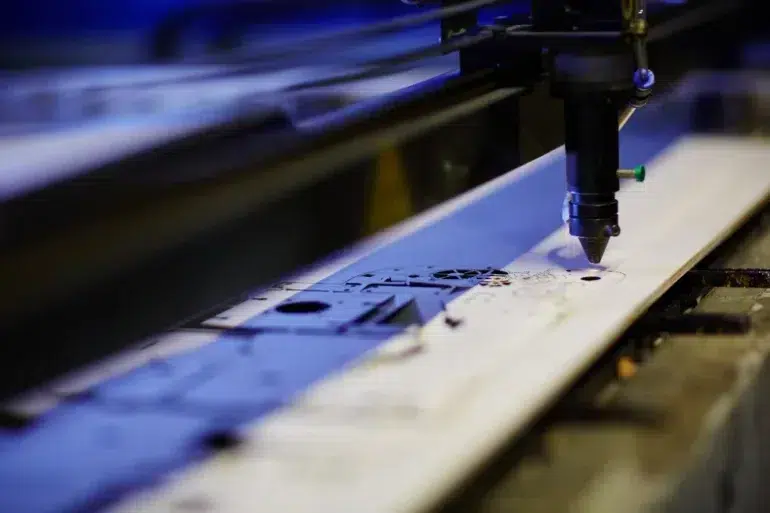
In today’s competitive manufacturing and engineering landscapes, precision and efficiency are paramount. One of the most critical innovations in recent years has been the development and deployment of the fiber laser machine. These machines have become ubiquitous in industries requiring exacting standards of quality and productivity.
Understanding Fiber Laser Technology
At the heart of fiber laser technology is its ability to produce a highly focused beam of light that can cut through various materials with unerring accuracy. Fiber lasers are generally compact and robust, making them well-suited for a wide range of applications. The laser beam is generated through a process involving banks of diodes which create the initial laser light. This light is then channelled through optic fibres, significantly amplifying its intensity and precision.
Applications of Fiber Laser Machines
Fiber laser machines are incredibly versatile, with applications that span across numerous industries. One prominent area of use is in the automotive sector, where precision cutting and welding of metal components are essential. Additionally, the aerospace industry benefits significantly from these machines, utilising them for intricate jobs such as drilling and engraving high-strength components.
The electronics industry is another beneficiary of fiber laser technology. The machines are employed in the production of circuit boards and delicate electronic components, where high precision is indispensable. Furthermore, manufacturers dealing with delicate materials such as gold and silver also rely on these machines for precision engraving and marking.
Advantages of Fiber Laser Machines
One of the primary advantages of fiber laser machines is their efficiency. The fibre optic delivery system allows for a more compact setup, saving space on the production floor. They are also energy efficient, using less power than traditional laser machines while providing superior performance.
Precision is another key benefit. The focusable laser beam ensures clean and accurate cuts, reducing the need for further processing and waste. This precision not only improves the quality of the final product but also increases the overall speed of production, creating a more effective workflow.
Technological Developments
Recent advancements in fiber laser technology have brought about improvements in the design and function of these machines. Enhanced computing power now allows for better control systems, making operations smoother and more user-friendly. Additionally, developments in cooling systems have extended the operational life of machines.
New innovations also focus on reducing setup times and improving the adaptability of machines to changeovers, making them even more versatile for today’s fast-paced manufacturing environments.
Economic Impact and Cost Efficiency
From a financial standpoint, investment in fiber laser machines can lead to significant cost savings in the long run. Due to their efficiency, they help reduce operational overheads, and the precision they offer minimizes waste materials. These financial benefits, coupled with an increasing demand for higher quality products, make fiber laser machines a prudent investment for manufacturers.
The decreased need for maintenance and repair, because of the robustness of these machines, further adds to their cost-effectiveness. Additionally, the quality and precision of the work produced often result in higher customer satisfaction and repeat business.
The Role of Automation
Automation plays a critical role in enhancing the capability and efficiency of fiber laser machines. Automated systems streamline processes, allowing for longer unmanned operation periods which boost productivity significantly. Integration with computer numerical control (CNC) systems has further enhanced the precision and flexibility of laser operations.
Future Trends in Fiber Laser Technology
The future of fiber laser technology looks promising, with ongoing research aiming to further improve laser output quality and operational efficiency. Innovations such as automated material handling and AI integration are on the horizon, which will likely enhance flexibility and operational capability. These advancements will enable industries to meet their precision and efficiency needs even more effectively.
Furthermore, as environmental concerns grow, there is a push towards reducing the ecological impact of manufacturing processes. Fiber laser machines are already known for their energy efficiency, and continued advancements could further reduce their carbon footprint.
Conclusion
In conclusion, the adoption of advanced fiber laser machines represents a significant advancement in manufacturing technology. From improving precision and efficiency to providing cost-effective solutions, these machines are revolutionising various industries. As technology continues to evolve, the potential for fiber laser machines to unlock further innovation and efficiency will likely expand, solidifying their place as indispensable tools in modern manufacturing.