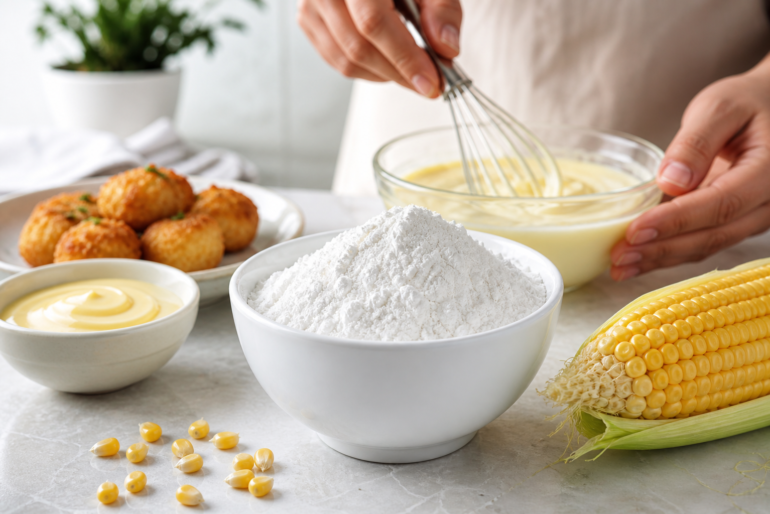
Starch of Maize is one of those simple kitchen ingredients that quietly does a lot more than most people realize. You may know it as cornstarch, maize starch, or cornflour in some countries, but the idea is the same: it is a fine white powder taken from the starchy part of corn kernels. It thickens sauces, improves baking texture, helps keep powdered foods dry, and is also used in household, cosmetic, and even industrial products.
It looks plain, but it is surprisingly useful.
Many people buy it for one recipe and then leave the rest of the box sitting in the cupboard. That is a shame, because this everyday powder can solve small problems in the kitchen, around the home, and sometimes in personal care routines too. The key is knowing where it works well, where it does not, and how to use it safely.
What Is Starch of Maize?
Starch of Maize is a refined starch extracted from maize, also known as corn. During processing, the starchy part of the corn kernel is separated, cleaned, dried, and turned into a soft powder.
It is usually white, odorless, and almost tasteless. That is why it blends easily into recipes without changing the flavor.
In the United States and Canada, people usually call it cornstarch. In many other regions, especially in commercial or ingredient labeling, the term maize starch is also common. The FDA notes that “starch” may be used as the common name for starch made from corn, while “cornstarch” is also acceptable on labels.
That small naming difference can confuse shoppers. If a recipe asks for cornstarch and your packet says maize starch, it is usually the same ingredient.
How Starch of Maize Is Made
The production process is more technical than simply grinding dry corn into powder. Regular corn flour contains more of the whole grain. Starch of Maize is more refined and mainly contains the starch portion.
In simple terms, manufacturers separate the corn kernel into parts. The starch is washed away from the protein, fiber, and germ. It is then dried and milled into a fine powder.
Britannica describes commercial starch production as a process where starch-containing seeds or tubers are crushed or ground, mixed with water, separated from impurities, and dried.
This is why maize starch behaves differently from ordinary cornmeal or corn flour. It has a smoother texture, stronger thickening power, and a more neutral taste.
Why Starch of Maize Is So Popular
The biggest reason is versatility.
Starch of Maize is cheap, easy to store, and simple to use. A small amount can change the texture of a sauce, make fried food crispier, soften baked goods, or prevent powdered ingredients from clumping.
It also has no strong smell or taste. That makes it useful in both sweet and savory recipes.
Food manufacturers like it because it can act as a thickener, stabilizer, texturizer, anticaking agent, and formulation aid. The FDA’s food substance database lists cornstarch, also called starch, maize, for uses including thickener, stabilizer, anticaking agent, drying agent, and texturizer.
At home, you do not need to think about all those technical terms. You just need to know that it helps food feel better, look better, and hold together better.
Starch of Maize Uses in Cooking
The most common use of Starch of Maize is thickening liquid-based foods. It is often added to sauces, soups, gravies, custards, puddings, and pie fillings.
When heated with liquid, starch granules swell and create a thicker texture. This is why a thin sauce can turn glossy and smooth in just a few minutes.
Common cooking uses include:
| Food | How Maize Starch Helps |
|---|---|
| Gravy | Makes it thicker and smoother |
| Soup | Adds body without heavy cream |
| Custard | Creates a soft, creamy texture |
| Stir-fry sauce | Gives a glossy restaurant-style finish |
| Pie filling | Helps fruit juices set |
| Pudding | Adds thickness and structure |
The trick is not to add the powder directly to hot liquid. That usually causes lumps.
Instead, mix it with a little cold water, milk, or broth first. This mixture is called a slurry. Once smooth, pour it into the hot food and stir until thickened.
How Much Starch of Maize Should You Use?
A little goes a long way.
For most sauces and gravies, start with 1 tablespoon of Starch of Maize mixed with 1 tablespoon of cold water for every cup of liquid. If you want a thicker result, add a little more slurry slowly.
Do not dump in too much at once. The texture can quickly become gummy or jelly-like.
For a light soup, use less. For pie fillings or puddings, recipes may need more because the final texture has to hold its shape.
Here is a simple home rule:
| Desired Texture | Amount Per Cup of Liquid |
|---|---|
| Lightly thickened | 1 teaspoon |
| Medium sauce | 1 tablespoon |
| Very thick filling | 1.5 to 2 tablespoons |
Always stir while adding it. Let the food simmer gently for a short time, but avoid long boiling because too much heat can weaken the thickened texture.
Starch of Maize in Baking
Bakers often use maize starch to improve texture. It can make cakes softer, cookies more tender, and fillings smoother.
In cakes, a small amount can reduce the protein strength of flour. That creates a lighter crumb. Some homemade cake flour substitutes are made by replacing part of all-purpose flour with cornstarch.
In cookies, it can help create a melt-in-the-mouth texture.
In fruit pies, it absorbs extra juice and helps the filling set instead of turning watery.
You may also see it used in:
- Shortbread cookies
- Sponge cakes
- Cream fillings
- Pastry creams
- Cheesecake toppings
- Gluten-free flour blends
It is not a complete flour replacement on its own. Starch does not provide structure the same way wheat flour does. It works best when combined with other ingredients.
Starch of Maize for Crispy Fried Food
One of the most loved kitchen uses is crispiness.
A light coating of Starch of Maize can make fried chicken, tofu, fish, vegetables, and potato wedges crispier. It creates a thin outer layer that browns nicely and helps reduce sogginess.
This is why many Asian-style fried recipes use cornstarch or a mixture of cornstarch and flour.
For best results, pat the food dry first. Moisture is the enemy of crispiness. Then coat lightly and shake off the excess before frying or air frying.
You can also mix it into marinades for stir-fried meat. It helps create a tender texture and protects the meat from drying out quickly.
Is Starch of Maize Nutritious?
Starch of Maize is mainly carbohydrate. It is not a rich source of protein, fiber, vitamins, or minerals.
That does not make it “bad.” It just means it should be understood as a functional ingredient, not a nutrition powerhouse.
Britannica notes that cornstarch is high in carbohydrates but low in vitamins, protein, fiber, and minerals.
So, if you use it to thicken a vegetable soup or homemade sauce, that is perfectly normal. But it should not be treated as a health food by itself.
It adds texture more than nutrition.
Benefits of Starch of Maize
The benefits depend on how you use it. It is useful because it solves practical problems in food preparation and everyday home care.
1. It Thickens Without Strong Flavor
Some thickeners change the taste of food. Maize starch does not do that much. It lets the flavor of your sauce, soup, fruit, or custard stay in front.
That is why it is popular in delicate dishes.
2. It Creates a Smooth, Glossy Finish
Sauces thickened with Starch of Maize often look shiny and smooth. This is especially helpful for stir-fry sauces, fruit toppings, and dessert glazes.
Flour-thickened sauces can look more cloudy. Maize starch usually gives a cleaner finish.
3. It Works Quickly
You do not have to cook it for a long time. Once the slurry hits hot liquid, thickening starts quickly.
This makes it helpful for fast weekday cooking.
4. It Can Improve Gluten-Free Recipes
Since maize starch does not contain gluten naturally, it is often used in gluten-free baking blends. It helps lighten texture and balance heavier flours like rice flour or sorghum flour.
People with celiac disease or gluten sensitivity should still check packaging for cross-contamination warnings.
5. It Helps Reduce Clumping
In powdered foods, starch can help absorb moisture and keep ingredients flowing. That is why it may appear in powdered sugar and seasoning mixes.
Food regulators also recognize cornstarch for anticaking and free-flow functions.
Everyday Household Applications
Starch of Maize is not only for cooking. Many people use it around the home because it absorbs moisture and has a gentle powdery texture.
Here are common household uses:
- Freshening shoes by absorbing odor and moisture
- Reducing dampness in drawers
- Helping clean greasy spots from fabric
- Loosening knots in string or shoelaces
- Polishing silver when mixed into a paste
- Making homemade craft clay or oobleck for children
For fabric stains, sprinkle a little on a fresh grease spot and let it sit. It can absorb some of the oil before washing. It will not fix every stain, but it can help if used early.
For crafts, mixing it with water creates a fun non-Newtonian mixture often called oobleck. It feels solid when pressed and liquid when released. This is more of a science activity than a cleaning use, but kids usually enjoy it.
Starch of Maize for Skin and Personal Care
Some people use Starch of Maize as a body powder because it absorbs moisture. It can help reduce friction in areas where skin rubs, such as underarms, feet, or thighs.
It is also found in some cosmetic and personal care products.
However, it should be used carefully. Do not inhale the powder. Avoid using it on infected, broken, or irritated skin without medical advice. Also, do not use it as a treatment for rashes that may be fungal, because moisture and starch can sometimes make certain skin issues worse.
For simple sweat control, a light amount may help. For persistent itching, redness, odor, or rash, it is better to speak with a healthcare professional.
Starch of Maize in Food Manufacturing
In packaged foods, maize starch is used for texture and stability. It can help products stay thick, creamy, smooth, or free-flowing.
You may see it in:
- Instant soups
- Sauces
- Gravies
- Puddings
- Snack coatings
- Bakery fillings
- Processed desserts
- Powdered mixes
- Frozen meals
Modified maize starch is also common in processed foods. “Modified” does not automatically mean unhealthy. It usually means the starch has been treated physically, enzymatically, or chemically so it performs better under heat, freezing, acidity, or long storage.
For example, a frozen sauce may need a starch that stays smooth after thawing. A canned filling may need one that handles heat without breaking down.
ScienceDirect describes starch as widely used in food, pharmaceutical, textile, papermaking, and adhesive applications because it is abundant, low-cost, renewable, and biodegradable.
Industrial and Commercial Uses
Outside the kitchen, Starch of Maize has many commercial uses. It is used in paper products, textiles, adhesives, biodegradable materials, and pharmaceuticals.
In paper manufacturing, starch can improve strength and surface quality. In textiles, it may help with finishing and sizing. In adhesives, it can work as a natural binding material.
ScienceDirect’s overview describes corn starch as a white, tasteless, odorless powder used in food processing, papermaking, industrial adhesives, cosmetics, and oral pharmaceutical products.
This wide use comes from its simple chemistry. It can bind, thicken, absorb water, and form films. That makes it useful far beyond recipes.
Is Starch of Maize Safe?
For most people, Starch of Maize is safe when used in normal food amounts. It has a long history of use in cooking and food manufacturing.
The FDA lists cornstarch in its food substances database and includes GRAS-related regulatory references for food use.
Still, safe does not mean unlimited. Since it is mostly refined carbohydrate, eating large amounts often is not ideal, especially for people managing blood sugar or following a specific medical diet.
People with corn allergies should avoid it unless a doctor says otherwise. While true corn allergy is not extremely common, it can happen.
Also, do not eat raw starch in large amounts. Some people crave raw starch, but this can upset digestion and may be linked with pica or nutritional concerns. If cravings are frequent, it is worth discussing with a healthcare provider.
Starch of Maize and Blood Sugar
Because maize starch is mostly carbohydrate, it can affect blood sugar. In cooked foods, it is digested into glucose like other starches.
That does not mean everyone must avoid it. The amount used in a sauce or soup is usually small. But if someone has diabetes, insulin resistance, or is closely watching carbohydrates, it is smart to count it as part of the meal.
There are also special forms like high-amylose maize starch, which may contain more resistant starch after cooking. Some research suggests resistant starch can affect glycemic and insulin responses differently from rapidly digested starch.
For everyday cooking, though, standard maize starch should be treated as a refined carbohydrate ingredient.
Starch of Maize vs Corn Flour
This is where many people get confused.
In the US, cornstarch usually means the pure white starch powder. Corn flour often means finely ground whole corn or a more flour-like corn product.
In the UK and some other countries, cornflour often means what Americans call cornstarch.
So the name depends on location.
Here is a simple comparison:
| Ingredient | Texture | Main Use |
|---|---|---|
| Starch of Maize | Fine white powder | Thickening, crisping, texture |
| Cornstarch | Same as maize starch in many regions | Thickening, sauces, baking |
| Corn flour | Fine ground corn, depending on country | Baking, coating, cooking |
| Cornmeal | Coarser ground corn | Polenta, cornbread, breading |
If you are following a recipe from another country, check the description. If it says fine white powder used for thickening, it likely means maize starch.
Starch of Maize vs Potato Starch
Potato starch and maize starch can sometimes replace each other, but they are not identical.
Potato starch thickens quickly and can create a slightly different texture. It is often used in gluten-free cooking and crispy coatings. Maize starch usually gives a clean, glossy finish and is easier to find in many grocery stores.
For sauces, either may work. For baking, results can vary.
If a recipe is delicate, use the starch it asks for. If it is a simple gravy or soup, substitution is usually easier.
Starch of Maize vs Tapioca Starch
Tapioca starch comes from cassava root. It creates a stretchy, glossy texture and is common in gluten-free baking, bubble tea pearls, and certain chewy desserts.
Maize starch is less stretchy. It gives a smoother, firmer thickness.
For fruit pies, tapioca can create a more gel-like texture. Maize starch gives a cleaner set but may become cloudy or break down if overcooked too long.
Both are useful. They just behave differently.
Practical Tips for Using Starch of Maize
Good results usually come from small habits.
First, always mix it with cold liquid before adding it to hot food. This prevents lumps.
Second, add it slowly. You can always thicken more, but fixing an overly thick sauce is harder.
Third, avoid long boiling. Once the food thickens, lower the heat or remove it from the stove.
Fourth, store it properly. Keep it in a sealed container away from moisture, strong smells, and pests.
Fifth, label it clearly if you transfer it to another jar. White powders can look similar, and confusing starch with baking powder, flour, or powdered sugar can ruin a recipe.
Common Mistakes People Make
Even simple ingredients can be used the wrong way.
One common mistake is adding the powder straight into hot soup. It clumps almost instantly.
Another mistake is using too much. The food may turn rubbery or gluey.
Some people also boil the dish too long after thickening. That can thin the sauce again.
Another issue is using maize starch where flour is needed for structure. For example, you cannot make regular bread with only starch. It does not behave like wheat flour.
A final mistake is assuming it adds major nutrition. It improves texture, not the overall nutrient quality of a meal.
Real-World Example: Fixing Watery Gravy
Imagine you make roast chicken, and the pan gravy looks thin. Instead of adding more flour and risking lumps, you can use a maize starch slurry.
Mix 1 tablespoon of Starch of Maize with 1 tablespoon of cold water. Stir until smooth. Slowly pour it into the hot gravy while whisking.
Within a minute or two, the gravy becomes thicker and smoother. If it still feels thin, add a little more slurry.
This is one of the easiest ways to save a sauce at the last minute.
Real-World Example: Crispier Homemade Fries
If your homemade fries turn soft after cooking, moisture may be the problem.
After cutting potatoes, rinse and dry them well. Toss them with a small amount of maize starch before frying or air frying. The starch helps create a crisp surface.
Do not use too much. A thin dusting is enough.
This method also works for tofu cubes, cauliflower bites, and chicken strips.
Real-World Example: Better Fruit Pie Filling
Fruit pies can become watery because fruits release juice during baking. Maize starch helps absorb that juice and turn it into a thicker filling.
For berries, apples, peaches, or cherries, mix the starch with sugar before adding it to the fruit. This helps distribute it evenly.
The result is a pie that slices better and does not flood the plate.
Storage and Shelf Life
Starch of Maize stores well if kept dry. Moisture is the main problem. If water gets into the container, it can clump or spoil.
Keep it in an airtight jar or its original sealed box. Store it in a cool, dry cabinet.
Do not keep it near spices with strong aromas. Since it is a fine powder, it may absorb smells over time.
Before using old starch, check for insects, strange odor, discoloration, or moisture clumps. If anything seems off, throw it away.
Buying Tips
When buying maize starch, check the label carefully.
Look for a fine white powder with no added flavor unless you need a specific prepared mix. Some products may be labeled cornflour, cornstarch, or maize starch depending on the market.
If you need gluten-free maize starch, choose a product that says gluten-free on the package. Naturally, maize does not contain gluten, but cross-contact during processing can matter for sensitive people.
If you want it for cooking, choose food-grade starch. Industrial starch is not meant for eating.
For skincare or body powder use, avoid scented products if your skin is sensitive.
Who Should Be Careful With It?
Most people can use it normally in cooking. But a few groups should be more careful.
People with corn allergies should avoid it. People managing blood sugar should count it as a carbohydrate. Anyone with ongoing skin irritation should avoid using it as a home remedy without proper advice.
Parents should also avoid letting young children inhale powder during play or personal care use. Fine powders can irritate the lungs.
In cooking, the risks are usually low. Inhaling powder or using it on infected skin is where more caution is needed.
Frequently Asked Questions
Is Starch of Maize the same as cornstarch?
Yes, in most cases, Starch of Maize and cornstarch refer to the same fine white starch taken from corn kernels. The name changes by country and labeling style.
Can I use Starch of Maize instead of flour?
Sometimes, but not always. It works well as a thickener for sauces and as a coating for frying. It cannot fully replace flour in bread, cakes, or doughs that need structure.
Is Starch of Maize gluten-free?
Pure maize starch is naturally gluten-free. However, people with celiac disease should choose certified gluten-free products to avoid cross-contact.
Can Starch of Maize be used on skin?
It may help absorb moisture, but it should not be used on broken, infected, or irritated skin. Avoid inhaling it, and stop using it if discomfort appears.
Does Starch of Maize expire?
It can last a long time when stored dry and sealed. Throw it away if it smells strange, has insects, gets wet, or changes color.
Can I use it for baby rash?
It is better to ask a pediatrician before using powders on babies. Fine powders can be inhaled, and rashes may need proper treatment depending on the cause.
Why does my sauce become lumpy?
Lumps usually happen when dry starch is added directly to hot liquid. Mix it with cold liquid first, then stir it into the hot sauce.
Conclusion
Starch of Maize is simple, affordable, and surprisingly powerful in everyday life. It thickens sauces, improves baking texture, adds crispiness to fried foods, helps with household moisture control, and appears in many commercial products because of its reliable performance.
It is not a superfood, and it should not be treated like one. Its real value is practical. Used in the right amount, it can make food smoother, cleaner, crispier, and more enjoyable.
Whether you call it maize starch, cornstarch, or cornflour, this fine white powder deserves a proper place in the kitchen. It is one of those ingredients that may not look exciting, but once you understand it, you start seeing uses for it everywhere.
For readers who want a simple background reference, the term corn starch is widely used for the same ingredient in many regions.