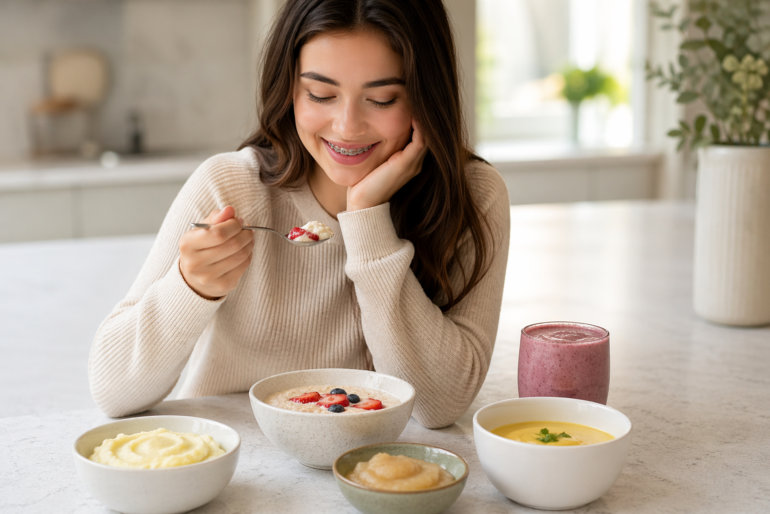
Getting braces is exciting when you think about the end result, but the first few days can be rough. Teeth often feel tender after braces are placed or tightened, and even foods you normally enjoy can suddenly feel like too much work. That is exactly why Soft Foods for Braces matter so much. They help you eat without putting extra pressure on sore teeth, and they also lower the chance of damaging brackets or wires while your mouth adjusts. Orthodontic guidance from the American Association of Orthodontists and the NHS both support choosing softer, easier-to-chew foods when braces feel uncomfortable, while also avoiding hard, sticky, and crunchy foods that can cause problems.
The good news is that eating with braces does not have to mean bland or boring meals. You can still have filling breakfasts, satisfying lunches, easy dinners, and snacks that taste good. The trick is knowing which textures are kind to your teeth and how to prepare regular foods in a braces-friendly way. This article walks through practical Soft Foods for Braces, meal ideas for sore teeth, foods to avoid, and simple habits that make the whole adjustment period easier. Guidance on oral care also matters because fixed appliances create extra plaque-retention areas, which can raise the risk of demineralization and cavities if cleaning slips.
Why Soft Foods for Braces Help So Much
Braces work by gradually moving your teeth, and that movement can make the teeth and surrounding tissues feel sensitive, especially right after placement or an adjustment. During that period, softer foods reduce the force needed for biting and chewing. That means less pressure on tender teeth and less irritation inside the cheeks and lips. Orthodontic advice commonly recommends soft foods such as yogurt, mashed potatoes, smoothies, soups, pasta, and scrambled eggs during these sore periods.
There is also a practical side to it. Some foods are not painful because of temperature or seasoning. They are painful because they are hard, crusty, sticky, or require a strong bite with the front teeth. Those same foods can also bend wires, loosen brackets, or get trapped around appliances. NHS and orthodontic sources specifically warn against foods like toffee, hard sweets, crusty bread, and biting directly into firm foods such as apples unless they are cut into smaller pieces.
What Counts as Soft Foods for Braces?
When people hear the phrase Soft Foods for Braces, they sometimes imagine only soup and yogurt. In reality, the category is much wider than that. A braces-friendly soft food is simply one that is easy to chew, easy to swallow, and does not fight back when your teeth are sore.
These foods usually have one or more of these qualities:
- Smooth texture
- Moist or creamy consistency
- Easy to mash with a fork
- Cut into small pieces
- Gentle on brackets and wires
- Low need for tearing, crunching, or biting
Cleveland Clinic defines soft foods in a very practical way by focusing on foods that reduce chewing effort and are easier to manage, which fits well for sore teeth after orthodontic visits too.
Best Soft Foods for Braces in the First Few Days
The first 24 to 72 hours after getting braces or having them tightened are usually when people want the most relief. This is when Soft Foods for Braces can make the biggest difference.
Breakfast ideas
Breakfast is often harder than people expect because crunchy cereal, toast, and chewy bagels can feel uncomfortable. Softer options are much easier.
Good breakfast choices include:
- Oatmeal
- Greek yogurt
- Smoothies
- Scrambled eggs
- Soft pancakes
- Mashed banana with yogurt
- Cottage cheese
- Cream of wheat
- Soft muffins broken into small pieces
Oatmeal and yogurt are especially useful because they are filling, gentle, and quick. Scrambled eggs also work well because they provide protein without requiring much chewing. These are consistent with orthodontic recommendations for soft, easy foods during sore periods.
Lunch ideas
Lunch is easier when you stop thinking in terms of crunchy sandwiches and start thinking in terms of softness and moisture.
Try:
- Mac and cheese
- Soft pasta with a mild sauce
- Mashed potatoes with shredded chicken
- Rice bowls with very soft ingredients
- Tuna or egg salad
- Soft tortilla wraps cut into small bites
- Blended vegetable soup
- Lentil soup
- Avocado on soft bread
If bread feels difficult, switch to bowls, soups, or soft casseroles for a couple of days. The goal is comfort, not perfection.
Dinner ideas
Dinner is where many people accidentally eat something too tough. Choose meals that are easy to chew and easy to reheat.
Helpful dinner options include:
- Soft pasta
- Risotto
- Baked fish
- Meatloaf
- Steamed vegetables cooked until tender
- Mashed sweet potatoes
- Soft rice with shredded turkey or chicken
- Polenta
- Soft casseroles
- Noodle soup
AAO advice also notes that soft or liquid foods such as soups, stews, casseroles, pasta, scrambled eggs, and smoothies are good everyday options while wearing braces.
Snack ideas
A lot of people focus only on meals, but snacks matter too because hunger makes it easier to make bad food choices.
Simple snack ideas:
- Applesauce
- Yogurt cups
- Pudding
- String cheese torn into small bits
- Hummus with soft pita pieces
- Banana slices
- Soft peaches
- Smoothies
- Ice cream in moderation
- Soft boiled eggs
If your mouth is very sore, cooler foods can feel soothing. Just avoid chewing ice, since hard ice is one of the classic foods that can damage braces.
A Simple Table of Soft Foods for Braces and Why They Work
| Food | Why It Helps | Best Time to Eat |
|---|---|---|
| Oatmeal | Warm, filling, and easy to chew | Breakfast |
| Yogurt | Cool and soothing with no chewing | Breakfast or snack |
| Scrambled eggs | Soft protein source | Breakfast or lunch |
| Mashed potatoes | Very low chewing effort | Lunch or dinner |
| Pasta | Comfortable and versatile | Lunch or dinner |
| Smoothies | Easy calories when chewing hurts | Any time |
| Soup | Hydrating and gentle | Lunch or dinner |
| Applesauce | Sweet, soft, and simple | Snack |
| Cottage cheese | Soft texture with protein | Breakfast or snack |
| Rice cooked soft | Easy base for soft meals | Lunch or dinner |
Soft Foods for Braces That Still Feel Like Real Meals
One of the biggest mistakes people make is eating too little because they think braces pain means they have to live on tiny snacks. That can leave you tired, irritable, and more tempted to grab whatever is easiest, even if it is not braces-safe.
A better approach is to build soft meals with three things in mind:
- A soft base such as rice, pasta, oatmeal, mashed potatoes, or soup
- A gentle protein such as eggs, yogurt, soft fish, shredded chicken, tofu, or cottage cheese
- Easy produce such as bananas, avocado, cooked carrots, cooked spinach, or blended vegetables
For example, a comforting dinner might be soft pasta with flaky salmon and steamed zucchini cooked until tender. A quick lunch could be mashed potatoes with shredded rotisserie chicken and gravy. A filling breakfast could be oatmeal with banana and peanut butter stirred in until smooth.
These combinations help you eat normally enough to stay satisfied while still respecting sore teeth.
Foods to Avoid When Your Braces Hurt
Knowing what not to eat is just as important as knowing the best Soft Foods for Braces. Even if a food seems healthy, it may not be a good fit if it is hard, sticky, or requires strong biting.
Common foods to avoid include:
- Popcorn
- Nuts
- Hard candy
- Ice
- Caramel
- Chewy candy
- Crusty pizza edges
- Tough bagels
- Raw hard vegetables
- Whole apples bitten with front teeth
- Crunchy chips
- Sticky granola bars
Orthodontic and dental sources regularly warn against hard and sticky foods because they can break brackets, distort wires, or get trapped around braces. NHS guidance also recommends cutting certain firmer foods into smaller pieces instead of biting straight into them.
Sugary and acidic drinks deserve caution too. The ADA recommends limiting sugary foods and drinks for oral health, and this becomes even more important with braces because appliances can make plaque control more challenging.
How to Make Regular Foods Safer for Braces
You do not always need a completely different menu. Sometimes a few small changes are enough to turn a tough meal into one of the better Soft Foods for Braces options.
Here are easy ways to adjust your food:
- Cut food into small pieces instead of biting with your front teeth
- Cook vegetables longer so they are tender
- Choose shredded meat over big pieces
- Blend soups for a smoother texture
- Add broth, sauce, or gravy to dry foods
- Mash fruits like banana or avocado
- Peel fruits and slice them thinly
- Toast less, not more
This is especially useful after the initial soreness fades. Many people can go back to a fairly normal diet within a few days, but texture still matters. NHS guidance says that after a short period with fixed braces, you can eat a more normal range of foods, while still avoiding foods that commonly damage the appliance.
Soft Foods for Braces for Kids, Teens, and Adults
The basics are the same for everyone, but the routine looks slightly different depending on age.
Kids often do best with familiar comfort foods such as yogurt, mashed potatoes, applesauce, soup, and soft pasta. Keeping meals simple lowers stress and makes it easier for them to keep eating regularly.
Teens usually need more filling options because of school schedules and bigger appetites. Think protein smoothies, rice bowls, mac and cheese, eggs, soft wraps, and pasta dishes that can be packed or reheated easily.
Adults often want options that fit work and daily responsibilities. Cottage cheese bowls, meal-prep soups, flaky fish, risotto, oatmeal, and softer grain bowls are practical choices that still feel like proper meals.
No matter the age, the pattern is the same. Choose foods that are soft, filling, and low-risk for braces.
What to Eat After a Braces Tightening Appointment
Many people notice soreness not just when braces are first fitted, but again after adjustment appointments. That discomfort is usually temporary, but it can still affect how you eat for a day or two.
A smart same-day plan looks like this:
Breakfast: yogurt with banana or soft oatmeal
Lunch: soup with soft noodles or rice
Dinner: mashed potatoes, soft fish, and cooked vegetables
Snack: smoothie, pudding, or applesauce
AAO guidance on orthodontic discomfort specifically recommends soft foods after adjustments, including items like yogurt, smoothies, pasta, scrambled eggs, and mashed potatoes.
Why Oral Care Matters Alongside Soft Foods for Braces
Food choice is only one half of the picture. The other half is cleaning well enough that food and plaque do not sit around brackets and gumlines. The ADA recommends brushing twice a day with fluoride toothpaste for two minutes and cleaning between teeth daily. That routine becomes even more important during orthodontic treatment.
Research reviews have found that fixed orthodontic appliances can increase plaque accumulation and raise the risk of early enamel problems and caries if oral hygiene is poor. In other words, choosing Soft Foods for Braces helps with comfort, but smart cleaning habits help protect the teeth throughout treatment.
Rinsing after meals, brushing carefully around brackets, and limiting frequent sugary snacks can make a big difference over time. Near the end of treatment, that effort shows up not just in straighter teeth, but in healthier-looking enamel too.
Common Questions About Soft Foods for Braces
How long do I need soft foods after getting braces?
Most people need softer foods for the first few days, especially in the first 24 to 72 hours. After that, many can return to a more normal routine, but should still avoid hard, sticky, and crunchy foods that can damage braces.
Can I eat rice with braces?
Yes, as long as it is cooked soft and eaten carefully. Rice works well as a base for braces-friendly meals, especially when paired with soft protein and cooked vegetables.
Are smoothies good for braces?
Yes. Smoothies are one of the easiest Soft Foods for Braces because they require little to no chewing. They are especially helpful when your mouth is sore and you still need calories and hydration. Orthodontic sources commonly include smoothies among recommended soft choices.
Is ice cream okay?
It can be, in moderation. Ice cream may feel soothing on sore teeth, but it is still sugary, so it should not become an all-day snack. If you have it, rinse with water afterward and keep up your brushing routine. ADA guidance supports limiting sugary foods as part of good oral health.
Can I eat bread with braces?
Soft bread can be fine, but crusty bread and hard rolls can be uncomfortable and may put pressure on brackets. If bread feels difficult, choose softer options or cut it into smaller bites.
Practical Meal Ideas for a Full Day
If you want a realistic example, here is a braces-friendly day of eating that keeps comfort and fullness in balance:
Breakfast: warm oatmeal with mashed banana and cinnamon
Mid-morning snack: Greek yogurt
Lunch: creamy tomato soup with soft pasta
Afternoon snack: applesauce and cottage cheese
Dinner: flaky baked fish, mashed sweet potatoes, and tender cooked green beans
Evening snack: smoothie with yogurt, berries, and peanut butter
That kind of routine works because it is soft without feeling restrictive. It also gives you protein, carbohydrates, and enough variety to avoid boredom.
Final Thoughts on Soft Foods for Braces
The best Soft Foods for Braces are the ones that help you stay comfortable without making eating feel like a chore. When your teeth are sore, softer textures reduce pressure, lower irritation, and make it easier to keep getting proper meals. Yogurt, oatmeal, soup, pasta, eggs, mashed potatoes, smoothies, and other gentle foods can carry you through the hardest days after braces are fitted or tightened.
At the same time, comfort should go hand in hand with smart habits. Avoid hard and sticky foods, cut firmer foods into smaller pieces, and stay consistent with brushing and flossing. Good oral hygiene matters just as much as smart meal choices when you want straight teeth without unnecessary setbacks. ADA and orthodontic guidance both point in the same direction: gentle foods help with soreness, while steady cleaning helps protect your teeth during treatment.
If you are ever unsure whether a food is safe, a simple rule usually works: if it is hard to bite, hard to chew, sticky, or likely to get stuck, save it for later. In the early days of treatment, choosing Soft Foods for Braces is one of the easiest ways to make the whole experience more manageable and a lot less painful.