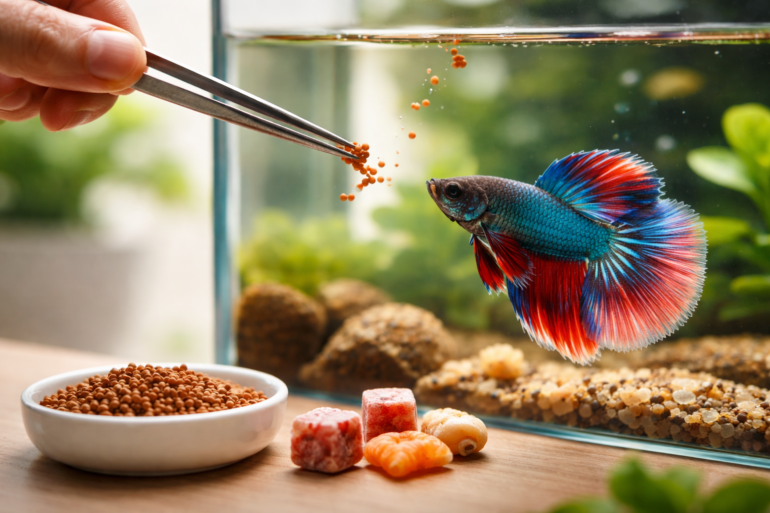
If you want a Siamese fighting fish to look vibrant, stay active, and avoid the common problems that come from poor feeding, the answer starts with the food bowl. Siamese Fish Food is not just about buying any fish pellets labeled for tropical fish. Bettas are carnivores, and they do best on a protein-rich diet made for their species, with portion control and some variety built in. A good feeding routine can support brighter color, better fin condition, stronger energy, and cleaner tank conditions at the same time. Sources that regularly care for aquarium fish, including PetMD and aquatic nutrition guidance from the University of Florida, consistently note that tropical aquarium diets are typically protein-forward, and bettas in particular do best with meat-based foods rather than generic community fish formulas.
The biggest mistake many owners make is assuming more food means a healthier fish. In reality, overfeeding is one of the fastest ways to cause bloating, obesity, digestive trouble, and poor water quality. Uneaten food breaks down in the tank, raises waste levels, and can make a healthy setup decline surprisingly fast. That is why choosing the right Siamese Fish Food matters, but feeding the right amount matters just as much.
What Is the Best Siamese Fish Food?
The best Siamese Fish Food is a high-protein pellet or similar staple formula made specifically for bettas. These fish naturally eat insects and insect larvae, so their diet should reflect that carnivorous feeding pattern. A staple food should have a strong animal-protein base and be sized appropriately for a betta’s small mouth. Occasional extras like brine shrimp, daphnia, or bloodworms can add variety, but they work best as supplements rather than the entire diet.
A lot of new keepers ask whether flakes are fine. They can be, but bettas often do better with species-specific pellets because pellets are easier to portion, stay more consistent from feeding to feeding, and are often formulated with the protein level bettas need. PetMD notes that meat-based foods, including pellets and some frozen or freeze-dried options, fit well into a balanced betta diet. The University of Florida also notes that aquarium and tropical fish feeds commonly contain about 35 to 50 percent protein, which helps explain why generic low-protein foods are rarely the best long-term choice for Siamese Fish Food.
Why Diet Affects Color and Health So Much
Color in bettas is influenced by genetics first, but food still plays a major supporting role. A fish that is underfed, overfed, or eating poor-quality Siamese Fish Food often looks duller, less energetic, and less impressive overall. Balanced nutrition helps the body maintain tissue repair, immune function, muscle tone, and normal activity. It also supports the fins and skin, which are often the first places where poor diet becomes visible.
Good nutrition also affects how well your fish handles stress. Bettas live in enclosed aquarium environments where water quality, temperature, and food all interact. If a fish is eating too much low-quality food, the tank gets dirtier, digestion gets worse, and the fish’s body has more to manage at once. So when people talk about better color, what they often really mean is a fish that is thriving overall. Better color is usually a visible side effect of better care.
How to Choose Siamese Fish Food at the Store
When shopping for Siamese Fish Food, think in layers. First, choose the staple food. Second, choose one or two extras for variety. Third, make sure everything fits your fish’s size and routine.
Here is a simple way to think about it:
| Food Type | Best Use | Pros | Watch Out For |
|---|---|---|---|
| Betta pellets | Daily staple | Easy to portion, protein-focused, convenient | Pellet size varies by brand |
| Betta flakes | Backup staple | Easy to find, affordable | Some bettas ignore flakes |
| Frozen brine shrimp | Occasional treat | Good variety, appealing texture | Needs thawing first |
| Frozen or freeze-dried bloodworms | Treat only | Highly appealing to bettas | Too much can unbalance the diet |
| Daphnia | Occasional supplement | Adds variety and light feeding option | Not enough as a sole diet |
| Live food | Rare enrichment | Encourages natural feeding behavior | Must come from safe sources |
This approach lines up well with veterinary and aquarium-care recommendations that favor a meat-based staple with occasional variety, while warning against relying too heavily on treats alone. Live food can be useful, but infected or poor-quality live food can introduce health problems, so sourcing matters.
Ingredients That Usually Signal Better Siamese Fish Food
A better staple formula usually emphasizes animal protein rather than filler-heavy plant content. You are generally looking for a food intended for carnivorous tropical fish, not a generic all-purpose aquarium mix. Protein quality matters because bettas are built for a diet centered on insects and other small animal prey, not a grain-heavy menu. The label will not tell you everything, but it gives you enough to avoid obviously weak choices.
Also pay attention to freshness. One practical point from aquarium feeding advice is that stored food does not stay ideal forever. Older food can lose nutritional value over time, which means even a good Siamese Fish Food may not stay good if it has been sitting open for months. Buy smaller containers when possible so you use them while they are still fresh.
How Much Siamese Fish Food Should You Feed?
This is where many betta owners improve results almost overnight. Bettas do not need large meals. They need small, regular meals that they can finish without excess food drifting to the bottom. Practical feeding advice for bettas commonly recommends portioning food so it is eaten within a few minutes, rather than dumping in extra food “just in case.”
For most adult bettas, a small serving once or twice a day works well, depending on pellet size, body condition, water temperature, and activity level. Some care sources recommend once daily, while others favor at least two smaller feedings. The common ground between them is portion control. Smaller meals reduce waste and are easier on digestion than one oversized feeding.
A practical rule for Siamese Fish Food is this: feed only what your betta can eat cleanly in a few minutes, then stop. If food is regularly left behind, the portion is too big. If the fish looks thin behind the head, the portion may be too small. Watching the fish’s body shape over time is often more helpful than blindly following a number printed on the container.
How Often to Feed for Better Color and Energy
Consistency matters more than novelty. A stable routine with quality Siamese Fish Food gives a fish a better chance to maintain normal digestion, energy, and body condition. Many keepers get the best results when they feed at the same time each day and avoid random snacking. That keeps the tank cleaner and makes it easier to notice if appetite changes, which is often one of the first signs that something is wrong.
If your betta is very young, especially active, or being conditioned for breeding, feeding patterns may be a little different and often more frequent. Breeding-related care advice commonly suggests more abundant high-protein feeding for conditioning, but that is not the same as routine daily care for a typical pet betta. For the average home aquarium, regular small meals are the safer standard.
Foods That Help Bettas Look Their Best
The best Siamese Fish Food routine is not flashy. It is steady. Start with a dependable pellet. Add occasional variety. Keep portions sensible.
A simple weekly rhythm might look like this:
- Most days: a small amount of high-protein betta pellets
- Once or twice a week: a little brine shrimp, daphnia, or bloodworms instead of part of the staple feeding
- Always: remove uneaten food promptly
That kind of rotation helps with palatability and nutritional variety without turning treats into the main diet. It also reduces the chance that a fish becomes too dependent on rich extras and starts refusing the staple food it actually needs most.
What About Color-Enhancing Fish Food?
Some products are marketed specifically for color. They can be useful, but they are not magic. If the food is still high quality, protein-appropriate, and fed in reasonable portions, it may fit into a good Siamese Fish Food routine. But color cannot compensate for poor water quality, cold water, overfeeding, or stress. A bright package does not matter if the basics are wrong.
In real-world fishkeeping, the most dramatic improvements usually come from combining proper feeding with clean water, stable temperature, and a low-stress tank setup. That is also why food alone should never be blamed for a dull fish before husbandry basics are checked.
Common Siamese Fish Food Mistakes
One of the most common problems is feeding too many bloodworms or other rich treats. Bettas love them, but a fish loving a food is not the same as that food being ideal every day. Treats should stay treats.
Another mistake is using generic community fish food as the only diet. Bettas are not built like every other tropical fish in the tank aisle, and their food should not be treated as interchangeable. A third mistake is ignoring pellet size. Even if the formula is good, oversized pellets can make feeding awkward and encourage waste.
A fourth mistake is not adjusting food to the fish’s condition. An overweight betta should not keep getting the same oversized meals. A fish that is losing weight should not be left on a minimal ration indefinitely. Good Siamese Fish Food practice always includes observation. The fish tells you a lot if you look closely.
Signs Your Betta’s Diet Is Working
A betta on the right Siamese Fish Food routine usually shows it in everyday ways. The fish comes forward eagerly at feeding time. The body looks smooth and balanced rather than pinched or bloated. Activity is steady, fins are carried well, and waste in the tank is manageable instead of excessive.
Color is part of that picture, but not the whole picture. A healthier fish often looks brighter because the body is functioning better overall. Owners sometimes focus only on bold reds or blues, but true improvement is usually broader than appearance. It shows up in appetite, posture, swimming, and consistency.
When Siamese Fish Food Is Not the Real Problem
Sometimes a fish eats well and still looks off. That is when it helps to step back and look at the tank itself. Digestion and metabolism are affected by temperature, and water quality strongly affects appetite and stress. Even excellent Siamese Fish Food cannot fully compensate for dirty water, rising nitrogen waste, or a setup that is chronically unstable.
This is especially important for people who feed heavily in small tanks. More food means more waste, and more waste changes the water faster. So if your betta seems sluggish, spits food out, or looks bloated, do not only change the food. Check the feeding amount, the water conditions, and the overall care routine together.
FAQ About Siamese Fish Food
Can Siamese fish eat tropical flakes?
They can, but betta-specific pellets or similar carnivore-leaning foods are usually a better long-term choice because bettas need a protein-rich diet and often respond better to foods made for their size and feeding style.
Is live food necessary?
No. Good-quality prepared Siamese Fish Food can be enough for routine care. Live food is optional enrichment, and if used, it should come from a safe source.
Are bloodworms good every day?
Usually not. They are better treated as an occasional supplement instead of the main diet.
How do I know if I am overfeeding?
Look for leftover food, a swollen belly, worsening water quality, or a fish that appears broader than normal from above. Those are common warning signs that the feeding routine needs adjustment.
Conclusion
The best Siamese Fish Food is simple in principle even if store shelves make it look complicated. Start with a high-protein staple made for bettas. Feed small portions. Add variety carefully. Watch your fish, not just the label. When the routine is right, you usually see the payoff in cleaner feeding behavior, steadier energy, healthier fins, and better overall color.
In other words, Siamese Fish Food works best when it is part of a complete care routine rather than a quick fix. Good food supports health, but clean water, proper temperature, and calm conditions are what allow that nutrition to show up on the fish itself. If you build feeding around what bettas naturally are, which is small carnivorous fish adapted to eating insects and similar prey, you give your betta the best chance to thrive in a home aquarium that respects its natural habitat.
A publish-ready approach to Siamese Fish Food does not need to be complicated. It needs to be consistent. Choose quality over quantity, avoid overfeeding, and let the fish’s condition guide small adjustments over time. That is how better color and better health usually happen together.