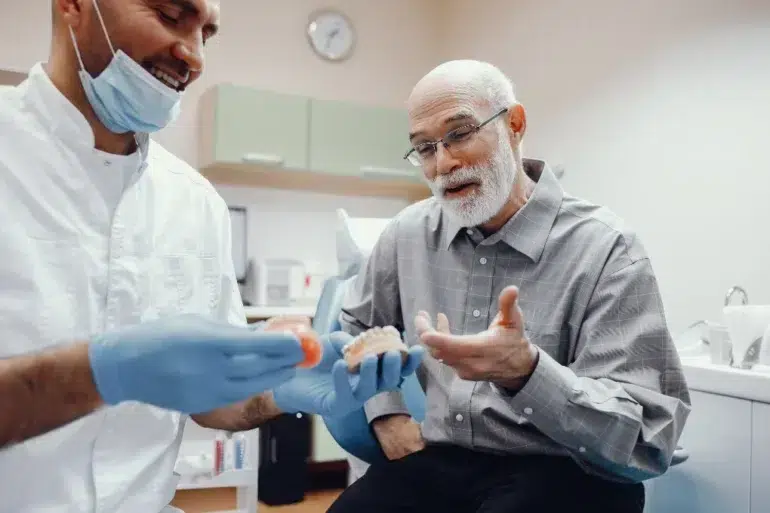
Aging changes your teeth, your gums, and your smile. You might see worn edges, stains, or gaps that were not there before. These shifts can drain your confidence and make you hide your mouth in photos or in conversation. You deserve clear answers and honest guidance. Cosmetic care for older adults is different from care for younger patients. Your health history, medications, and bone strength all matter. So you need to ask the right questions. This blog gives you four direct questions to bring to your next visit. You can use them with any provider, including Dr. Dhaval Patel dentist or your current dentist. Each question helps you weigh safety, cost, and results. You gain control over your choices. You protect your health. You also give yourself a real chance to feel at ease when you smile again.
1. “Is my mouth healthy enough for cosmetic work?”
Cosmetic care rests on a healthy base. If your gums bleed, your teeth feel loose, or you have dry mouth, you need to fix those problems first.
Ask your dentist to check three things.
- Gum health and bone loss
- Tooth decay and worn fillings
- Dry mouth from medicines or health conditions
The dentist may use X-rays, a gum exam, and a bite check. Each step protects you from pain and wasted money. The National Institute of Dental and Craniofacial Research explains that older adults face a higher risk for decay on root surfaces and around old fillings. That risk grows if you use medicines that cause dry mouth.
Ask for clear language.
- “Do I have gum disease, and how serious is it?”
- “Do I need cleanings or treatment before any cosmetic work?”
- “What happens if I skip that step?”
If the dentist cannot explain the plan in simple words, stop and ask again. You deserve to understand each step.
2. “Which options fit my age, health, and daily habits?”
Not every treatment fits every older adult. You might have arthritis in your hands, trouble sitting in a dental chair, or a tight budget. Your dentist should match options to your life, not the other way around.
Common cosmetic choices for older adults include three groups.
- Whitening for stained teeth
- Bonding or veneers for worn or chipped edges
- Implants, bridges, or partial dentures for missing teeth
Use questions like these.
- “How long does each option last for someone my age?”
- “How much daily care does it need?”
- “What might go wrong and how often?”
Then ask your dentist to compare options for you. The table below gives an example. It is not personal medical advice. It shows how you might think through choices during your visit.
| Example comparison of cosmetic options for older adults | ||||
|---|---|---|---|---|
| TREATMENT TYPE | COMMON USE | TYPICAL VISIT COUNT | AVERAGE STAYING POWER | DAILY CARE NEEDS |
| Whitening | Surface stains | 1 to 3 visits | Months to a few years | Avoid dark drinks. Use touch-ups. |
| Bonding | Small chips or gaps | 1 visit per tooth | Several years | Do not bite hard objects. |
| Veneers | Shape and color change | 2 to 3 visits | Many years | Good brushing and flossing. |
| Implants | Single missing teeth | Several visits over months | Often long lasting | Careful cleaning around the implant. |
| Partial dentures | Many missing teeth | 2 to 4 visits | Several years | Daily cleaning. Night removal. |
Use this kind of table with your dentist. Ask them to fill in the details for your mouth and your health.
3. “How will my medicines and health conditions affect treatment?”
Many older adults live with heart disease, diabetes, osteoporosis, or past cancer treatment. You might use blood thinners, bone medicines, or drugs that dry the mouth. Each one can shape what is safe.
Before any cosmetic plan, tell your dentist about three things.
- All prescription and over-the-counter medicines
- Any history of radiation to the head or neck
- Any joint replacements or heart valve issues
The dentist may talk with your medical doctor. That step shows respect for your safety. For example, if you use blood thinners, some gum work may need timing changes. If you have dry mouth, whitening may cause more tooth pain.
The Centers for Disease Control and Prevention reports that many older adults have untreated decay and gum disease. Medicines that cut saliva raise this risk. Ask your dentist.
- “Does any part of this plan raise my risk for infection or bone problems?”
- “Do I need medical clearance from my doctor?”
- “Are there safer options that still improve my smile?”
Clear answers protect you from regret later.
4. “What will this cost over time, and what will it feel like to live with it?”
Cosmetic work touches your money, your time, and your daily comfort. A low price today can lead to higher costs later if it fails or feels hard to use. Ask about the full picture, not just the first bill.
Start with cost questions.
- “What is the total cost from start to finish?”
- “What parts does insurance usually not cover?”
- “What repairs or replacements might I face in five or ten years?”
Then ask about how it feels to live with the change.
- “Will I speak or eat differently at first?”
- “How long will soreness or tooth sensitivity last?”
- “What daily habits do I need to change to protect this work?”
Request plain numbers. Ask your dentist to compare one-time costs with long-term care. A more durable choice can sometimes save money over time. At the same time, a smaller change can still lift your confidence and fit a tight budget.
How to prepare for your next visit
Before you sit in the chair, write your own list of goals. Pick your top three.
- “I want to smile in photos without fear.”
- “I want to chew on both sides again.”
- “I want teeth that are easier to clean.”
Bring a written list of your medicines and health conditions. Bring your dental insurance card and any past X-rays if you have them. Then bring the four questions from this blog. Use them to guide the talk. You are not being difficult. You are protecting your health and your dignity.
Your smile carries your history. It also carries your next chapter. With clear questions and honest answers, you can choose cosmetic options that respect your age, your body, and your peace of mind.