
Video has become the default language of the web. Whether you’re a solo creator building an audience or a marketing team shipping campaigns at scale, the pressure to produce polished, engaging video content — consistently — has never been greater. The challenge isn’t creativity; it’s capacity. Most professionals don’t lack ideas. They lack a workflow that turns ideas into finished video without eating up an entire week.
The good news is that AI video tools have matured enough in 2025 to genuinely close that gap. The better news is that you don’t need a single all-in-one platform; you need two complementary capabilities working in tandem: cinematic generative video for high-impact content, and structured visual storytelling for explanation and education.
Why Frontier AI Video Generation Changes the Game
For years, producing studio-quality video meant either a significant budget or a significant time investment. Scripting, shooting, editing, and color grading could take days even for a two-minute clip. AI-native video generation has fundamentally changed that equation.
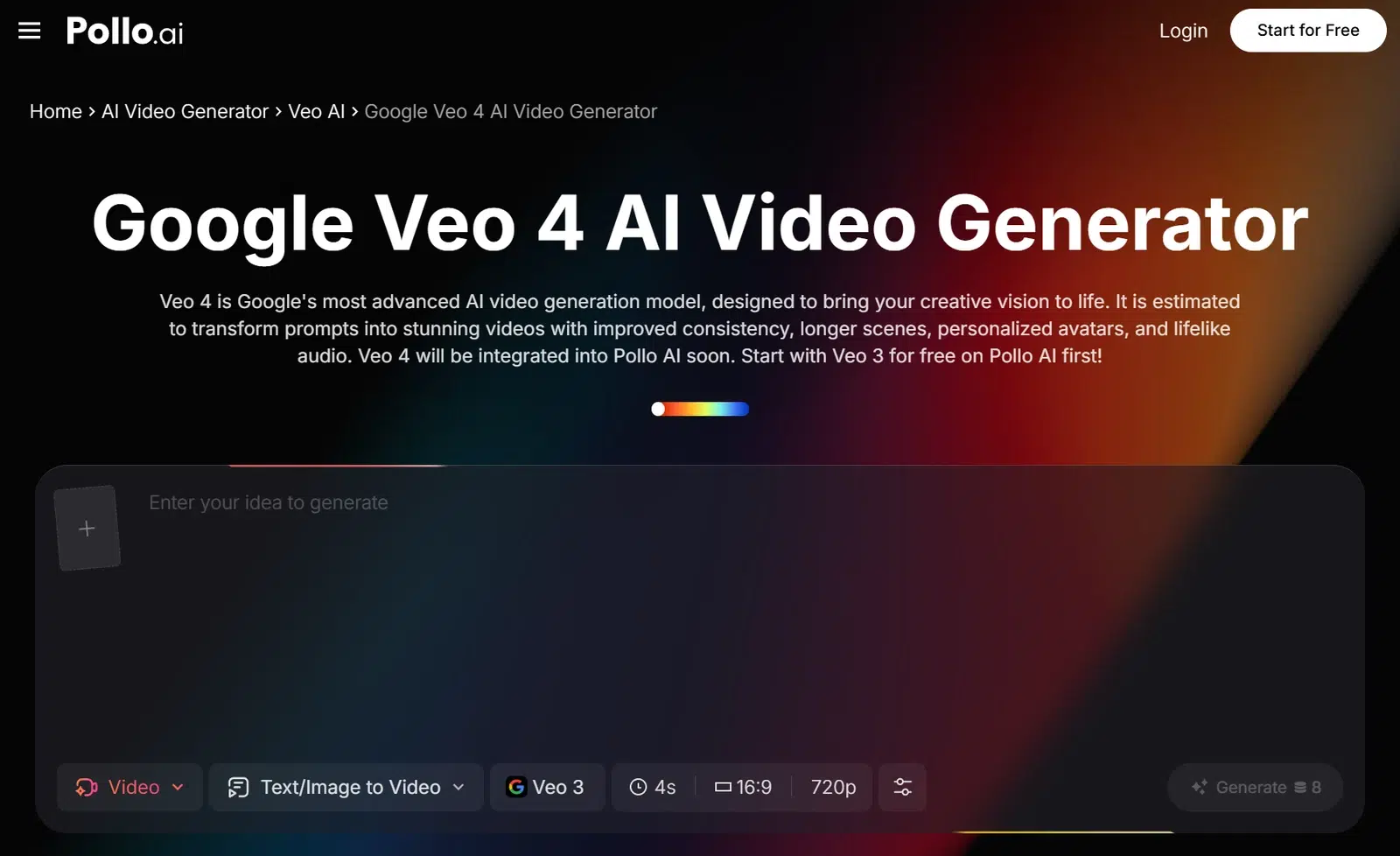
Pollo AI gives creators access to some of the most capable generative video models available today. Among them, the Google Veo 4 AI Video Generator sits at the frontier — producing photorealistic footage, complex motion, and nuanced scene transitions from a text prompt or reference image. For creators who need visually striking hero content, product showcases, or social media clips, this kind of output used to require a production team. Now it requires a well-crafted prompt and a few minutes.
What makes this meaningful beyond the novelty factor is the fidelity. Veo 4’s outputs hold up at high resolution, handle lighting and camera movement naturally, and respond well to stylistic direction — all attributes that matter when the content represents a brand or a professional creative standard.
The Explainer Gap That Generative Video Alone Can’t Fill
Photorealistic generative video is powerful, but it’s optimized for impact, not for instruction. If you’ve ever tried to explain a product feature, walk through a process, or teach a concept using purely cinematic video, you’ve likely noticed the problem: beautiful footage and pedagogical clarity don’t always travel together.
This is the explainer gap. High-production visuals can actually distract from the message when the goal is to guide someone step by step. Learners and buyers need structure — arrows, annotations, simplified diagrams, characters that point things out rather than scenes that unfold cinematically.
This is where a different mode of video production earns its place in a professional workflow. Not every piece of content needs to look like a film. Some pieces need to think like a whiteboard.
Adding Structured Visual Storytelling to Your Pipeline
The strongest content pipelines aren’t built around a single format. They’re built around matching the right format to the right job. Generative video handles awareness, emotion, and brand impression. Structured visual tools handle education, onboarding, and conversion.
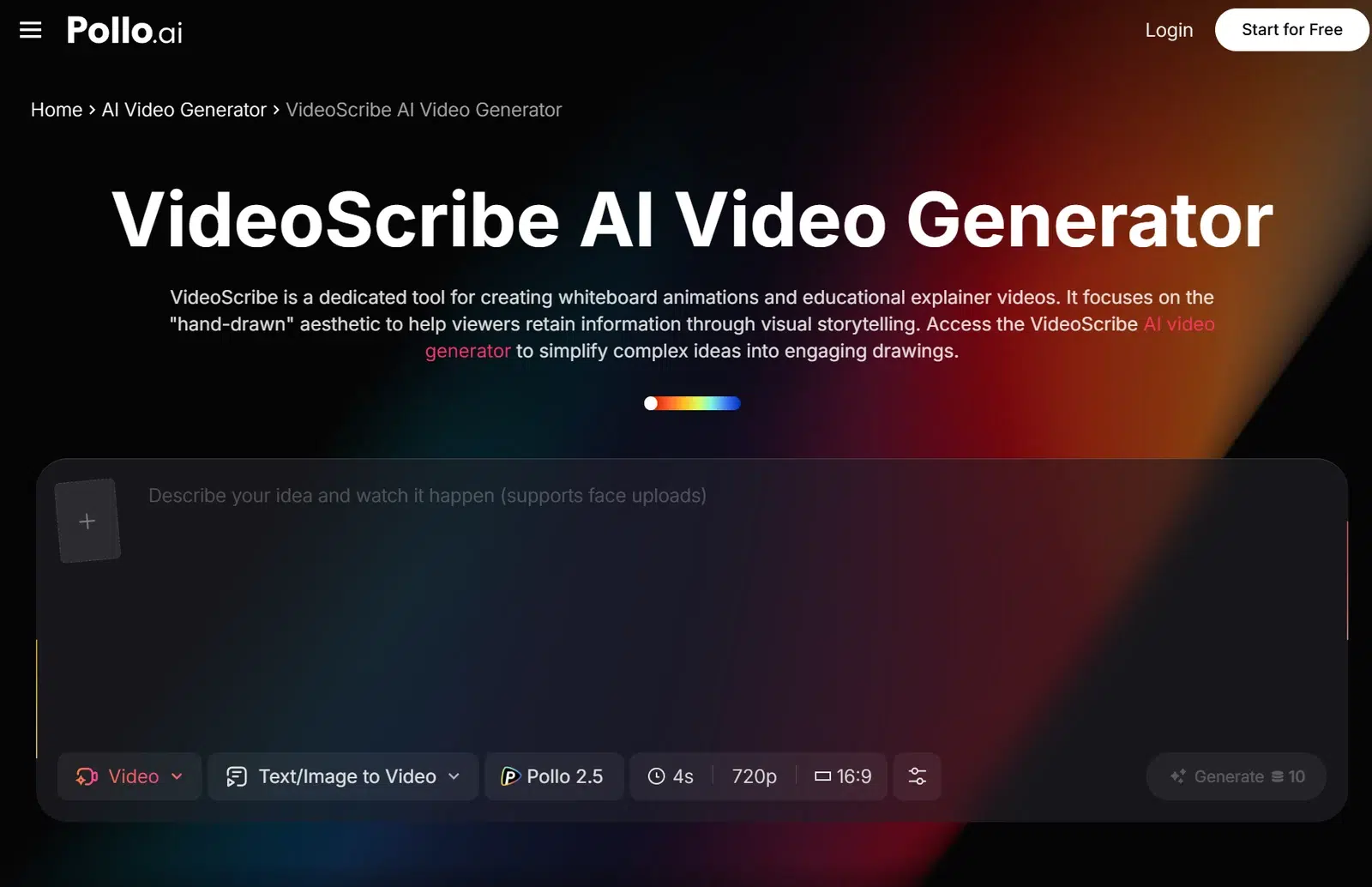
Pollo AI also supports VideoScribe, a whiteboard-style animation tool that takes a fundamentally different approach to video production. Instead of generating scenes from prompts, VideoScribe builds explanations through sequential visual reveals — text, icons, illustrations, and hand-drawn animations that unfold in a way the viewer can follow at the pace of an idea. This format is especially effective for product walkthroughs, explainer content, onboarding flows, and any situation where comprehension matters more than spectacle.
The practical result is that a creator or marketing team can use both modes without switching between disconnected platforms. A product launch might open with a cinematic AI-generated video to create impact, then follow up with a whiteboard-style explainer that walks the prospect through exactly how the product works. Both assets live within the same creative workflow, and both serve a distinct purpose.
How to Structure a Two-Format Content Strategy
Implementing a two-format approach doesn’t require a complex production system. It requires clarity about what each piece of content is supposed to accomplish.
Start by categorizing your content needs into two buckets: impression content and instruction content. Impression content is what someone sees before they know they need you — it creates emotion, sparks curiosity, and builds brand recognition. Instruction content is what someone needs once they’re considering you — it reduces confusion, builds confidence, and moves decisions forward.
Generative tools like those available through Pollo AI are ideal for impression content. The visual quality, the dynamic motion, the cinematic feel — these attributes work precisely because they engage before the viewer has committed any attention intentionally. Structured animation tools work for instruction content because they slow the pace, highlight what matters, and deliver information in digestible, sequential chunks.
Once you’ve mapped your content to these two functions, production decisions become much cleaner. You’re no longer choosing one style for everything and hoping it works universally.
The Workflow Advantage for Lean Teams
For founders and solo operators, the case for this kind of pipeline is especially strong. Hiring a video production team for every content format isn’t realistic. But publishing only one type of video — whether that’s raw talking-head footage, cinematic AI clips, or static slide recordings — limits your reach and leaves certain audience segments underserved.
A two-format AI-assisted workflow solves this without adding headcount. You produce impression content for social and top-of-funnel distribution, then produce structured explainer content for your website, email sequences, and sales enablement. The total production time drops significantly compared to traditional video, and the outputs are purpose-built rather than compromised.
The professionals who will get the most out of AI video tools in the next few years are not the ones who find a single platform and commit to it exclusively. They’re the ones who understand what each format does well, build a pipeline that uses each one deliberately, and stay close enough to the tools to take advantage of capability improvements as they arrive.
That’s what a smarter video content strategy actually looks like — not more video, but the right video, made efficiently.