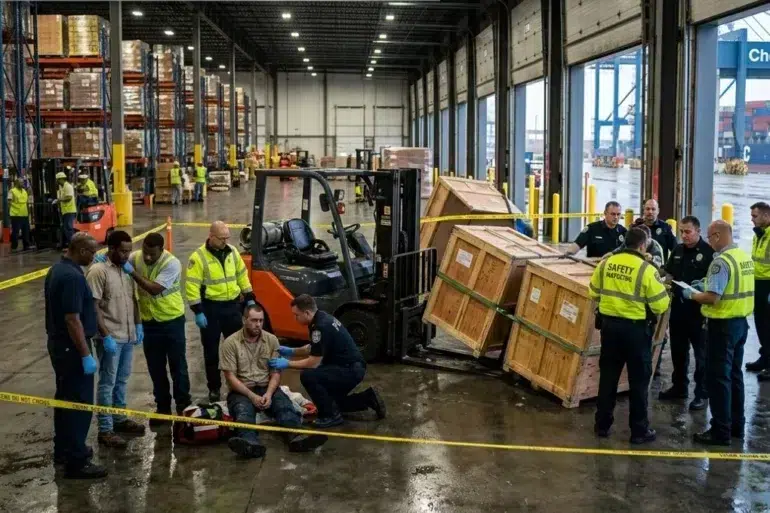
You go to work expecting a shift, not an ambulance ride, a crushed hand, a back injury, or a call home that changes everything. After a warehouse or industrial accident, life gets tight fast. Your body hurts, your paycheck may stop, and the same people who counted on you yesterday may suddenly act distant. That shock is real, and it hits hard in Hampton Roads, where warehouses, shipping operations, manufacturing sites, and distribution centers keep a lot of people moving at a fast pace. Visit this website for more help and information.
Hampton Roads industrial & warehouse accidents often involve more than one problem at once. There is the injury itself, the pressure to report it, the fear of retaliation, and the confusion over medical care and wage benefits. You may also be hearing mixed advice from a supervisor, a coworker, and an insurance adjuster, all while you are trying to heal. The short version is simple. Report the injury, get medical treatment, protect your records, and do not assume your employer or the insurance company will explain your rights clearly.
Warehouse and industrial injuries in Chesapeake can change your finances overnight
A lot of these injuries happen in ways workers see every day. A forklift turns a blind corner. A pallet shifts. A worker falls from a loading dock. A repetitive lifting job turns into a torn shoulder or serious back damage. In some cases, exposure to chemicals, poor machine guarding, or blocked exits creates the kind of danger that OSHA has warned employers about for years. If you work in warehousing or logistics, reviewing OSHA warehouse safety guidance can make it painfully clear how many of these incidents are preventable.
The financial strain starts almost immediately. If your injury keeps you off the job, even for a short time, your household budget can start slipping. Rent, utilities, groceries, child care, gas, and follow up appointments do not pause because you got hurt at work. If your employer questions whether the injury happened on the job, or pushes back on treatment, that stress gets worse. You may be asking yourself whether you should just tough it out and return before you are ready. That choice can make a temporary injury much worse.
Industrial worksites also create a different kind of fear. You may worry that speaking up will mark you as difficult, especially if the company has a culture of cutting corners or blaming workers for unsafe conditions. That fear is common after warehouse accident injuries, especially when coworkers quietly admit they saw the same hazard before you got hurt.
Unsafe conditions often point to larger workplace safety failures
One accident can expose a bigger pattern. Poor training, rushed production goals, broken equipment, weak lockout procedures, and missing protective gear do not exist in isolation. Virginia workers can file a safety complaint with the state through the Virginia Occupational Safety and Health complaint process if they believe serious hazards are present. That matters when the danger is ongoing and other workers are still exposed.
Virginia has also placed special attention on warehousing hazards. The state’s warehousing program directive shows how regulators are looking closely at injury risks in these settings. That does not fix your injury, but it does reinforce a truth many workers already know. Warehouses and industrial sites can become unsafe quickly when speed matters more than safety.
That is where a workers compensation claim and legal guidance often become necessary. A workers compensation lawyer can help when benefits are delayed, denied, or cut off, when medical treatment is being limited, or when your employer disputes what happened. In some cases, there may also be a third party claim if someone outside your employer contributed to the accident, such as an equipment company, contractor, or delivery operator.
What workers face after an industrial accident
| Issue | Trying to handle it alone | Getting legal help |
|---|---|---|
| Reporting the injury | Workers may give incomplete notice or miss deadlines | Notice is documented clearly with details that support the claim |
| Medical treatment | Confusion about approved providers and records | Treatment history is organized and connected to the workplace injury |
| Lost wage benefits | Payments may be delayed or underpaid without challenge | Benefit calculations and delays can be reviewed and disputed |
| Employer or insurer disputes | Workers may feel pressured to return too soon or give damaging statements | Communication is handled with a strategy that protects the claim |
| Long term impact | Permanent restrictions may be overlooked | Future work limits and ongoing care are taken seriously |
Clear steps can protect your health and your claim
1. Report the injury in writing. Tell your supervisor as soon as possible, and do it in a way that creates a record. Include when, where, and how it happened, along with the body parts injured. If there were witnesses, write down their names. Keep a copy of anything you submit.
2. Get medical care and track everything. Follow through with treatment, describe all symptoms honestly, and do not minimize pain just because you want to keep working. Save discharge papers, work notes, prescriptions, mileage, and appointment dates. Small details often become important when the insurance company starts looking for gaps.
3. Speak with a workers comp attorney before the claim gets shaped by someone else. Early advice can help you avoid common mistakes, especially recorded statements, vague accident reports, and rushed return to work decisions. If your injury is serious, if surgery is involved, or if your employer is already resisting the claim, waiting usually does not help.
Chesapeake workers deserve support after warehouse and industrial accidents
If you were hurt on the job, you are not overreacting by taking the injury seriously. You are responding to a real event with real consequences. Industrial and warehouse accidents can leave you dealing with pain, uncertainty, and income loss all at once, and that is exactly why your next steps matter. Protect your health, protect your records, and get guidance before deadlines, denials, or pressure from the job make things harder than they already are.
If you need help understanding your options after a workplace injury, speak with a workers compensation lawyer as soon as you can.