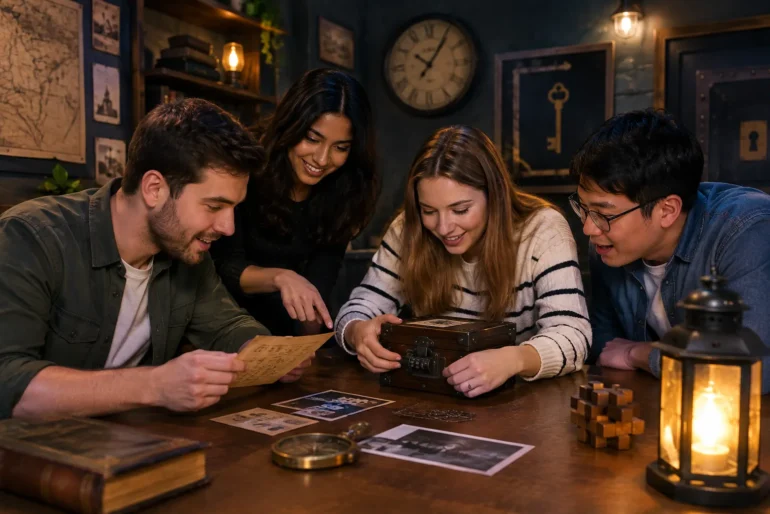
Getting a mixed group of friends together for an evening out takes some doing. It turns into a real puzzle when one person lives in spreadsheets while another craves high-stakes story dynamics. Standard coffee shop meetups regularly wind up with everyone scrolling through phones, which explains why interactive gaming keeps pulling ahead of regular night outs. Still, planning an outing where veterans stay challenged while newcomers do not feel left out takes a bit of finesse. The setup at modern entertainment venues, including the popular escape room club in Canada Escape Hour, shows that a balanced layout brings people with totally different vibes together. The trick starts with figuring out how a group of friends can organize an exciting evening in an escape room considering different levels of experience and interests while keeping the momentum going.
Smooth Team Outings: How to Set Up an Escape Room Night Everyone Enjoys
Organizers constantly fall into the trap of booking strictly based on their own taste. When players bring opposite backgrounds to the table, flexible scenario design, a comfortable environment, and a steady pace make all the difference.
Logistical Details
Keeping a group run smooth and stress-free comes down to a few practical planning steps:
- Balancing difficulty. Pick medium-tier rooms featuring varied puzzle types. Scenarios offering everything from hidden compartment hunts to step-by-step logic chains work best. This gives first-timers quick wins while experienced players tackle multi-layer codes.
- Filtering genres. Skip heavy actor-driven horror setups if anyone in your group prefers a calm evening. Immersive adventure or mystery themes hit the sweet spot by focusing on atmosphere rather than jump scares.
- Sizing the group. Four to six players per room keeps the game running at peak efficiency. For larger crowds, splitting into two teams across parallel rooms prevents people from leaning against the wall waiting for a turn.
Team Gameplay Rules
Pairing the game with a quick bite or post-game drinks elevates any birthday or weekend plan. Larger crowds often get the best results corporate events and parties at escape venues. Locations run by Escape Hour combine solid gameplay flow with top-tier hosting, making an organized escape room event turn a routine weekend into a genuine blowout. Once inside, applying simple team habits makes a massive difference:
- Dividing tasks by interest. Avoid dumping math puzzles on visual thinkers. Let detail-oriented players investigate physical textures and search for keys, while systematic thinkers track clues on a central table.
- Giving space without pressure. Let newcomers crack at least one lock on their own. Experienced players should dial back their enthusiasm, playing subtle guides rather than sweeping through every puzzle in ten minutes.
- Talking out loud. Any fresh clue needs to be called out to the room instantly. A player frequently holds a odd item while someone else has been staring at a matching keyhole for five minutes straight.
- Requesting hints early. When an adventure escape room grinds to a halt for over eight minutes, talk to the game master. Taking a quick nudge does not mean losing—it simply keeps the evening lively.
- Rebounding after the timer. Plan a 30- to 40-minute window post-escape to laugh over funny mistakes. A great game sparks so much energy that post-game banter usually floods team group chats for days.
If you want deep story immersion alongside an unusual storyline, check out the Five Lives scenario. Pairing that with thorough escape room game prep ensures every player walks out smiling and ready to book their next run.