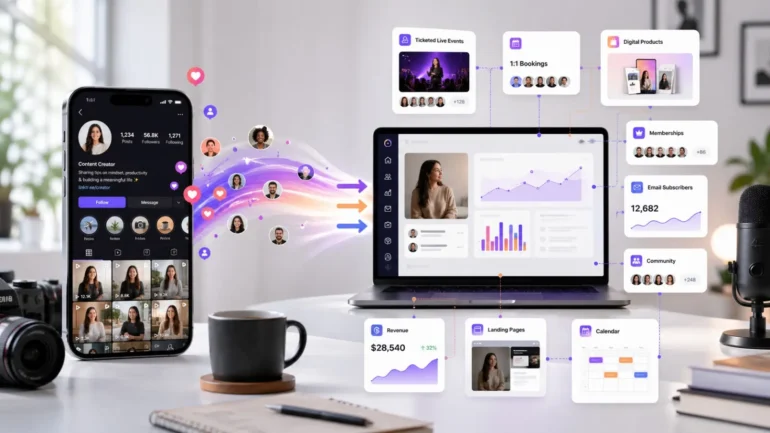
For years, social media promised creators visibility, influence, and sometimes even fame. Millions of people today post regularly on platforms like Instagram, YouTube, TikTok, and LinkedIn hoping to grow their audiences and monetize their content.
But a hard truth has emerged in the creator economy: a large following does not automatically translate into sustainable income. Many creators with thousands of followers still struggle to generate consistent revenue, while others with smaller audiences run profitable businesses.
The difference lies in a fundamental shift in mindset, which is, building a creator business instead of merely maintaining a social media profile. In today’s rapidly evolving creator economy, the most successful creators are the ones who use content as a distribution channel for products, services, and communities.
The Rise of the Creator Economy
The creator economy has grown into an industry of its own. According to research results from various sources, the global creator economy is valued at over $250 billion and could exceed $480 billion by 2027.
Millions of individuals now earn income through digital content, memberships, and online communities. Platforms like Substack and Servv AI have enabled creators to monetize their expertise directly, without relying solely on brand sponsorships.
However, the ecosystem is becoming more competitive. With over 200 million people worldwide identifying as creators, simply posting content is no longer enough to stand out or build financial stability. This is where the difference between a profile and a business becomes critical.
The Shift Toward Creator Businesses
A creator business treats content as a marketing channel rather than the final product. Instead of simply posting pictures and random videos, creators now focus on building products and services that solve real problems for their audience and address their needs.
In this model, social media becomes the top of the funnel, bringing people into a broader ecosystem that the creator controls. This ecosystem can include:
- courses
- paid communities
- live events
- consulting services
- digital products
- memberships
- newsletters
The result is multiple revenue streams instead of a single dependency on brand deals.
Main Pillars of a Creator Business
Building a creator business requires a structured approach. Successful creators often rely on four core pillars listed below.
1. Audience Engagement Over Audience Size
In the early years of social media, influence was measured primarily by scale. Today, niche authority, real-time engagement, and trust matter more than raw follower numbers.
Micro-creators with 1,000–10,000 followers often generate stronger engagement rates than mega influencers. This is why niche creators in fields like fitness, finance, education, real estate, and digital marketing often monetize faster than lifestyle influencers with broad audiences.
A smaller audience that trusts your expertise is far more valuable than a large but passive follower base.
2. Owned Platforms
One of the most important steps in building a creator business is developing platform independence. Creators increasingly build assets outside social media, including:
- email newsletters
- private communities
- personal websites
- membership platforms
Email marketing platforms, for example, remain one of the most effective channels for creators because email subscribers belong to the creator, not a social platform. This direct relationship dramatically improves monetization opportunities.
3. Productized Knowledge
Most successful creator businesses revolve around knowledge products. Creators package their expertise into structured offerings such as:
- online courses
- workshops
- coaching programs
- templates and guides
- paid newsletters
Platforms like Servv AI, an AI-powered event management platform, have made it easier for creators to sell paid workshops, online courses, live sessions, and coaching programs to a global audience without relying only on social media or brand sponsorships. This approach converts audience attention into scalable revenue.
4. Community and Experiences
Another emerging revenue model involves community-driven monetization.
Instead of one-time purchases, creators build ongoing ecosystems where audiences interact with each other and the creator. Examples include:
- membership communities
- cohort-based courses
- live sessions and events
Platforms like Discord and Circle have become popular for building creator communities. These communities generate recurring revenue while strengthening audience loyalty.
Why Small Audiences are Turning Out to be More Profitable?
A surprising insight from the creator economy is that smaller audiences can often produce higher income per follower. This happens because niche audiences tend to have:
- stronger trust in the creator
- higher engagement levels
- more specific problems to solve
For example, a finance educator helping freelancers manage taxes or handling gig economy may have only a few thousand followers but can sell high-value courses or consulting services. This model is far more sustainable than chasing viral content that generates fleeting attention.
The Future of Creator Entrepreneurship
The creator economy is evolving from a content-driven ecosystem to a product-driven ecosystem. Industry analysts predict several major shifts in the coming years:
- creators will increasingly operate as solo media companies
- AI tools will reduce content production costs
- communities will replace passive audiences
- digital education will become a major creator revenue stream
Instead of depending on brand sponsorships, creators will increasingly generate income through direct audience relationships.
From Creator to Founder
The most important shift in mindset is moving from content creator to business founder. A social profile asks:
- How many followers do I have?
- How many views did my post get?
A creator business asks:
- What value do I provide?
- What problems do I solve?
- What products or experiences can I build for my audience?
Content then becomes a distribution engine, not the end goal.
Summing Up
The era of chasing followers for validation is slowly giving way to something more meaningful, building sustainable creator businesses. While social media remains a powerful discovery tool, long-term success in the creator economy depends on value creation, and diversified revenue streams.
Creators who think like entrepreneurs, such as developing products, communities, and owned platforms, will be the ones who thrive in the coming decade.
In the end, the goal is not just to build a popular profile. It is to build a resilient digital business powered by trust, expertise, and meaningful connections with an audience.