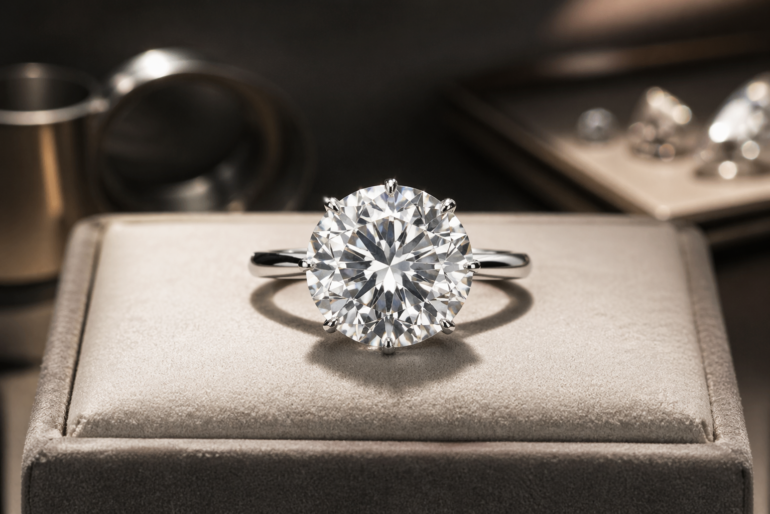
A 10 Carat Diamond Ring sits in a completely different category from the average engagement ring or fine jewelry purchase. It is rare, visually dramatic, and expensive enough that small differences in cut, color, clarity, certification, and setting can change the final price by tens of thousands of dollars. That is why shopping for a 10 Carat Diamond Ring is not just about choosing something beautiful. It is about understanding what you are paying for, what will actually look best on the hand, and which details protect your money over the long term. The Gemological Institute of America says the 4Cs of diamond quality are cut, color, clarity, and carat weight, and carat is a measure of weight rather than face-up size. A metric carat equals 200 milligrams.
For many buyers, the biggest surprise is that a 10 Carat Diamond Ring is not priced by size alone. Two rings with the same carat weight can look similar at first glance but have wildly different value because diamond prices rise with rarity, grading quality, and overall visual performance. GIA also notes that prices per carat generally increase as stones cross major weight thresholds, and the jump becomes especially meaningful at high sizes.
If you are buying a 10 Carat Diamond Ring for an engagement, anniversary, investment-minded luxury purchase, or heirloom piece, the smartest move is to focus on the details that affect beauty first and prestige second. A ring at this size should impress in photos, in daylight, and across a room, but it also needs to wear comfortably and hold up to real life.
Why a 10 Carat Diamond Ring Commands So Much Attention
A 10 Carat Diamond Ring looks substantial because the stone is large enough to dominate the design. In practical terms, a round 10-carat diamond often faces up around 13.7 to 14.0 millimeters across, based on current retail listings for certified stones from major sellers. That is dramatically larger than a typical 1-carat round diamond, which commonly measures around 6.5 millimeters.
That visual jump matters because once you move into the ultra-luxury tier, people notice more than just size. They notice shape, finger coverage, brilliance, and how balanced the ring looks. A 10 Carat Diamond Ring with a poor cut can look flat or glassy, while a slightly lower color grade with an excellent cut may appear more alive and attractive in normal wear. GIA describes cut as the factor that drives brightness, fire, and scintillation in a standard round brilliant, which is why cut is often the first place experienced buyers look.
10 Carat Diamond Ring Price Range in the Real Market
The first question most buyers ask is simple: how much does a 10 Carat Diamond Ring cost?
The honest answer is that the range is enormous. A natural 10-carat diamond with strong grades can easily reach into the hundreds of thousands of dollars, and truly exceptional stones can go much higher. Current retail examples show how wide the spread can be. One 10.25-carat round natural diamond listed by Ritani shows a diamond cost above $286,000 before final retail structure, while 10-carat natural eternity styles on Ritani run from roughly $34,979 to over $66,000 depending on design and construction. On the lab-grown side, a 10.10-carat round lab-grown diamond listed by James Allen was shown at $9,630, illustrating how sharply lab and natural pricing can diverge at this size.
That does not mean every 10 Carat Diamond Ring should be judged by sticker price alone. Price is shaped by several core factors:
- Natural or lab-grown origin
- Shape and cut precision
- Color grade
- Clarity grade
- Certification lab
- Setting metal and craftsmanship
- Brand markup
A natural 10 Carat Diamond Ring carries a rarity premium that lab-grown diamonds do not. GIA notes it grades both natural and laboratory-grown diamonds, and it separately identifies laboratory-grown origin on reports so buyers know exactly what they are purchasing.
What Actually Drives the Price of a 10 Carat Diamond Ring
Cut quality matters more than many buyers expect
If you only remember one rule, make it this one: do not chase size at the expense of cut. A 10 Carat Diamond Ring is big enough that weak cut quality becomes obvious fast. GIA says its round brilliant cut grading system evaluates how the diamond handles light and grades cut from Excellent to Poor. Excellent stones are described as bright and sparkling, while poor-cut stones can look dull because of light leakage.
For a round 10 Carat Diamond Ring, excellent cut is usually the safest target. In fancy shapes such as oval, emerald, radiant, or cushion, there is no official GIA overall cut grade in the same way there is for round brilliants, so you need to judge proportions, symmetry, and visual performance more carefully. GIA notes that the round brilliant is the only diamond shape with an official GIA cut grade.
Color affects price and appearance
GIA’s color scale runs from D to Z, with D representing colorless and increasing letters showing more visible tint. In a 10 Carat Diamond Ring, body color can be easier to notice than in a smaller stone because there is simply more diamond for your eye to read.
If you want a crisp white look, many buyers focus on the D to H range. If you want better value without giving up too much face-up beauty, near-colorless grades can make sense, especially in yellow or rose gold settings, where slight warmth may blend more naturally.
Clarity matters, but not always the way people think
GIA defines clarity by the size, number, position, and visibility of inclusions and blemishes. On a 10 Carat Diamond Ring, inclusions can be easier to spot than on a smaller stone, especially if they are centrally located or dark.
Still, you do not always need flawless or internally flawless clarity to get a beautiful result. In many cases, a VS1, VS2, or even carefully chosen SI1 diamond can look clean to the naked eye while costing much less than top-tier clarity grades. The real goal is eye-clean beauty, not paying extra for microscopic perfection you will never see without magnification.
Carat weight is not the same as visible size
This is where many luxury buyers make expensive mistakes. GIA states that carat measures weight, not size. A shallow or poorly cut stone may seem broad but lose life, while a deep stone may hide weight where you cannot see it.
That is why a 10 Carat Diamond Ring should always be evaluated by millimeter spread, depth, table, and real visual performance, not by carat weight alone.
Best Styles for a 10 Carat Diamond Ring
A 10 Carat Diamond Ring needs a setting that supports the center stone rather than competes with it. The best styles usually balance structure, security, and elegance.
Solitaire
A solitaire remains the purest option for a 10 Carat Diamond Ring. It keeps attention on the main diamond and lets cut and shape do the talking. This style works especially well for round, oval, cushion, and emerald-cut stones.
Hidden halo
A hidden halo can add extra sparkle without crowding the design. On a 10 Carat Diamond Ring, it also helps the center stone appear even more elevated while keeping the face-up view clean.
Three-stone
A three-stone design can make a 10 Carat Diamond Ring feel more architectural and balanced. Tapered baguettes, trillion side stones, or pears can frame the center stone beautifully.
Cathedral setting
A cathedral setting gives the ring more presence and support. That can matter with a 10 Carat Diamond Ring, since the mounting must handle greater weight securely.
Bezel or semi-bezel
For buyers who want modern luxury and better protection, a bezel or partial bezel offers security and a sleek look. This can be especially appealing for someone who will wear the ring often rather than reserve it for special events.
Which Diamond Shape Looks Best at 10 Carats
Shape changes the personality of a 10 Carat Diamond Ring more than most people expect.
Round brilliant is usually the brightest and most classic. It is also the safest choice for buyers who want maximum sparkle and a strong resale-friendly profile.
Oval can make the finger look longer and may appear visually larger because of its elongated outline. Pear has drama and elegance. Emerald cut is refined and clean, but it shows clarity and color more openly because of its broad step facets. Cushion and radiant offer a softer luxury look, while Asscher gives a vintage, architectural feel.
The best shape for a 10 Carat Diamond Ring depends on whether you care most about brilliance, finger coverage, or a distinctive silhouette. If sparkle is the top priority, round and radiant usually lead. If elegant length matters more, oval, pear, or emerald often win.
Natural vs Lab-Grown 10 Carat Diamond Ring
This is one of the most important buying decisions today. A natural 10 Carat Diamond Ring and a lab-grown 10 Carat Diamond Ring can look similar in everyday wear, but they differ significantly in rarity and market pricing. GIA states that laboratory-grown diamonds are real diamonds, but they are identified as laboratory-grown on grading reports so consumers can make informed choices.
A natural 10 Carat Diamond Ring is usually the choice for buyers who care about rarity, long-term prestige, and traditional luxury symbolism. A lab-grown 10 Carat Diamond Ring is often chosen by shoppers who want visual scale and high specs at a much lower price.
Neither option is automatically right for everyone. The right answer depends on what matters most to you: rarity or size efficiency.
What to Check Before You Buy a 10 Carat Diamond Ring
Before you finalize any 10 Carat Diamond Ring, check these details carefully:
- Confirm the grading report from a respected lab such as GIA
- Review actual measurements, not just carat weight
- Look for strong cut quality or excellent visual performance
- Ask whether the stone is eye-clean in normal viewing conditions
- Verify whether the diamond is natural or lab-grown
- Ask about fluorescence and inspect it in daylight
- Review return policy, upgrade policy, and insurance requirements
Fluorescence is worth attention because GIA says about 25 percent to 35 percent of diamonds show some degree of fluorescence under long-wave UV light, and more than 95 percent of those fluoresce blue. In some cases this has little practical effect, while in others it can change appearance or pricing.
The FTC also advises sellers to describe diamonds truthfully and disclose material information, including treatments and the nature of laboratory-created products, so clear documentation matters.
Is a 10 Carat Diamond Ring a Good Investment
A 10 Carat Diamond Ring can be a powerful luxury asset, but buyers should be realistic. Jewelry is primarily a luxury purchase first and only sometimes a store of value second. Blue Nile notes that natural diamond jewelry typically resells for about 25 percent to 50 percent of the original purchase price, which is a useful reminder that retail markup, brand premium, and resale channels affect outcomes.
If you are buying a 10 Carat Diamond Ring mainly for value retention, your best chances usually come from strong certification, desirable shapes, good color and clarity balance, and high-quality craftsmanship rather than chasing flashy branding alone. If you are buying it to celebrate a milestone, then emotional and aesthetic value may matter far more than resale math.
Who Should Buy a 10 Carat Diamond Ring
A 10 Carat Diamond Ring makes sense for a buyer who wants one of three things.
First, it suits someone looking for an unmistakable statement piece with real luxury presence.
Second, it fits a buyer who understands the premium attached to rarity and wants a ring that feels special even in elite jewelry circles.
Third, it works for a shopper who has already decided that this is an heirloom purchase, not an impulse buy.
What it does not suit is a buyer who wants discreet everyday jewelry with low maintenance. A 10 Carat Diamond Ring attracts attention. It also demands more care, more insurance, and more thought about security and wearability.
Final Thoughts on Choosing the Right 10 Carat Diamond Ring
The best 10 Carat Diamond Ring is not always the whitest, clearest, or most expensive one in the case. It is the one with the right balance of beauty, certification, proportion, comfort, and purpose. At this level, every detail matters. Cut can transform sparkle. Shape can change personality. Setting can shift the ring from bold to elegant. Origin can reshape the price completely.
If you shop carefully, compare reports instead of marketing language, and pay attention to how the diamond performs in real light, a 10 Carat Diamond Ring can be one of the most striking and satisfying jewelry purchases you will ever make. For broader background on the history and cultural meaning of the diamond ring, it helps to understand why this piece remains one of the strongest symbols of luxury and commitment in modern jewelry.
A 10 Carat Diamond Ring is ultimately about more than size. It is about choosing a rare object with intention and buying it with enough knowledge that the beauty you see is matched by the quality you actually own.