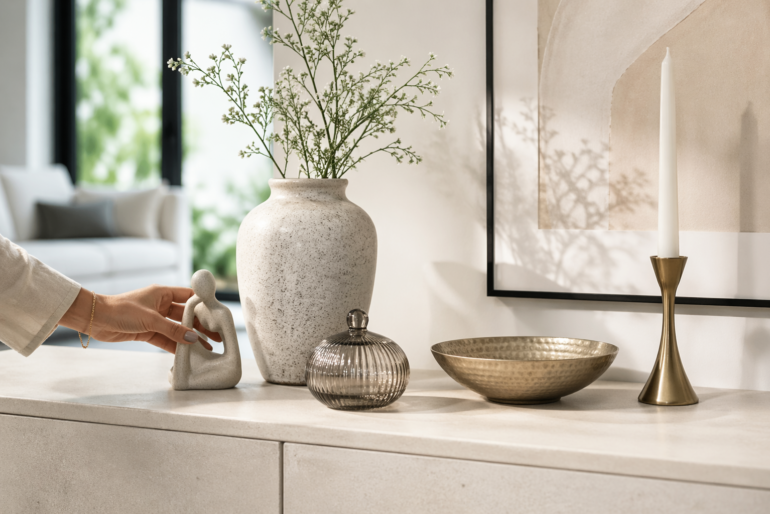
Ornaments can do something surprisingly powerful in a room. They add detail, soften empty surfaces, and make a space feel lived in rather than unfinished. In the broad design sense, an ornament is a decorative element added for embellishment, and that idea has deep roots in architecture, interiors, and the wider world of decorative arts. Britannica defines ornament as an element added to a form for decoration or embellishment, while the V&A describes ornament as additional detail added to an object, interior, or architectural structure for decorative effect.
That sounds formal, but in everyday homes, ornaments are the things that make a room feel personal. A ceramic vase on a console, a carved bowl on a coffee table, a sculptural figurine on a shelf, a small brass object on a stack of books, or a framed decorative piece in a hallway all count. They may be small, but they shape the mood of a space in a big way.
The trick is knowing which ornaments work, where they belong, and how to use them without making a room look crowded. The best interiors do not rely on random accessories. They use ornaments with purpose, balance, and a clear sense of style. Once you understand that, decorating becomes much easier.
What Are Ornaments in Interior Design?
In home decor, ornaments are decorative objects used to enhance the look and feel of a room. They are not usually the main functional pieces, like a sofa or dining table. Instead, they bring visual interest through texture, shape, color, material, and personality.
This idea connects to the longer history of ornament in architecture and design. Museums and reference works consistently place ornament within the tradition of decorative arts, which includes the design and decoration of useful and beautiful objects such as ceramics, glassware, textiles, metalwork, furniture, and related pieces.
In practical terms, ornaments can include:
- Vases
- Figurines
- Sculptures
- Decorative bowls
- Candlesticks
- Wall plaques
- Mirror accents
- Bookends
- Small handcrafted objects
- Seasonal decorative pieces
- Carved wooden or stone items
Some ornaments are subtle. Others are bold enough to become conversation starters. What matters most is not how expensive they are, but how well they fit the room.
Why Ornaments Matter More Than People Think
A room without ornaments can look clean, but it can also feel flat. Even beautifully designed spaces can seem incomplete if every surface is purely functional. Ornaments solve that problem by adding layers.
They create depth. They break up empty areas. They introduce contrast. A smooth glass vase beside a rough woven basket creates tension in a good way. A matte ceramic object on a glossy console table adds richness. A sculptural ornament can shift the whole energy of a room, especially if the rest of the space is simple.
Ornaments also help tell a story. A coastal home might use coral inspired pieces, light ceramics, and driftwood textures. A modern apartment may lean into geometric sculptures, black metal accents, and stone objects. A classic home often feels more complete with decorative urns, carved frames, or antique inspired accessories.
That storytelling role is part of why ornament has remained so significant across design history. The V&A’s work around ornament and Owen Jones’s influential ideas show how color, geometry, pattern, and abstraction have long shaped how designers think about beauty and composition.
Main Types of Ornaments for the Home
Not all ornaments do the same job. Some are meant to ground a room, while others add sparkle, softness, or structure. Understanding the major types makes it easier to decorate with confidence.
Decorative Vases and Vessels
These are some of the easiest ornaments to use. They work on coffee tables, dining tables, consoles, mantels, and shelves. A vase does not have to hold flowers to be effective. On its own, it can add shape and texture to a room.
Tall floor vases are useful in corners that feel empty. Small ceramic vessels are ideal for layering on trays or shelves. Glass vases add lightness, while clay and stoneware bring warmth.
Figurines and Sculptural Objects
These ornaments often add character fastest. They can be abstract, animal inspired, human form, or purely geometric. Used well, they give a room a focal point without demanding too much space.
One strong sculptural piece often works better than five tiny unrelated objects. A room usually looks more intentional when there is a clear hero item.
Bowls, Trays, and Centerpiece Objects
Decorative bowls and trays blur the line between useful and ornamental, which is one reason they work so well. They can hold keys, candles, beads, dried botanicals, or simply stand alone as part of a styled surface.
A tray also helps organize smaller ornaments. Instead of several objects looking scattered, they feel grouped and deliberate.
Candlesticks and Lanterns
These ornaments add height and atmosphere. Even when not in use, they bring elegance. Metal candlesticks can make a room feel refined. Wood or matte ceramic holders feel softer and more organic.
Lantern style ornaments work especially well in entryways, patios, and large living rooms where you need presence without clutter.
Wall Ornaments
Many people think of ornaments only as tabletop decor, but walls matter just as much. Decorative plates, carved panels, metal wall art, mirrors with ornamental frames, and niche objects can all give vertical spaces more life.
Wall ornaments are especially useful in rooms where floor or table surfaces are already busy.
Seasonal and Festive Ornaments
These are ornaments designed for a specific time of year, whether that means winter holidays, spring refreshes, autumn tones, or celebratory events. The best seasonal ornaments feel connected to the home’s normal style rather than completely disconnected from it.
If your home is minimal, seasonal decor should still feel minimal. If your home is classic, richer ornamentation may suit it better.
Popular Ornament Styles and What They Say About a Space
Choosing ornaments becomes much easier once you know your preferred style language. Most people are drawn to a few specific looks, even if they never use design labels.
| Ornament Style | Common Features | Best For |
|---|---|---|
| Modern | Clean lines, simple shapes, neutral tones, metal or glass | Apartments, minimalist homes, contemporary interiors |
| Traditional | Symmetry, carved details, classic forms, rich finishes | Formal living rooms, elegant dining spaces |
| Rustic | Wood, woven textures, earthy tones, handmade feel | Farmhouse homes, cozy family spaces |
| Bohemian | Layered textures, global influence, artisan pieces, mixed colors | Creative spaces, eclectic rooms |
| Scandinavian | Soft neutrals, natural materials, understated forms | Bright, calm, uncluttered interiors |
| Glam | Reflective surfaces, metallic finishes, crystal or polished accents | Statement spaces, luxe bedrooms, chic living rooms |
| Coastal | Soft blues, sandy tones, organic textures, sea inspired shapes | Relaxed homes, airy bedrooms, beach style interiors |
A common mistake is mixing too many styles with no connection between them. A little contrast is healthy, but total randomness can make a space feel confused. If you want variety, keep one thing consistent. That could be color, shape, finish, or material.
For example, you can mix modern and rustic ornaments if the color palette is consistent. You can mix traditional and glam if the finishes relate to each other. Rooms look better when there is a thread tying everything together.
How to Choose the Right Ornaments for Each Room
A beautiful ornament in the wrong place can still look off. Placement matters just as much as style.
Living Room
The living room is where ornaments usually have the biggest visual impact. Coffee tables, side tables, consoles, and shelves all offer opportunities.
Use a mix of heights and shapes. A low bowl, a medium candle holder, and a taller vase often work well together. Shelves benefit from a balance of books, greenery, and decorative objects rather than ornaments alone. Too many accessories on open shelves can quickly feel heavy.
If your living room already has strong patterns in rugs, curtains, or cushions, choose calmer ornaments. If the room is neutral and simple, you have more freedom to use bold sculptural pieces.
Bedroom
Bedroom ornaments should feel restful, not busy. This is a space where softer materials and fewer items usually work best. A small vase, ceramic dish, framed ornament, or textured candle holder can be enough.
Nightstands do not need elaborate styling. One or two thoughtful ornaments often look better than a crowded surface. In bedrooms, restraint usually wins.
Dining Room
Dining spaces respond well to ornaments that feel centered and grounded. Bowls, centerpieces, vases, and candlesticks are classic choices. The key is scale. A tiny object on a large dining table disappears visually, while an oversized piece can block conversation.
Low arrangements are usually easiest for everyday use. If you want height, use something slender that still allows sightlines across the table.
Entryway
Entryways benefit from ornaments that make a first impression. This is a good place for a statement bowl, a sculptural object, or an eye catching vase on a console table. Since entryways are often small, every piece needs to feel intentional.
A mirror paired with one or two ornaments is often enough to make the space feel styled and welcoming.
Bathroom
Bathrooms are often overlooked, but a few well chosen ornaments can make them feel more polished. Small trays, ceramic jars, a mini vase, or a decorative object in stone or glass can add elegance without getting in the way.
Because bathrooms are usually compact, avoid overdecorating. One surface with a curated arrangement is more effective than ornaments everywhere.
Home Office
In a home office, ornaments should support focus rather than distract from it. Clean lined objects, bookends, a small sculpture, or a meaningful keepsake can add personality without visual noise.
This is one room where symbolic ornaments work especially well. A piece that reflects your interests, values, or creative identity can make the space feel more personal and motivating.
Decorating Ideas That Actually Work
People often buy ornaments one by one without a plan, then wonder why the room still feels unfinished. The answer is usually in how the pieces are arranged.
Start with the rule of balance. Not everything needs to match, but the visual weight should feel even. If one side of a mantel has a large vase, the other side may need height or substance too, even if the objects are different.
Think in groups rather than isolated pieces. Three objects with different heights often look more natural than two objects of the same size. This is especially true on shelves, sideboards, and tables.
Use negative space. One of the biggest styling mistakes is filling every empty area. Empty space is what helps ornaments stand out. When every surface is covered, nothing feels special.
Repeat materials subtly. If you use brass in one ornament, repeating a brass accent elsewhere in the room creates harmony. The same goes for black metal, ceramic, wood, glass, marble, or woven textures.
Layer with purpose. A decorative object placed on top of books instantly gains presence. A tray under smaller ornaments creates order. A wall ornament above a console can visually anchor the items below it.
Best Materials for Ornaments
Material changes the mood of an ornament as much as shape does. Decorative arts collections around the world show just how central material choice has always been to ornament and design, especially in ceramics, glass, metalware, textiles, and carved objects.
Here is how common materials tend to read in a space:
Ceramic and pottery feel warm, tactile, and timeless. They work in almost any room and suit modern, rustic, Scandinavian, and traditional interiors.
Glass feels light and clean. It reflects light well and can make a room feel more open. Glass ornaments are especially useful in small spaces.
Metal adds polish and contrast. Brass feels warm and classic. Black metal feels modern. Chrome and silver can lean sleek or glamorous depending on the room.
Wood brings softness and natural texture. It is ideal for cozy interiors and spaces that need warmth.
Stone and marble feel grounded and sophisticated. These materials work well when you want ornaments to look substantial without becoming flashy.
Woven materials such as rattan, cane, and seagrass make a room feel casual and organic. They are especially good in relaxed, airy spaces.
How to Avoid a Cluttered Look
This is where many people struggle. Ornaments are beautiful until there are too many of them.
The easiest fix is editing. Step back and remove anything that does not add something specific. That could be height, texture, color, contrast, or meaning. If an object contributes nothing, it is probably just filling space.
Another common problem is scale confusion. Tiny ornaments scattered across large furniture pieces often look messy instead of elegant. Fewer, larger objects usually create a stronger effect.
Color overload can also make ornaments feel chaotic. If every object is a different bright tone, the eye has nowhere to rest. That does not mean you need a beige room. It simply means the palette should feel intentional.
Dust and maintenance matter too. Highly detailed ornaments can lose their charm if they are hard to clean and end up neglected. Sometimes the most practical choice is also the most stylish one.
Ornaments on a Budget
Great ornaments do not have to be expensive. Some of the most charming decorative pieces come from flea markets, thrift stores, artisan fairs, travel finds, and handmade sellers.
A simple ceramic bowl can look more elevated than a flashy mass produced ornament if the shape is strong and the material feels authentic. Vintage pieces often bring depth because they do not look overly perfect. Handmade ornaments can do the same.
Budget decorating works best when you focus on quality of shape rather than brand name. Look for clean silhouettes, pleasing texture, and finishes that do not look cheap under natural light.
You can also rotate ornaments instead of constantly buying new ones. A vase from the bedroom can move to the entryway. A bowl from the living room can freshen a dining table. Rearranging often gives existing decor a second life.
Real World Styling Example
Imagine a plain living room with a neutral sofa, a wood coffee table, and empty built in shelves. The room is functional but forgettable. Now add a tall matte ceramic vase beside the sofa, a shallow stone bowl on the coffee table, stacked books with a small sculptural ornament on top, and a mix of framed art and warm metal bookends on the shelves.
The furniture has not changed, but the room suddenly feels finished. Why? Because the ornaments introduced shape, material contrast, rhythm, and personality. That is the real job of decorative objects. They do not just fill space. They complete it.
This is also why ornaments continue to matter across so many design traditions. They sit within the long history of decorative arts, where beauty and everyday living meet in the objects people choose to keep around them.
Conclusion
Ornaments may be small, but they have a huge effect on how a home looks and feels. The right ornaments add warmth, texture, and identity to a room. They help empty spaces feel intentional, give surfaces more depth, and turn ordinary interiors into spaces that feel personal and complete.
The best ornaments are not chosen at random. They fit the room, support the overall style, and bring balance instead of clutter. Whether you prefer modern pieces, classic decorative accents, rustic objects, or sculptural forms, thoughtful ornaments can elevate every space in your home.