
For technology professionals, developers, and agencies handling complex global campaigns, relying on standard software environments is a massive liability. Account overlapping, data leaks, and platform bans are constant threats when operations scale. The modern solution is to implement a robust virtual browser architecture to strictly segregate workflows. However, true technological efficiency requires scaling this isolation while fundamentally automating repetitive tasks and ensuring absolute network security.
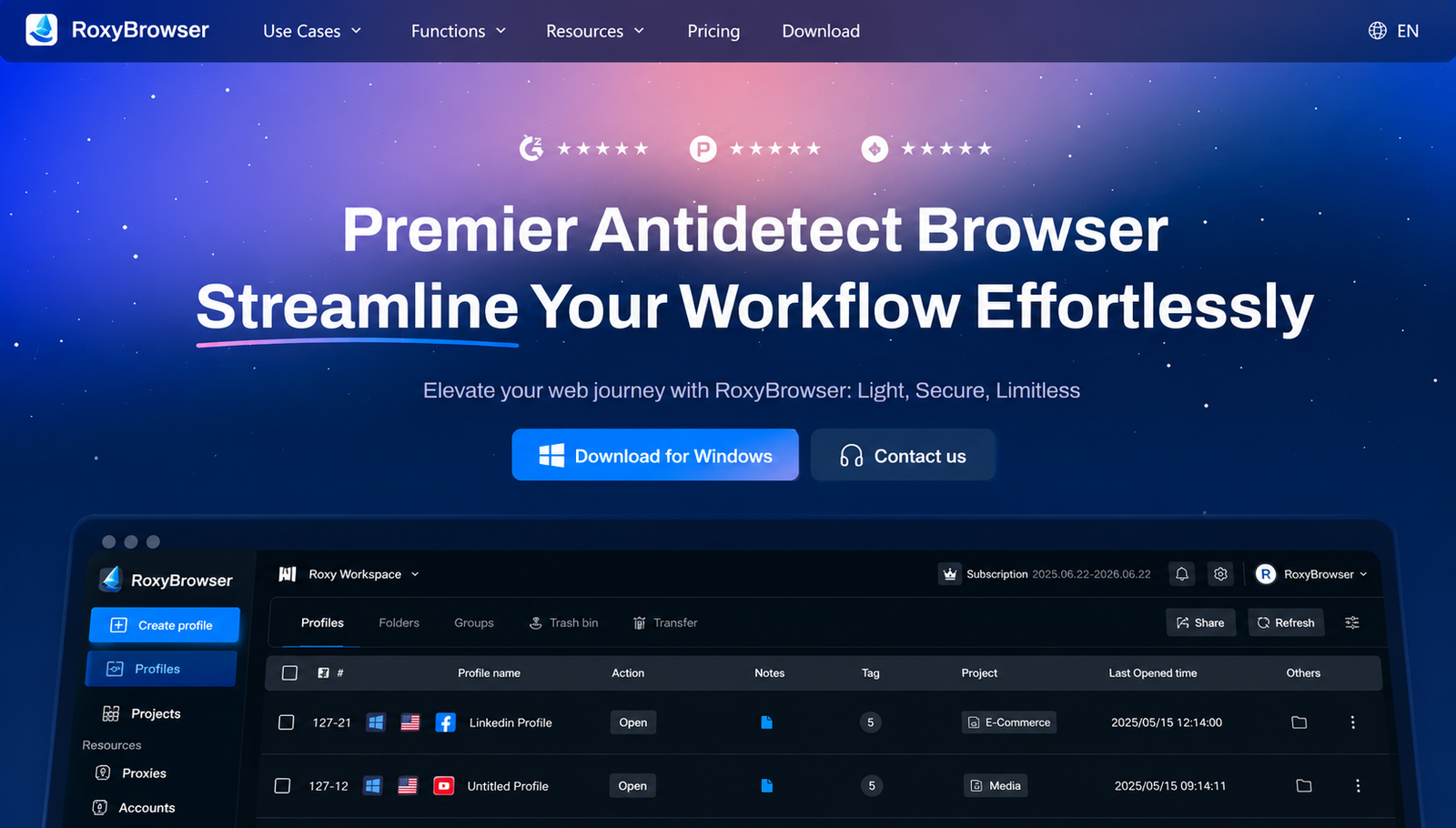
The Shift from Rigid RPA to AI Automation
Historically, scaling digital operations required writing and maintaining complex RPA (Robotic Process Automation) scripts. Today, that rigid programming logic is increasingly obsolete. The industry is shifting toward zero-code AI automation. By utilizing an AI-driven intelligent co-pilot, tech teams can now issue a single natural language command to concurrently control hundreds of isolated browser windows. With native support for MCP protocols and seamless integration of custom skills, operations that previously required hours of mechanical clicking are compressed into seconds. This eliminates the steep learning curve of automation, boosting batch operation efficiency by more than tenfold.
Military-Grade Isolation and Data Privacy
Automation is useless without a secure foundation. To evade increasingly stringent risk-control algorithms, enterprises are integrating a professional antidetect browser into their toolchain. Unlike consumer-grade privacy tools, the core logic of an advanced anti-detect solution focuses fundamentally on the proactive removal of telemetry data. By neutralizing background trackers and executing deep, kernel-level spoofing across over 200 hardware parameters—including Canvas, Audio contexts, and mobile-specific traits like battery and Bluetooth states—each profile registers as a physically unique device. This guarantees a 99.9% account survival rate and easily bypasses top-tier fingerprinting systems like Pixelscan, achieving true zero-association.
Integrated Network Infrastructure
A highly secured browser environment must be paired with flawless network routing. For technical accuracy, it is important to distinguish between simply relying on a broad proxy server infrastructure and the precision of assigning a clean, dedicated proxy IP—the specific numerical address—to an individual session. To eliminate the pain of sourcing reliable external proxies, top-tier platforms now feature built-in residential IP stores. Offering over 90 million pure, native nodes across 200+ regions, these built-in systems allow users to select, configure, and bind an exclusive, low-latency IP to a browser environment in under 30 seconds, creating an incredibly stable network foundation without cross-platform procurement.
Enterprise-Level Cross-Border Collaboration
As studios and tech firms scale to hundreds of employees, managing digital assets becomes a logistical challenge. Modern platforms are designed specifically for enterprise-level matrices, effortlessly supporting cross-border collaboration for teams of 100 or more. Administrators can distribute unlimited sub-accounts, apply granular permission tiers, and synchronize environment templates in a single second. Whether it involves safely sharing environments, isolating passwords, or tracking exact operational logs down to the individual user, team collaboration is completely streamlined. Even as the workforce expands, critical digital assets remain 100% secure and controllable.