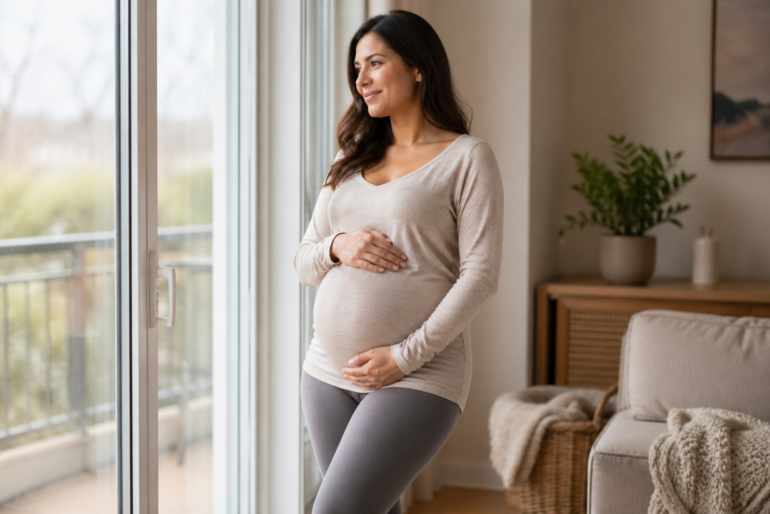
Leggings in Pregnancy are one of those wardrobe choices that sound simple until your body starts changing week by week. One day your regular leggings feel perfectly fine, and the next day the waistband feels too tight, your belly wants more room, and even sitting for a while feels different.
The good news is that leggings can be safe and comfortable during pregnancy when they fit properly, feel breathable, and do not put harsh pressure on your belly. For many moms, maternity leggings become a daily favorite because they stretch with the body, support light movement, and make getting dressed easier when jeans or structured pants no longer feel practical.
Still, not every pair of leggings is pregnancy-friendly. The fabric, waistband, compression level, rise, and how long you wear them all matter.
Are Leggings in Pregnancy Safe?
Yes, leggings in pregnancy are generally safe to wear as long as they are not painfully tight, restrictive, or causing discomfort. Clothing itself does not harm the baby when it fits well. Your baby is protected inside the uterus, surrounded by amniotic fluid and layers of your body.
The bigger concern is your comfort and circulation. If leggings leave deep marks, roll down constantly, dig into the lower belly, make you feel overheated, or cause numbness around the hips and thighs, they are probably too tight for your current stage of pregnancy.
The American College of Obstetricians and Gynecologists advises pregnant women to stay hydrated, avoid overheating, and wear loose-fitting clothing during exercise, especially because the body’s temperature regulation changes during pregnancy. That does not mean leggings are off-limits, but it does mean breathable, flexible, non-restrictive leggings are the better choice.
Think of pregnancy leggings as supportive clothing, not shapewear. They should move with you, not squeeze you into shape.
Why Many Moms Prefer Leggings During Pregnancy
Pregnancy changes how clothes feel. A waistband that used to sit comfortably on your waist may suddenly press against your abdomen. Seams may rub. Denim may feel stiff. Even dress pants can feel annoying during long sitting hours.
Leggings solve many of these everyday problems because they are soft, stretchy, and easy to style. You can wear them at home, during walks, at prenatal appointments, while traveling, or with a long top for casual outings.
Many expecting moms also like leggings because they reduce the daily “what should I wear?” stress. When your body is changing quickly, comfort becomes more than a style choice. It becomes part of your mood, movement, and energy.
A good pair of maternity leggings can help with:
- Light belly support
- Easier movement
- Less waistband pressure
- Better comfort while sitting
- Layering under dresses or tunics
- Gentle support during walking or prenatal yoga
The key word here is gentle. Pregnancy comfort is about support without compression that feels forced.
Regular Leggings vs Maternity Leggings
Regular leggings may work in early pregnancy, especially during the first trimester. At that stage, many women are not showing much yet, although bloating can make tight waistbands uncomfortable.
As pregnancy progresses, maternity leggings usually become more comfortable because they are designed with extra room around the belly. They often have a high, stretchy belly panel that can go over the bump or a low-rise waistband that sits under it.
Here is a simple comparison:
| Feature | Regular Leggings | Maternity Leggings |
|---|---|---|
| Waistband | Standard high or mid-rise | Over-bump or under-bump design |
| Belly room | Limited stretch | Extra stretch for pregnancy |
| Comfort later in pregnancy | May dig in or roll down | Usually more supportive |
| Best stage | Early pregnancy | Second and third trimester |
| Main benefit | Easy if already owned | Better fit as belly grows |
Regular leggings are not automatically unsafe. But if they feel tight around the abdomen, it is time to switch to maternity leggings or size up.
Can Tight Leggings Hurt the Baby?
This is one of the most common questions moms ask, and it is understandable. When your belly grows, pressure can feel worrying.
Tight leggings are unlikely to directly hurt the baby. The baby is well protected inside your body. However, overly tight leggings can make you uncomfortable, restrict natural movement, increase sweating, irritate the skin, and possibly worsen swelling or pressure sensations.
A practical rule is simple: if you feel relief after removing the leggings, they were probably too tight.
Signs your leggings are too tight include:
- Deep marks on your belly, waist, hips, or thighs
- Tingling or numbness in your legs
- Increased pelvic or abdominal discomfort
- Trouble taking a full breath while sitting
- Waistband rolling, digging, or pinching
- Skin irritation or itching
- Feeling too warm or sweaty
Pregnancy should not feel like you are constantly adjusting your clothes. If you keep pulling the waistband up, folding it down, or shifting seams, your body is telling you something.
Best Types of Leggings for Pregnancy
The best leggings in pregnancy usually have a soft stretch, a smooth waistband, and breathable fabric. They should support your changing body without feeling like tight compression wear.
Over-the-Bump Leggings
Over-the-bump leggings have a stretchy fabric panel that covers the belly. Many moms love them in the second and third trimester because the panel gives a hugged, secure feeling.
They are helpful if you dislike waistbands sitting under your belly or if regular leggings keep sliding down.
Best for:
- Growing belly support
- Daily wear
- Walking
- Cooler weather
- Wearing with shorter maternity tops
Some moms find over-the-bump panels too warm in summer, so fabric choice matters.
Under-the-Bump Leggings
Under-the-bump leggings sit below the belly. They can feel less restrictive and cooler, especially for moms who do not like fabric over the abdomen.
Best for:
- Early pregnancy
- Warm weather
- Sensitive belly skin
- Moms who dislike belly panels
The downside is that they may roll down or feel less secure as the bump grows.
Seamless Maternity Leggings
Seamless leggings reduce rubbing and irritation. This can be helpful during pregnancy because skin may become more sensitive, and your belly, hips, and thighs may change shape quickly.
Best for:
- Sensitive skin
- Lounging
- Long sitting periods
- Everyday comfort
Look for a waistband that stretches evenly rather than a narrow band that digs into one spot.
Workout Maternity Leggings
Workout leggings are designed for movement, but during pregnancy they should still be breathable and flexible. Avoid very high-compression styles unless your healthcare provider has recommended medical-grade support for a specific reason.
The Mayo Clinic notes that staying active during pregnancy can help ease aches and pains and support healthy weight management when exercise is safe for the individual pregnancy. Comfortable clothing can make movement easier and more enjoyable.
Best for:
- Prenatal yoga
- Walking
- Light strength training
- Low-impact workouts
- Stretching
The NHS also states that exercise is not dangerous for the baby in uncomplicated pregnancies and that active women may be less likely to experience problems later in pregnancy and labor.
Fabric Matters More Than You Think
Fabric can make or break your experience with leggings during pregnancy. A pair that looks cute but traps heat or feels scratchy will not stay in your rotation for long.
Pregnancy can make you feel warmer than usual. You may sweat more, especially around the belly, hips, and thighs. That is why breathable fabrics are worth choosing.
Good fabric qualities include:
- Soft feel against the skin
- Four-way stretch
- Moisture-wicking ability
- Breathable texture
- Enough thickness for coverage
- No scratchy seams
- Good recovery after stretching
Cotton blends can feel soft and breathable for lounging, but they may stretch out over time. Polyester and spandex blends often hold shape better and work well for activewear. Nylon-spandex blends can feel smooth and supportive, but some may trap heat depending on the quality.
A balanced fabric is usually best. You want stretch, but not a rubbery squeeze. You want support, but not stiffness.
How to Choose the Right Size
Sizing during pregnancy can be confusing because your body does not change in a straight line. Your belly may grow, but your hips, thighs, and waist may also change differently.
Many maternity brands suggest choosing your pre-pregnancy size in maternity clothing. That can work, but it is not always perfect. Every body and every brand is different.
A better approach is to check comfort points:
- Can you sit without the waistband digging in?
- Can you breathe normally?
- Can you walk without pulling them up every few minutes?
- Does the belly panel stretch smoothly?
- Do the thighs feel snug but not squeezed?
- Does the fabric become see-through when stretched?
- Are there red marks after wearing them?
If you are between sizes, sizing up is often more comfortable during pregnancy. Your body still has more changing to do, and a slightly softer fit is usually better than a tight one.
Leggings in Pregnancy for Each Trimester
Your clothing needs may shift across pregnancy. What feels great at 10 weeks may feel annoying at 28 weeks.
First Trimester
In the first trimester, bloating can be more noticeable than the baby bump. Some moms can still wear regular leggings, while others feel uncomfortable in tight waistbands very early.
During this stage, soft high-waisted leggings or under-bump styles may feel best. Avoid anything that presses hard into your lower abdomen, especially if nausea makes tight clothing harder to tolerate.
Second Trimester
The second trimester is often when maternity leggings start to feel more useful. Your bump may become more defined, and regular leggings may begin rolling down or pressing in awkward places.
Over-the-bump leggings can offer a smoother fit under tops and dresses. This is also a good time to invest in one or two quality pairs rather than buying many cheap pairs that lose shape quickly.
Third Trimester
By the third trimester, comfort becomes the priority. Sitting, walking, sleeping, and even standing for long periods can feel different.
Choose leggings with a soft belly panel, breathable fabric, and no tight elastic at the top. Many moms prefer full-panel maternity leggings now because they stay in place better.
If swelling is an issue, avoid leggings that are tight around the ankles or calves. Swelling in pregnancy can be common, but sudden or severe swelling should be discussed with a healthcare professional.
Are Compression Leggings Safe During Pregnancy?
Compression is a tricky word because it can mean different things. Light compression in maternity activewear may feel supportive. Strong compression, especially around the belly, may feel uncomfortable and is not the same as medical compression.
Medical compression stockings are sometimes recommended during pregnancy for leg swelling or vein concerns, but those are different from tight fashion leggings. If you have varicose veins, swelling, blood clot risk, or circulation problems, talk to your doctor before using compression-style leggings.
For everyday wear, choose leggings that feel supportive rather than squeezing. Your belly should never feel restricted.
When Leggings May Not Be the Best Choice
Leggings are comfortable for many moms, but they are not perfect for every situation.
You may want to avoid or limit leggings if:
- You feel overheated
- You have skin irritation or rashes
- The leggings are too tight around the belly
- You are dealing with heavy sweating
- You have swelling and tight ankle seams
- Your doctor has advised specific clothing or support garments
- You feel pelvic pressure that worsens with tight clothing
Pregnancy comfort is personal. Some days leggings may feel perfect. Other days a loose dress, maternity joggers, or soft pants may feel better.
Practical Styling Ideas for Pregnant Moms
You do not need a huge maternity wardrobe to feel put together. A few comfortable basics can go a long way.
Try pairing maternity leggings with:
- Long cotton tunics
- Oversized button-down shirts
- Soft maternity T-shirts
- Sweater dresses
- Long cardigans
- Loose hoodies
- Breathable workout tops
- Maternity tank tops
For work-from-home days, leggings with a long cardigan can feel comfortable but still presentable. For errands, a soft tunic and supportive shoes make a simple outfit. For prenatal appointments, leggings are practical because they are easy to move in and remove if needed.
If you want a more polished look, choose thicker black maternity leggings with a structured long top. The outfit still feels relaxed but looks more intentional.
What About Wearing Leggings While Sleeping?
Some moms sleep in leggings because they feel cozy or supported. That can be fine if the leggings are loose, breathable, and not causing overheating.
However, tight leggings are not ideal for sleep. Your body needs comfort and circulation during rest. If you wake up sweaty, itchy, or with marks on your skin, switch to loose pajama pants or maternity sleepwear.
Sleep comfort becomes more important as pregnancy progresses. Loose clothing can also make nighttime bathroom trips easier.
Can Leggings Help With Pregnancy Back Pain?
Leggings themselves do not treat back pain, but supportive maternity leggings may make movement more comfortable. Some leggings provide a gentle hugged feeling around the belly and lower back, which some moms find helpful.
For real back or pelvic pain, clothing is only one small part of comfort. Supportive shoes, posture changes, prenatal stretching, rest, and medical advice matter more.
ACOG notes that later in pregnancy, belly support belts may reduce discomfort while walking. That is separate from leggings, but it shows that gentle external support can sometimes help with comfort during movement.
If pain is severe, one-sided, sudden, or paired with bleeding, fever, dizziness, contractions, or fluid leakage, seek medical care promptly.
How Long Can You Wear Leggings in a Day?
There is no strict rule for how many hours you can wear leggings during pregnancy. The right answer depends on fit, fabric, temperature, activity, and your body’s comfort.
For daily wear, comfortable maternity leggings can usually be worn for several hours. But it is smart to change out of sweaty workout leggings after exercise to reduce skin irritation. It is also helpful to give your belly and skin a break if you have worn snug clothing all day.
A simple habit is to check your body at the end of the day. Are there deep marks? Itching? Redness? Pressure? If yes, choose a softer or larger pair next time.
Hygiene and Skin Comfort Tips
Pregnancy skin can be more sensitive. Sweat, friction, and tight fabric may lead to irritation, especially around the belly fold, thighs, and waistband area.
To stay comfortable:
- Wash leggings after sweaty use
- Avoid rough seams
- Choose breathable underwear
- Change after workouts
- Use fragrance-free detergent if your skin is sensitive
- Avoid leggings that stay damp
- Rotate between pairs instead of wearing the same one daily
If you notice persistent itching, rash, pain, or unusual discharge, do not assume clothing is the only cause. Ask a healthcare provider, especially during pregnancy.
Real-World Scenario: When Regular Leggings Stop Working
Imagine a mom at 22 weeks pregnant. Her regular black leggings still stretch, so she keeps wearing them. But by lunchtime, the waistband digs into her lower belly. She folds it down, then it rolls. She pulls it up, then it presses against her bump.
By evening, she has red marks around her waist and feels bloated. The leggings are not dangerous, but they are no longer serving her body.
When she switches to over-the-bump maternity leggings with a soft panel, she can sit longer, walk comfortably, and stop adjusting her outfit every few minutes. That is the real benefit. Not magic support. Just better design for the stage she is in.
Mistakes to Avoid When Buying Pregnancy Leggings
Buying leggings during pregnancy is easy, but buying the right ones takes a little attention.
Avoid these common mistakes:
- Buying very tight leggings “for support”
- Choosing thin fabric that becomes see-through
- Ignoring waistband comfort
- Buying only one pair if you wear them daily
- Choosing fashion leggings for workouts
- Wearing non-breathable leggings in hot weather
- Assuming all maternity leggings fit the same
- Keeping leggings that leave painful marks
The best leggings are the ones you forget you are wearing. If you are constantly aware of the waistband, seams, or tightness, they are not the right pair.
What Doctors Usually Care About Most
Doctors usually care less about whether you wear leggings and more about whether your clothing supports safe comfort, movement, and healthy temperature control.
During pregnancy, overheating can be a concern, especially during exercise. Hydration, breathable clothing, and avoiding extreme heat are practical safety steps. ACOG recommends pregnant women avoid becoming overheated, drink plenty of water, and use comfortable clothing during physical activity.
If you have a high-risk pregnancy, circulation issues, severe swelling, pelvic pain, or any medical condition, ask your healthcare provider what type of support clothing is best for you.
Are Leggings Good for Pregnancy Workouts?
Leggings can be a good choice for pregnancy workouts when they are made for movement. They should stay in place, wick sweat, and allow your hips and belly to move comfortably.
Good workout options during many uncomplicated pregnancies include walking, swimming, stationary cycling, prenatal yoga, and low-impact aerobics. Mayo Clinic and NHS pregnancy resources both support safe movement during pregnancy when it matches the person’s health and medical guidance.
For workouts, avoid leggings that:
- Slide down during movement
- Feel too hot
- Restrict squats or stretching
- Press into the belly during bending
- Become transparent when stretched
- Have rough seams inside the thighs
After exercise, change into dry clothing if you are sweaty. This helps reduce friction and skin irritation.
How Many Pairs Do You Really Need?
You do not need a closet full of maternity leggings. Most moms can manage well with two to four good pairs, depending on lifestyle.
A simple setup could include:
- One soft pair for home
- One thicker pair for outings
- One workout pair
- One extra pair for laundry days
If you are pregnant during winter, thicker leggings may be useful. If you are pregnant during summer, breathable and lighter fabrics matter more.
Quality is more important than quantity. One well-fitting pair that stays comfortable all day is better than three pairs that dig, roll, or stretch out.
Frequently Asked Questions
Can I wear high-waisted leggings while pregnant?
Yes, high-waisted leggings can be comfortable during pregnancy if the waistband is soft and stretchy. If the waistband digs into your belly or causes pressure, switch to maternity leggings with a belly panel.
Are leggings better than jeans during pregnancy?
For many moms, leggings feel better than jeans because they stretch and do not have stiff buttons or zippers. Maternity jeans can also be comfortable, but leggings usually offer more flexibility for daily wear.
Can I wear leggings in early pregnancy?
Yes, you can wear leggings in early pregnancy. Many women continue wearing regular leggings during the first trimester. Just make sure they do not worsen bloating, nausea, or belly pressure.
Should pregnancy leggings be tight?
Pregnancy leggings should be snug enough to stay in place but not tight enough to leave painful marks, restrict breathing, or press hard into the belly. Supportive is good. Squeezing is not.
Are maternity leggings worth it?
Maternity leggings are worth it for many moms, especially from the second trimester onward. They are designed to fit a growing belly and often feel more comfortable than regular leggings.
Can I wear leggings after delivery?
Yes, many moms continue wearing maternity leggings postpartum because the belly panel feels soft and forgiving. Avoid strong compression unless approved by your healthcare provider, especially after a C-section or complicated delivery.
Conclusion
Leggings in Pregnancy can be safe, practical, and very comfortable when you choose the right fit. The goal is not to squeeze your belly or force your body into your old clothes. The goal is to support your changing shape with soft, breathable, flexible clothing that helps you move through the day with less discomfort.
Regular leggings may work early on, but maternity leggings often become the better option as your bump grows. Look for a soft waistband, stretchy belly room, breathable fabric, and a fit that lets you sit, walk, stretch, and breathe comfortably.
Pregnancy already asks a lot from your body. Your clothes should make the day easier, not harder. A good pair of leggings will not solve every ache or discomfort, but it can make daily life feel a little smoother, especially when you are dressing for comfort, movement, and real motherhood.
In the final months, many moms also appreciate how modern maternity clothing has moved beyond hiding the bump and now focuses more on comfort, confidence, and everyday function.