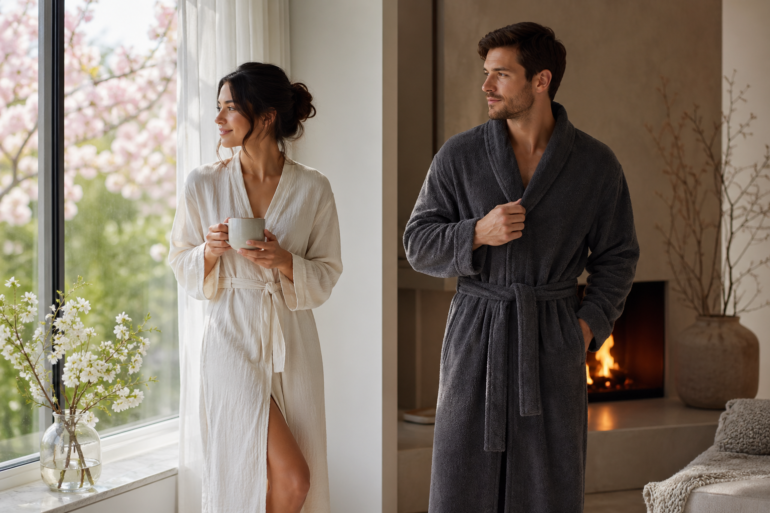
Robes are one of those simple wardrobe pieces that quietly make everyday life feel better. They are easy to wear, comfortable after a shower, useful on slow mornings, and perfect for relaxing at home after a long day. Whether you prefer a soft cotton bathrobe, a lightweight kimono-style robe, a plush fleece robe, or a smooth satin option, the right choice can add comfort, style, and practicality to every season.
A good robe is not just something you throw on when you are half-awake. It can be part of your self-care routine, your home wardrobe, your travel packing list, and even your evening wind-down ritual. For women and men, the best robes balance fabric, fit, warmth, breathability, and personal style.
Why Robes Remain a Timeless Homewear Essential
Robes have been around in many forms for centuries, but their modern purpose is beautifully simple. They give you coverage, comfort, and ease without requiring a full outfit.
That is why robes work so well for different people and lifestyles. A parent may wear one during a busy morning routine. Someone working from home may use a lightweight robe between showering and getting dressed. A traveler may pack a compact robe for hotel stays. A person who enjoys spa-style self-care may choose a plush bathrobe for after-bath comfort.
The basic idea is practical, but the experience feels personal. A robe can make a normal morning feel calmer. It can make a cold night feel warmer. It can make a simple skincare routine feel a little more special.
According to clothing definitions, a robe is generally understood as a loose-fitting outer garment, often with sleeves, and bathrobe styles are commonly worn after bathing or around the pool.
What Makes a Good Robe?
A good robe should feel comfortable the moment you put it on. It should not scratch, pull, overheat, or feel awkward around the shoulders.
The best robes usually have a few things in common:
They feel soft against the skin.
They offer the right warmth for the season.
They are easy to wash and maintain.
They fit comfortably without feeling bulky.
They have practical details like pockets, a secure belt, or an inner tie.
They match your lifestyle, not just your taste.
A robe that looks beautiful but feels stiff will probably stay in the closet. A robe that feels cozy but takes forever to dry may not work well after showers. That is why fabric choice matters so much.
Best Fabrics for Robes
Fabric is the heart of any robe. It affects warmth, weight, breathability, absorbency, and how the robe feels after repeated washing.
Cotton Robes
Cotton robes are among the most popular choices because they are soft, breathable, and absorbent. Cotton fibers are known for being naturally absorbent, and this makes cotton a strong option for bathrobes and post-shower wear. ScienceDirect describes cotton fibers as soft, breathable, and highly absorbent, with the ability to hold a large amount of water compared with their own weight.
Cotton is a smart year-round choice. In summer, a lightweight cotton robe feels airy. In cooler weather, a thicker cotton terry robe can feel cozy without becoming too heavy.
Common cotton robe styles include:
Terry cotton robes
Waffle cotton robes
Turkish cotton robes
Organic cotton robes
Jersey cotton robes
A terry cotton robe is best when you want towel-like absorbency. A waffle cotton robe is lighter and often dries faster. Jersey cotton feels more like a soft T-shirt, making it ideal for lounging rather than drying off.
Fleece Robes
Fleece robes are made for warmth. They are soft, plush, and comforting during colder months. If you live somewhere with chilly mornings or cold winters, fleece can feel like wearing a blanket with sleeves.
Fleece is commonly made from polyester and is widely used in winter clothing because of its soft and cozy feel. Some polyester fleece fabrics are also designed to provide insulation while staying relatively lightweight.
The downside is that fleece is not usually the best choice right after a shower because it is not as absorbent as cotton terry. It is better for lounging, reading, watching TV, or staying warm on cold mornings.
Silk and Satin Robes
Silk and satin robes are chosen more for feel and style than absorbency. They are smooth, lightweight, and elegant. Many people love them for getting ready, sleeping, or wearing over nightwear.
Silk has natural luxury appeal, while satin refers to a type of weave and may be made from different fibers. A satin robe can look polished at a lower price than pure silk.
These robes are not usually ideal for drying off after bathing. They are better for warm evenings, bridal moments, travel, or light lounging.
Waffle Robes
Waffle robes have a textured square pattern that helps them feel breathable and spa-like. You often see this style in hotels and wellness spaces.
A waffle robe is lighter than thick terry cotton, which makes it useful for warmer weather or people who dislike bulky fabric. It can be a good middle option between a bathrobe and a lounge robe.
Velour Robes
Velour robes have a soft, plush surface that feels luxurious. They often look dressier than terry robes but still provide warmth and comfort.
Many velour robes have cotton or blended interiors for absorbency, with a smoother outer finish for style. They work well for people who want a robe that looks polished but still feels cozy.
Linen Robes
Linen robes are excellent for hot weather. They feel breathable, relaxed, and naturally textured. Linen softens with use, so a good linen robe can become more comfortable over time.
The main drawback is wrinkling. Some people love that natural lived-in look, while others prefer smoother fabrics.
Robes for Every Season
Not all robes work equally well throughout the year. The best choice depends on temperature, humidity, and how you plan to wear it.
Spring Robes
Spring weather can be unpredictable. Some mornings feel cool, while afternoons become warm. A medium-weight cotton or waffle robe usually works well during this season.
Choose something breathable but not too thin. A knee-length cotton robe or lightweight jersey robe can give enough coverage without making you feel overheated.
Best spring choices:
Waffle cotton robe
Jersey cotton robe
Light terry robe
Light satin robe for indoor lounging
Summer Robes
Summer robes should feel light, airy, and easy to move in. Heavy fleece or thick terry can feel too warm unless you are using them in an air-conditioned room.
For hot weather, look for breathable fabrics such as cotton, linen, rayon blends, or lightweight satin. Shorter lengths can also feel more comfortable in summer.
Best summer choices:
Linen robe
Light cotton robe
Kimono-style robe
Short satin robe
Waffle robe
A summer robe should never feel like a burden. It should help you stay covered while still allowing air to move.
Fall Robes
Fall is when cozy textures start to make sense again. You may not need a heavy winter robe yet, but you may want something warmer than a thin summer wrap.
A medium terry robe, velour robe, or soft cotton blend works well in this season. Earthy colors, deeper neutrals, and textured fabrics also feel right for autumn.
Best fall choices:
Velour robe
Medium cotton robe
Plush cotton blend robe
Light fleece robe
Winter Robes
Winter robes are all about warmth. A plush fleece robe, sherpa-lined robe, or thick terry robe can make cold mornings much easier.
If your home gets cold, choose a robe with a shawl collar, full-length design, deep pockets, and a secure waist tie. These little details make a noticeable difference.
Best winter choices:
Fleece robe
Sherpa robe
Thick terry cotton robe
Full-length plush robe
Quilted robe
A winter robe should feel generous without being hard to move in. If it is too bulky, you may not reach for it daily.
Robes for Women: Style, Comfort, and Practical Details
Women’s robes often come in a wide variety of lengths, fabrics, and silhouettes. Some are made for spa-like comfort, while others are designed for beauty routines, maternity wear, bridal mornings, or relaxed evenings.
A short satin robe can be ideal for warm weather or getting ready. A long cotton robe works well after bathing. A plush fleece robe is perfect for cold nights. A lightweight kimono robe adds style without feeling heavy.
When choosing robes for women, pay attention to:
Length
Sleeve width
Belt placement
Inner ties
Fabric transparency
Pocket depth
Washability
A robe should feel secure when moving around the home. Inner ties are especially useful because they keep the robe from opening unexpectedly. This is a small feature, but it can make the robe much more practical.
Robes for Men: Simple, Comfortable, and Functional
Men’s robes often focus on comfort, durability, and easy wear. Popular choices include cotton terry bathrobes, fleece robes, waffle robes, and flannel-style lounging robes.
A cotton terry robe is useful after a shower. A fleece robe is better for warmth. A waffle robe gives a cleaner spa-style look without too much weight.
When choosing robes for men, look at:
Shoulder fit
Sleeve length
Robe length
Belt strength
Fabric thickness
Pocket size
Collar style
A shawl collar adds warmth around the neck, which is helpful in winter. A kimono collar feels lighter and works better for warm seasons.
How to Choose the Right Robe Length
Robe length changes both comfort and style. There is no one perfect length for everyone, but each option has a clear purpose.
Short robes usually end above the knee. They are good for warm weather, beauty routines, and casual lounging.
Knee-length robes are practical for everyday home use. They provide coverage without feeling too warm.
Mid-calf robes feel more traditional and comfortable. They work well after showers and during relaxed mornings.
Full-length robes are best for winter and maximum warmth. They feel cozy but may be too much for hot climates.
For most people, a knee-length or mid-calf robe is the safest everyday choice.
Robe Fit: What to Check Before Buying
Fit matters more than many shoppers realize. A robe is supposed to feel relaxed, but it should not constantly slide open or drag on the floor.
Check the shoulder seams first. If they fall too far down the arm, the robe may feel sloppy. If they sit too tightly, the robe may pull when you reach forward.
Sleeves should allow easy movement. Long sleeves can be cozy, but if they cover your hands too much, they may get in the way during breakfast, skincare, or household tasks.
The belt should sit close to your natural waist. If it sits too high or too low, the robe may feel uncomfortable.
Robes for Different Daily Routines
The best robe depends on how you actually live. A robe that works for one person may not work for another.
After-Shower Routine
For after-shower use, choose cotton terry or absorbent waffle cotton. These fabrics help absorb moisture and provide coverage while you dry off.
Avoid satin or silk for this purpose because they are not designed to replace a towel.
Morning Coffee Routine
For slow mornings, comfort matters most. A soft cotton, fleece, or jersey robe can feel perfect while making coffee, feeding pets, or reading the news.
Pockets are useful here. You can carry small items like lip balm, earbuds, or a room key when traveling.
Work-From-Home Routine
A robe can be useful before getting fully dressed, but it should still feel neat. A lightweight waffle or jersey robe looks more put-together than a bulky blanket-style robe.
Choose neutral colors if you want a cleaner look around the house.
Spa and Self-Care Routine
For skincare, hair care, or home spa days, choose a robe that is easy to wash and comfortable around the neck. Waffle robes and cotton robes are especially good here.
A white robe gives that hotel-spa feeling, but darker colors may be easier to maintain.
Travel Routine
For travel, lightweight robes are best. A bulky fleece robe takes up too much suitcase space. A thin cotton, satin, or waffle robe packs more easily.
Look for quick-drying fabric if you plan to use it at hotels, pools, or beach stays.
Robe Fabric Comparison Table
| Fabric Type | Best For | Season | Main Benefit | Possible Drawback |
|---|---|---|---|---|
| Cotton Terry | After showers | All seasons | Absorbent and soft | Can feel heavy |
| Waffle Cotton | Spa feel and travel | Spring, summer | Lightweight and breathable | Less plush |
| Fleece | Warm lounging | Fall, winter | Very cozy | Not ideal after bathing |
| Silk | Luxury lounging | Spring, summer | Smooth and elegant | Requires careful care |
| Satin | Stylish homewear | Spring, summer | Affordable luxury look | Not absorbent |
| Linen | Hot weather | Summer | Breathable and relaxed | Wrinkles easily |
| Velour | Cozy style | Fall, winter | Plush and polished | May feel warm |
Color Choices That Work Best
Color may seem like a style detail, but it affects how often you enjoy wearing your robe.
White feels clean, classic, and spa-inspired. It is beautiful but can show stains easily.
Gray, navy, beige, and charcoal are practical everyday colors. They look calm and are easy to match with sleepwear.
Pastel colors feel soft and relaxed, especially for spring and summer. Deep colors like burgundy, forest green, and chocolate brown feel warmer for fall and winter.
Printed robes can be fun, but simple solid colors often look more timeless.
Robes as Part of a Better Home Wardrobe
A robe is not just sleepwear. It is part of a comfortable home wardrobe.
Many people invest in outdoor clothing but ignore what they wear at home. Yet home is where comfort matters most. A quality robe can make daily transitions easier, from waking up to getting ready, from showering to relaxing, and from work mode to evening rest.
This is especially true for people with busy schedules. A robe can become a small signal that the day is beginning or ending. That may sound simple, but routines often rely on small physical cues.
Real-World Example: Choosing a Robe for a Couple
Imagine a couple shopping for robes together. One person runs warm and wants something breathable after a shower. The other gets cold easily and wants something soft for winter evenings.
Buying the same robe for both may not work. The first person may prefer a waffle cotton robe. The second may enjoy a plush fleece or thick terry robe.
This is why robes for women and men should be chosen by lifestyle, not just appearance. Matching colors can still create a nice coordinated look, but fabric and warmth should fit each person separately.
Real-World Example: Choosing a Robe for a Guest Room
Robes can also be a thoughtful addition to a guest room. A simple waffle cotton robe feels clean, neutral, and hotel-like. It is not too personal, not too heavy, and easy to wash between guests.
For guest use, choose one or two medium sizes if possible. Avoid very expensive delicate fabrics because guests may not know how to care for them.
This small detail can make visitors feel more comfortable and welcome.
Care Tips to Make Robes Last Longer
A good robe can last for years if cared for properly. The main rule is to follow the care label, but a few general habits help.
Wash cotton robes with similar fabrics to reduce lint transfer.
Avoid too much fabric softener on absorbent bathrobes because it can reduce absorbency over time.
Hang robes properly after use so moisture can evaporate.
Do not leave damp robes in a pile.
Wash fleece robes inside out to help protect softness.
Use gentle detergent for silk or satin robes.
Let robes dry fully before storing them.
The better you care for your robe, the better it will feel over time.
Common Mistakes People Make When Buying Robes
Many people buy robes based only on softness in the store or product photo. That can lead to disappointment.
A robe may feel soft but be too hot. It may look stylish but have no inner tie. It may seem luxurious but require dry cleaning. It may be cheap but lose shape after a few washes.
Avoid these common mistakes:
Buying fleece for post-shower use
Choosing silk when you need absorbency
Ignoring sleeve length
Buying a robe that is too heavy for your climate
Forgetting about washing instructions
Choosing style over daily comfort
The best robe is the one you will actually wear often.
Are Expensive Robes Worth It?
Expensive robes can be worth it, but only when the quality matches your needs. A high-quality cotton robe may feel softer, absorb better, and last longer than a cheap one. A well-made silk robe may drape beautifully and feel luxurious.
However, price alone does not guarantee comfort. Always look at fabric content, stitching, belt design, care instructions, and customer feedback.
For everyday use, a mid-priced cotton or waffle robe can be a smart purchase. For luxury lounging, silk, premium cotton, or high-end velour may be worth the extra cost.
How Many Robes Should You Own?
Most people can manage well with one or two robes.
One absorbent robe is useful for bathing and showering. One lounging robe is useful for comfort, warmth, or style.
If you live in a place with strong seasonal changes, owning a summer robe and a winter robe makes sense. A lightweight cotton or linen robe can handle warm months, while fleece or thick terry works better in winter.
Best Robes for Different Needs
For after showering, choose cotton terry.
For summer lounging, choose linen or lightweight cotton.
For winter warmth, choose fleece or sherpa.
For a spa feel, choose waffle cotton.
For luxury style, choose silk or satin.
For travel, choose a lightweight waffle or thin cotton robe.
For everyday use, choose a washable cotton blend.
This simple approach makes shopping easier because it connects the robe to a real purpose.
Safety and Comfort Details to Consider
Comfort is important, but safety matters too. Long robes can create a tripping risk if they drag on the floor. Wide sleeves may get in the way while cooking or using candles.
If you plan to wear your robe while doing chores, choose a shorter length and sleeves that do not hang too loosely. If you wear it mostly for sitting, reading, or relaxing, a longer plush style may be fine.
For older adults, a robe with a secure tie, non-dragging hem, and easy-care fabric is usually the better choice.
Sustainable Robe Choices
Sustainability is becoming more important in fashion and homewear. If this matters to you, look for organic cotton, recycled polyester fleece, linen, or brands that share clear information about sourcing and manufacturing.
Natural fibers are not automatically perfect, and synthetic fabrics are not automatically bad. The best choice often depends on durability, washing habits, and how long you keep the garment.
A robe that lasts five years is usually a better choice than one that feels trendy but falls apart after a few months.
Conclusion: Robes Bring Everyday Comfort Into Every Season
Robes are simple, but they can make daily life feel noticeably better. The right robe keeps you comfortable after a shower, warm on cold mornings, relaxed during quiet evenings, and stylish during slow weekends at home.
For women and men, the best choice depends on fabric, season, fit, and routine. Cotton robes are practical and absorbent. Fleece robes bring winter warmth. Waffle robes feel clean and spa-like. Silk and satin robes add light luxury. Linen robes shine in summer heat.
When shopping for robes, think less about what looks good in a photo and more about how it will feel in your real life. A robe should match your climate, your schedule, your care habits, and your comfort needs. When it does, it becomes more than homewear. It becomes part of your everyday rhythm.
In the last few years, home comfort has become a bigger part of personal style, and robes fit naturally into that shift. Whether you want a soft bathrobe, a stylish dressing gown, or a cozy winter wrap, this loose-fitting garment has earned its place in modern wardrobes. For more background on the traditional meaning of a loose garment, the history of robes shows how practical clothing can remain timeless across cultures and lifestyles.
FAQs About Robes
What are robes used for?
Robes are used for comfort, coverage, warmth, and relaxation at home. Many people wear them after bathing, while getting ready, during morning routines, or while lounging in the evening.
What is the best fabric for robes?
Cotton is best for absorbency, fleece is best for warmth, waffle cotton is best for a spa-like feel, silk is best for luxury, and linen is best for hot weather.
Are robes good for both women and men?
Yes, robes are practical for women and men. The main difference is usually style, fit, length, and fabric preference.
Can robes be worn after a shower?
Yes, but absorbent robes like cotton terry or waffle cotton are best after a shower. Satin, silk, and fleece are better for lounging than drying off.
What robe is best for winter?
A fleece, sherpa, thick terry, or full-length plush robe is best for winter because these styles provide more warmth and coverage.
What robe is best for summer?
A lightweight cotton, linen, waffle, or short satin robe is best for summer because these fabrics feel lighter and more breathable.