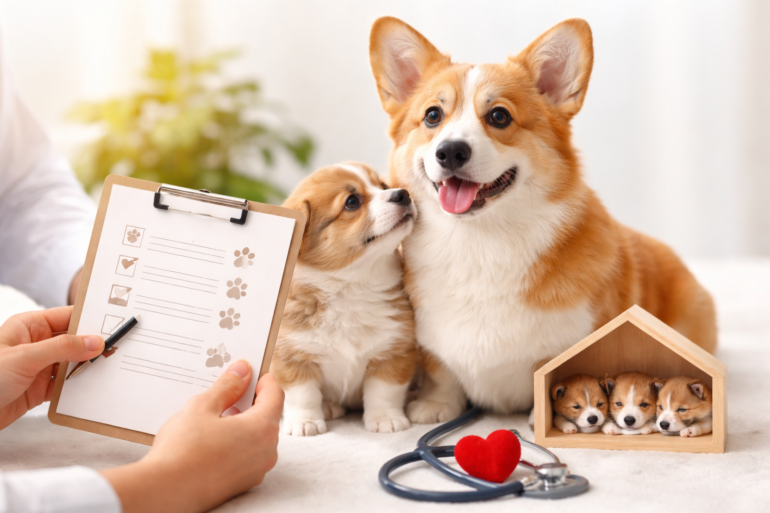
Breeding Corgi dogs can look simple from the outside. People see adorable short legs, bright expressions, and playful puppies, then assume the process is mostly about finding two good looking dogs and waiting for a litter. In reality, responsible breeding starts much earlier and asks tougher questions about health, genetics, temperament, finances, and long-term commitment. Breed clubs and veterinary sources consistently stress that breeding decisions should protect the well-being of the mother, improve the breed where possible, and give every puppy the best possible start.
That matters even more with Corgis. Pembroke Welsh Corgis are sturdy, intelligent, athletic small herding dogs, but they are also a chondrodysplastic breed, meaning their body structure is shaped by dwarfism genetics. The breed club notes that Pembrokes are generally healthy overall, yet breeders still need to pay close attention to issues such as hip health, eye disorders, von Willebrand disease, and degenerative myelopathy.
So before breeding Corgi dogs, the first question is not “Can I sell puppies?” It is “Can I do this responsibly, safely, and in a way that truly serves the dogs?” If the answer is not a clear yes, it is better to wait, learn more, and work closely with a veterinarian and experienced breed mentors.
Why Breeding Corgi Is a Bigger Responsibility Than Most People Expect
Responsible breeding is not just mating two purebred dogs. It involves prebreeding exams, health screening, pedigree research, timing of ovulation, pregnancy care, whelping preparation, newborn monitoring, socialization, contracts, and lifetime responsibility for the puppies you produce. The AKC and AVMA both frame breeding as a serious, structured commitment rather than a casual side project.
With Corgis, this responsibility also includes understanding the breed’s working background. Pembrokes were developed as herding dogs, so sound temperament, trainability, and physical structure matter. A Corgi that is cute but anxious, medically compromised, or poorly socialized should not become part of a breeding plan just because it is registered or popular online.
This is where many first-time breeders go wrong. They focus on color, fluff, social media appeal, or market demand before they evaluate health and stability. Good breeding turns that order upside down. Health and temperament come first, and appearance comes after that.
Start With the Right Reason for Breeding
The most responsible reason for breeding Corgi dogs is to preserve and improve the breed through careful selection. That means choosing dogs with strong health records, sound structure, steady temperament, and traits worth passing forward. The AKC’s responsible breeding guidance emphasizes that breeders should understand why they are breeding and how each pairing supports a thoughtful long-term goal.
Breeding for easy money is a weak foundation. Pregnancy, veterinary support, health testing, emergency care, puppy supplies, food, vaccination schedules, registration, and screening homes all cost time and money. If a bitch needs urgent help during labor or a litter needs extra neonatal support, the costs rise quickly. Veterinary references also note real risks around dystocia, postpartum complications, and metabolic problems such as eclampsia.
A better mindset is this: if every puppy stayed with you longer than expected, could you still care for them properly? If one puppy had a health issue, could you handle it? If a buyer needed to return a dog months later, would you take that dog back? Responsible breeders build from yes answers to those questions.
Health Testing Comes Before Breeding Corgi Dogs
Health testing is one of the clearest lines between responsible breeding and careless breeding. The AKC’s Pembroke Welsh Corgi breed page lists hip evaluation and ophthalmologist evaluation among the recommended health tests from the national breed club. The Pembroke Welsh Corgi Club of America also highlights hip dysplasia, eye disorders, and von Willebrand disease as important concerns in the breed.
The broader AKC breed health testing resources add that breed parent clubs define the testing expectations breeders should meet before mating dogs. In other words, testing is not a bonus. It is part of the minimum standard for informed decision-making.
For many owners considering breeding Corgi dogs, the main screening areas include:
- Hip evaluation to reduce the chance of passing on poor hip structure or dysplasia risk.
- Eye evaluation by a veterinary ophthalmologist to identify inherited or developing eye problems.
- von Willebrand disease screening because the breed club specifically identifies vWD as a concern in Pembrokes.
- Degenerative myelopathy related testing and interpretation because PWCCA provides breed-specific education on this issue and AKC lists DM DNA testing within breed health resources.
Health testing is also broader than DNA alone. A dog can have a clean genetic panel for some variants and still be a poor breeding candidate because of structure, eye findings, orthopedic concerns, fertility issues, or unstable temperament. That is why prebreeding veterinary exams matter so much. Merck notes that dogs intended for breeding should be in optimal body condition and evaluated for reproductive soundness before an anticipated breeding.
Age and Timing Matter More Than Many Owners Realize
Many female dogs can have their first heat before they are physically or mentally ready for pregnancy. Merck states that puberty in the bitch commonly begins around 10 to 12 months, with a wider range of roughly 6 to 24 months depending on breed and individual variation. AKC guidance similarly notes that smaller dogs may cycle earlier than larger dogs.
That does not mean the first heat is the right time to breed. AKC’s responsible breeding guidance says breeders generally do not breed a bitch at the first heat because pregnancy and lactation place stress on a young, still-growing animal. The PWCCA Code of Ethics also states that members should not breed a bitch prior to 1 year of age, should not breed her older than 8 years, should avoid excessive lifetime litters, and should not breed on more than 2 out of 3 consecutive seasons.
This is an important principle for breeding Corgi dogs. Readiness is not just about being capable of becoming pregnant. It is about mature development, complete health screening, stable behavior, and a veterinarian’s approval.
Temperament Is Not Optional
A Corgi’s personality is part of its genetic legacy. Pembrokes are known for being affectionate, bright, alert, and responsive to training, but they can also be sensitive and independent. AKC notes that positive, reward-based training and early socialization are especially important for the breed.
That matters in breeding choices because temperament is not just learned. It is shaped by both genetics and environment. A dog that startles easily, struggles with handling, shows unstable aggression, or cannot recover well from stress is not an ideal breeding candidate, even if its coat and pedigree look impressive. The puppies deserve better odds than that.
A responsible breeder also pays attention to the temperament of both parents, not just the dam. Merck notes that when reproductive problems are being investigated, the male should be assessed too, and poor breeding timing is a common reason normal dogs fail to produce a litter. In practice, that means the stud dog should be evaluated as carefully as the female.
Choosing the Right Pairing for Breeding Corgi Dogs
A responsible pairing is built on complementing strengths and avoiding known weaknesses. If one dog has only average hips, weak movement, or a family line with certain concerns, pairing blindly can increase risk instead of reducing it. Experienced breeders study pedigrees, test results, structure, temperament, and the strengths and faults of both lines before making a decision.
This is especially important in a breed with recognizable body proportions. The Pembroke Welsh Corgi Club of America reminds owners that Pembrokes are a true dwarf breed. That does not make them unhealthy by default, but it does mean careless mating choices can amplify structural issues rather than preserve soundness.
Breeding Corgi dogs responsibly also means resisting trends that are popular but poorly thought through. Rare color marketing, exaggerated body type, and hype breeding can push owners toward choices that prioritize demand over welfare. Good breeders are more interested in healthy, functional Corgis than in viral puppies.
The Veterinary Side of Pregnancy and Whelping
Dog pregnancy is time-sensitive and more medical than many people expect. Merck and AKC sources place average canine gestation around 60 to 63 days, while Merck’s reproductive table notes that timing can vary depending on whether gestation is counted from breeding or from ovulation.
That difference is not trivial. Accurate breeding timing improves the odds of conception and helps estimate due dates more reliably. Merck also notes that poor timing is one of the most common causes of infertility in dogs.
Before breeding Corgi dogs, owners should already have:
- A veterinarian familiar with canine reproduction
- A plan for progesterone timing or other breeding management if needed
- A whelping setup ready well before the due date
- Emergency transport options for after-hours veterinary care
- Supplies for neonatal monitoring, weighing, warming, and sanitation
Those are not luxury extras. Dystocia, or difficult birth, occurs in about 5% of pregnancies overall according to Merck, and the risk can be much higher in some breed types. Postpartum problems can also include metritis and eclampsia, with Merck noting that eclampsia often appears around peak lactation 2 to 3 weeks after whelping and is seen most often in small-breed bitches with large litters.
Nutrition, Body Condition, and Maternal Care
A bitch should not go into pregnancy overweight, underweight, or poorly conditioned. Merck states that females intended for breeding should be in optimal body condition, and pregnant bitches should be transitioned to a complete and balanced growth diet at the beginning of gestation to support both the dam and developing fetuses.
This step is easy to underestimate with Corgis because they are food-motivated and can gain weight easily. Yet excess weight can add stress to pregnancy, mobility, and recovery. A fit, well-muscled, moderate-weight Corgi usually has a better starting point than one already carrying extra pounds.
Daily observation also matters. Appetite changes, discharge, labor signs, milk production, hydration, and behavior should all be monitored closely. Responsible breeding Corgi owners are hands-on from the start, not casual observers.
Raising Healthy Puppies Starts Before They Are Born
Good puppy raising is not something that begins at eight weeks. It begins with parental selection, prenatal care, and the environment into which the puppies are born. AKC breeder education materials stress that breeders have an obligation to produce puppies with good health, reliable temperaments, strong care routines, and effective early socialization.
AKC also discusses early neurological stimulation and structured handling during early development windows. While not every breeder follows the same routine, the broader lesson is clear: early life experiences matter. Puppies that are carefully handled, kept clean and warm, exposed to normal household life in thoughtful ways, and socialized at the right pace often transition more smoothly into family homes.
For breeding Corgi dogs, this is particularly valuable because Corgis are intelligent and alert. Early experiences can shape how well puppies adapt to noises, people, training, confinement, and change later on.
Screening Buyers Is Part of Responsible Breeding
Producing puppies is only half the job. Placing them well is the other half. The PWCCA FAQs emphasize that reputable breeders carefully evaluate the health, temperament, and quality of both parents and screen breeding stock for testable diseases. AKC also notes that responsible breeders use contracts and commonly include return-to-breeder clauses.
That means breeding Corgi puppies responsibly includes asking buyers real questions. Do they understand the breed’s energy level? Are they ready for training and socialization? Do they have a plan for veterinary care, exercise, grooming, and weight management? Are they choosing a Corgi because it fits their life, or because they saw cute videos online?
A solid breeder is willing to say no to the wrong home. That protects the puppy, the breed, and the breeder’s reputation.
Common Mistakes First-Time Corgi Breeders Make
One common mistake is assuming registration equals quality. Registration can confirm lineage, but it does not replace health testing, structural assessment, or behavioral evaluation.
Another mistake is breeding too early. A female may cycle young, but that does not mean she is ready for pregnancy. Responsible breeding guidance is clear on avoiding first-heat breeding.
A third mistake is underestimating risk. Difficult labor, weak puppies, mastitis, metritis, and eclampsia are not rare enough to ignore. They need a plan in place before mating ever happens.
The fourth mistake is treating puppy socialization as optional. Breeders strongly influence puppy outcomes through the first weeks of life. Handling, hygiene, enrichment, and thoughtful exposure all matter.
Is Breeding Corgi Dogs Right for You?
For some owners, the honest answer is no, at least not yet. Maybe the dog has not completed health testing. Maybe the owner does not have a mentor, emergency fund, or enough time for whelping and puppy raising. Maybe the dog is wonderful as a pet but not exceptional as breeding stock. All of those are valid reasons to step back.
The best breeders are not the ones who rush. They are the ones who are willing to learn, test, wait, ask for help, and walk away from a pairing that does not feel right. That patience is often what separates responsible breeding from preventable mistakes.
In the end, breeding Corgi dogs responsibly means thinking beyond the litter. It means protecting the mother, respecting the breed, screening for known health risks, planning for complications, raising puppies with purpose, and staying accountable long after the puppies leave. That approach is better for the dogs, better for future owners, and better for the long-term health of this beloved herding breed.
If you are willing to do all of that, breeding may be worth considering. If not, the most responsible choice may be to enjoy your Corgi as a cherished companion and leave breeding to those with the time, resources, health data, and experience to do it properly.
Conclusion
Breeding Corgi dogs should never begin with impulse. It should begin with health testing, veterinary support, careful timing, stable temperament, realistic finances, and a long-term plan for every puppy produced. Responsible pet owners consider the welfare of the dam, the quality of the pairing, and the lifelong outcomes for the litter before moving forward.