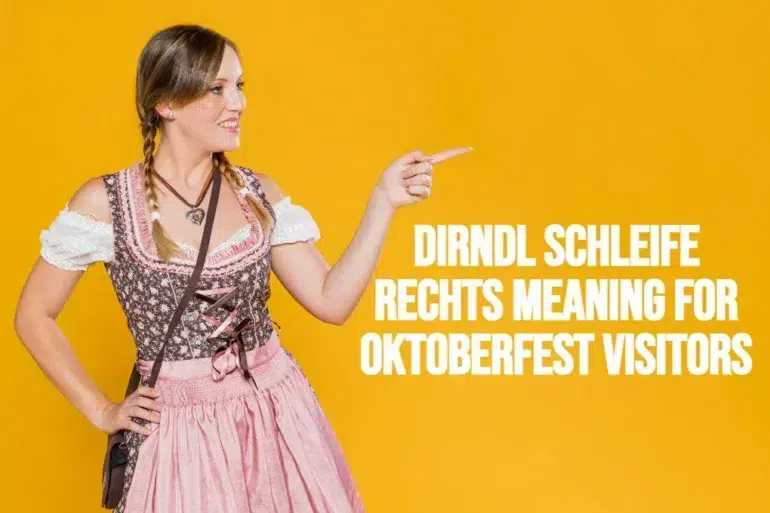
Why the Dirndl Bow Matters More Than You Think
If you’re planning to attend Oktoberfest, you’ve probably come across the traditional Bavarian outfit known as the Dirndl. It’s charming, elegant, and — surprisingly — full of hidden meaning. One small detail, the Dirndl Schleife Rechts, can say a lot about you without you saying a word.
Yes, we’re talking about the bow on the apron.
For many first-time visitors, it might seem like just a decorative touch. But locals know better. The position of the Schleife Dirndl (Dirndl bow) is actually a subtle social signal. And if you get it wrong, it can lead to some awkward — or amusing — misunderstandings.
Let’s break it down in a simple, friendly way so you can wear your Dirndl with confidence and avoid sending the wrong message.
What Does Dirndl Schleife Rechts Mean?
Dirndl Schleife Rechts means that the bow on your apron is tied on the right side, indicating that the wearer is married, engaged, or in a committed relationship.
The Hidden Language of the Dirndl Bow
The Dirndl isn’t just a costume — it’s a piece of cultural heritage from Bavaria and Austria. According to cultural historians and tourism sources like Munich Tourism Board, traditional clothing often carries symbolic meanings tied to social status and identity.
The apron bow is one of those symbols.
Here’s how it works:
| Bow Position | Meaning |
|---|---|
| Right (Dirndl Schleife Rechts) | Taken / Married / In a relationship |
| Left | Single / Available |
| Center Front | Virgin (traditional meaning) |
| Back | Widow or waitress (historically) |
So, when you choose Dirndl Schleife Rechts, you’re essentially saying: “I’m not available.”
Why This Tradition Still Matters at Oktoberfest
You might wonder — does anyone really pay attention to this in modern times?
Short answer: Yes, especially at Oktoberfest.
While not everyone strictly follows the tradition, many locals and seasoned festival-goers still recognize and respect it. It’s part of the charm and authenticity of the event.
Why it matters:
- It helps avoid awkward social situations
- It shows cultural awareness and respect
- It adds to the immersive Oktoberfest experience
According to travel insights from Oktoberfest.de, understanding local customs enhances visitor experience and interaction.
Dirndl Schleife Rechts vs. Left: The Most Common Mistake
Let’s be honest — this is where most tourists slip up.
Many visitors unknowingly tie their Schleife Dirndl on the right side simply because it “looks better” or feels natural. But culturally, that sends a clear signal.
Real-world scenario:
Imagine you’re at a beer tent, enjoying music and steins of beer. Someone approaches you, thinking you’re available… but your bow says otherwise.
Confusing, right?
Quick tip:
- If you’re single, tie it on the left
- If you’re taken, go with Dirndl Schleife Rechts
Simple — but important.
How to Tie Your Dirndl Bow Correctly
If you’re new to wearing a Dirndl, don’t worry — it’s easier than it looks.
Step-by-step guide:
- Put on your Dirndl and apron normally
- Wrap the apron strings around your waist
- Decide your bow position:
- Right = taken (Dirndl Schleife Rechts)
- Left = single
- Tie a neat bow (not too tight, not too loose)
- Adjust for symmetry
Pro tips:
- Keep the bow slightly angled — it looks more natural
- Avoid oversized bows — they can look costume-like
- Practice beforehand so you’re not struggling last minute
The Cultural Roots Behind the Dirndl Bow
The Dirndl dates back to the 19th century and was originally worn by Alpine peasants. Over time, it evolved into a symbol of regional pride.
The bow placement tradition developed as a subtle way to communicate marital status — especially in close-knit communities where social cues mattered.
According to ethnographic studies referenced by German cultural archives, clothing often served as a “silent language” in traditional societies.
And that language still lives on today.
Modern Interpretations: Do You Have to Follow the Rules?
Here’s where things get interesting.
In modern Oktoberfest culture, the rules are a bit more flexible. Many people treat the Dirndl as festive fashion rather than strict tradition.
So, do you have to follow the rules?
Not necessarily — but it’s recommended.
Why?
- It shows respect for Bavarian culture
- It helps you blend in more naturally
- It avoids sending mixed signals
Think of it like learning basic etiquette when visiting another country. You don’t have to — but it makes the experience smoother and more enjoyable.
Common Questions About Dirndl Schleife Rechts
1. Can I wear Dirndl Schleife Rechts if I’m single?
Technically yes — but it will signal that you’re taken. So unless that’s your intention, it’s better to tie it on the left.
2. Do men understand the meaning?
Many locals do, especially in Bavaria. Tourists may not always notice, but it’s still widely recognized.
3. What if I tie it incorrectly?
Don’t stress too much. It’s not offensive — it just might lead to confusion or funny situations.
4. Does this rule apply outside Oktoberfest?
Yes, especially at traditional events, festivals, or in regions where Dirndl culture is strong.
5. Is the Schleife Dirndl tradition still relevant today?
Absolutely. While modernized, it remains a fun and meaningful part of Bavarian culture.
Styling Tips for Your Dirndl Look
Beyond the bow, there are a few ways to elevate your outfit.
Choose the right fit
- A well-fitted Dirndl enhances your silhouette
- Avoid overly short or costume-like designs
Pay attention to accessories
- Classic blouse with lace details
- Comfortable but stylish shoes
- Minimal jewelry for authenticity
Confidence is key
No matter where your bow sits, wearing your Dirndl with confidence makes all the difference.
First-Time Oktoberfest Visitor
Let’s say Sarah, a tourist from the UK, attends Oktoberfest for the first time. She buys a beautiful Dirndl but ties the bow on the right — without knowing the meaning of Dirndl Schleife Rechts.
Throughout the evening, she notices fewer people approaching her socially. Later, a local explains the tradition.
The next day, she switches the bow to the left — and suddenly, the experience feels completely different.
Small detail. Big impact.
Final Thoughts: Wear It Right, Enjoy It More
Understanding the meaning of Dirndl Schleife Rechts might seem like a tiny detail — but it can shape your entire Oktoberfest experience.
It’s more than just fashion. It’s tradition, communication, and culture wrapped into one simple bow.
So before you head out in your Dirndl, take a moment to decide:
What do you want your bow to say?
Conclusion
The Dirndl Schleife Rechts is a meaningful tradition that signals you are in a committed relationship. While modern Oktoberfest allows for flexibility, respecting this custom helps you blend in, avoid confusion, and fully enjoy the cultural experience. Whether you follow tradition strictly or loosely, understanding the Schleife Dirndl meaning adds depth and authenticity to your celebration.