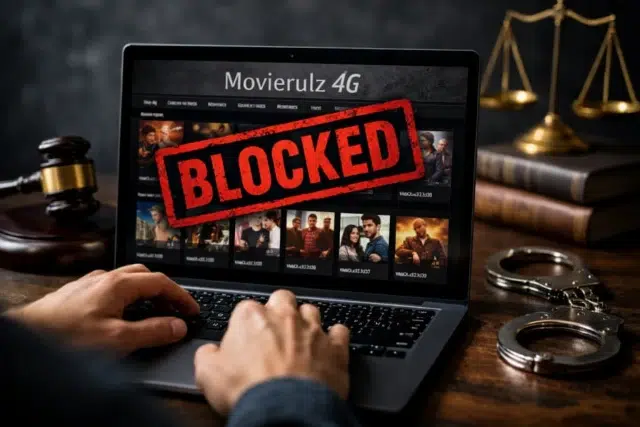
If you have searched for 4g Movierulz, you have probably noticed a pattern. One day a link opens, the next day it shows an error. Sometimes it loads slowly, sometimes it redirects, and sometimes your internet provider seems to block it completely.
That confusion is exactly why this topic keeps trending. People want to know what is happening behind the scenes, what “blocked” actually means, and whether there are risks they are ignoring in the rush to watch something quickly.
This article breaks it down in plain language. You will learn why sites linked with 4g Movierulz get blocked, how blocking usually works, what the law and internet policies have to do with it, and what you should understand before clicking anything that looks shady.
What “4g Movierulz” Usually Refers To (and why it keeps changing)
The keyword 4g Movierulz is commonly used online to refer to pages that claim to offer movies or shows for free, often without proper licensing. The exact domain, mirror, or page name can change frequently. That constant shifting is not random. It is one of the reasons blocking happens so often, and why people keep searching the same keyword again and again.
A useful way to think about it is this: when a site repeatedly becomes the target of enforcement or takedown actions, it often reappears under a new domain, a new subdomain, or a lookalike copy. That creates a cycle of “open today, blocked tomorrow.”
This is not unique to 4g Movierulz. It is a broader pattern seen across piracy and unauthorized streaming ecosystems, where link swapping is a survival tactic and users get pulled along for the ride. Research firm MUSO, for example, tracks global traffic to piracy websites and reported 216.3 billion visits to piracy sites in 2024, showing how massive and persistent this ecosystem remains.
Why Sites Like 4g Movierulz Get Blocked
When people say “the government blocked it” or “my ISP blocked it,” there are usually a few real mechanisms behind the scenes. Here are the most common reasons sites associated with 4g Movierulz get blocked.
1) Copyright enforcement and court orders
A major driver is copyright enforcement. Rights holders can go to court and seek orders requiring intermediaries (often internet service providers) to restrict access to specific domains that repeatedly facilitate infringement.
In many countries, site blocking is handled through legal processes where courts evaluate evidence and then direct ISPs to implement blocks for specific domains. Some proposals and discussions emphasize judicially supervised blocking as a way to target “adjudicated piracy sites” rather than broad, vague takedowns.
2) “Whack a mole” mirrors and dynamic blocking
Even if one domain is blocked, another often pops up quickly. That leads to what many observers call a “whack a mole” cycle, where enforcement expands to new mirrors or related domains over time. Commentary around site blocking often points out that dynamic blocking can create an ongoing chase because sites can move domains and hosting repeatedly.
This is one reason the 4g Movierulz keyword stays popular. People aren’t always searching for one stable website. They are searching for whatever the latest working version appears to be.
3) Search engines deindexing and link removals
Sometimes a site is not blocked by an ISP at all, but it becomes harder to find because search engines remove or demote certain pages after receiving copyright complaints.
Google publishes data on copyright-related removal requests through its Transparency Report. It is a clear window into how often links get reported and removed from search results.
So, when someone says “it disappeared,” the reality might be: the site still exists, but it is less visible because search engines have acted on removal requests.
4) Hosting and domain actions
Domains can be suspended, hosting can be terminated, or payment services can cut off support if terms of service are violated. These actions don’t always look like a “block” from the user’s perspective. They can look like:
- a blank page
- constant redirects
- a “site can’t be reached” message
- a warning screen from the browser
In short, 4g Movierulz can seem to “vanish” because multiple parts of the internet supply chain can disable access.
How Website Blocking Works (in simple terms)
Blocking can sound mysterious, but most of it is technical plumbing. Here are the common methods, explained without jargon.
Common blocking methods used by ISPs
| Blocking Method | What it does | What users typically see |
|---|---|---|
| DNS blocking | Stops your device from resolving the domain name | “Server not found” or DNS error |
| IP blocking | Blocks traffic to an IP address hosting the site | Site never loads, timeouts |
| URL filtering | Blocks specific URLs or patterns | “Access denied” style pages |
| Deep packet inspection (some networks) | Detects and blocks certain traffic signatures | Intermittent issues, inconsistent access |
Different countries and providers use different mixes. Also, blocking can be overbroad in some cases (for example, when multiple sites share infrastructure). That is one reason some tech policy groups warn about unintended consequences of network-level blocking.
What a “Blocked” Message Really Means
When 4g Movierulz appears blocked, it can mean one of these realities:
- Your ISP is complying with a legal order to restrict the domain
- A DNS resolver is refusing to resolve the domain
- The site has been taken down or the domain is suspended
- Your browser or security software is warning you because the site is risky
- The site is up, but overloaded, broken, or deliberately redirecting you
That last one is surprisingly common. Some pages intentionally bounce users through ad networks or fake “play” buttons that exist only to generate clicks, installs, or subscriptions.
The Risks Users Often Miss with 4g Movierulz
People usually focus on “Does it open?” and ignore “What happens if it does?” Sites tied to 4g Movierulz style searches can carry risks that go beyond legality.
Malware, fake downloads, and drive by traps
Some pages push:
- fake video players
- forced notification prompts
- app downloads that are not what they claim
- “update your browser” popups
- lookalike buttons that trigger adware installers
Even if you never download anything, malicious scripts and aggressive trackers can still cause harm, especially on older phones or unpatched browsers.
Data privacy and tracking
Unlicensed streaming and download pages often rely on heavy advertising and tracking. That can expose:
- your IP address
- device fingerprints
- browsing behavior
- location signals (approximate)
- referral data
If you have ever wondered why the ads suddenly become weirdly specific after visiting a sketchy site, that is not magic. It is tracking.
Financial scams disguised as subscriptions
Another common scenario is the “small fee” trap. A page looks like it offers free access, then suddenly asks for:
- a card verification fee
- a “premium membership”
- a paid download manager
Consumer-facing anti-piracy groups cite data suggesting many consumers who pay pirate services expose themselves to fraud and identity risks, especially when payment is involved.
Legal and Policy Context Users Should Understand
I am not your lawyer, and laws vary by country, but there are a few consistent themes worth knowing about 4g Movierulz searches.
Copyright law is not only about uploaders
Many legal systems focus enforcement on operators, uploaders, and distributors, but users can still face consequences depending on local laws and the situation. Even when users are not criminally prosecuted, the ecosystem is still subject to enforcement actions like:
- court-ordered blocks
- domain seizures
- platform takedowns
- search delisting
- advertising and payment disruption
That is why access is unstable.
Enforcement actions can be large and international
Piracy enforcement sometimes becomes international cooperation, especially when a large network is involved. For example, major illegal streaming networks have been shut down through coordinated efforts involving law enforcement and anti-piracy coalitions.
The takeaway is simple: if a piracy network is big enough, it can draw serious attention, and the blocks can spread across mirrors and clones.
Why People Still Search “4g Movierulz” Even When Blocks Keep Happening
This part is uncomfortable but honest. People search 4g Movierulz for the same reasons piracy persists generally:
- streaming fragmentation across services
- regional restrictions
- rising subscription costs
- delayed releases in some markets
- convenience, even when risky
MUSO’s reporting often points to market factors like fragmentation and affordability pressures as major drivers of piracy demand.
So blocking is not only a tech story. It is also a consumer behavior story.
Real World Scenarios (What Blocking Looks Like Day to Day)
Here are a few situations that readers commonly experience when dealing with 4g Movierulz type searches.
Scenario A: “It works on my friend’s Wi-Fi but not on mine”
This often happens because different ISPs use different DNS resolvers and enforce different blocklists. It is also possible that one network’s security filters are stricter.
Scenario B: “It opens, but the play button does nothing”
That is frequently an ad overlay or a fake player layer. The site may be built primarily to generate ad clicks rather than actually stream reliably.
Scenario C: “It redirects me to random pages”
Redirect chains are a common monetization strategy in gray-market and piracy ecosystems. Sometimes it is just aggressive ads. Sometimes it is worse.
Scenario D: “My phone suddenly gets spammy notifications”
Many risky sites trick users into enabling browser notifications. Once enabled, your phone can receive spam alerts even when you are not on the site.
What Users Should Do Instead (Practical, Non-Preachy Steps)
If you have been searching 4g Movierulz, here are actions that protect you without turning this into a lecture. These steps focus on safety, legality awareness, and control.
If you already visited a suspicious page
- Clear your browser site permissions, especially notifications
- Check recently installed apps and remove anything you do not recognize
- Run a reputable mobile security scan if you suspect a download happened
- Update your browser and phone OS
- Change passwords if you entered credentials anywhere questionable
If your main issue is “I can’t find what to watch”
Try working from your goal instead of chasing unstable links:
- Use legitimate services available in your region
- Look for free, ad-supported legal platforms (many markets have them)
- Check if the content is available for rent digitally, which can be cheaper than subscriptions
- Use official studio or network apps where possible
A quick safety checklist for any “free streaming” link
Before clicking around, ask:
- Does it ask for notification permission immediately?
- Are there multiple fake “play” buttons?
- Does it push an APK or “player app” download?
- Does your browser show a warning?
- Is the domain full of odd spelling or constant popups?
If the answer is yes to any of these, treat it as a risk, not a bargain.
4g Movierulz and the Bigger Picture: What the Numbers Suggest
It is easy to dismiss piracy as a niche issue, but the scale is enormous. MUSO’s 2024 reporting of 216.3 billion visits to piracy sites shows how widespread it remains.
At the same time, enforcement and takedowns are also massive in scale. Google’s Transparency Report provides ongoing data about copyright-related actions affecting search visibility.
The broader lesson: this ecosystem is under constant pressure, which is why access to 4g Movierulz style destinations keeps changing and breaking.
FAQs
Why does 4g Movierulz keep changing domains?
Because domains can be blocked, suspended, or delisted. Operators often switch domains or create mirrors to keep traffic moving, which leads to constant churn and frequent outages.
Is a blocked page proof that the site is illegal?
Not automatically in every case, but repeated blocks and enforcement patterns often point to copyright disputes or policy violations. Blocking usually happens due to legal orders, rights-holder action, or infrastructure enforcement.
Can these sites harm my phone even if I do not download anything?
Yes. Malicious ads, trackers, notification abuse, and drive-by scripts can still create risks. Downloads increase risk, but they are not the only threat.
Why do some people get access while others do not?
Different ISPs, DNS providers, regions, and network security settings can change what you can reach. Some networks also apply stricter filtering policies.
What is the safest way to watch movies online?
Use licensed platforms available in your region, including legal free ad-supported options. It is more stable, reduces security risk, and avoids the legal gray zones that come with piracy ecosystems.
Conclusion: The One Thing to Remember About 4g Movierulz
If you take only one idea from this, make it this: 4g Movierulz stays in search trends because it sits at the center of a constant loop of enforcement, mirrors, and user demand. Blocks happen for legal and policy reasons, but also because the underlying ecosystem is unstable by design.
When something is constantly moving, users end up taking more risks just to keep up. And those risks are not only legal. They are practical: malware, scams, privacy leaks, and time wasted on broken pages.
Understanding how and why blocking happens helps you make smarter choices, protect your device, and avoid getting pulled into the mess. In the last few years, the world has become more aggressive about protecting intellectual property, and that includes the digital side of things like copyright law and enforcement actions. You can see the general definition of copyright infringement in plain terms, which helps clarify why these blocks exist.