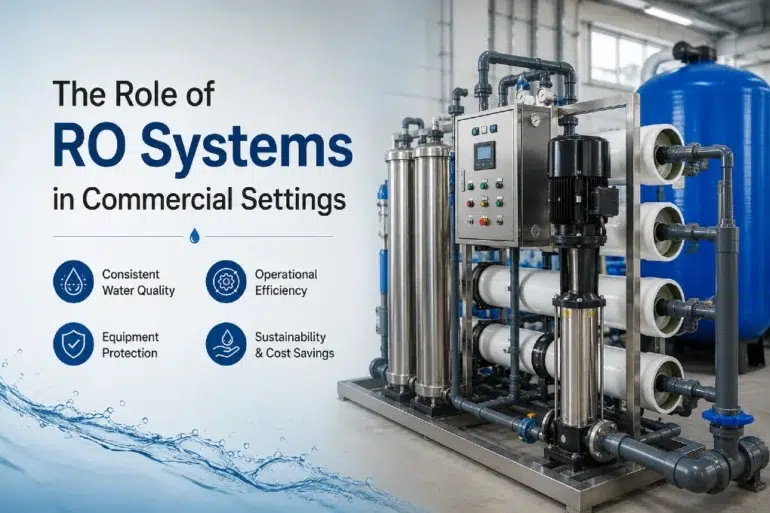
Reverse osmosis (RO) systems play a crucial role in providing clean and safe water in various commercial environments. As water quality becomes an increasingly prominent concern, businesses are investing in advanced reverse osmosis water filter technologies to ensure the purification of their water supplies. These systems effectively remove contaminants by pushing water through a semi-permeable membrane, offering a reliable solution for maintaining high standards of water quality.
Why Commercial Settings Need RO Systems
Commercial settings such as restaurants, hospitals, and manufacturing facilities require large volumes of clean water not only for consumption but also for various operational processes. RO systems provide an efficient method of purifying water by removing impurities such as dissolved salts, organics, and other particulates. This is particularly important in industries where water purity can impact product quality, equipment longevity, and health safety standards.
Benefits of Using Reverse Osmosis in Business Operations
Businesses that incorporate reverse osmosis technology can experience numerous benefits. Firstly, they achieve substantial cost savings by reducing the need for bottled water and minimising equipment maintenance resulting from scale build-up. Furthermore, clean water ensures better-tasting food and beverages in hospitality sectors, setting a higher standard for customer satisfaction. Compliance with health regulations is another major advantage, reducing liabilities related to water-borne health risks.
The Technology Behind RO Systems
At the core of RO systems is a semi-permeable membrane that allows water molecules to pass while blocking larger molecules and contaminants. This process, reinforced by pressure, reverses the natural flow of water, thereby facilitating effective filtration. Modern RO systems include pre-filters and post-filters to handle a range of impurities, enhancing overall performance and longevity of the system.
Applications in Different Industries
The use of RO systems extends across various industries. In the food and beverage sector, they help maintain flavour and consistency by ensuring pure water in production processes. Pharmaceuticals rely on RO systems for ultrapure water crucial for drug manufacturing. In electronics, these systems prevent mineral deposits that can interfere with product quality during fabrication. Such versatility highlights the importance of RO systems in diverse commercial applications.
Environmental Impact of RO Systems
RO systems offer an environmentally friendly solution by significantly reducing reliance on single-use plastic bottles. By producing purified water on-site, businesses can decrease their plastic waste footprint. Moreover, some systems are designed with energy-efficient features that lower operational costs and mitigate environmental impacts.
Installation and Maintenance Considerations
Installing an RO system involves an assessment of current water quality and specific filtration needs. Choosing the right system depends on factors like water demand, pressure conditions, and available space. Regular maintenance, including membrane replacement and sanitation procedures, ensures the system operates efficiently and provides high-quality water continually.
Challenges and Solutions
While RO systems are highly effective, they can face challenges such as wastewater production and membrane fouling. Innovations in system design, such as high recovery RO systems, address these issues by maximising water in-take efficiency and reducing waste. Additionally, proper pre-treatment of incoming water can prevent membrane blockages and extend equipment lifespan.
Evaluating Costs Versus Benefits
Investing in a reverse osmosis system requires a careful evaluation of both initial costs and long-term savings. While the upfront investment may be significant, the reduction in operational costs and potential health liability offsets it over time. Businesses are encouraged to weigh these aspects and consider the enhanced reputation and consumer trust that come with providing high-quality water.
RO Systems and Health Safety Regulations
Compliance with stringent health regulations can be managed effectively with RO systems. They remove contaminants including lead, arsenic, and fluoride that are regulated in many jurisdictions. Businesses utilising RO technology can thus avoid penalties and ensure public safety continues to be paramount in their operations.
Partnering with Experts in Water Filtration
Collaborating with reputable providers like Pure Water Systems ensures tailored solutions to meet specific commercial water filtration needs. Experts can offer insights into system design, installation, and maintenance, leading to optimised performance.
Choosing the Right System for Your Business
Selecting an appropriate RO system is critical. Businesses should evaluate factors such as system capacity, local water composition, and specific industry requirements. By investing in a high-quality system, companies can benefit from consistent water quality, operational efficiency, and improved product standards.
The Future of RO Technology in Commercial Settings
Innovation in RO technology continues to evolve, with manufacturers focusing on increasing efficiency and reducing environmental impact. Future advancements may include systems that integrate smart technology for real-time monitoring and maintenance, making them even more appealing for commercial settings.
Case Study: Success Stories of RO Implementation
Several companies have reported significant improvements in operational efficiency and compliance after integrating RO systems. For instance, water-intensive industries in Perth have embraced water filtration systems to address local water challenges, achieving enhanced water quality and cost savings.
Conclusion: A Strategic Investment
In conclusion, RO systems represent a strategic investment for commercial settings aiming to improve water quality, ensure regulatory compliance, and reduce operational costs. By choosing to implement this advanced filtration technology, businesses can secure a sustainable future and demonstrate a commitment to health and environmental stewardship.