

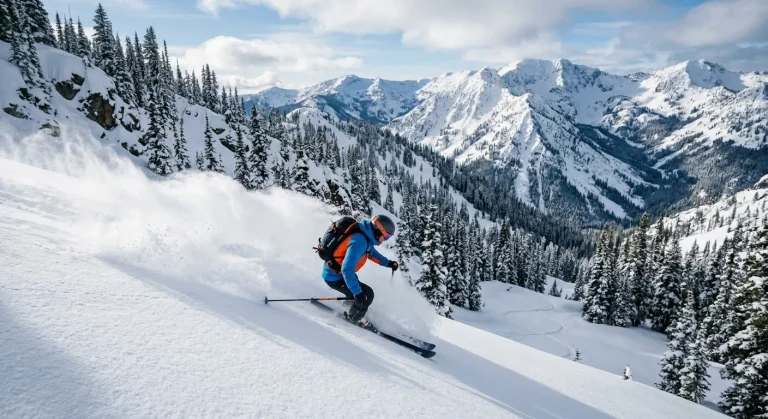
Powder can describe fresh snow on a patrolled trail, a gladed resort zone or an unmarked slope far beyond ordinary ski-area services. https://brundage.com/ gives experienced Idaho skiers and snowboarders several ways to pursue soft snow, including resort terrain and guided Snowcat Adventures. Those products carry different hazards, expectations and equipment needs, so the most important planning step is understanding where resort skiing ends and backcountry travel begins.
Separate resort powder from backcountry travel
Fresh snow inside an open ski-area boundary is managed differently from natural terrain outside regular patrol and grooming. Inbounds runs may still contain trees, cliffs, variable coverage and collision hazards, but guests can use marked trails, posted closures and resort operations information.
Backcountry terrain is not simply a quieter version of a black-diamond run. Avalanche exposure, route finding, unmarked obstacles and delayed rescue change the decision. A gate or nearby chairlift does not make an uncontrolled slope safe. Skiers should never follow tracks across a boundary without knowing where they lead and whether they can return.
Guided snowcat skiing occupies another category. Transportation and professional guidance can provide access to remote powder, but natural hazards remain. Guests still need appropriate ability, honest communication and a willingness to follow the guide’s terrain decisions.
Read terrain before chasing snowfall
A storm total does not reveal how snow has been affected by wind, temperature or slope direction. Wind can load one aspect while scouring another. New snow may cover rocks, stumps or a firm crust. Tree-lined glades can preserve soft conditions while creating visibility and navigation challenges.
Use the Brundage snow report, webcams, grooming information and lift status to understand what is operating. On the mountain, pay attention to patrol signs, ropes and closures. A closed powder field is not an invitation to find another entrance.
Terrain choice should reflect control in the current snow, not performance on a groomed run. Deep powder changes turning, speed management and the effort required to recover after a fall. An expert on firm snow can still struggle when visibility and surface resistance change.
Understand the guided Snowcat product
Brundage Mountain’s official SnowCat Adventures page describes a permit area covering 17,912 acres of snowy steeps, glades and bowls in the Payette National Forest. The terrain reaches elevations of nearly 8,500 feet and spans three mountain peaks. A private snowcat can take a group of up to 10 people.
Those figures indicate scale, not guaranteed untracked snow or a fixed itinerary. Guides select terrain based on avalanche conditions, weather, group ability and snowcat access. A day may include forested slopes, open bowls or mixed snow. Guests should expect decisions to change as conditions develop.
Before booking, ask what skiing or snowboarding ability is required, what safety equipment is supplied, what personal gear to bring and how the program handles cancellations or weather interruptions. Powder skis or an appropriate snowboard can reduce effort, but equipment does not replace technique.
Match skill to natural hazards
Backcountry readiness begins with consistent control in trees and variable snow. Riders should be comfortable making turns where the line is constrained and stopping before hazards. Fitness matters because repeated powder runs, transitions and falls require more energy than ordinary groomed skiing.
Avalanche awareness is another requirement. A beacon is useful only when the user understands companion rescue and carries the rest of the appropriate equipment. Introductory instruction from a guide is valuable, but it is not a substitute for broader avalanche education when someone plans independent travel.
Groups should communicate medical conditions, injuries and ability differences before entering remote terrain. Hiding uncertainty to keep up can expose everyone to greater risk.
Carry equipment for the environment
Start with a properly fitted helmet and goggles suited to changing light. Pack layers that manage moisture during exertion and preserve warmth during stops. Spare gloves, neck protection and a dry insulating layer can matter when weather shifts.
Backcountry equipment depends on the product and route. Confirm whether avalanche rescue gear is provided and whether a backpack, food or water is required. Keep personal items secured so they do not disappear during a fall in deep snow.
Do not experiment with unfamiliar boots, bindings or a dramatically different ski shape on the morning of a demanding trip. Test equipment and solve fit problems before committing to remote terrain.
Use reports and maps deliberately
A trail map helps identify named resort zones, lifts and boundary areas. A snow report provides operational facts. Webcams show visibility and surface clues at specific viewpoints. None of these tools can certify that a slope is safe.
Check information close to departure and again at the mountain. Read avalanche advisories when backcountry exposure is possible. Ask patrol or guides about closures and expected conditions rather than relying on social-media footage from another day.
For resort powder, plan alternate zones in case a lift is delayed or a preferred area remains closed. For guided skiing, accept that the best available terrain may differ from the image that motivated the booking.
Compare Idaho powder destinations
Idaho powder skiing extends beyond Brundage. Schweitzer, Lookout Pass and Silver Mountain shape a North Idaho trip, while Sun Valley offers a different high-desert mountain setting. Each resort has its own storm track, terrain layout, road access and operating decisions.
Comparison should focus on the day’s conditions and the skier’s goals. A traveler seeking glades may evaluate a mountain differently from someone who wants bowls, groomed powder or a guided backcountry experience. Lodging in McCall, Sandpoint, Kellogg or Sun Valley also changes how early a group can reach the lifts after a storm.
Make conservative decisions on the mountain
Powder rewards timing, but urgency can undermine judgment. Slow down long enough to confirm terrain status, partner readiness and an exit plan. Keep the group together in trees and regroup where everyone is visible and out of uphill traffic.
The best powder decision may be an open inbounds run, a guided route chosen for the conditions or a different day entirely. Brundage provides several pathways to soft snow, but the responsible choice depends on boundaries, ability and current hazard information rather than enthusiasm alone.